
Our sales manager will contact you shortly
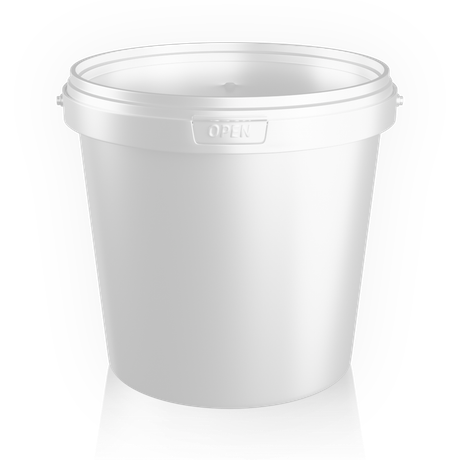
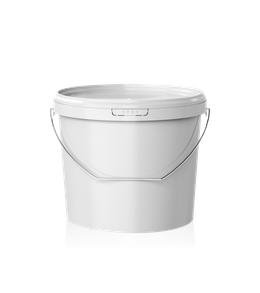 Plastic buckets14 sizes · 560 ml to 21 L
 Medical buckets9 sizes · 1 to 21 L
 Food containers5 formats · 250 to 750 ml
 Plastic jerry cans5 L and 10 LPlastic buckets16 models, 560 ml - 21 LMedical buckets10 models, 1 - 21 LFood containers5 models, 250 - 750 mlPlastic canisters5 and 10 L塑料桶16 个型号,560 毫升 - 21 升食品容器5 个型号,250 - 750 毫升塑料方桶5 升和 10 升
Hello! We'll suggest the right size for your product, calculate pallets, and quote a price for your order.
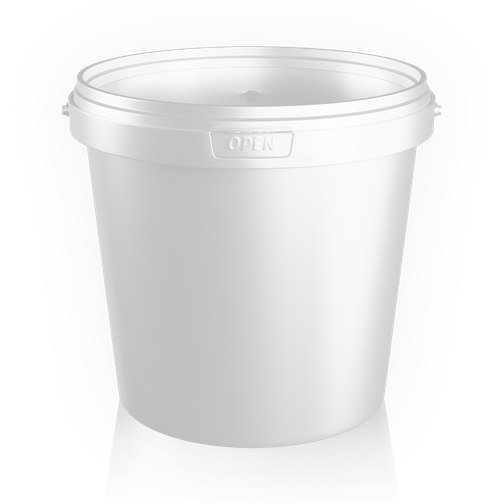
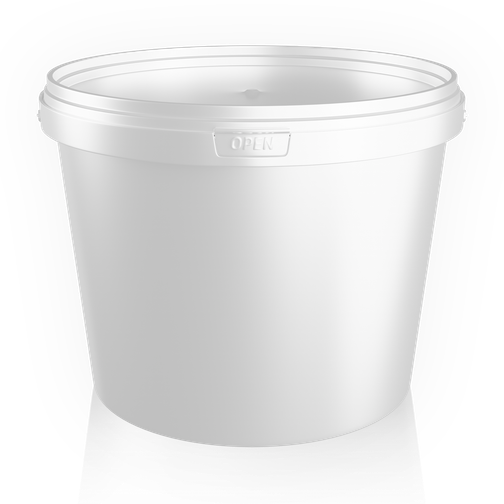
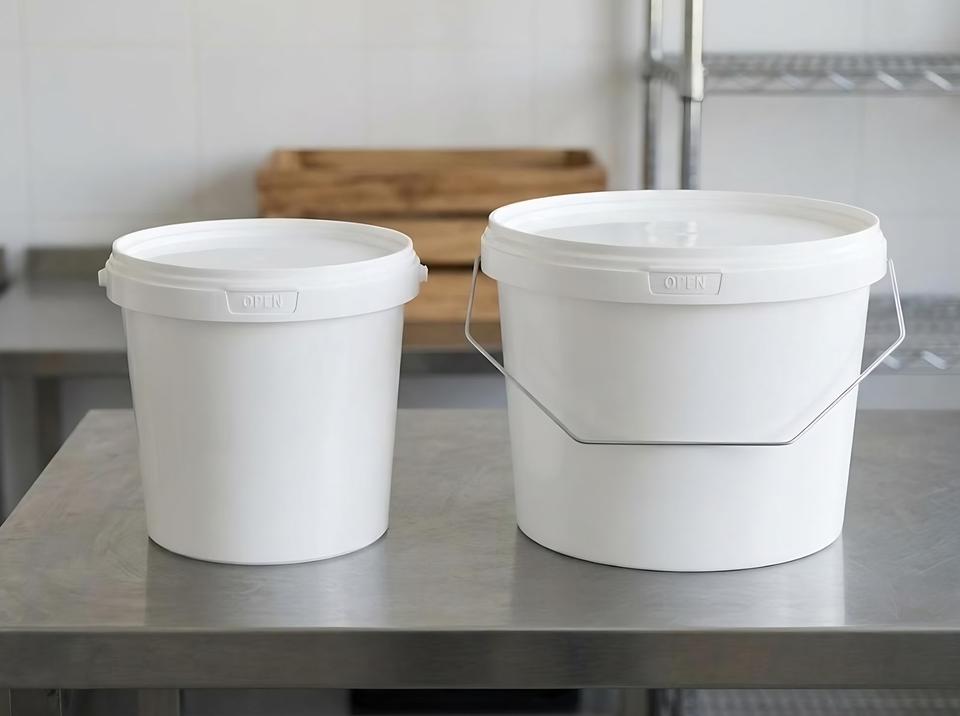
Shoppers buy a 1-liter bucket as a single purchase: a kilogram of sour cream, 1.42 kg of honey, a little paint for small repairs. A 2.3 liter bucket is already a family supply or a market-stall pack, and it is the first size in the range to come with a metal bail handle. The two are almost the same height, 121 and 132 mm, and all the extra volume has gone into width. We compare dimensions, handles, product weight and what the packaging costs you per tonne packed.
The first rows come from the two buckets' product cards; the rest are calculated from them. Product weight is given for a fill to nominal capacity: honey at about 1.42 kg per liter, jam at about 1.33 kg, pickles in brine at about 1.05 kg. The bottom row converts packaging per tonne of honey: how many buckets you need and how much they weigh in total.
| Parameter | 1 L bucket | 2.3 L bucket |
|---|---|---|
| Model | PK10 | PK23 |
| Nominal / brim-full | 1 L / 1.18 L | 2.3 L / 2.444 L |
| Top × height | 132.5 × 121 mm | 175 × 132 mm |
| Empty bucket weight | 36 g | 62 g |
| Handle | plastic, 1.3 g | metal 13.4 g or plastic 3.4 g |
| Honey / jam / pickles | 1.42 / 1.33 / 1.05 kg | 3.27 / 3.06 / 2.42 kg |
| Per pallet: buckets / liters filled | 6 480 / 6 480 | 3 300 / 7 590 |
| Packaging per tonne of honey: buckets / kg | 704 / 25,4 | 306 / 19,0 |
Almost twice as many 1-liter buckets fit on a pallet, yet in packed volume a pallet of 2.3 liter buckets comes out 1,110 liters ahead. For every tonne of honey, the larger bucket saves about 6.4 kg of plastic and almost 400 lids to close on the line. The 1-liter size remains indispensable where shoppers pay for a portion rather than by the kilogram.
Choose a product and a monthly volume - we will compare net weight, pieces per tonne, liters per pallet and how many pallets each item needs per month. Calculated on nominal capacity and the product weight per liter from our selection pages.
On paper the difference is 1.3 liters. In practice four things change at once: how the bucket is carried, how it is bought, how much it spreads out in width and how much plastic goes into every tonne of product.
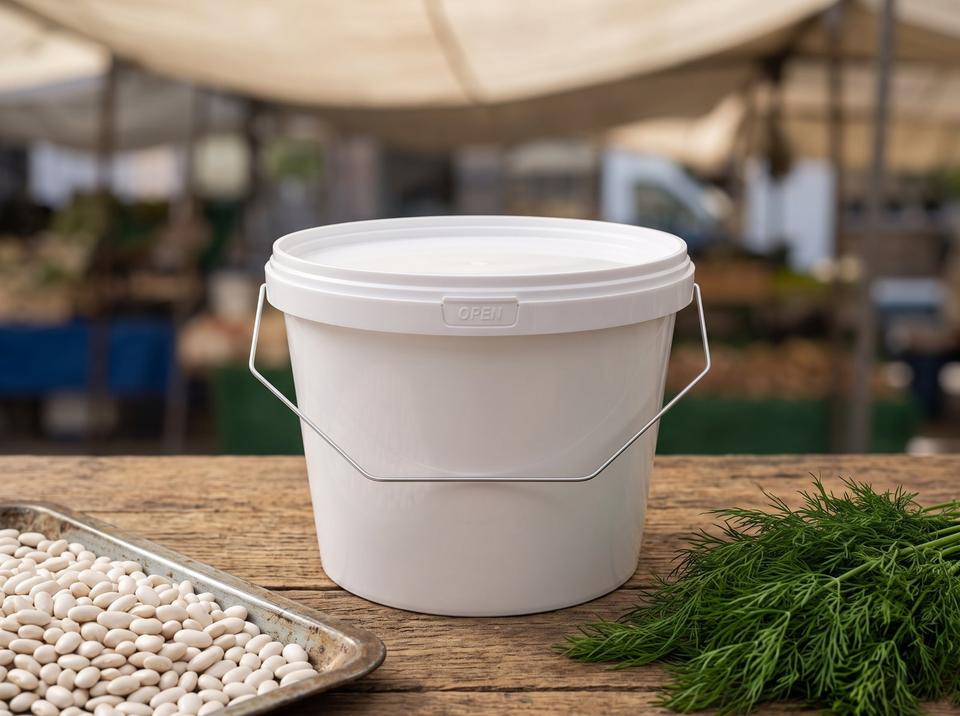
The 1-liter bucket comes only with a 1.3 g plastic handle: full of honey, it weighs about 1.46 kg. A 2.3 liter bucket already holds over 3 kilograms of product, so this is where the 13.4 g bail handle appears in the range. A 3.4 g plastic handle is still available for packaging that does not need metal.
The 1-liter size is a shelf and gift format, picked up on impulse like a packet of tea. A 2.3 liter bucket is a considered stock-up purchase, more often made at the market or directly from a beekeeper. Choose the size to match these two ways of buying.
Height has grown by just 11 mm, while the top has widened from 132.5 to 175 mm. The 2.3 liter bucket is squat and stable, and in a fridge or on a shelf it takes up almost no more height than the 1-liter.
Packing a tonne of honey into 1-liter buckets takes 704 of them, weighing 25.4 kg in total. With 2.3 liter buckets, 306 are enough, and they weigh 19.0 kg. For a packer that means fewer capping operations and less money tied up in packaging.
A simple rule: if the product sells by the unit and shoppers choose with their eyes, go for 1 liter. If it sells by weight, in small wholesale lots or to food service, go for 2.3 liters. Typical cases:
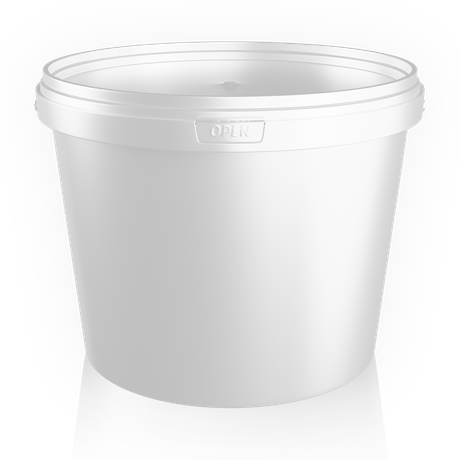
All dimensions, versions and application tips are on the 1 liter bucket and 2.3 liter bucket pages. The neighboring pair of mid-size buckets is covered in the 2.3 or 3 liter comparison.
1-liter buckets come in pallets of 6,480, 2.3 liter buckets in pallets of 3,300, and both sizes can go in one shipment. Empty buckets nest inside each other, so the stacks take up little space. You can collect the packaging yourself from the factory warehouse in the Bishkek Free Economic Zone, Ak-Chiy village, or order delivery: we deliver across Bishkek and the Chuy Region with our own trucks and ship to Osh, Karakol, Talas, Naryn and Jalal-Abad via a freight carrier. Customers in Kazakhstan receive buckets by the pallet within the EAEU, in Shymkent, Almaty, Astana and other cities. Our sales manager will confirm lead time and cost when processing the order.
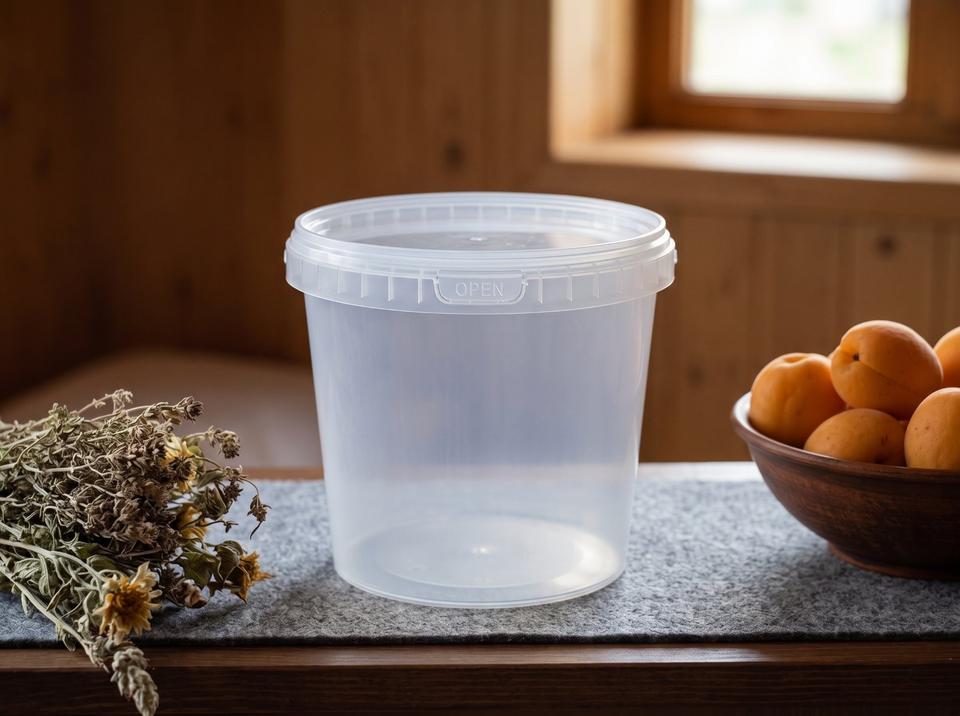
This size comes only with a 1.3 g plastic handle: a full bucket of honey weighs about 1.46 kg. The 13.4 g metal bail handle starts in the range at 2.3 liters, which holds 2.3 times more product.
About 1 kg of sour cream in the 1-liter and about 2.3 kg in the 2.3 liter bucket; for jam, about 1.33 and 3.06 kg. Calculate by nominal capacity: the top 180 and 144 ml are left empty so the lid snaps into the rim without squeezing product out.
Per liter of product, the 2.3 liter bucket uses about 27 g of plastic and the 1-liter 36 g. If your sales format allows a bigger pack weight, the larger bucket noticeably cuts the share of packaging in your unit cost.
Our sales manager calculates the exact amount for your order: it depends on quantity, color, handle type and branding. Call +996 222 600 292 and ask for both sizes in one quote.
Yes. A label is applied to the finished bucket, while with IML the artwork is fused into the wall during molding and does not wash off. The artwork size for each body is agreed with our sales manager: the 2.3 liter wall is wider and gives more space.
Yes, buckets go to Kazakhstan by the pallet within the EAEU: to Shymkent, Almaty, Astana, Karaganda and other cities. Our sales manager will confirm freight cost and lead time when you order.
Yes, we mold both sizes in white and in clear polypropylene. Through the clear wall you can see the honey, jam or mushrooms, so the bucket does the job of a display case.
Tell us what you pack and who you sell to: shops by the unit or the market by weight. Our sales manager will suggest the size and handle, and you can split your first delivery between the two sizes to see which sells faster.