
 1 L
 2.3 L
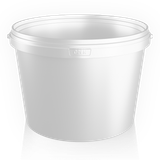 3 L
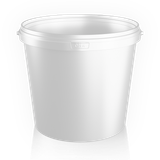 3.8 L
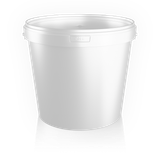 5.6 L
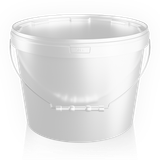 8 L
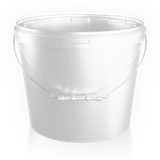 11.5 L
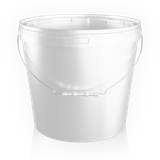 18 L
Our sales manager will contact you shortly
Request a callback from our specialist
Want to learn more about our packaging or find the right fit for your business? Request a callback, and our specialist will call you at a time that suits you. Tell us about your product, and we'll help you choose the best option.
Order a callback from a specialist
Want to learn more about our solutions or find the perfect solution for your business? Leave a request for a callback and our specialist will contact you at a convenient time. Together we will find the optimal solution to make your business thrive!
Request a callback from our HR team
Interested in our openings and career opportunities? Leave your contact details and our HR team will get back to you shortly. We'll answer your questions and explain how to join the HTI Group team.
Order a callback from a specialist
Would you like to learn more about our job openings and career opportunities? Leave your contact information, and our HR department will get in touch with you shortly. We will answer all your questions and provide detailed information on how to become part of the HTI Group team.
与我们取得联系
想了解更多我们的解决方案或为您的业务选择完美的解决方案吗?
请留下您的联系方式,我们的专家将尽快与您联系。
让我们一起找到最佳方案,助您的业务蓬勃发展!
请留下您的联系方式,我们的专家将尽快与您联系。
让我们一起找到最佳方案,助您的业务蓬勃发展!
要点电话回拨来自人力资源部门
想了解更多关于我们职位和职业发展的机会吗?请留下您的联系信息,我们的人力资源部门将尽快与您联系。我们将回答您的所有问题,并提供详细信息,帮助您成为HTI Group团队的一员。
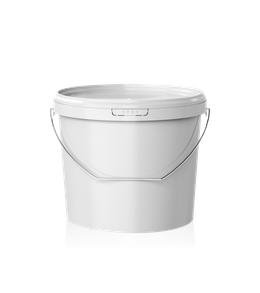 Plastic buckets14 sizes · 560 ml to 21 L
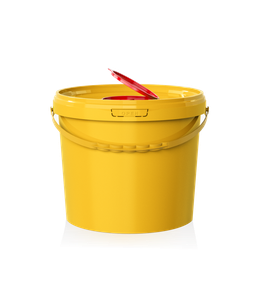 Medical buckets9 sizes · 1 to 21 L
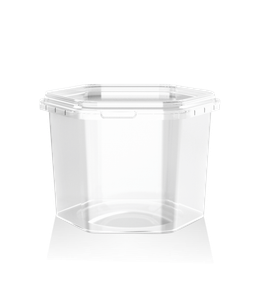 Food containers5 formats · 250 to 750 ml
 Plastic jerry cans5 L and 10 L
Plastic buckets16 models, 560 ml - 21 L
Medical buckets10 models, 1 - 21 L
Food containers5 models, 250 - 750 ml
Plastic canisters5 and 10 L
塑料桶16 个型号,560 毫升 - 21 升
食品容器5 个型号,250 - 750 毫升
塑料方桶5 升和 10 升
HTI AssistantFind the right packaging for your product in 4 steps
HTI AssistantOnline until 5:00 PM
Hello! We'll suggest the right size for your product, calculate pallets, and quote a price for your order.
Contact the plant
WhatsAppChat with a sales managerCall+996 222 600 292We'll call you backLeave your numberEmailinfo@hti-group.kg
Quick actions
Mon-Fri, 9:00 AM-5:00 PM · Factory in the Bishkek Free Economic Zone, Ak-Chiy village
Preserves and bazaar sales
Buckets for pickles and fermented vegetables
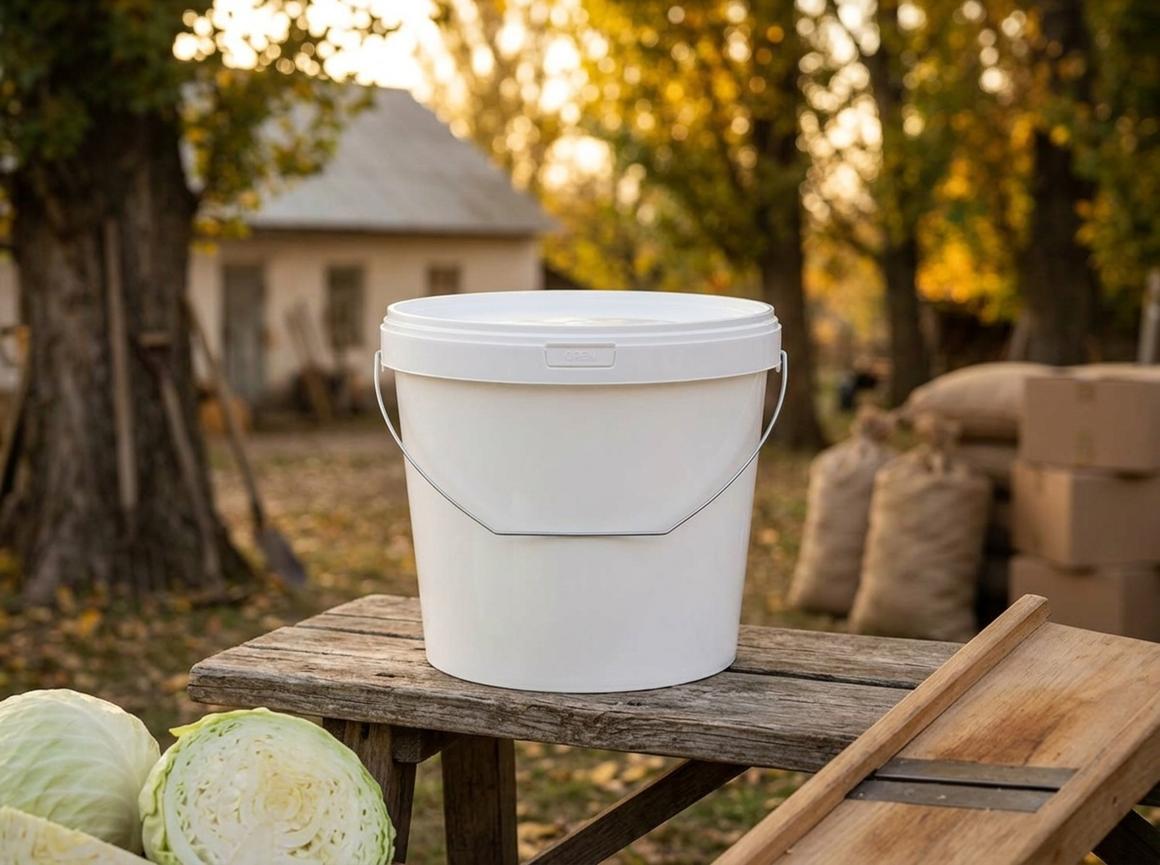
At the bazaar, sauerkraut, barrel pickles, salted tomatoes, and wild garlic are sold by weight, and they travel from farm to stall over bumpy roads. A plastic bucket with a tight lid won't break like a glass jar, weighs many times less, and leaves room above the product for brine. We make these buckets from 1 to 21 L at our plant in Bishkek for farmers, pickling producers, and traders in Kyrgyzstan and Kazakhstan. A clear bucket shows off the product, while a white one carries the farm's label.
1-21 Lsizes for pickling
1.05 kgof pickles in brine per liter
up to 1.9 Lheadspace above nominal
OPENtamper evidence
Pickling tool
Brine, headspace, and pickle weight
Pickles are weighed together with their brine: a liter weighs about 1.05 kg. The tool shows the net weight at nominal fill, the weight including the bucket, and how much fits when filled to the brim, which is the extra room you need for brine. On the "Order" tab, tonnes of cabbage and cucumbers convert into buckets and pallets.
Packaging from this page's lineup
ProductFill weight, kg
kg
Enter the net weight and the calculator will pick packaging from this page.
How much product do you package per month
t
We ship in full pallets, so the number of pallets is rounded up.
Shelf length, cm
cm
Shelf depth, cmcm
Calculated by the top size of the packaging, in a single layer, with no gaps between neighboring items.
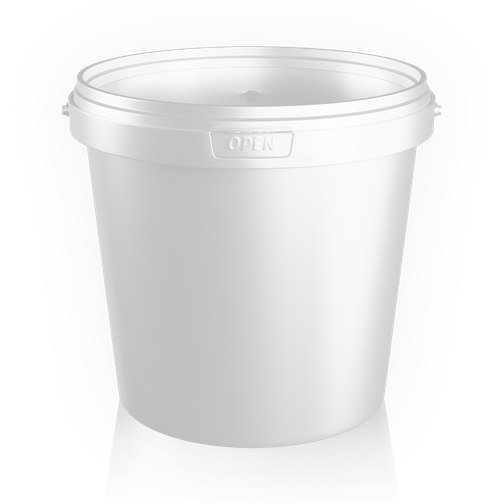 121 mm
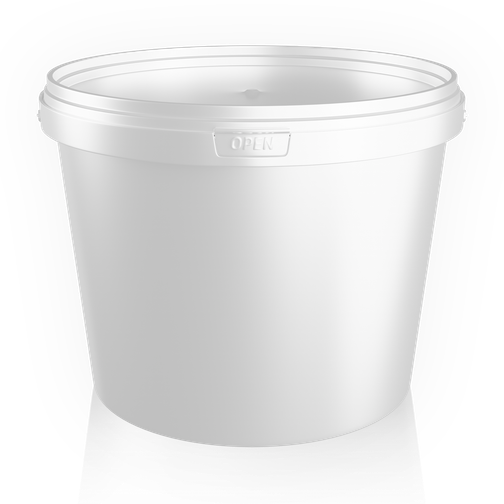 132 mm
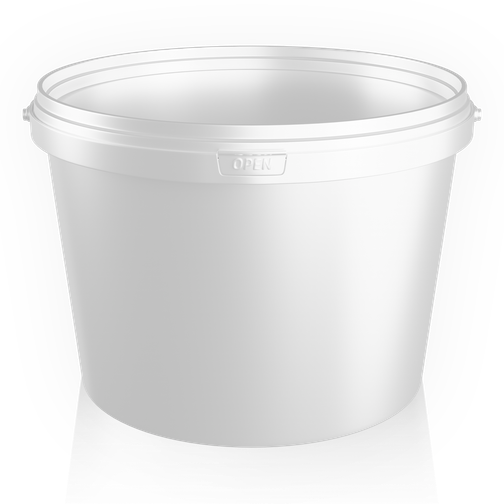 137 mm
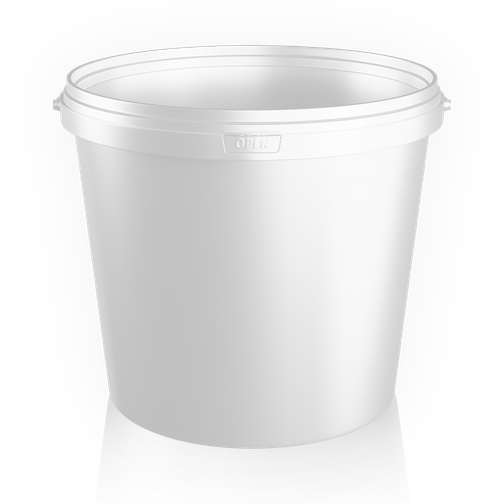 176 mm
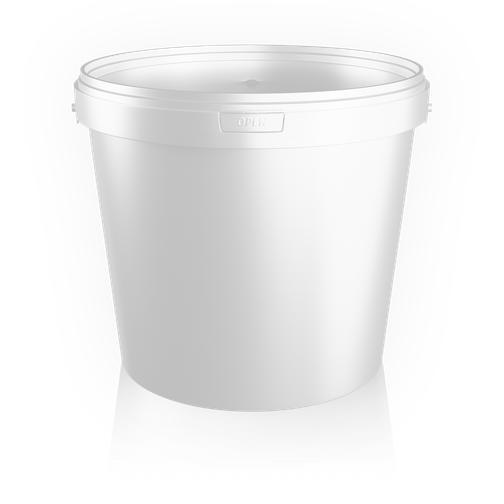 193 mm
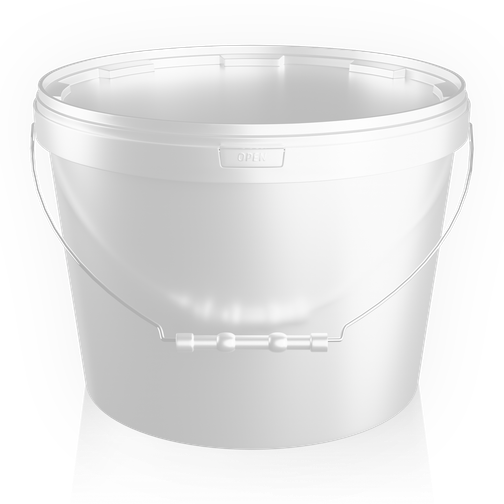 197.5 mm
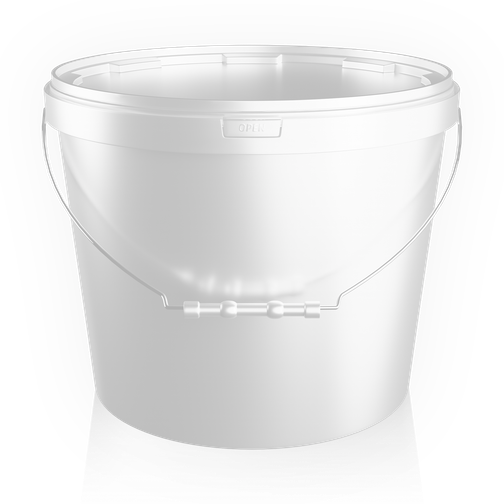 234 mm
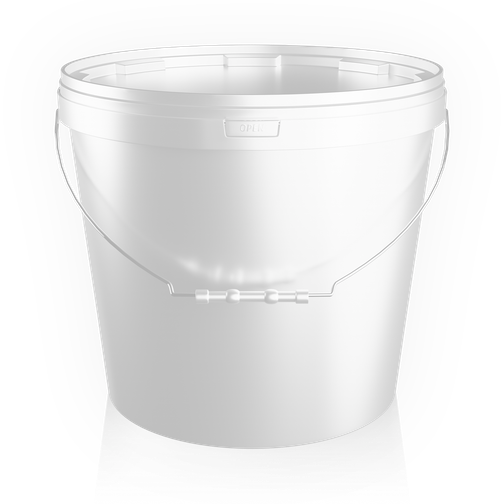 286 mm
What matters for pickling
Brine, fermentation, and the trip to the bazaar
Pickles travel a long way: from the garden or greenhouse to the cellar, from the cellar to the truck, and from the truck to the stall. At every stage the bucket is put to the test, and the difference from a glass jar or an old enamel pail shows right away. Enamel chips over time and glass breaks, but a polypropylene body handles both knocks and washing.
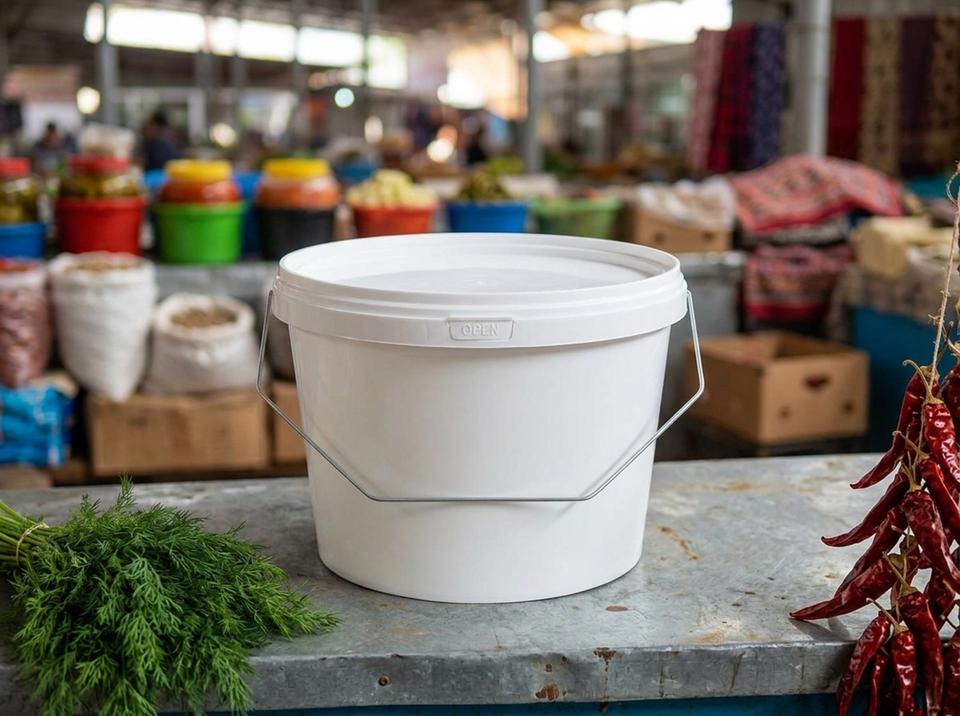
Room for fermentation
In the first few days, sauerkraut and barrel pickles push their brine up. Headspace ranging from 144 ml on the small sizes to 1.9 L on the 18 L bucket lets you ferment right in the bucket without worrying that the juice will push the lid off. A weight goes on a plate on top, and once fermentation is done, the bucket is simply closed and moved to the cellar.
A lid that stays on over bumps
The lid snaps into the double rim all the way around, so a bucket of pickles survives the trip from Jalal-Abad to Bishkek in the back of a truck. At home or in a cafe, it comes off and goes back on as many times as needed. The brine stays in the bucket, not on the truck bed and the sacks next to it.
Unbreakable and almost weightless
A 3 L bucket weighs 95 g, many times less than a glass jar of the same capacity. Nothing breaks on the road, no glass shards end up in the product, and at the stall you can set the bucket right at the edge without worrying. After the season, the empty buckets nest in a stack and are put away until the next harvest.
Customers can see the bucket is sealed
Under the lid rim there's an OPEN tamper-evident tear strip. At a bazaar, where people often sample the goods, it separates buckets opened for tasting from sealed ones for sale. A wholesale buyer from a cafe takes sealed buckets and knows nobody opened them on the way.
Room for brine
Headspace and finished pickle weight
During fermentation, cabbage releases juice, cucumbers ferment in brine, and the liquid level rises. That's why, for pickling, the nominal capacity of a bucket matters, but so does its headspace: the part of the volume that stays empty at a normal fill. Weights are calculated for pickles with brine, at about 1.05 kg per liter.
Lineup at the same scalebody width and height per factory spec sheets
| Volume | Brim-full | Headspace above nominal, ml | Pickles with brine, kg | Buckets per 1 t |
|---|---|---|---|---|
| 1 L | 1.18 L | 180 | 1.1 | 953 |
| 2.3 L | 2.444 L | 144 | 2.4 | 415 |
| 3 L | 3.28 L | 280 | 3.2 | 318 |
| 3.8 L | 4.1 L | 300 | 4.0 | 251 |
| 5.6 L | 5.87 L | 270 | 5.9 | 171 |
| 8 L | 9.326 L | 1,326 | 8.4 | 120 |
| 11.5 L | 12.575 L | 1,075 | 12.1 | 83 |
| 18 L | 19.9 L | 1,900 | 18.9 | 53 |
The 8 and 18 L buckets have the most generous headspace, over a liter of free space above the working fill. They're used for cabbage and cucumbers that will ferment right in the bucket. For finished pickles headed to the stall, 3 or 3.8 L is enough: about 300 ml of headspace keeps the brine under the lid on the road. The "Buckets per 1 t" column helps you convert your harvest into a packaging order without a calculator.
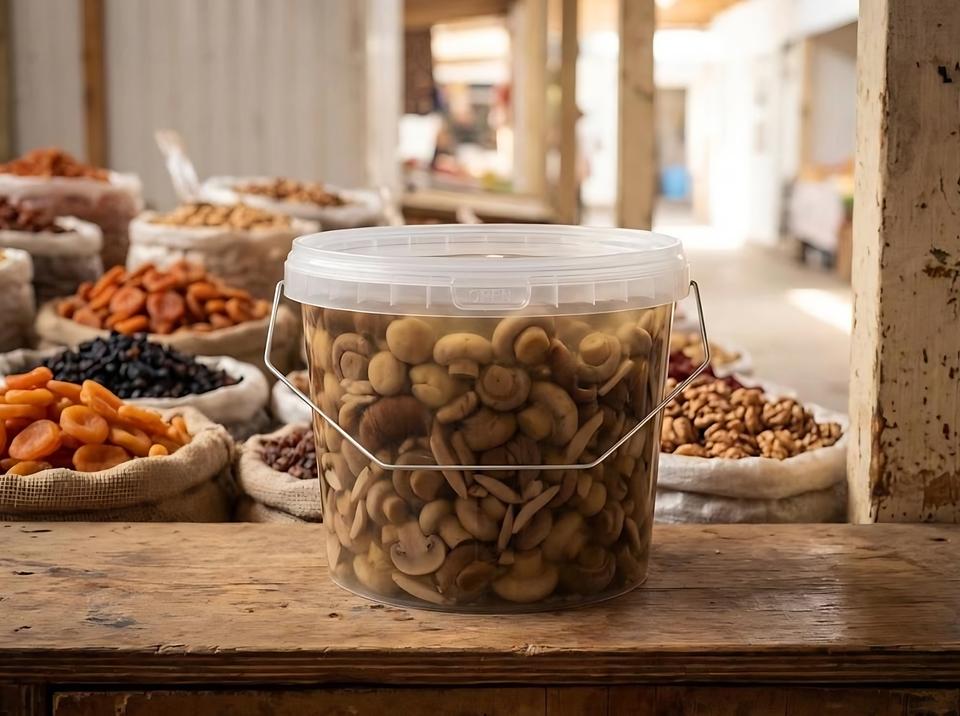
How to choose
Size for your product and stall
For pickles, the opening matters as much as the capacity: whole tomatoes and big cucumbers need to be laid in, not forced through. Here's how farmers and pickling producers usually split their sizes. If you sell both at the bazaar and to cafes, keep two or three sizes: a retail one, a medium one for kitchens, and a large one for fermenting.
1Wild garlic, garlic, and spicy appetizers in trial portions: 1 L or 2.3 L. In spring, wild garlic from the gorges of Chuy and Talas Regions sells out in exactly these portions.1 L bucket2.3 L bucket
2Whole cucumbers and tomatoes for retail customers: 3 L or 3.8 L, with a 200 mm opening so the produce can be packed in rows.3 L bucket3.8 L bucket
3Mixed pickles and sauerkraut for canteens and cafes: 5.6 L or 8 L.5.6 L bucket8 L bucket
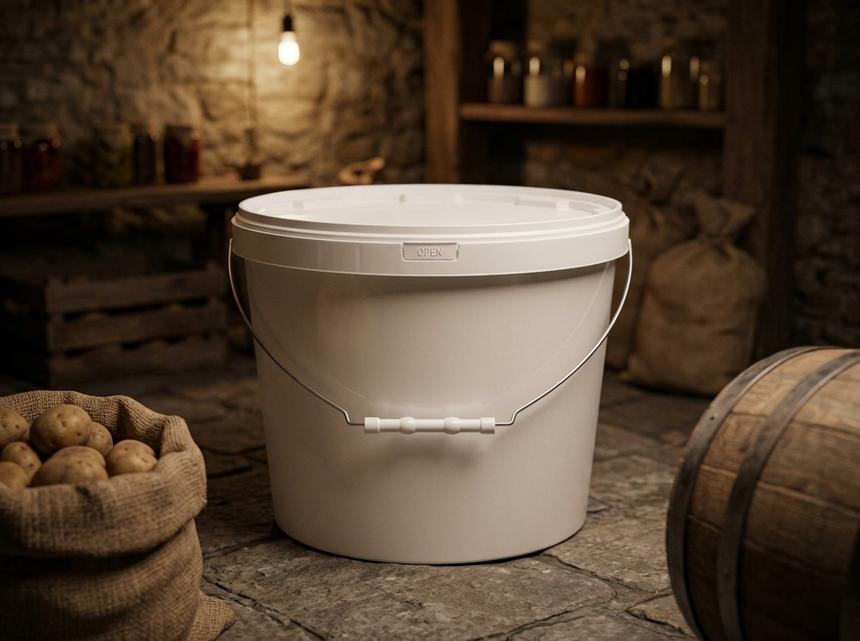
4Large-batch fermenting and bulk sales: 11.5 L or 18 L with a metal bail handle and plastic grip.11.5 L bucket18 L bucket
5Choose a clear body when the pickles sell on their looks, and white when the farm needs a bright label.
Related guides
Preserves and appetizers next door
Next to the pickles at the bazaar, you'll find Korean-style salads, mushrooms, olives, and spicy pastes. Packaging for each has its own page.
All 46 guides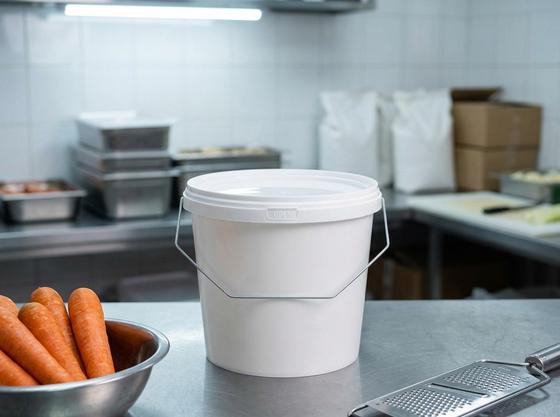 Buckets for Korean saladsKorean carrot salad, khe, kimchi, fern salad1-11.5 L
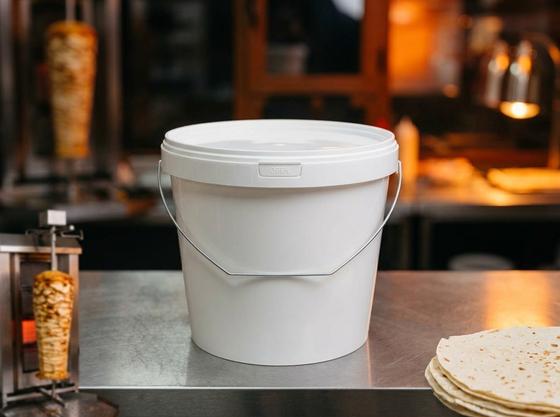 Buckets for mayonnaise and saucesmayonnaise, ketchup, garlic and cheese sauces800 ml-18 L
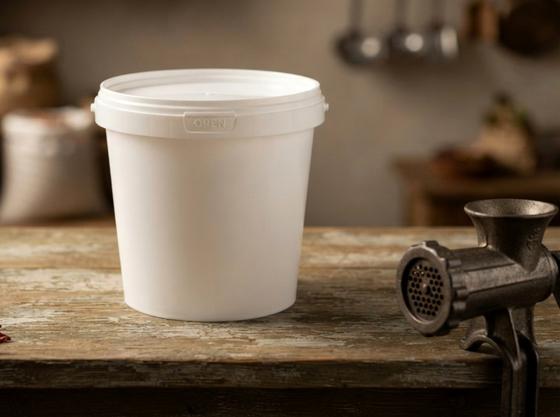 Adjika and mustard bucketsadjika, mustard, horseradish, tomato paste0.56-21 L
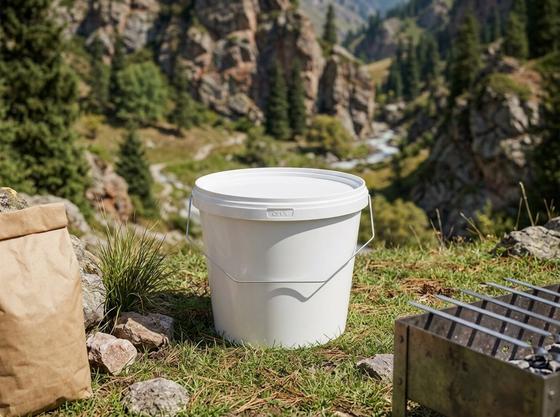 Buckets for marinated meatmarinated shashlik, ground meat, ready-to-cook products3-11.5 L
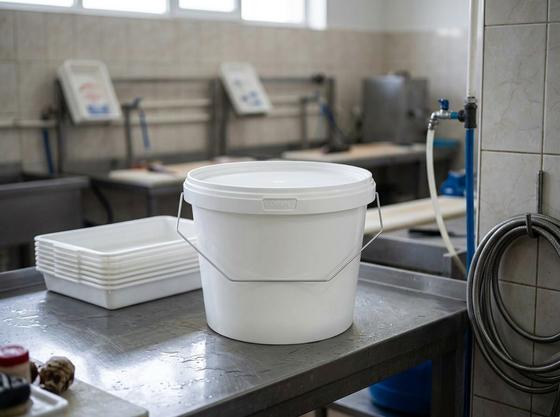 Buckets for fish and caviarherring, mackerel, trout, caviar in sauce560 ml-15 L
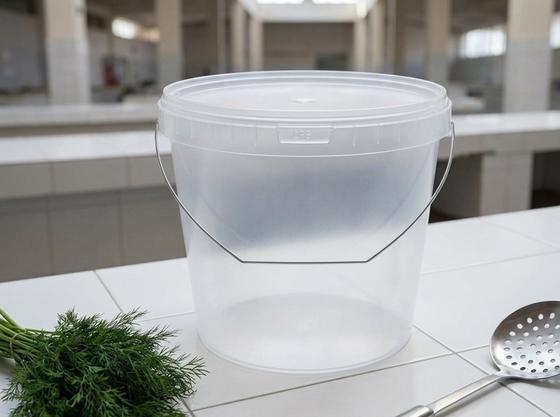 Mushroom bucketssalted and pickled mushrooms560 ml-21 L
Logistics
Packaging ready for preserving season
Cucumbers, tomatoes, and cabbage ripen at almost the same time, so everyone needs packaging in the same few weeks. Empty buckets nest inside each other, so a whole season's supply fits in a corner of the shed. Pickup by the pallet is from the factory warehouse in the Bishkek Free Economic Zone (FEZ), Ak-Chiy village. We deliver with our own trucks across Bishkek and Chuy Region, and ship buckets to farmers in Osh, Jalal-Abad, Talas, Naryn, and Issyk-Kul Region via a freight carrier. For pickling producers in Almaty, Shymkent, and Taraz, we ship pallets within the EAEU. Your sales manager confirms delivery time and cost when processing your order. To avoid running out of packaging at the height of pickling season, place your order while the cucumbers are still in bloom.
Questions and answers
Frequently asked questions about pickle buckets
Yes, a food-grade polypropylene bucket works for fermenting. Leave some free space above the cabbage: on the 8 and 18 L buckets, the headspace is over a liter, enough to keep the fermenting juice from lifting the lid.
Pickles with brine weigh about 1.05 kg per liter, so 11.5 L holds about 12.1 kg of product. The bucket itself weighs 307 g, and the metal bail handle with plastic grip lets you carry it with one hand. For comparison, 18 L of pickles weighs almost 19 kg, which is easier for two people to carry.
Nominal capacity is the working fill; filled to the brim, the bucket holds more. That extra room takes the brine that rises during fermentation and sloshes around on the road, so the lid stays in place. If you fill pickles right to the brim, brine will seep out from under the lid onto neighboring buckets.
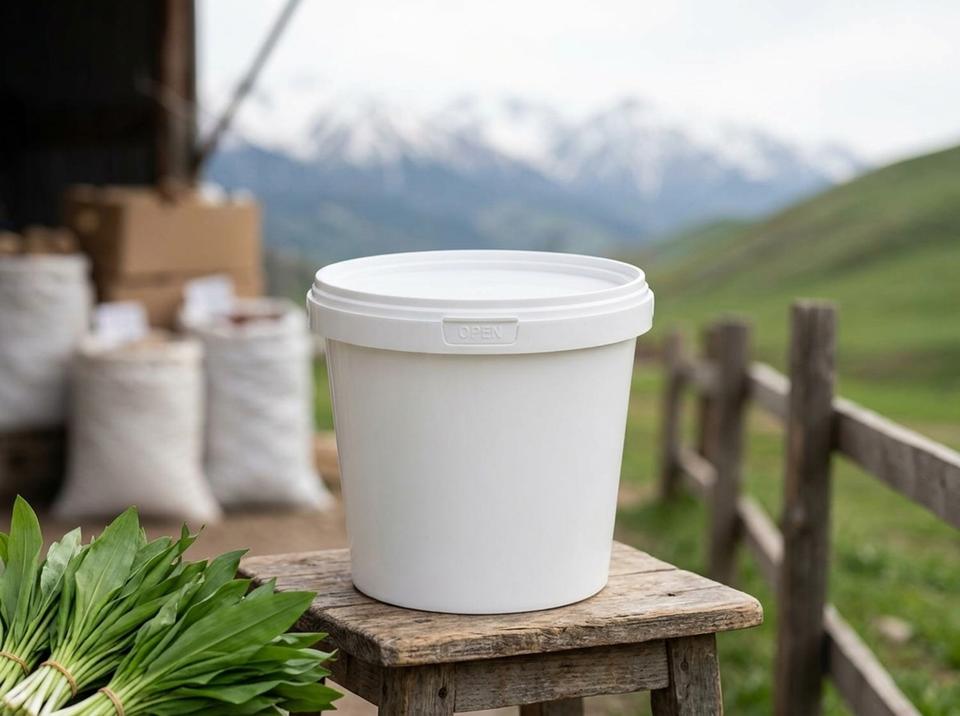
A clear bucket shows off cucumbers, tomatoes, and cabbage without a label, and it's the usual pick for the bazaar. White is chosen when a farm sells under its own name and uses a bright label. For cabbage that ferments for several weeks in a cellar, the body color doesn't matter.
Our sales manager prices each specific order based on size, quantity, color, handle, and printing. Call +996 222 600 292 to get a quote. Give us your expected harvest in kilograms, and your sales manager will convert it into a number of buckets using the table above.
Yes, with a label on the finished bucket or with in-mold labeling (IML), where the image is fused into the wall during molding. Labels suit seasonal batches, and IML suits ongoing production. A producer that supplies pickles to stores in Bishkek or Almaty year-round usually switches to IML.
Yes, by the pallet within the EAEU: to Almaty, Shymkent, Taraz, Astana, and other cities. Your sales manager confirms delivery time and cost when you place the order.
Catalog
Buckets for preserves in the HTI catalog
The catalog lists every size with dimensions, weight, and handle options. To learn how farmers pack marinated products and what packaging they use for different foods, read our article on buckets for marinades.
Request
First time making pickles for sale?
Tell us what you plan to pickle, how much, and where you'll sell it. Our sales manager will suggest sizes and calculate how many buckets your harvest will need. Small farms often get by with two sizes: a small one for the stall and a large one for fermenting.