


A sales manager will contact you shortly.
Request a callback from our specialist
Want to learn more about our packaging or find the right fit for your business? Request a callback, and our specialist will call you at a time that suits you. Tell us about your product, and we'll help you choose the best option.
Order a callback from a specialist
Want to learn more about our solutions or find the perfect solution for your business? Leave a request for a callback and our specialist will contact you at a convenient time. Together we will find the optimal solution to make your business thrive!
Request a callback from our HR team
Interested in our openings and career opportunities? Leave your contact details and our HR team will get back to you shortly. We'll answer your questions and explain how to join the HTI Group team.
Order a callback from a specialist
Would you like to learn more about our job openings and career opportunities? Leave your contact information, and our HR department will get in touch with you shortly. We will answer all your questions and provide detailed information on how to become part of the HTI Group team.
与我们取得联系
想了解更多我们的解决方案或为您的业务选择完美的解决方案吗?
请留下您的联系方式,我们的专家将尽快与您联系。
让我们一起找到最佳方案,助您的业务蓬勃发展!
请留下您的联系方式,我们的专家将尽快与您联系。
让我们一起找到最佳方案,助您的业务蓬勃发展!
要点电话回拨来自人力资源部门
想了解更多关于我们职位和职业发展的机会吗?请留下您的联系信息,我们的人力资源部门将尽快与您联系。我们将回答您的所有问题,并提供详细信息,帮助您成为HTI Group团队的一员。
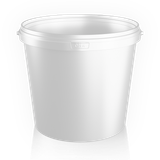
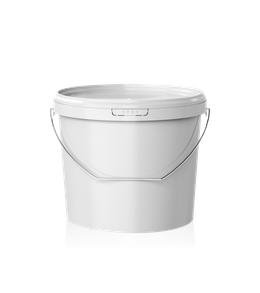 Plastic buckets14 sizes · 560 ml to 21 L
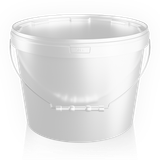
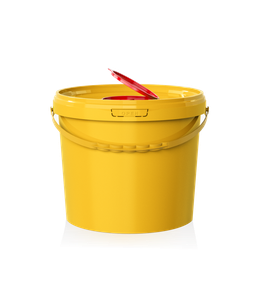 Medical buckets9 sizes · 1 to 21 L
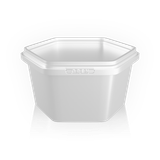
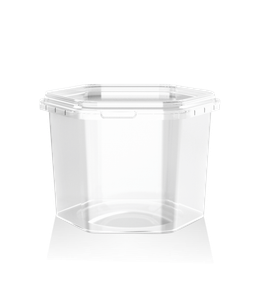 Food containers5 formats · 250 to 750 ml
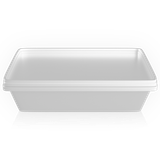
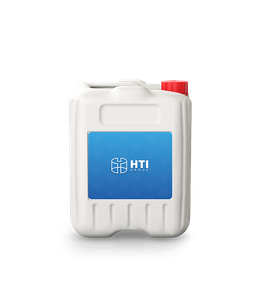 Plastic jerry cans5 L and 10 L
Plastic buckets16 models, 560 ml - 21 L
Medical buckets10 models, 1 - 21 L
Food containers5 models, 250 - 750 ml
Plastic canisters5 and 10 L
塑料桶16 个型号,560 毫升 - 21 升
食品容器5 个型号,250 - 750 毫升
塑料方桶5 升和 10 升
HTI AssistantFind the right packaging for your product in 4 steps
HTI AssistantOnline until 5:00 PM
Hello! We'll suggest the right size for your product, calculate pallets, and quote a price for your order.
Contact the plant
WhatsAppChat with a sales managerCall+996 222 600 292We'll call you backLeave your numberEmailinfo@hti-group.kg
Quick actions
Mon-Fri, 9:00 AM-5:00 PM · Factory in the Bishkek Free Economic Zone, Ak-Chiy village
Pastry kitchen
Packaging for pastry shops and bakeries
A pastry kitchen handles a dozen thick bases and fillings: custard, buttercream, glaze, fondant, jam, fruit butter, and dulce de leche. They need wide-mouth packaging so a spatula reaches the bottom, while raw materials and the display case each need their own sizes. HTI molds the full lineup in Bishkek: 3.8-11.5 L buckets for the kitchen, 18 L buckets for dry ingredients, small buckets, and containers and trays for selling desserts. We ship to pastry shops and bakeries across Kyrgyzstan and Kazakhstan.
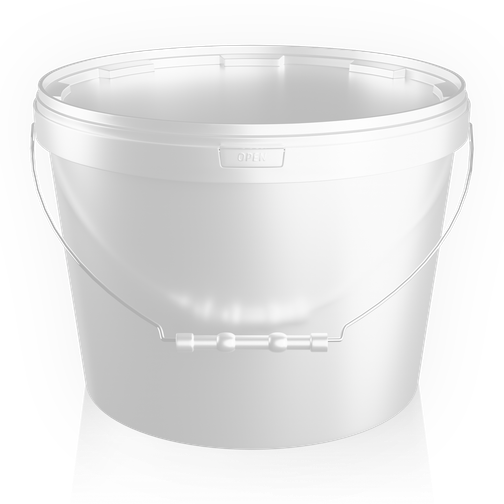
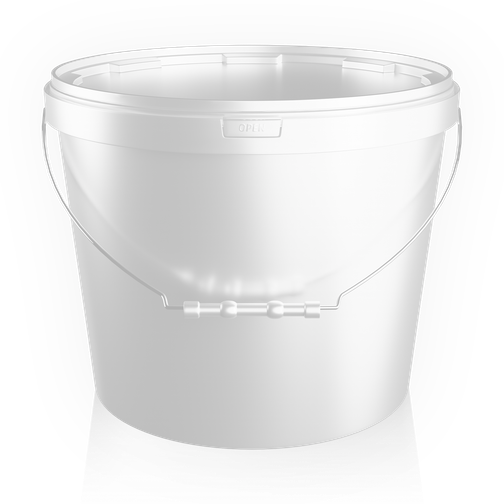
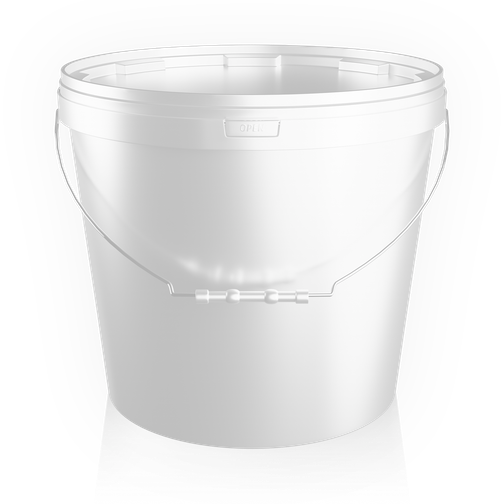
3.8-11.5 Lkitchen work buckets
295 mm11.5 L bucket opening
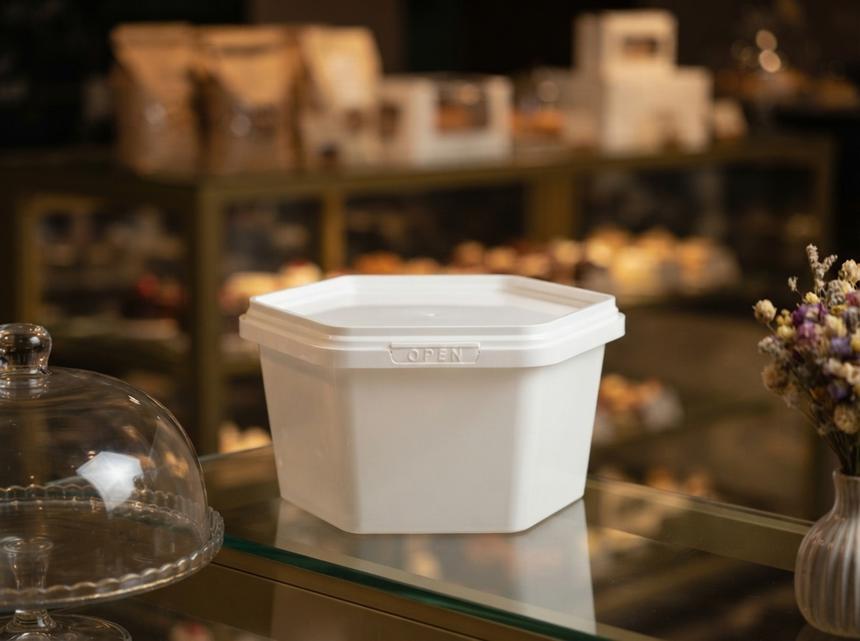
250-750 mldisplay and takeout
OPENretail seal
Pastry kitchen kit
Packaging for one shift: creams, fillings, and the display case
A small pastry shop needs three working sizes. A chain with branches also needs delivery and display packaging. Pick a ready-made kit or set pallets for each work area yourself: the total updates instantly.
Ready-made kits
- 1Ingredient storagepoppy seeds, sesame, raisins, powdered sugar18 L bucketPK180 · 600 pcs per pallet
- 2Fillings stationa shift's supply of jam, fruit butter, and dulce de leche11.5 L bucketPK115 · 816 pcs per pallet
- 3Cream stationcustard, buttercream, cream cheese frosting5.6 L bucketPK56 · 1,920 pcs per pallet
- 4Glazingglaze, fondant, ganache3.8 L bucketPK38 · 2,800 pcs per pallet
- 5Delivery to branchescreams and fillings from the central kitchen8 L bucketPK80 · 840 pcs per pallet
- 6Display casesingle-serve tiramisu, mousse, and cream desserts250 ml containerPHD250 · 17,600 pcs per pallet
- 7Display casepastries, cake slices, eclairs750 ml trayFCD750 · 15,000 pcs per pallet
- 8Store shelfjam and cream under your own brand850 ml bucketPKS850 · 7,200 pcs per pallet
Kit summary
Pallet and unit counts follow factory standards; truck loading is an estimate. The order calculator shows the exact layout.
From storeroom to display case
Packaging for each stage of pastry production
The table follows the product through the kitchen: dry ingredients, fillings, creams, glaze, delivery to branches, and sales. For a pastry chef, the key dimension is the opening. The wider it is, the easier it is to work with a spatula and fill a piping bag. Empty weight helps you compare options if you currently use steel pots or tubs from your suppliers.
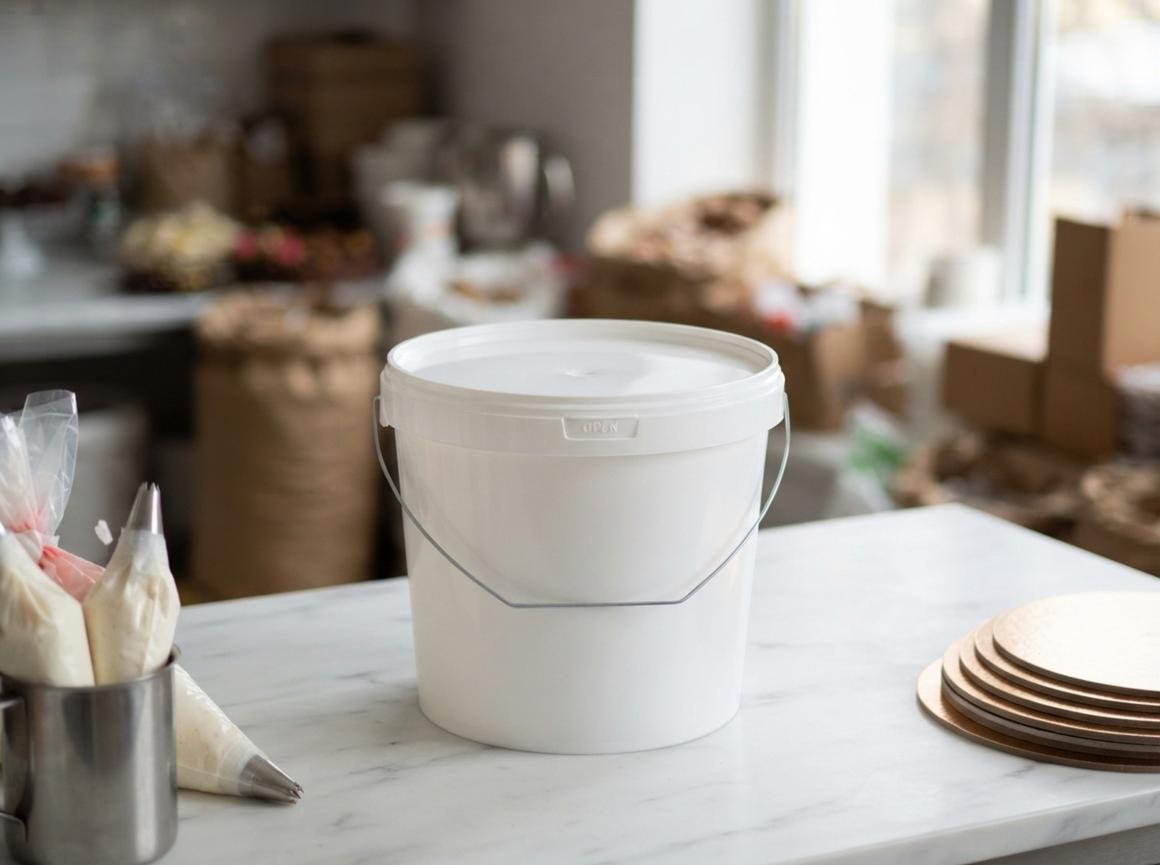
Lineup at the same scalebody width and height per factory spec sheets
| Area | What it holds | Packaging and size | Opening or shape | Tare weight |
|---|---|---|---|---|
| Ingredient storage | poppy seeds, sesame, raisins, powdered sugar | 18 L bucket | 332 mm | 526 g |
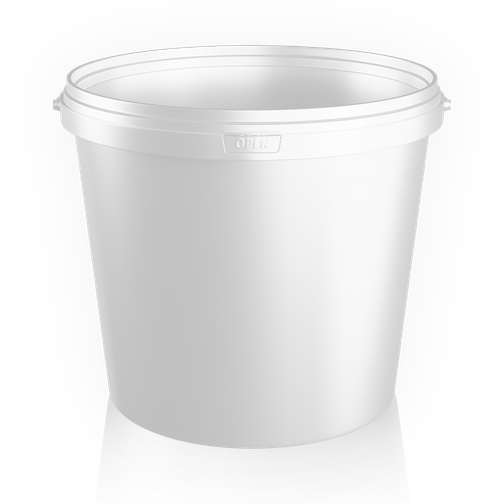
| Fillings station | a shift's supply of jam, fruit butter, and dulce de leche | 11.5 L bucket | 295 mm | 307 g |
| Cream station | custard, buttercream, cream cheese frosting | 5.6 L bucket | 224 mm | 156 g |
| Glazing | glaze, fondant, ganache | 3.8 L bucket | 200 mm | 110 g |
| Delivery to branches | creams and fillings from the central kitchen | 8 L bucket | 276 mm | 250 g |
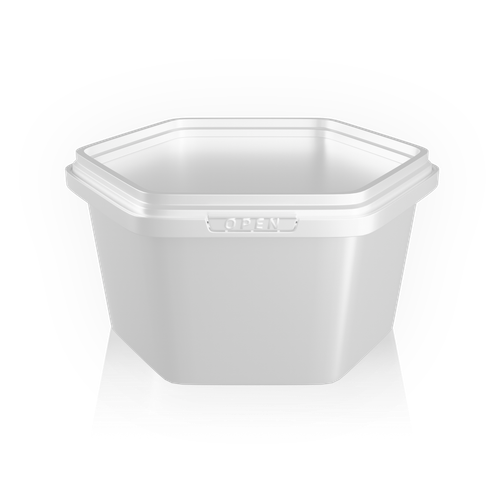
| Display case | single-serve tiramisu, mousse, and cream desserts | 250 ml container | hexagon | 13 g |
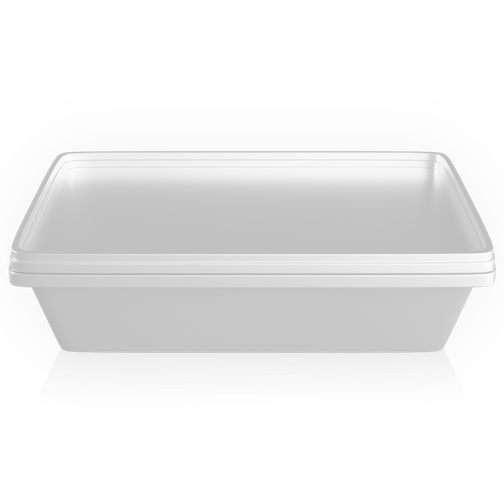
| Display case | pastries, cake slices, eclairs | tray 750 ml | flat | 21 g |
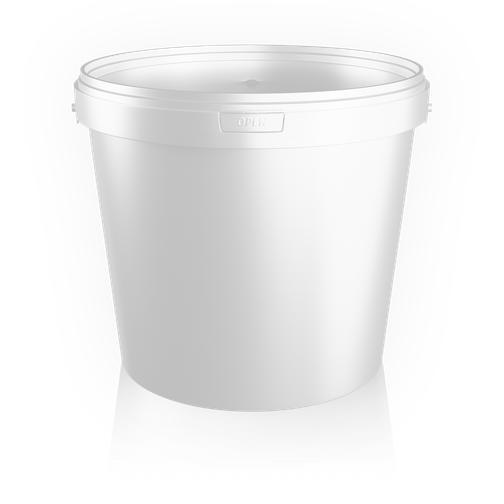
| Store shelf | jam and cream under your own brand | 850 ml bucket | 118 mm | 32.5 g |
The 11.5 L bucket has an opening of almost 30 cm, so you can scoop filling down to the bottom without tilting the bucket. Glaze and fondant need only 3.8 L: you use them in small portions, so an open bucket doesn't sit on the table for half a day. A useful detail for retail: the 560 ml and 850 ml buckets share the same 118 mm opening but differ in height (80 and 124 mm). Two pack sizes of the same jam look like one series on the shelf.
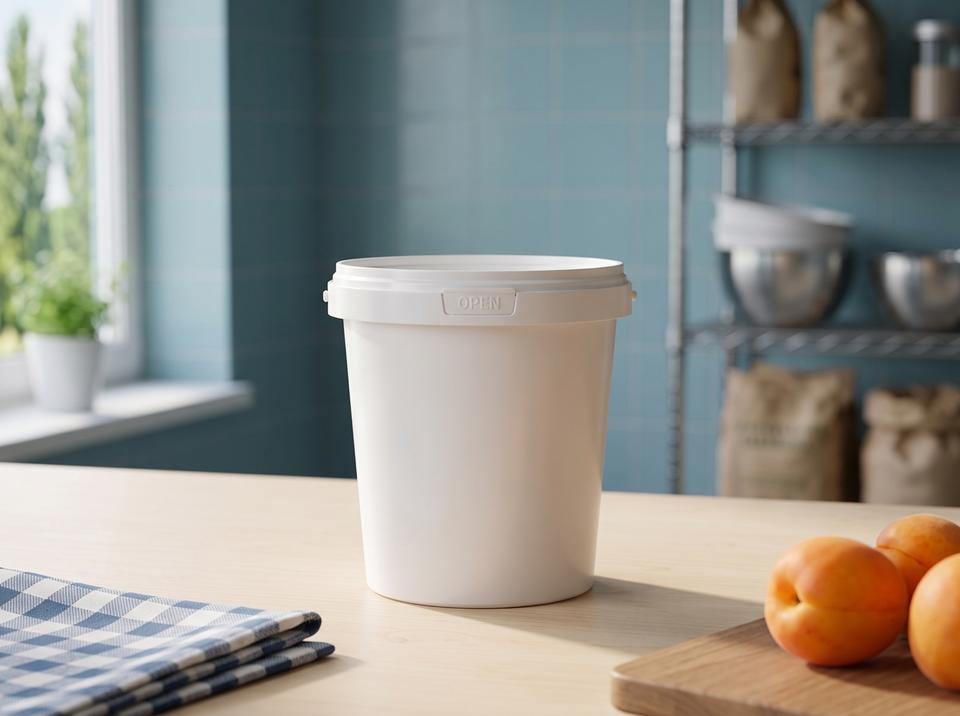
Raw materials, kitchen, counter
Four areas where a pastry shop needs its own packaging
A neighborhood bakery and a confectionery factory differ in scale, but they have the same work areas. In each one, packaging does its own job: it protects raw materials, gives the pastry chef easy access to cream, gets semi-finished products to the branch, and shows the finished dessert to the customer at its best.
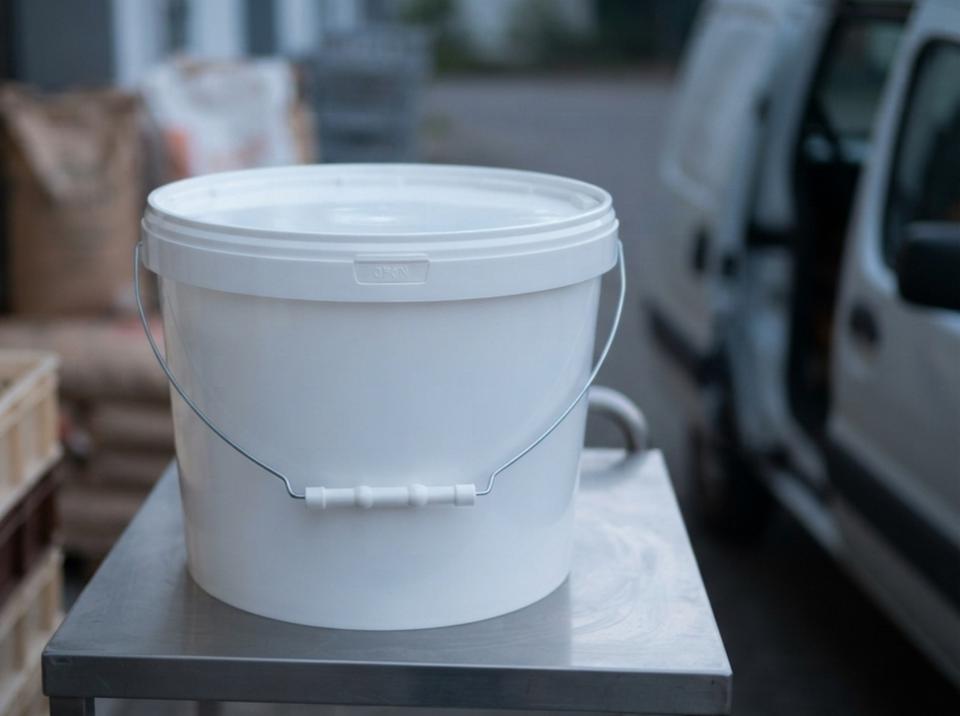
Creams and fillings
The work bucket stays by the table all shift. The pastry chef scoops cream with a spatula, closes the lid, and comes back an hour later. The body tapers toward the bottom and has no corners, so the product doesn't get stuck along the edges. Keep two buckets for each cream: one in use, and a clean spare while the first one is washed.
Dry ingredients
Store poppy seeds, sesame seeds, nuts, raisins, and powdered sugar in 18 L or 21 L buckets with lids. An open sack picks up every smell and all the dust in the warehouse, while a bucket lid seals on a double rim. For more on packaging for dry goods, see our buckets for spices and dry goods page.
Display and takeout desserts
Single-serve tiramisu or mousse looks great in a 250 ml clear container. Pastries and cake slices fit a 750 ml flat tray. Customers see the dessert layers without opening the lid, and staff don't need to move the pastry into a box at the counter.
Cooking oil
Bakeries that fry pirozhki, belyashi, and boorsok buy vegetable oil in 10 L jerry cans. The handle is molded in one piece with the body, a screw cap closes the neck between pours, and the flat front panel holds a label with the opening date.
How to plan your purchase
How much packaging to plan for your shop
Plan from your production schedule, not your display range: how many creams, fillings, and glazes you make per shift and how many outlets your kitchen supplies. From there, it comes down to a few rules.
1For each semi-finished product, keep two work buckets and one spare. Your packaging stays in use, and washing doesn't slow down the shift.
2A small pastry shop needs three sizes: 3.8 L for glaze, 5.6 L for creams, and 11.5 L for fillings.3.8 L bucket11.5 L bucket
3A bakery with a chain of kiosks needs 8 L buckets with a plastic grip on the bail. You carry a full bucket in one hand, and the lid snaps into the double rim.8 L bucket
4Selling your own jam or cream? Use 560 ml and 850 ml small buckets. Our page on buckets for jam and fruit butter shows how to match them to your product.850 ml bucket
5For a lasting brand on store shelves, choose IML buckets. With in-mold labeling (IML), the design is fused into the wall and looks the same on every bucket in the batch.
Logistics
Packaging for the holiday season without the rush
Before New Year's, March 8, and graduation season, cake orders multiply, and you can't run out of packaging in those weeks. Empty buckets and containers nest inside each other, so stock for your peak month fits in a corner of the warehouse. You can pick up your order from the HTI factory in the Bishkek Free Economic Zone (FEZ), Ak-Chiy village. We deliver it ourselves across Bishkek and Chuy Region. For bakeries in Osh, Jalal-Abad, Karakol, and Talas, we ship by freight carrier. Pastry shops in Almaty, Shymkent, and Astana receive pallets within the EAEU. Your sales manager confirms delivery time and cost when you place the order, so start your December order in November.

Related pages
Fillings, condensed milk, jam: guides for pastry chefs
We have separate pages for fillings, condensed milk, jam, and desserts, with portion and fill calculations. Below you'll find them, plus the producers that supply pastry chefs with raw materials.
All 20 industries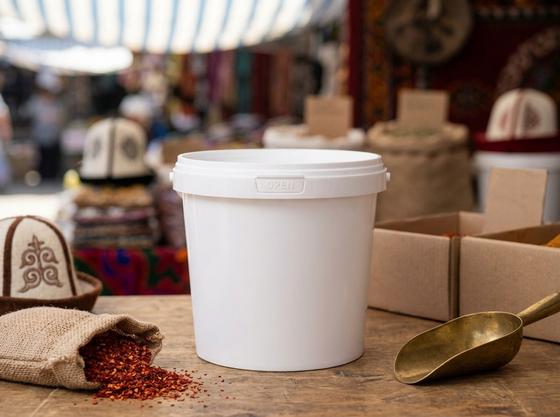 Buckets for spices and dry goodscumin, pepper, rice, sugar, feed560 ml-21 L
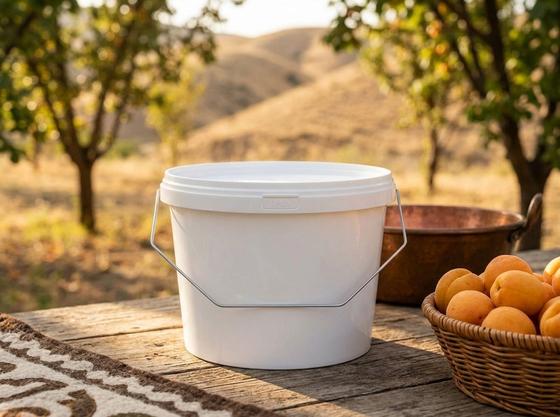 Buckets for jam and fruit butterpreserves, jam, fruit butter, fillings560 ml-18 L
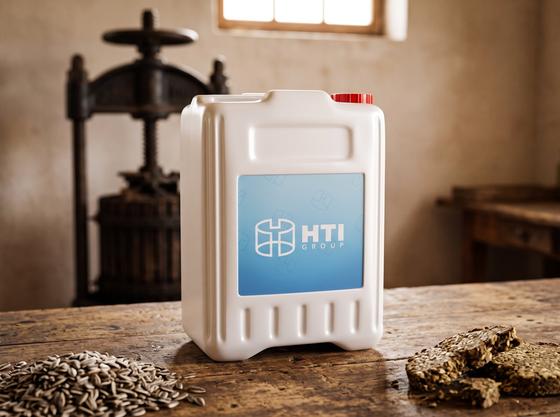 Oil millsvegetable oil, oilseed cake, pastes5 and 10 L jerry cans, buckets
 Sports nutritionprotein, mass gainers, powders2.3-5.6 L buckets
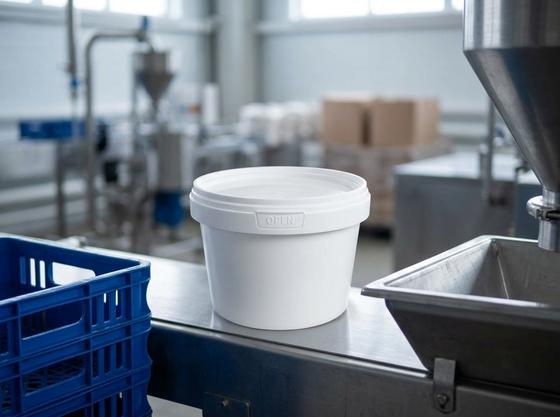 Dairy plantssour cream, cottage cheese, suzma, and kaymak for stores, bazaars, and cafescontainers 250-400 ml, buckets 560 ml-11.5 L
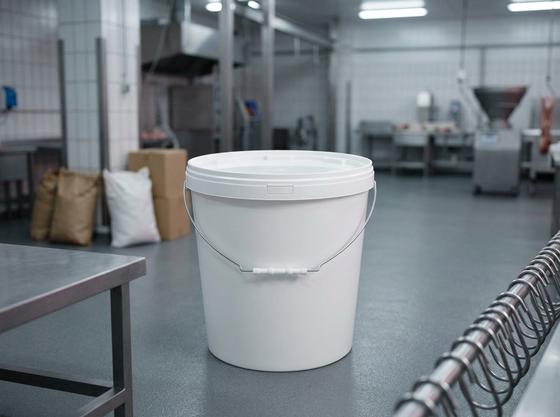 Meat processorstrimmings, ground meat, marinated shashlik, sauces, deli foodsbuckets 3.8-21 L, 750 ml tray
Questions and answers
Frequently asked questions about packaging for pastry shops
Usually three sizes: 3.8 L for glaze and fondant, 5.6 L for creams, and 11.5 L for fillings. If you have a display case with takeout desserts, add 250 ml containers and 750 ml trays. For dry ingredients, add one or two 18 L buckets.
Yes, that's why pastry chefs choose wide-opening buckets: the 5.6 L bucket has a 224 mm opening, and the 11.5 L bucket has a 295 mm opening. The walls are smooth and the body tapers toward the bottom, so the spatula scoops out all the cream with nothing left in the corners.
Single-serve desserts go in a 250 ml hexagonal container, pastries and cake slices in a 750 ml flat tray. The clear version shows the dessert through the lid. The colored version works well with a sticker bearing your pastry shop's name.
Yes. For retail shelves, choose 560 ml or 850 ml buckets with an OPEN tamper-evident tear strip under the lid rim. Customers can see the package hasn't been opened since it left your kitchen. Your brand goes on with a label or IML.
Your sales manager prices each order based on sizes, quantity, handles, and printing. Describe your kitchen's work areas and the number of branches, and the estimate will cover every item at once.
Yes. For a trial run, a label on a finished bucket works well. For ongoing production, choose IML: the label is fused into the wall during molding. You approve the artwork with your sales manager.
Yes, by the pallet within the EAEU: to Almaty, Shymkent, Astana, Karaganda, and other cities. Buckets and containers travel in one shipment, and our sales manager confirms delivery time and cost when placing your order.
Catalog
Buckets and containers for pastry shops in the catalog
Dimensions, empty weight, and handle options for each size are on the catalog pages. To learn how to choose a bucket for a specific cream and where it pays off faster than a pot, read our article on buckets for pastry creams.
Request
Expanding your kitchen or opening a branch?
Tell us which creams and fillings you make and how many outlets your kitchen supplies. Your sales manager will split the order by size, add spares to cover washing, and calculate how many pallets your seasonal delivery needs.