


A sales manager will contact you shortly.
Request a callback from our specialist
Want to learn more about our packaging or find the right fit for your business? Request a callback, and our specialist will call you at a time that suits you. Tell us about your product, and we'll help you choose the best option.
Order a callback from a specialist
Want to learn more about our solutions or find the perfect solution for your business? Leave a request for a callback and our specialist will contact you at a convenient time. Together we will find the optimal solution to make your business thrive!
Request a callback from our HR team
Interested in our openings and career opportunities? Leave your contact details and our HR team will get back to you shortly. We'll answer your questions and explain how to join the HTI Group team.
Order a callback from a specialist
Would you like to learn more about our job openings and career opportunities? Leave your contact information, and our HR department will get in touch with you shortly. We will answer all your questions and provide detailed information on how to become part of the HTI Group team.
与我们取得联系
想了解更多我们的解决方案或为您的业务选择完美的解决方案吗?
请留下您的联系方式,我们的专家将尽快与您联系。
让我们一起找到最佳方案,助您的业务蓬勃发展!
请留下您的联系方式,我们的专家将尽快与您联系。
让我们一起找到最佳方案,助您的业务蓬勃发展!
要点电话回拨来自人力资源部门
想了解更多关于我们职位和职业发展的机会吗?请留下您的联系信息,我们的人力资源部门将尽快与您联系。我们将回答您的所有问题,并提供详细信息,帮助您成为HTI Group团队的一员。
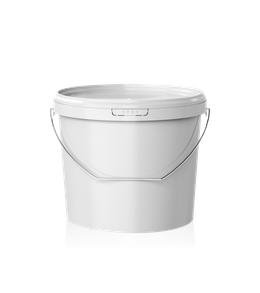 Plastic buckets14 sizes · 560 ml to 21 L
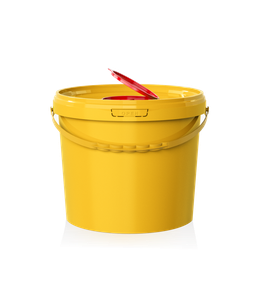 Medical buckets9 sizes · 1 to 21 L
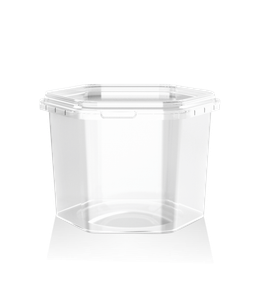 Food containers5 formats · 250 to 750 ml
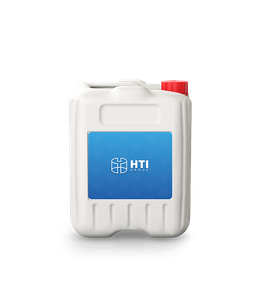 Plastic jerry cans5 L and 10 L
Plastic buckets16 models, 560 ml - 21 L
Medical buckets10 models, 1 - 21 L
Food containers5 models, 250 - 750 ml
Plastic canisters5 and 10 L
塑料桶16 个型号,560 毫升 - 21 升
食品容器5 个型号,250 - 750 毫升
塑料方桶5 升和 10 升
HTI AssistantFind the right packaging for your product in 4 steps
HTI AssistantOnline until 5:00 PM
Hello! We'll suggest the right size for your product, calculate pallets, and quote a price for your order.
Contact the plant
WhatsAppChat with a sales managerCall+996 222 600 292We'll call you backLeave your numberEmailinfo@hti-group.kg
Quick actions
Mon-Fri, 9:00 AM-5:00 PM · Factory in the Bishkek Free Economic Zone, Ak-Chiy village
Honey from hive to shelf
Packaging for beekeepers and honey packers
Honey changes packaging several times a season. From the extractor it goes into large buckets, where it waits for a wholesaler or sits in storage over winter. Then it is repacked into smaller sizes for bazaars and stores. With the right size at each step, an apiary doesn't lose honey to transfers or hunt for buckets in the middle of extraction. HTI Group molds the whole lineup, from 560 ml to 21 L, and ships it to apiaries and packers in Kyrgyzstan and Kazakhstan.
560 ml-21 Lfrom shop shelf to extractor
34 bucketsof 21 L per metric ton of honey
2 colorswhite and clear
60021 L buckets per pallet
Apiary season
Honey's journey through every packaging size
The table follows the beekeeping year stage by stage. The last column shows how many buckets you need per metric ton of honey at a density of about 1.42 kg/L, rounded up to a whole bucket. This makes it easy to estimate packaging for your expected harvest: multiply the figure by your tonnage and add a small reserve for filling rejects and samples.
Lineup at the same scalebody width and height per factory spec sheets
| Stage | Task | Empty weight | Volume | Buckets per 1 t of honey |
|---|---|---|---|---|
| Stationary apiary extraction | draining from the extractor through a strainer | bucket with bail handle and plastic grip | 21 L | 34 |
| Migratory apiary extraction | a bucket one person can lift into a truck bed | bucket with 60 g bail handle and plastic grip | 18 L | 40 |
| Storage and wholesale | apiary batch for a reseller | bucket with bail handle and plastic grip | 11.5 L | 62 |
| Bazaar, large fill | a family's supply for the winter | bucket with metal bail handle | 3.8 L | 186 |
| Bazaar, medium fill | for holidays and guests | bucket with bail handle or plastic handle | 3 L | 235 |
| Bazaar, small fill | trial purchase | bucket with bail handle or plastic handle | 2.3 L | 307 |
| Stores and fairs | retail packs | bucket with plastic handle | 1 L | 705 |
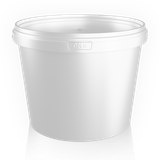
| Gift set | a teatime portion, a souvenir | bucket with lugs | 560 ml | 1,258 |
The two ends of the table differ 37-fold: a metric ton of honey fills 34 large buckets, but retail packing in 560 ml takes 1,258 units. That's why an apiary that sells its own honey orders many times more small packaging by count, even though the order is smaller in liters. See how many kilograms of honey fit in each bucket on our honey buckets page.
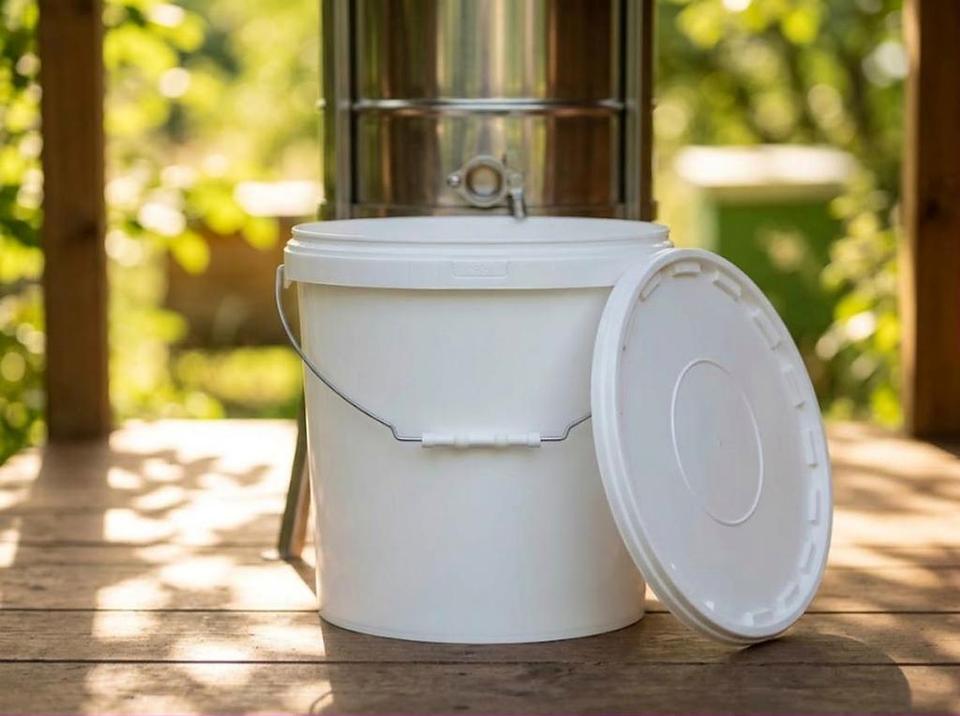
Apiary season kit
Your apiary season in pallets: extraction, bazaar, and fair
Start with large packaging for the whole harvest, then small packaging for the share you sell yourself. Select stages and pallets, and the calculator shows how many buckets you'll receive and their total volume in liters.
Ready-made kits
- 1Stationary apiary extractiondraining from the extractor through a strainer21 L bucketPK210 · 600 pcs per pallet
- 2Migratory apiary extractiona bucket one person can lift into a truck bed18 L bucketPK180 · 600 pcs per pallet
- 3Storage and wholesaleapiary batch for a reseller11.5 L bucketPK115 · 816 pcs per pallet
- 4Bazaar, large filla family's supply for the winter3.8 L bucketPK38 · 2,800 pcs per pallet
- 5Bazaar, medium fillfor holidays and guests3 L bucketPK30 · 2,800 pcs per pallet
- 6Bazaar, small filltrial purchase2.3 L bucketPK23 · 3,300 pcs per pallet
- 7Stores and fairsretail packs1 L bucketPK10 · 6,480 pcs per pallet
- 8Gift seta teatime portion, a souvenir560 ml bucketPKS560 · 7,200 pcs per pallet
Kit summary
Pallet and unit counts follow factory standards; truck loading is an estimate. The order calculator shows the exact layout.
How to choose
How much packaging to order for the season
The exact quantity depends on your harvest and how you sell. But the estimate always follows the same order: first large packaging for all the honey you expect, then small packaging for the share you'll sell yourself. Here's how it works in practice.
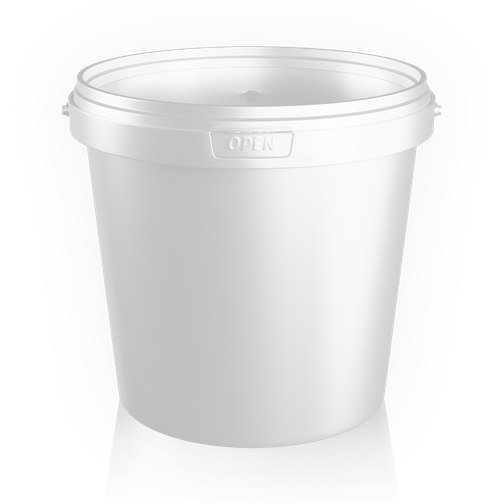
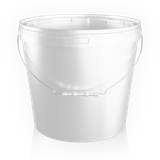
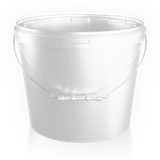
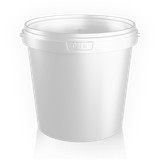
1For the whole harvest: 21 L or 18 L buckets, 34 or 40 per metric ton. Both have a 332 mm top; only the body height differs.18 L bucket21 L bucket
2If you sell to a reseller, stick to one bucket size: a batch accepted by weight is easier to count and double-check.
3For your own retail, decide what share of the honey you'll sell yourself and convert it to units with the table, for example 705 one-liter buckets per metric ton.
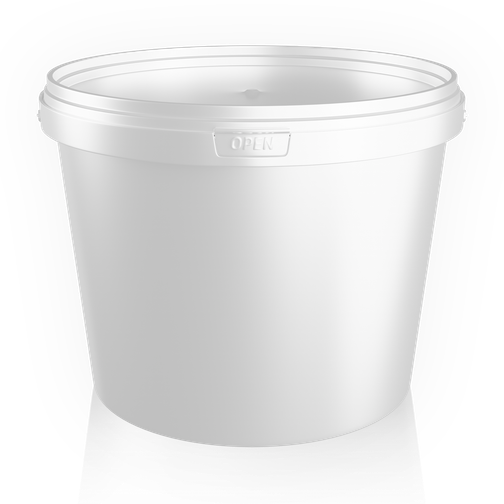
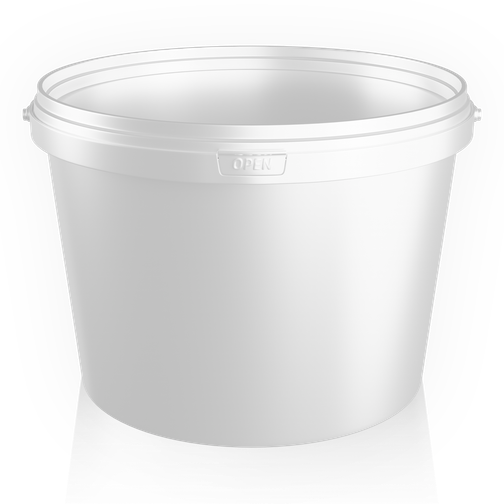
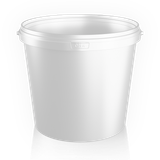
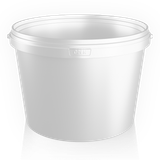
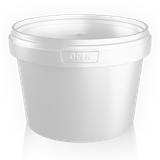
4For the bazaar, take two sizes, 2.3 L and 3.8 L: buyers choose between "just a taste" and "enough for the winter."2.3 L bucket3.8 L bucket
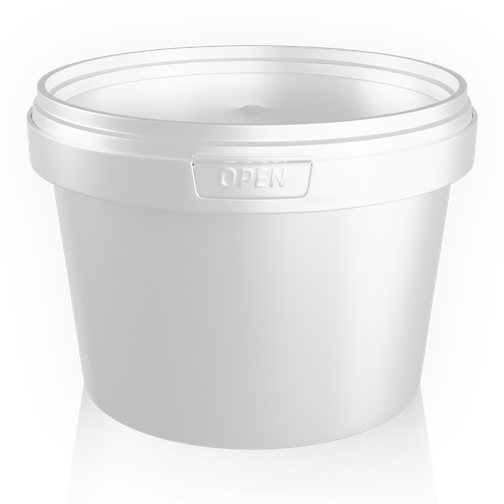
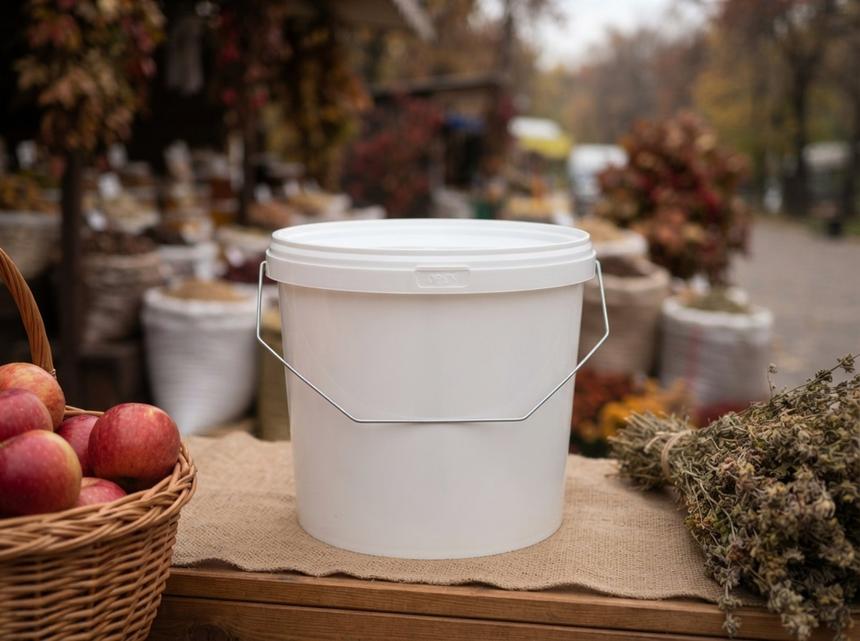
5For display, use clear buckets; for stores and orders, white ones with an OPEN tamper-evident tear strip and your apiary's brand.
Apiary operations
Four apiary seasons and packaging for each
Beekeepers order buckets for extraction, not for sales, and a mistake at that point is costly: honey won't wait for packaging to arrive. Below is how apiaries in Issyk-Kul, Naryn, Talas, and the Chuy Valley handle packaging through the year. Every apiary has its own calendar, but the order of steps is nearly the same.

Spring: stock up before the bloom
Empty buckets nest inside each other, so an apiary picks up its season's supply in one trip and keeps it in a corner of the shed or bee wintering house. A pallet holds 600 buckets of 21 L, enough for almost 18 metric tons of honey. For a small apiary, one pallet lasts several years.
Summer: extraction and migration
At migratory sites, honey goes straight into 18 or 21 L buckets, which stand upright in the truck bed. The metal bail handle with a plastic grip lets one person lift a full bucket onto the truck, and the lid, seated in a double rim, keeps out dust from mountain roads.
Fall: the honey sets
By fall, most honey varieties crystallize. The packer removes the lid from a 21 L bucket, scoops the honey out through the 332 mm opening, and fills 560 ml to 1 L buckets. The large bucket is closed with the same lid until the next shift.
Winter: bazaars and fairs
In winter, beekeepers sell what didn't go to wholesalers. At the bazaar, buyers ask for 2.3-3.8 L buckets; at fairs and in stores, 560 ml and 1 L. Through a clear wall, buyers see the honey's color and grain, while a white bucket with a label or in-mold labeling (IML) promotes your apiary's name.
Logistics
Packaging in time for extraction, not after
The golden rule for any apiary: get your buckets before the first extraction. You can pick up pallets from the factory warehouse in the Bishkek Free Economic Zone (FEZ), Ak-Chiy village, and many beekeepers collect their packaging on the way to summer sites. Our own delivery trucks serve Bishkek and Chuy Region, and buckets go to Issyk-Kul, Naryn, Talas, Osh, and Jalal-Abad by freight carrier. For packers and wholesalers in Kazakhstan (Almaty, Taldykorgan, Oskemen (Ust-Kamenogorsk), and Shymkent), we ship packaging by the pallet within the Eurasian Economic Union (EAEU). Our sales manager confirms delivery time and cost when you place the order, so it's best to submit your season request in spring.
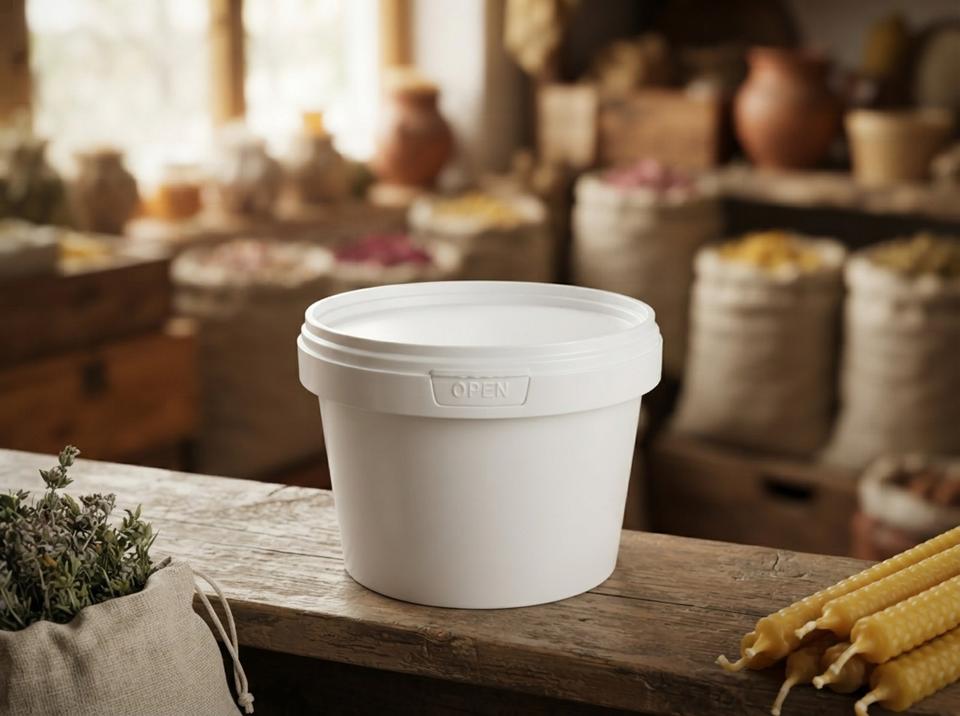
Related pages
Honey, beeswax, propolis: estimates for apiaries
Our product guides show how many kilograms of honey each bucket holds and where to store wax and bee bread. Alongside them are guides for farmers and packers, who share the market with apiaries.
All 20 industries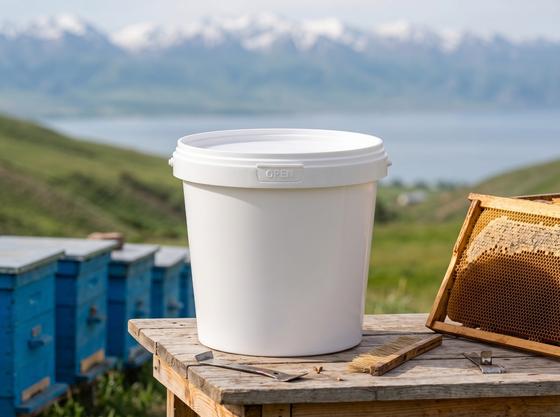 Honey bucketsapiary honey, creamed honey, retail packing850 ml-21 L
 Farms and agribusinesseswater, fertilizers, feed, berries, dairy farms5 and 10 L jerry cans, 3-21 L buckets
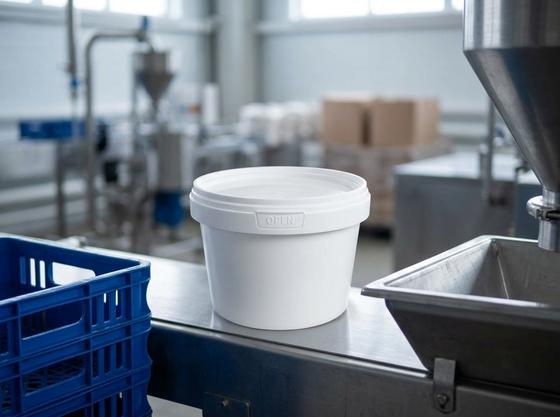 Dairy plantssour cream, cottage cheese, suzma, and kaymak for stores, bazaars, and cafescontainers 250-400 ml, buckets 560 ml-11.5 L
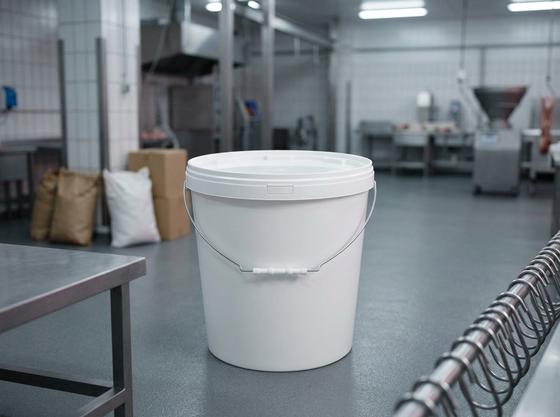 Meat processorstrimmings, ground meat, marinated shashlik, sauces, deli foodsbuckets 3.8-21 L, 750 ml tray
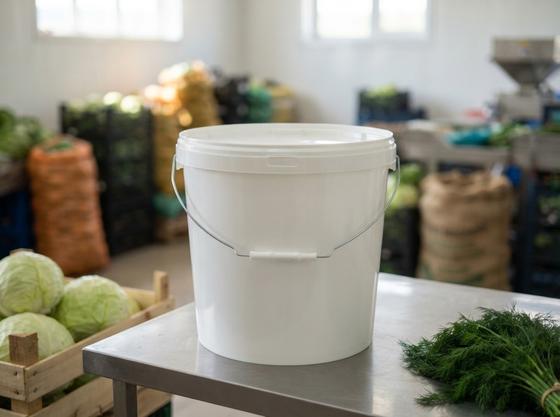 Canneriespickles, marinades, Korean-style salads, tomato paste, jambuckets 560 ml-21 L, 10 L jerry can
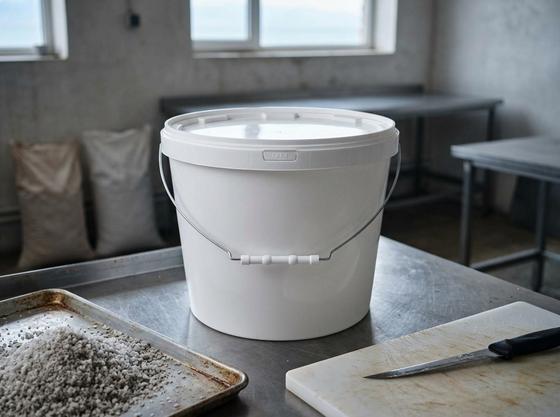 Fish processingsalting, marinating, caviar, preserved fishbuckets 560 ml-21 L, containers
Questions and answers
Frequently asked questions from beekeepers
At a density of about 1.42 kg/L, a metric ton of honey fills 34 buckets of 21 L or 40 buckets of 18 L. For retail packing, you need 705 buckets of 1 L or 1,258 buckets of 560 ml.
In spring, before the first extraction. Our sales manager confirms the delivery time when you order, and with an early request the buckets reach your apiary before the frames go into the extractor.
Most often 18 or 21 L: large buckets are easier to weigh and load, and a pallet holds 600 empty buckets of either size. If the reseller packs honey themselves, ask which size they use and deliver in it.
Your sales manager calculates the price for your order: sizes, quantity, handle, color, and printing all matter. Call +996 222 600 292 with your expected harvest and sales channels, and we'll estimate packaging for the whole season.
Yes. Small orders get a label; for recurring order volumes, IML is the better fit: the label is fused into the wall during molding and becomes part of the bucket. Learn more on our IML printing page.
Yes, by the pallet within the EAEU to Almaty, Taldykorgan, Oskemen (Ust-Kamenogorsk), Shymkent, and other cities. Our sales manager confirms delivery time and cost when you place the order.
Small clear buckets of 560 ml and 1 L sell well at fairs: the honey's color shows from a distance. Keep white 2.3-3.8 L buckets with your apiary's brand next to them for customers who stock up.
Catalog
Buckets for the whole apiary
The catalog lists every size from 560 ml to 21 L, with dimensions and handle options. For more on the product itself, the weight of honey in each bucket, and choosing a color, see our honey buckets page and our article about plastic honey buckets.
Request
Planning your season ahead?
Tell us how many hives you have or your expected harvest in metric tons, and what share of the honey you sell yourself. A sales manager will split it by size, count the pallets, and offer shipment before extraction begins.