
Our sales manager will contact you shortly
 Plastic buckets14 sizes · 560 ml to 21 L
 Medical buckets9 sizes · 1 to 21 L
 Food containers5 formats · 250 to 750 ml
 Plastic jerry cans5 L and 10 LPlastic buckets16 models, 560 ml - 21 LMedical buckets10 models, 1 - 21 LFood containers5 models, 250 - 750 mlPlastic canisters5 and 10 L塑料桶16 个型号,560 毫升 - 21 升食品容器5 个型号,250 - 750 毫升塑料方桶5 升和 10 升
Hello! We'll suggest the right size for your product, calculate pallets, and quote a price for your order.
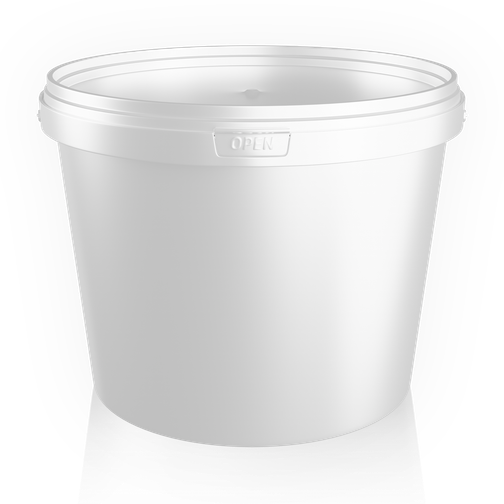
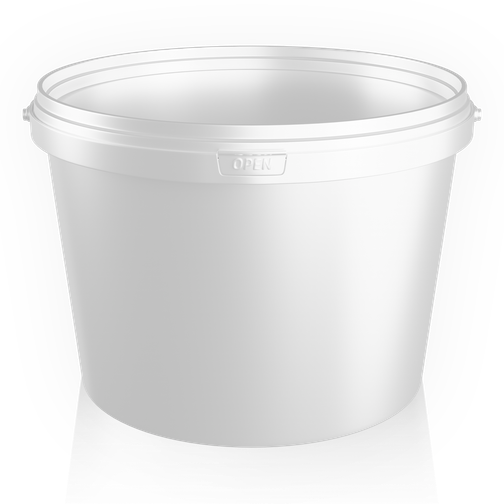
The two buckets are almost the same height, 132 and 137 mm; what sets them apart is width and what that width costs. The 3-liter bucket is 25 mm wider at the top and holds 700 ml more, but weighs 95 g versus 62. The 2.3 liter bucket is the most plastic-efficient of all sizes up to 3 liters, while the 3-liter one shares its 200 mm opening with the 3.8 liter bucket, making it easy to scoop product out. Here is when each one pays off.
First the specs of both buckets, then the calculations. Product weight is given for a fill to nominal capacity with honey (about 1.42 kg/L), jam (about 1.33 kg/L) and pickles in brine (about 1.05 kg/L). The last row converts empty weight into kilograms of plastic per 1,000 liters packed.
| Parameter | 2.3 L bucket | 3 L bucket |
|---|---|---|
| Model | PK23 | PK30 |
| Nominal / brim-full | 2.3 L / 2.444 L | 3 L / 3.28 L |
| Headspace above nominal | 144 ml | 280 ml |
| Opening × height | 175 × 132 mm | 200 × 137 mm |
| Bucket weight / handle options | 62 g / bail handle 13.4 g or plastic 3.4 g | 95 g / bail handle 13.4 g or plastic 5.0 g |
| Honey / jam / pickles | 3.27 / 3.06 / 2.42 kg | 4.26 / 3.99 / 3.15 kg |
| Per pallet: buckets / liters | 3 300 / 7 590 | 2 800 / 8 400 |
| Packaging per 1,000 L packed | 27.0 kg | 31.7 kg |
For every 1,000 liters packed, 3-liter buckets use 4.7 kg more plastic, roughly 17% more. On the other hand, a pallet of them carries 810 liters more product, and their headspace is almost twice as deep. The choice comes down to what costs your business more: packaging material or ease of handling the product.
Choose a product and a monthly volume - we will compare net weight, pieces per tonne, liters per pallet and how many pallets each item needs per month. Calculated on nominal capacity and the product weight per liter from our selection pages.
Nobody will notice 5 millimeters of height. A 25 millimeter difference in opening, however, is obvious to anyone reaching in with a spoon, ladle or brush. Here are four consequences of that width: two in favor of the 3-liter bucket and two in favor of the 2.3 liter one.
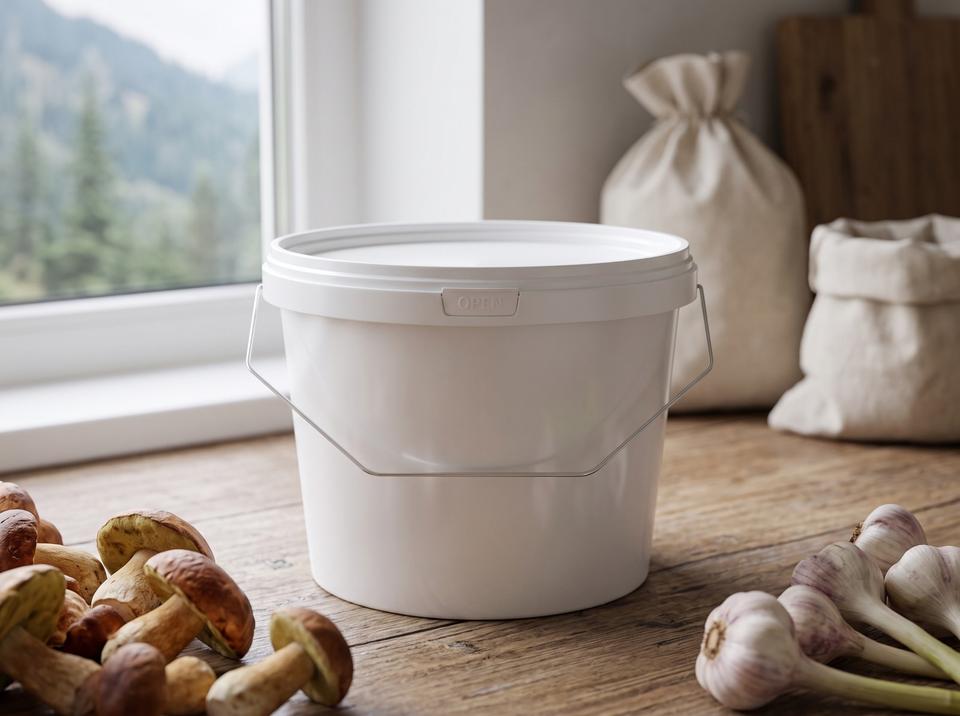
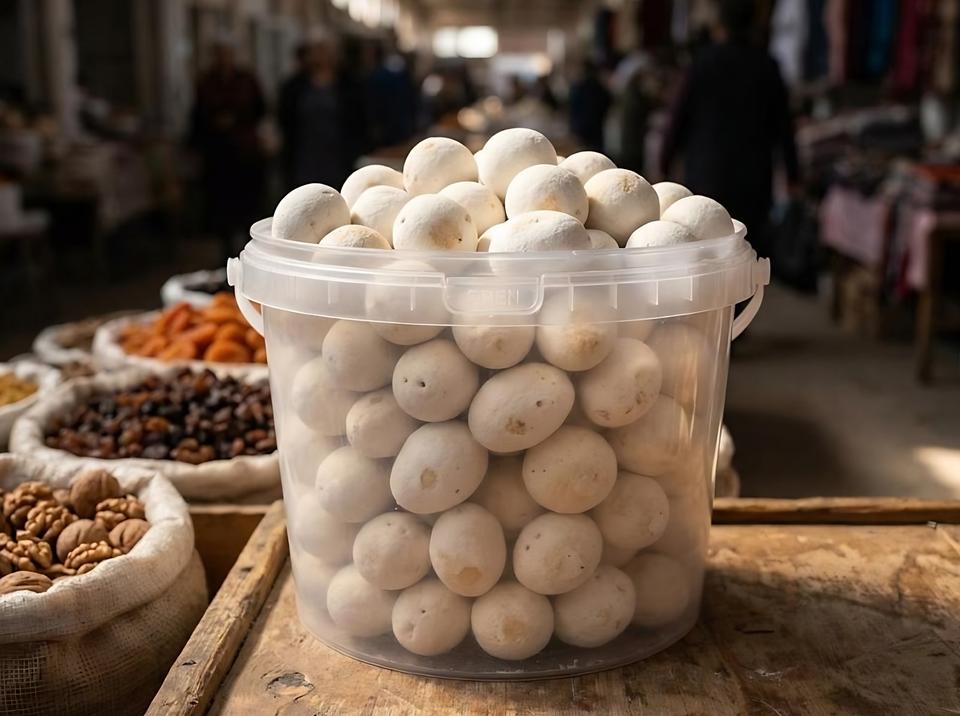
A 200 mm opening fits a hand holding a ladle or slotted spoon, so kurt, cottage cheese or thick jam can be scooped out without tilting the bucket. You can reach into the 175 mm opening too, but only with a smaller utensil.
The 3-liter bucket has 280 ml between nominal capacity and the brim; the 2.3 liter one has 144 ml. For pickles in brine and runny jam, deeper headspace is more convenient: the liquid stays below the rim while the lid is pressed shut.
62 g versus 95 g per bucket, a difference of 33 g. Per 1,000 liters packed, that is 27.0 kg of packaging versus 31.7 kg. With runs in the tens of thousands, the 2.3 liter size noticeably cuts packaging material use.
A pallet takes 3,300 of the 2.3 liter buckets or 2,800 of the 3-liter ones. In liters packed, the 3-liter buckets gain 810 L per pallet, so for long-distance shipping, to Kazakhstan for example, they make better use of truck space.
If your product is thick or dry and scooped out in portions, choose the 3-liter bucket. If it is liquid or sold sealed, and packaging cost matters, go for 2.3 liters. Typical buyers in more detail:
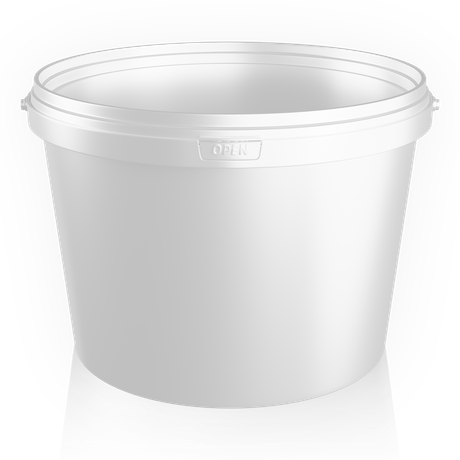
Full dimensions and use cases are on the 2.3 liter bucket and 3 liter bucket pages. Neighboring pairs are covered in the 1 vs 2.3 liter and 3 vs 3.8 liter comparisons.
A pallet takes 3,300 nested 2.3 liter buckets or 2,800 of the 3-liter size. If you need both sizes, we combine them in one shipment. You can collect from the plant warehouse in the Bishkek Free Economic Zone, Ak-Chiy village. We deliver across Bishkek and the Chuy Region with our own truck, and to Naryn, Batken, Osh, Karakol and Talas via a freight carrier. For Kazakhstan, we build pallets and ship them within the EAEU to Almaty, Taraz, Shymkent, Astana and other cities. Our sales manager confirms delivery time and cost when you place an order.
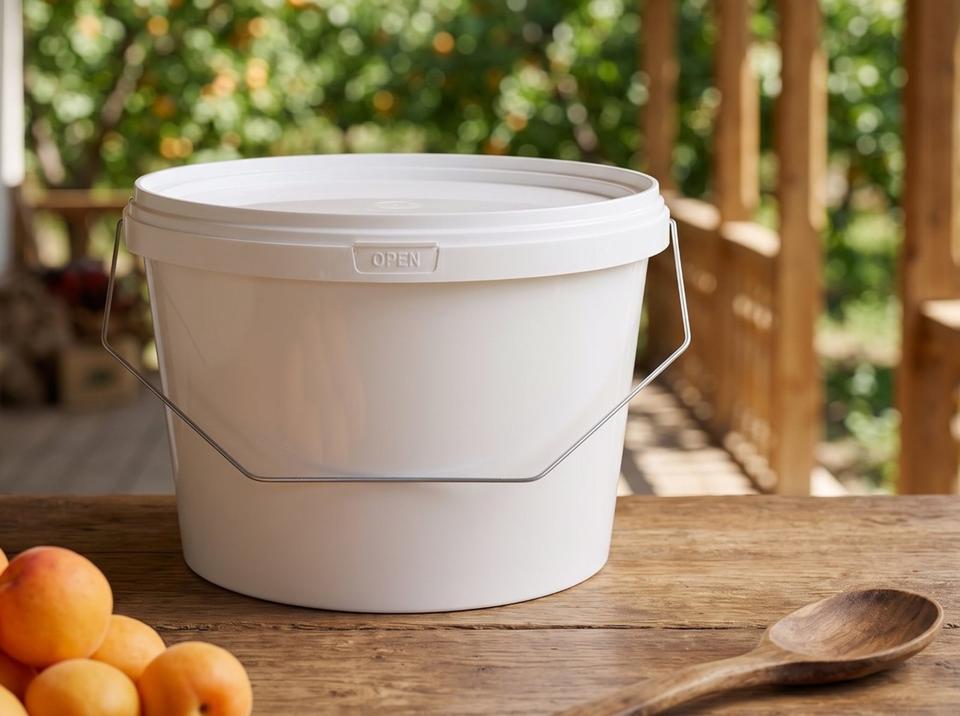
No, their openings differ, 175 and 200 mm, so the lids have different diameters. The 3-liter bucket shares its 200 mm opening with the 3.8 liter bucket.
About 3.06 kg in the 2.3 liter and about 3.99 kg in the 3-liter bucket, at a jam density of roughly 1.33 kg/L. Leave the 144 and 280 ml headspace empty.
It has a wider opening and a larger wall and lid area. Hence 95 g versus 62 g, and higher plastic use per liter of product: 31.7 g versus 27.0 g.
Both are available with a 13.4 g metal bail handle. The plastic handle weighs 3.4 g on the 2.3 liter bucket and 5.0 g on the 3-liter one. Plastic is chosen when the container must have no metal parts; the bail handle suits heavy products and frequent carrying.
Our sales manager prices each order individually, based on quantity, color, handle type and branding. Call +996 222 600 292 and ask for a quote on both sizes: you will see the cost difference right away.
Send a request or call our sales manager: your order will be palletized and shipped within the EAEU. Lead time and freight cost to your city are confirmed when you place the order.
Yes, both sizes can be ordered with IML: the printed film is fused into the wall during molding and will not rub off. For trial orders, a label on the finished bucket is simpler. Details are on the IML printing page.
Tell us what product you pack, how it will be scooped out and where it is going. Our sales manager will compare both options for your run size and recommend a handle.