
Our sales manager will contact you shortly
 Plastic buckets14 sizes · 560 ml to 21 L
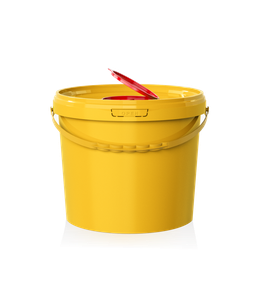 Medical buckets9 sizes · 1 to 21 L
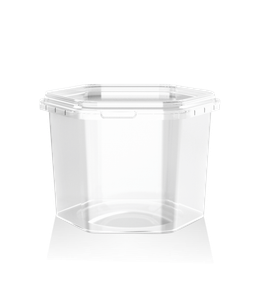 Food containers5 formats · 250 to 750 ml
 Plastic jerry cans5 L and 10 LPlastic buckets16 models, 560 ml - 21 LMedical buckets10 models, 1 - 21 LFood containers5 models, 250 - 750 mlPlastic canisters5 and 10 L塑料桶16 个型号,560 毫升 - 21 升食品容器5 个型号,250 - 750 毫升塑料方桶5 升和 10 升
Hello! We'll suggest the right size for your product, calculate pallets, and quote a price for your order.
These two buckets share one top diameter - 200 mm - and the same handle options, and each fits 2,800 to a pallet. The difference is height: 137 mm for the 3-liter and 176 mm for the 3.8. Those 39 mm add 800 ml of product per bucket, and each pallet of buckets carries 2,240 more liters of filled product. Both sizes come in white and clear. Here is when one bucket makes more sense than the other.
The comparison is based on the product pages of both buckets. Product weight is calculated at a nominal fill for three popular products: honey (about 1.42 kg per liter), jam (about 1.33 kg) and pickles in brine (about 1.05 kg).
| Parameter | 3 L bucket | 3.8 L bucket |
|---|---|---|
| Model | PK30 | PK38 |
| Brim-full / headspace above nominal | 3.28 L / 280 ml | 4.1 L / 300 ml |
| Opening × height | 200 × 137 mm | 200 × 176 mm |
| Empty bucket weight | 95 g | 110 g |
| Handle | metal 13.4 g or plastic 5.0 g | metal 13.4 g or plastic 5.0 g |
| Honey / jam / pickles | 4.3 / 4.0 / 3.2 kg | 5.4 / 5.1 / 4.0 kg |
| Per pallet: buckets / liters filled | 2 800 / 8 400 | 2 800 / 10 640 |
| Empty packaging per pallet | 266 kg | 308 kg |
The pair share the same top and handles, so the whole difference lies in body height. An extra 15 g of plastic buys 800 ml of extra volume, and a pallet of 3.8 L buckets carries 2,240 more liters of filled product. The 3-liter wins where the bucket needs to be low and light in the hand.
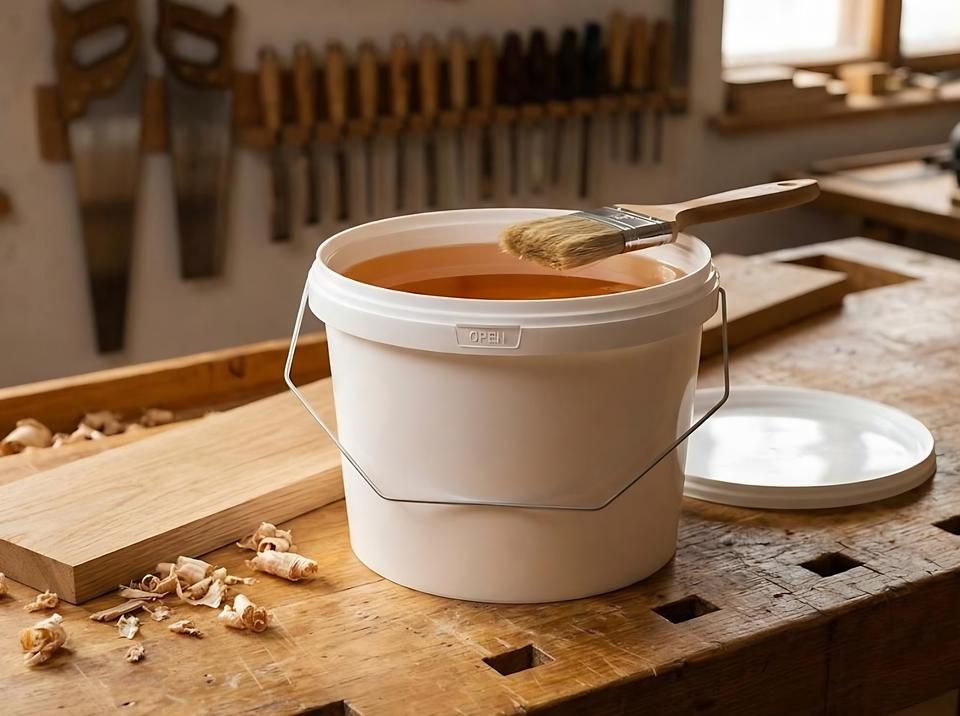
Choose a product and a monthly volume - we will compare net weight, pieces per tonne, liters per pallet and how many pallets each item needs per month. Calculated on nominal capacity and the product weight per liter from our selection pages.
When two buckets share the same top, it is easy to underestimate the differences. In practice, 39 mm of height affects weight in the hand, how the product looks from above, clearance under shelves and the return on every pallet of buckets.

Filled with honey, the 3-liter weighs about 4.3 kg and the 3.8 liter about 5.4 kg. For a shopper carrying a bucket home from the market, that is the difference between "easy in one hand" and "better bring a bag". For a filler on the line, it is barely noticeable.
The low, wide 3-liter bucket shows off almost all of the product: at a counter with Korean salads, pickles or cottage cheese, the shopper sees the whole surface. In the taller 3.8 liter the product sits deeper, but there is more of it.
The 3.8 liter is 39 mm taller. In a single layer that does not matter, but stack closed buckets three high and the difference reaches 117 mm - enough to run out of clearance under a cold-room shelf or in a low van.
Both have a 200 mm top and the same choice of handle: a 13.4 g metal bail or a 5.0 g plastic handle. Switching from one size to the other does not change how your filler works: same lid diameter, same grip.
In short: the 3-liter is for retail, where weight in the hand and product appeal matter; the 3.8 liter is for kitchens, production and wholesale, where volume per pallet and per opening matters.
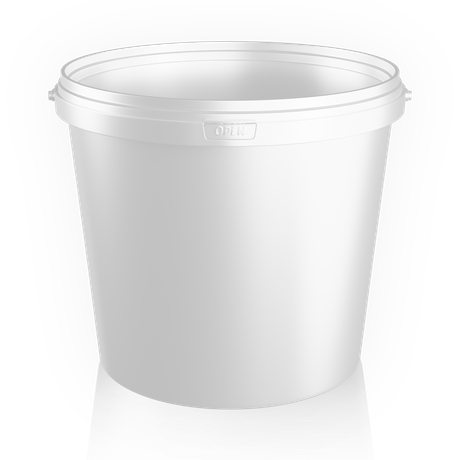
Full dimensions and usage tips are on the 3 liter bucket and 3.8 liter bucket pages. If you are comparing other pairs, see also 18 or 21 liters and 850 or 900 ml.
Both sizes ship at 2,800 buckets per pallet, so swapping one for the other changes the liters, not the number of pallets. Orders can be picked up from our factory warehouse in the Bishkek Free Economic Zone, Ak-Chiy village. In Bishkek and Chuy Region, our own vehicles deliver. Customers in Osh, Jalal-Abad, Karakol, Naryn, Talas and other Kyrgyz cities receive their buckets via a freight company; customers in Kazakhstan, by the pallet within the EAEU, to Almaty, Astana, Shymkent, Karaganda and other cities. Our sales manager confirms lead time and delivery cost when you place the order. Both sizes can be combined in one shipment.
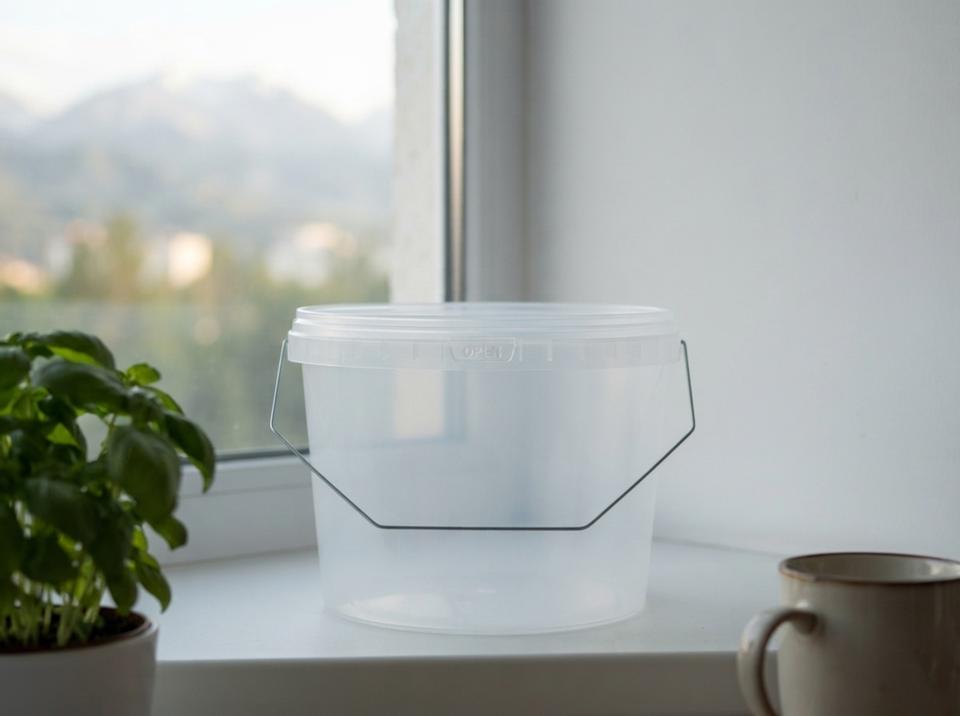
In height and capacity: 137 mm versus 176 mm, and 3.28 L versus 4.1 L brim-full. Both have a 200 mm top, the same handle options and 2,800 units per pallet.
Both buckets have a 200 mm top and a lid of the same diameter. If you want to keep a shared stock of lids for both sizes, check compatibility with our manager when ordering.
About 4.3 kg in the 3 liter and about 5.4 kg in the 3.8 liter, at a honey density of roughly 1.42 kg/L. Fill to nominal, not to the brim, so the lid seats evenly.
Both sizes are available with a 13.4 g metal bail or a 5.0 g plastic handle. The bail suits heavy products and building mixes; the plastic handle is for when the pack must be metal-free.
Our manager prices each order based on size, quantity, handle, color and printing. Call +996 222 600 292 and ask for a quote on both sizes to compare.
Yes, with a label on the finished bucket or by IML, where the artwork is fused into the wall during molding and does not wash off. The taller wall of the 3.8 liter gives more room for the design.
Yes, by the pallet within the EAEU - to Almaty, Astana, Shymkent, Karaganda and other cities. Our manager gives lead time and delivery cost when you order.
Tell us your product, fill weight and where it is sold. Our manager will suggest a size and handle, and if the choice is not clear-cut, start with a trial order of both buckets.