
 560 ml
 900 ml
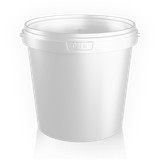 1 L
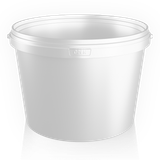 3 L
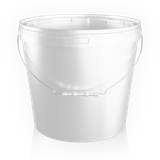 18 L
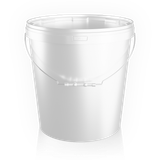 21 L
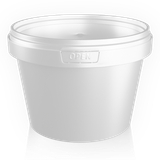 550 ml
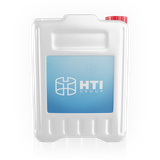 10 L
Our sales manager will contact you shortly
Request a callback from our specialist
Want to learn more about our packaging or find the right fit for your business? Request a callback, and our specialist will call you at a time that suits you. Tell us about your product, and we'll help you choose the best option.
Order a callback from a specialist
Want to learn more about our solutions or find the perfect solution for your business? Leave a request for a callback and our specialist will contact you at a convenient time. Together we will find the optimal solution to make your business thrive!
Request a callback from our HR team
Interested in our openings and career opportunities? Leave your contact details and our HR team will get back to you shortly. We'll answer your questions and explain how to join the HTI Group team.
Order a callback from a specialist
Would you like to learn more about our job openings and career opportunities? Leave your contact information, and our HR department will get in touch with you shortly. We will answer all your questions and provide detailed information on how to become part of the HTI Group team.
与我们取得联系
想了解更多我们的解决方案或为您的业务选择完美的解决方案吗?
请留下您的联系方式,我们的专家将尽快与您联系。
让我们一起找到最佳方案,助您的业务蓬勃发展!
请留下您的联系方式,我们的专家将尽快与您联系。
让我们一起找到最佳方案,助您的业务蓬勃发展!
要点电话回拨来自人力资源部门
想了解更多关于我们职位和职业发展的机会吗?请留下您的联系信息,我们的人力资源部门将尽快与您联系。我们将回答您的所有问题,并提供详细信息,帮助您成为HTI Group团队的一员。
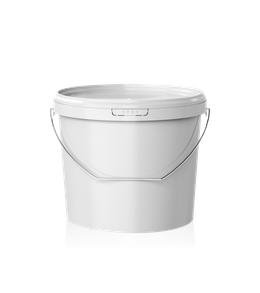 Plastic buckets14 sizes · 560 ml to 21 L
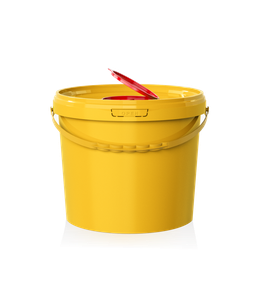 Medical buckets9 sizes · 1 to 21 L
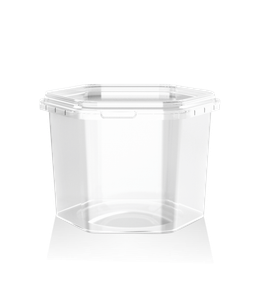 Food containers5 formats · 250 to 750 ml
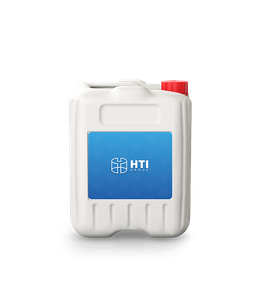 Plastic jerry cans5 L and 10 L
Plastic buckets16 models, 560 ml - 21 L
Medical buckets10 models, 1 - 21 L
Food containers5 models, 250 - 750 ml
Plastic canisters5 and 10 L
塑料桶16 个型号,560 毫升 - 21 升
食品容器5 个型号,250 - 750 毫升
塑料方桶5 升和 10 升
HTI AssistantFind the right packaging for your product in 4 steps
HTI AssistantOnline until 5:00 PM
Hello! We'll suggest the right size for your product, calculate pallets, and quote a price for your order.
Contact the plant
WhatsAppChat with a sales managerCall+996 222 600 292We'll call you backLeave your numberEmailinfo@hti-group.kg
Quick actions
Mon-Fri, 9:00 AM-5:00 PM · Factory in the Bishkek Free Economic Zone, Ak-Chiy village
Myth check
Plastic bucket myths: what's true and what's not
Plastic bucket myths outlive the buckets themselves: people repeat them at markets, in purchasing departments, and in emails to suppliers. We've collected eight common beliefs, from "all buckets are the same" to "empty packaging eats up your warehouse," and checked each one against figures for HTI Group products. This breakdown is useful for buyers and food technologists in Kyrgyzstan and Kazakhstan, especially those buying packaging for the first time.
8myths checked against figures
650 mlbrim-full capacity of the 560 ml bucket
14 sizesbuckets with a clear body
600-7 200buckets on one pallet
Myths 1-4
About the bucket itself: size, capacity, lid, and savings
The first four myths are about things that seem obvious, so nobody checks them. A bucket looks simple: bottom, wall, lid, handle. But we make 14 food-grade sizes, and almost every one of these parts changes from size to size.
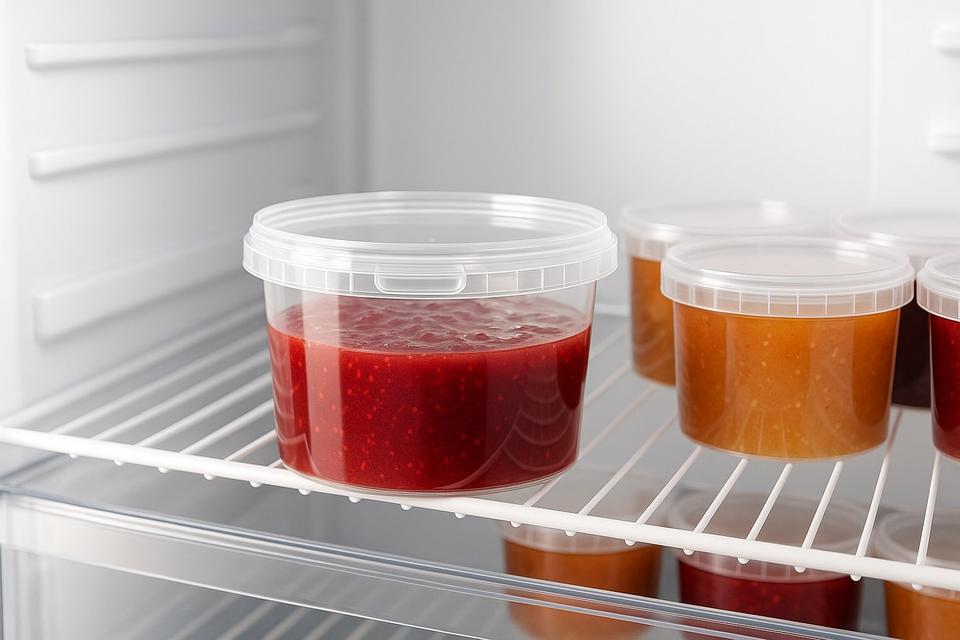
Myth 1. All buckets are the same
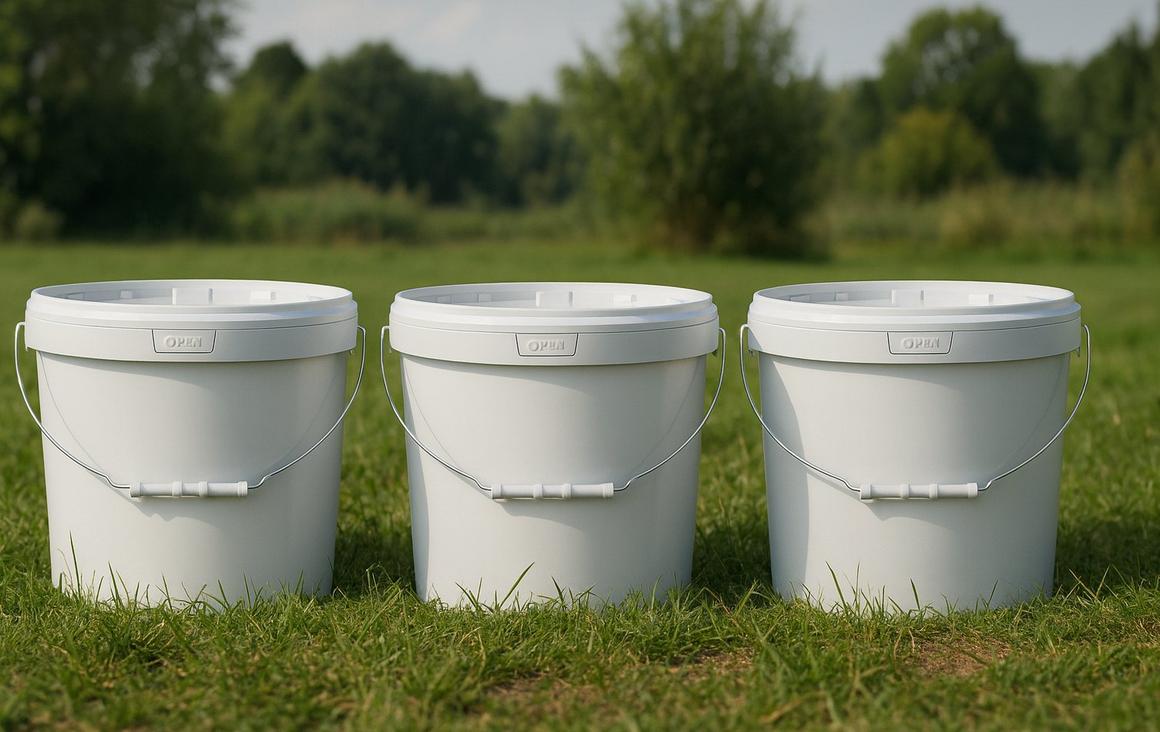
The 560 and 850 ml buckets share the same 118 mm top, but their heights are 80 and 124 mm. Handles differ too: side lugs on the 560 ml, a molded-in handle on the 900 ml, a metal bail handle from 2.3 L, and a plastic grip from 8 L. The neighboring 18 and 21 L sizes, both 332 mm in diameter, differ in height by 47.5 mm.
Myth 2. Nominal capacity equals actual capacity
The number on the label is the nominal capacity, but the body holds more. A 560 ml bucket takes 650 ml filled to the brim: the extra 90 ml is headspace under the lid, so the product isn't squeezed out when the lid goes on. Hence a common mistake: a packer fills "right up to the lid" and gives the customer extra product for free. Check both figures before you set up your filler.
Myth 3. The lid can be removed unnoticed
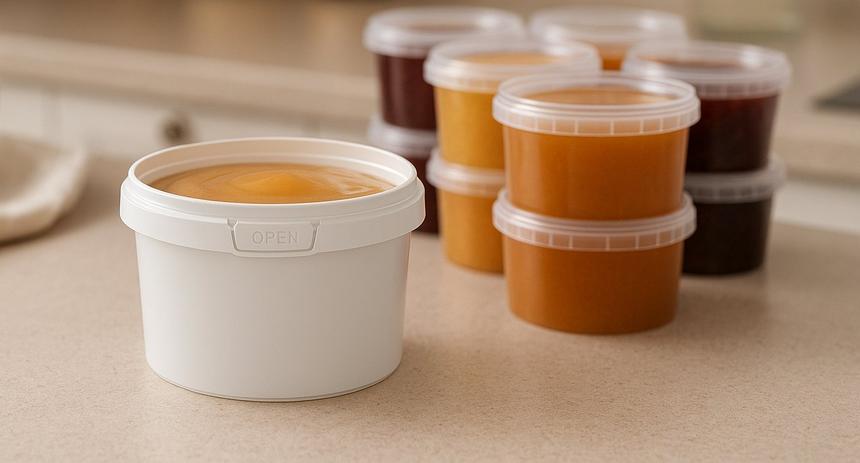
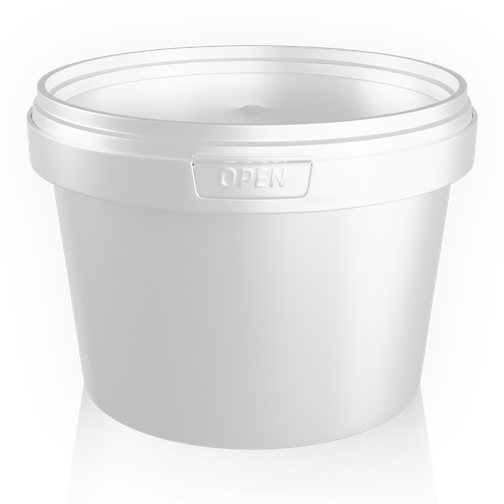
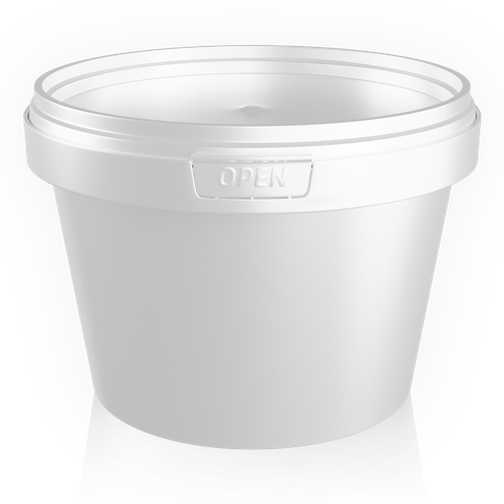
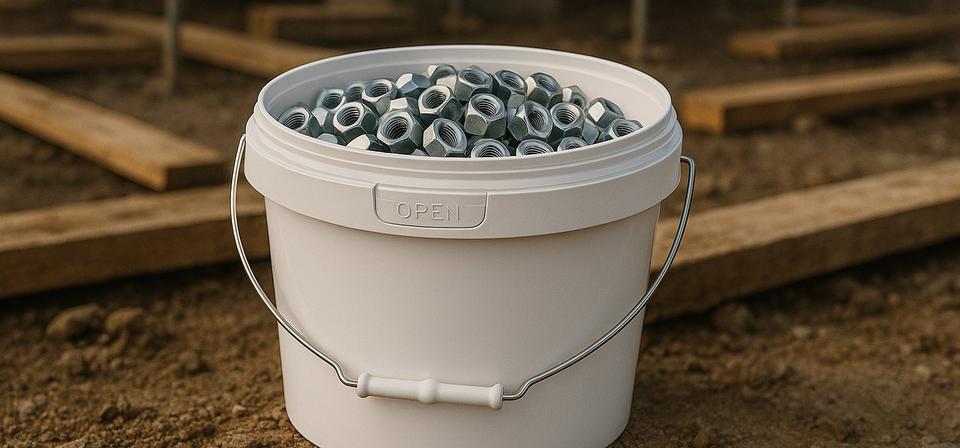
Our food-grade buckets have an OPEN tamper-evident tear strip under the lid rim. An intact strip means the bucket has not been opened since filling; on first opening it is torn off and cannot be put back. The myth holds for packaging without this feature, but not for these buckets. Learn more in our article on tamper evidence.
Myth 4. Bigger is always better value
In terms of plastic use, yes: the 21 L bucket uses about 29.5 g of packaging per liter of capacity, the 1 L bucket 36 g, and the 560 ml bucket about 41 g. But 21 L of honey weighs about 29.8 kg, more than a retail shopper can carry. Large sizes pay off for wholesale, small ones for households.
Fact-check tool
Click a myth to see the product
Each myth in the tool has its own product, the one that makes it easiest to check. Click a statement and you'll see a bucket, container, or jerry can to scale, with the figures from its row: tare weight, units per pallet, and the fact that corrects the myth.
Packaging from this page's lineup
Myth
The rows come from this page's table: each one has its own packaging.
How much product do you package per month
L
We ship in full pallets, so the number of pallets is rounded up.
Shelf length, cm
cm
Shelf depth, cmcm
Based on the top dimensions of the packaging, in a single layer, with no gaps between items.
 80 mm
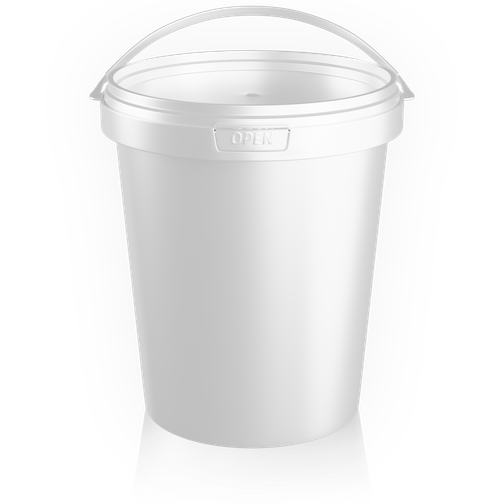 134 mm
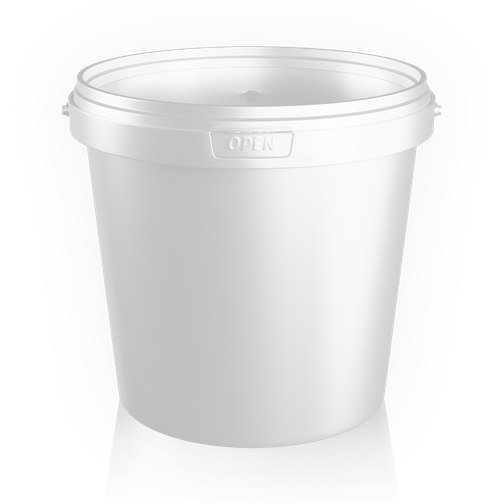 121 mm
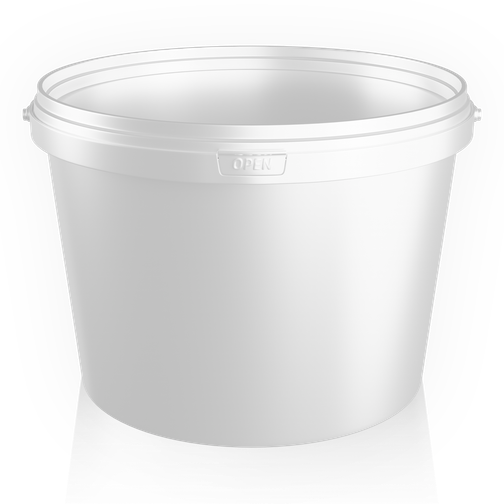 137 mm
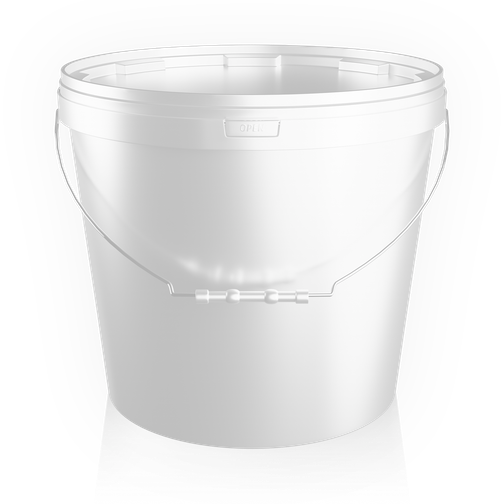 286 mm
 333.5 mm
 80 mm
 296 mm
Myth table
Eight myths and the product that tests each one
The fourth column gives a figure you can double-check with a ruler or a scale. Some figures are calculated: headspace under the lid is brim-full capacity minus nominal capacity, liters per pallet are units multiplied by capacity, and kilograms of honey are based on a density of 1.42 kg per liter.
Lineup at the same scalebody width and height per factory spec sheets
| Volume | Myth | The facts | Figure to check | Empty weight | Units per pallet |
|---|---|---|---|---|---|
| 900 ml | all buckets are the same | molded-in handle | Ø127× | 34 g | 7,200 |
| 560 ml | the labeled size is the full capacity | the body holds more than the nominal capacity | 650 ml brim-full, 90 ml headspace | 23 g | 7,200 |
| 1 L | the lid can be removed unnoticed | the OPEN tear strip comes off on first opening | the strip cannot be put back | 36 g | 6,480 |
| 21 L | a big bucket is always better value | less plastic per liter, but too heavy for retail | about 29.8 kg of honey | 620 g | 600 |
| 18 L | only small buckets come in clear | all 14 sizes are available with a clear body | 560 ml to 21 L | 526 g | 600 |
| 550 ml | printing on packaging is always a sticker | IML printing: the image is fused into the wall | Ø118× | 18.8 g | 10,800 |
| 10 L | jerry cans and buckets are interchangeable | screw cap and molded-in handle: made for pouring | 201× | 420 g | 100 |
| 3 L | empty packaging takes up a lot of space | buckets nest inside each other | 8,400 L of capacity per pallet | 95 g | 2,800 |
None of the myths turned out to be pure fiction: each one grows out of an observation that's true for one size and false for another. A large bucket really does save plastic, but it isn't sold at retail. So don't check the claim in general; check the specific product.
Myths 5-8
Branding and storage: four more myths
The next four come up after the first order: a buyer assumes only the one-liter bucket comes in clear, a process engineer decides to pour oil from a jerry can into a bucket, and a warehouse manager clears a whole row of racks for empty packaging. The last item isn't a myth but a rule for next time.
1Myth 5. Only small buckets come in clear. Not true: a clear body is available for the 21 L bucket and for any of the thirteen smaller sizes. Through the wall of a large bucket, you can see how much product is left.21 L bucket
2Myth 6. Printing on a bucket is always a sticker. Not true: with IML, the image is fused into the wall during molding. But the 15 L bucket has no IML option, and among containers only the round 550 ml has it.550 ml container
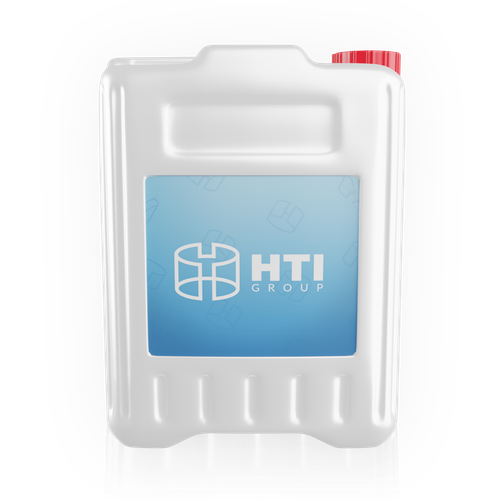
3Myth 7. Jerry cans and buckets are interchangeable. Jerry cans, which come in 5 and 10 L sizes, have a narrow neck with a screw cap: they're made for pouring, not scooping. There's no getting a thick product out of them.10 L jerry can
4Myth 8. Empty packaging takes up a lot of space. Buckets nest inside each other: a pallet holds 7,200 of the 560 ml buckets or 2,800 of the three-liter ones. A pallet holds just 180 or 100 jerry cans, so for them the myth is closer to the truth.560 ml bucket
5Rule. When you hear a new claim about packaging, ask for the numbers: size, weight, units per pallet. If a property can't be checked with a number, such as how the packaging will behave in your refrigerator or on your filling line, order a trial batch.
Logistics
Three delivery myths and how delivery really works
The first delivery myth is that packaging is sold by the piece: we sell it by the full pallet. The second is that each size needs its own truck: we combine different items into one shipment. The third is that we don't deliver beyond Bishkek. In fact, buyers either pick up their order themselves in Ak-Chiy village, in the Bishkek Free Economic Zone (FEZ), or wait for our own delivery truck if they're based in the capital or Chuy Region. Pallets for Osh, Naryn, and Karakol go by freight carrier, and pallets for Almaty, Astana, and Shymkent travel within the EAEU. Our sales manager works out delivery time and cost for your address.
Further reading
Put other common beliefs to the test
Several of these myths have their own in-depth articles on our blog: the difference between a bucket and a jerry can, units per pallet, tamper evidence, and what to do with a bucket once the product is gone.
All blog articles IML vs labelsEight scenarios and a clear answer on how to label a bucketMaterial and labeling · 6 min
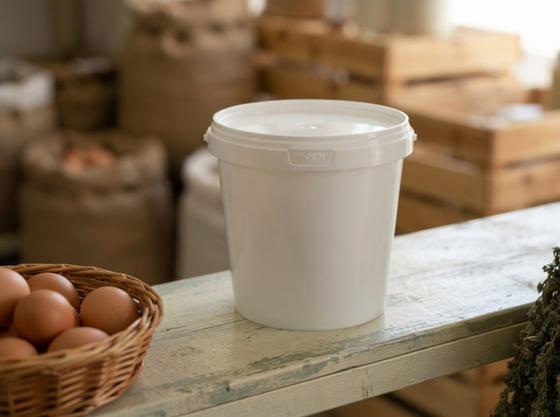 Tamper evidenceHow the OPEN tear strip works and why stores want itMaterial and labeling · 7 min
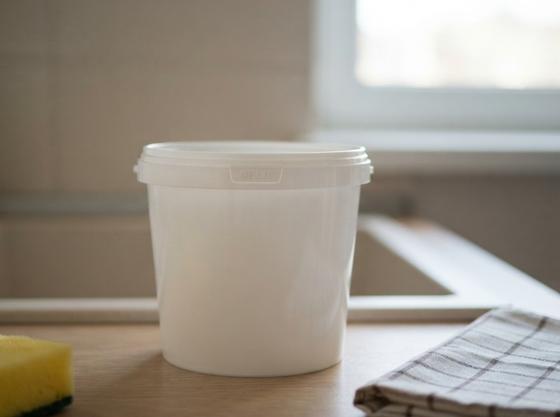 A second life for bucketsWhen a bucket can be washed and refilledMaterial and labeling · 6 min
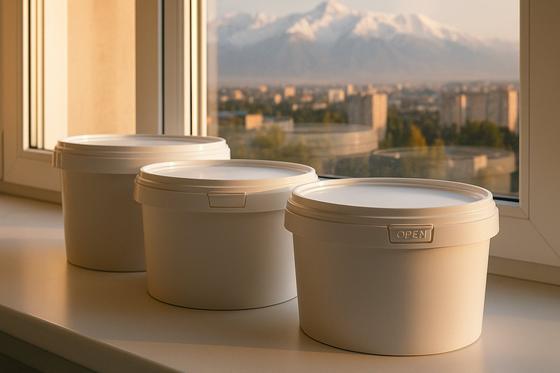 Trial batchHow to test packaging with your product before a full runChoosing packaging · 8 min
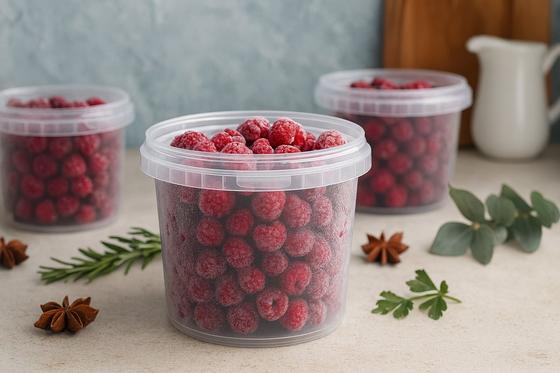 Packaging for freezingHow to choose packaging and test it in your own freezerProducts and industries · 8 min
 Export packagingHow packaging helps your product reach another country intactOrdering and logistics · 8 min
Questions and answers
The questions that start the myths
No. The lineup has fourteen food-grade sizes, and they differ in more than capacity. The top diameter ranges from 118 to 332 mm, the empty weight from 23 to 620 g, and the handle from side lugs to a bail handle with a plastic grip. You can compare two sizes side by side with our bucket comparison tool.
Brim-full, it holds 650 ml. The nominal 560 ml is the working fill: the level at which the lid snaps on without squeezing out product. There's no point filling the 90 ml of headspace: with honey, that's about 128 g more than declared in every bucket.
Not with our food-grade buckets. Opening one for the first time means tearing off the OPEN tear strip under the lid rim, and the mark stays for good. Stores check the strips when they receive goods, and shoppers check them on the shelf. If the strip is gone, the bucket has been opened.
A pallet of 21 L buckets is 600 units and 12,600 liters of capacity; a pallet of one-liter buckets is 6,480 units and 6,480 liters. For wholesalers and food service, a big bucket saves both plastic and space. In retail, the best value is the size a shopper is willing to carry home.
Yes. All 14 food-grade buckets are made in clear, including the three largest, and every one of them also comes in white or in color. In a large clear bucket, you can see how much product is left without removing the lid. If you're selling on artwork rather than on how the product looks, choose a white body for a label or print.
Polypropylene, made by injection molding. This article makes no other claims about the material. We don't claim how the packaging will behave with your product in the freezer or with hot filling: a trial batch under your own conditions will tell you. Learn more in our article on polypropylene.
Not always. The 10 L jerry can has a 201×234×296 mm body and a screw cap: it's made for pouring. The 11.5 L bucket has a 295 mm opening and a removable lid: it's made for scooping. A pallet holds 100 empty jerry cans versus 816 buckets. For a product-by-product breakdown, see our article bucket vs jerry can.
Catalog
Facts, not myths: product pages in the catalog
Each size has a page listing its dimensions, tare weight, handle, and units per pallet: the very figures that put the myths to the test. Start with large buckets or small ones if you already know who you're packing for.
Quote
Heard something about packaging that's not covered here?
Ask our sales manager, and you'll get hard numbers for the specific product: size, weight, handle, and units per pallet. If we don't claim a particular property, we'll tell you so and offer samples for a trial fill.