
 1 L
 2.3 L
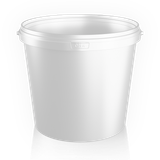 3.8 L
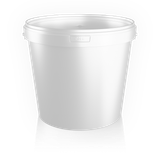 5.6 L
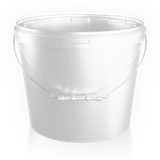 11.5 L
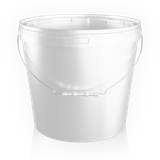 18 L
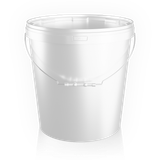 21 L
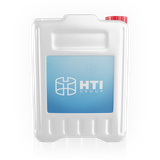 10 L
Our sales manager will contact you shortly
Request a callback from our specialist
Want to learn more about our packaging or find the right fit for your business? Request a callback, and our specialist will call you at a time that suits you. Tell us about your product, and we'll help you choose the best option.
Order a callback from a specialist
Want to learn more about our solutions or find the perfect solution for your business? Leave a request for a callback and our specialist will contact you at a convenient time. Together we will find the optimal solution to make your business thrive!
Request a callback from our HR team
Interested in our openings and career opportunities? Leave your contact details and our HR team will get back to you shortly. We'll answer your questions and explain how to join the HTI Group team.
Order a callback from a specialist
Would you like to learn more about our job openings and career opportunities? Leave your contact information, and our HR department will get in touch with you shortly. We will answer all your questions and provide detailed information on how to become part of the HTI Group team.
与我们取得联系
想了解更多我们的解决方案或为您的业务选择完美的解决方案吗?
请留下您的联系方式,我们的专家将尽快与您联系。
让我们一起找到最佳方案,助您的业务蓬勃发展!
请留下您的联系方式,我们的专家将尽快与您联系。
让我们一起找到最佳方案,助您的业务蓬勃发展!
要点电话回拨来自人力资源部门
想了解更多关于我们职位和职业发展的机会吗?请留下您的联系信息,我们的人力资源部门将尽快与您联系。我们将回答您的所有问题,并提供详细信息,帮助您成为HTI Group团队的一员。
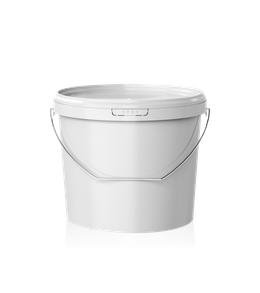 Plastic buckets14 sizes · 560 ml to 21 L
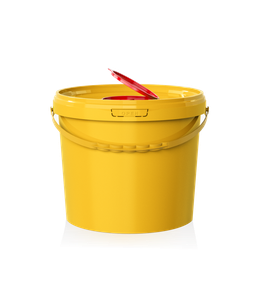 Medical buckets9 sizes · 1 to 21 L
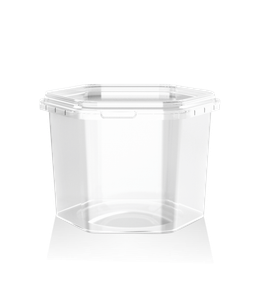 Food containers5 formats · 250 to 750 ml
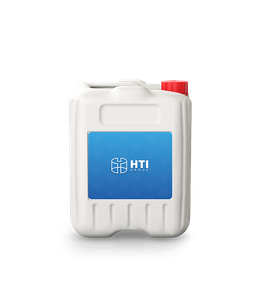 Plastic jerry cans5 L and 10 L
Plastic buckets16 models, 560 ml - 21 L
Medical buckets10 models, 1 - 21 L
Food containers5 models, 250 - 750 ml
Plastic canisters5 and 10 L
塑料桶16 个型号,560 毫升 - 21 升
食品容器5 个型号,250 - 750 毫升
塑料方桶5 升和 10 升
HTI AssistantFind the right packaging for your product in 4 steps
HTI AssistantOnline until 5:00 PM
Hello! We'll suggest the right size for your product, calculate pallets, and quote a price for your order.
Contact the plant
WhatsAppChat with a sales managerCall+996 222 600 292We'll call you backLeave your numberEmailinfo@hti-group.kg
Quick actions
Mon-Fri, 9:00 AM-5:00 PM · Factory in the Bishkek Free Economic Zone, Ak-Chiy village
Practical guide
Can you wash and reuse a food-grade bucket?
A bucket that held honey or jam rarely gets thrown out right away: the sturdy polypropylene body and tight lid are too good to waste. The short answer is yes: at home, an empty bucket can be put back to work as long as it's intact, thoroughly washed, and previously held food, not chemicals. Packing product for sale to customers is a different story, and below we explain why. This isn't a sanitary code, just common sense and knowing how a bucket is made.
PPpolypropylene body
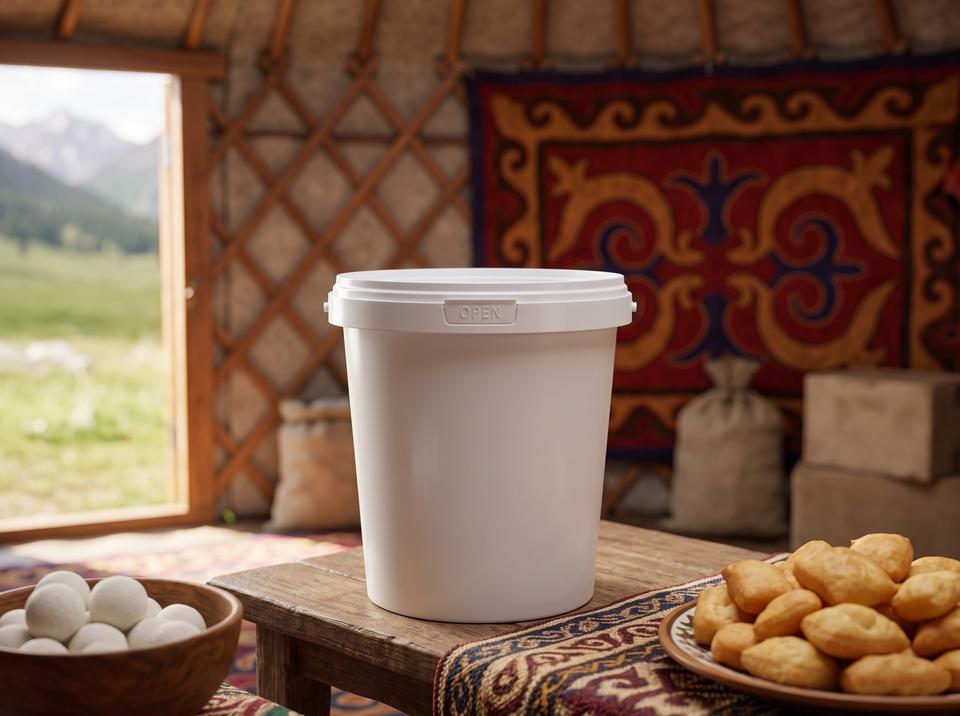
OPENthe seal works only once
IMLdoesn't wash off
up to 332 mmopening width for easy washing
Reuse
Four checks before you refill a bucket
An empty bucket may have been dropped, sat under a heavy load, or baked in the sun in a truck bed. Before you trust it with a new product, take a minute to inspect it. If it fails even one check, it's better off as a utility bucket.
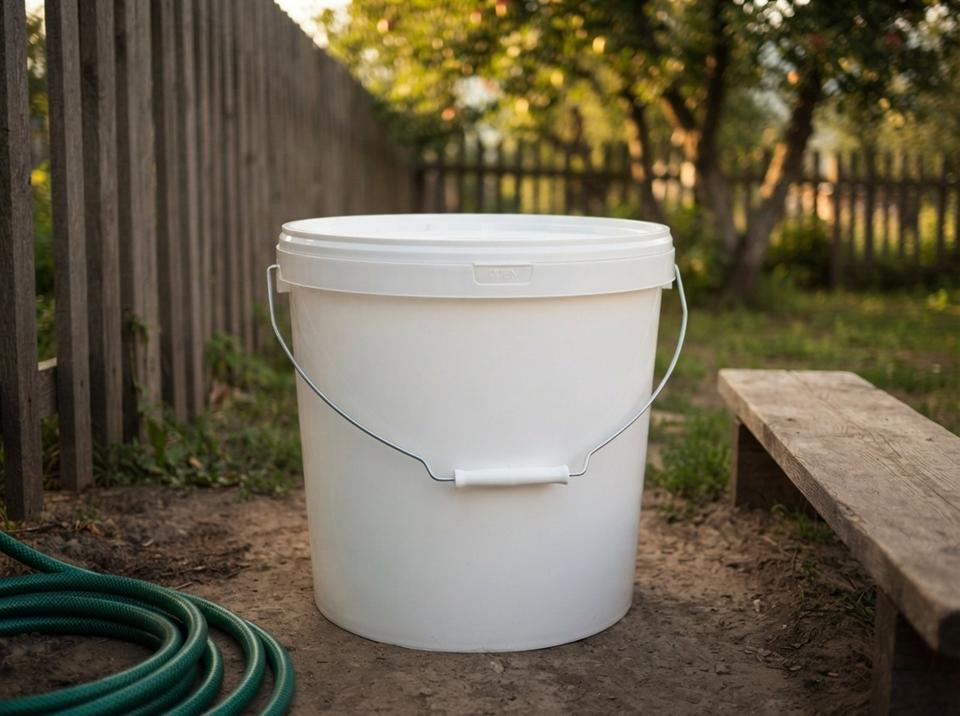
No cracks in the body
Hold the bucket up to the light and check the walls and bottom, especially near the rim and around the handle lugs. A hairline crack is barely visible at first but spreads under the weight of a full bucket. Deep scratches inside are also a warning sign: product residue is harder to wash out of them.
The lid seats all the way around
The flat lid should fit into the double rim evenly, with no gaps or tilt. If the rim is dented or the lid no longer seats tightly after many openings, the bucket is no longer fit for food. It can still hold nails, clothespins, or toys.
The handle holds the weight
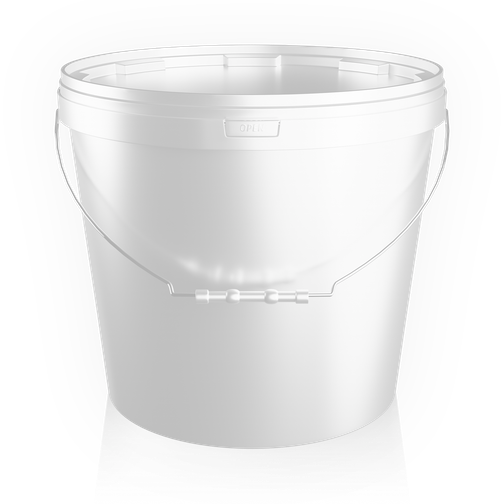
A metal bail handle should sit firmly in its lugs without popping out, and the plastic grip on it should turn freely. Check a plastic handle for cracks where it attaches. A full 21 L bucket of water weighs more than 21 kg, so it's better to spot a loose bail handle before anyone lifts the bucket.
No residue, no odor
After washing and drying, the bucket shouldn't smell of its previous contents, and there should be no film or stains on the walls. If a pickle or fish smell lingers, keep the bucket for the same product or for non-food uses, not for dairy or sweets.
Second-life tool
The bucket is empty: now what?
Click the product the bucket held, and the tool shows the bucket to scale, whether it can take food again, and what a sensible second life would be. "Per shelf" tells you how many buckets fit in a row in a pantry or garage.
Packaging from this page's lineup
Typical contents
The rows come from this page's table: each one has its own packaging.
How much product do you package per month
L
We ship in full pallets, so the number of pallets is rounded up.
Shelf length, cm
cm
Shelf depth, cmcm
Based on the top dimensions of the packaging, in a single layer, with no gaps between items.
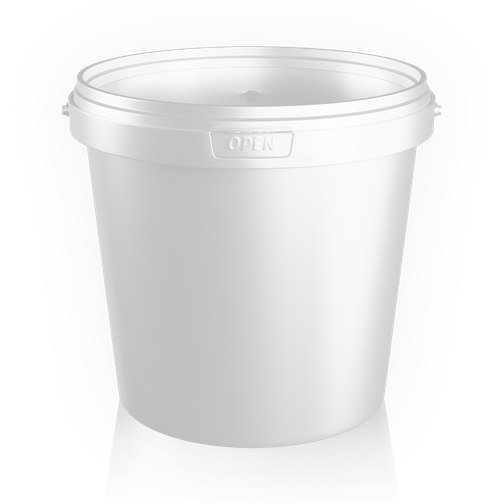 121 mm
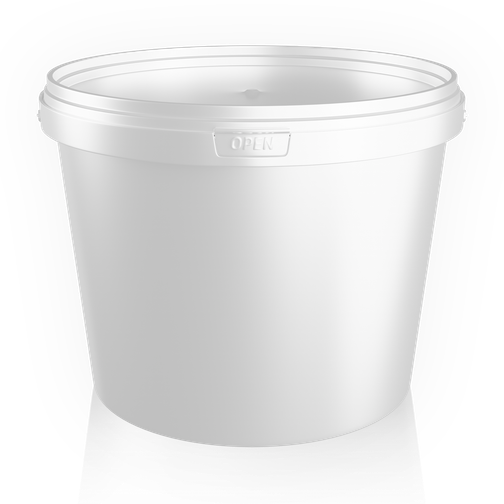 132 mm
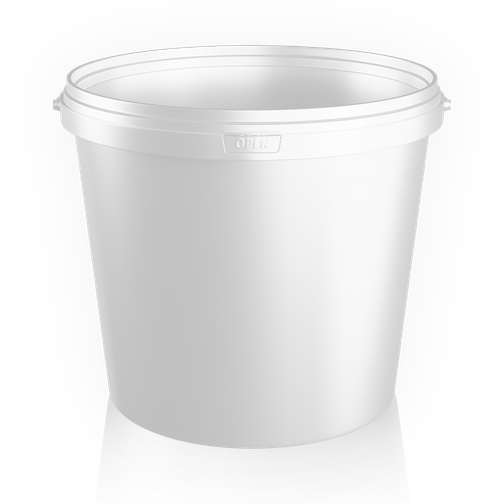 176 mm
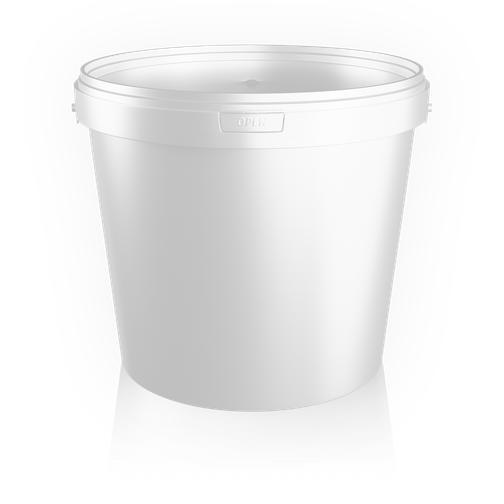 193 mm
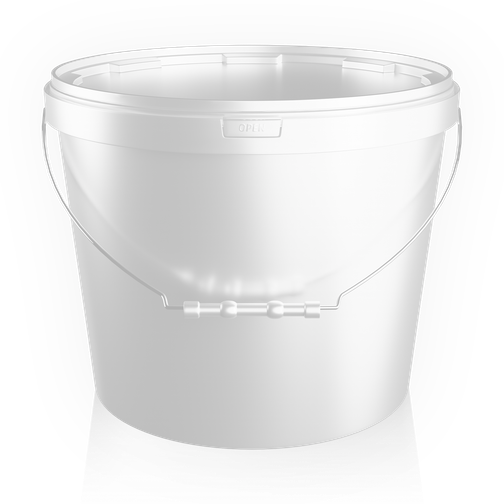 234 mm
 286 mm
 333.5 mm
 296 mm
Cheat sheet
What was inside and what it can hold next
What decides an empty bucket's fate is mainly what it held before. After honey and dry foods, the body is easy to clean; after pickles and fish, a smell may linger; after paint, putty, or car care products, the bucket becomes a utility item for good. The table suggests a sensible second use for typical sizes.
Lineup at the same scalebody width and height per factory spec sheets
| Volume | Typical contents | Reuse for food | Sensible second life |
|---|---|---|---|
| 1 L | honey, jam, preserves | at home, if the bucket is intact and clean | grains, sugar, nuts, dried fruit |
| 2.3 L | pickles, Korean-style salads | best for a product with a similar smell | clothespins, small garden items |
| 3.8 L | sauces, mayonnaise | after thorough washing | flour, rice, poultry feed |
| 5.6 L | marinated meat | for the same type of product | tools, nails, fasteners |
| 11.5 L | putty, primer | no | mortar, sand, renovation debris |
| 18 L | water-based paint | no | cleaning water, construction tools |
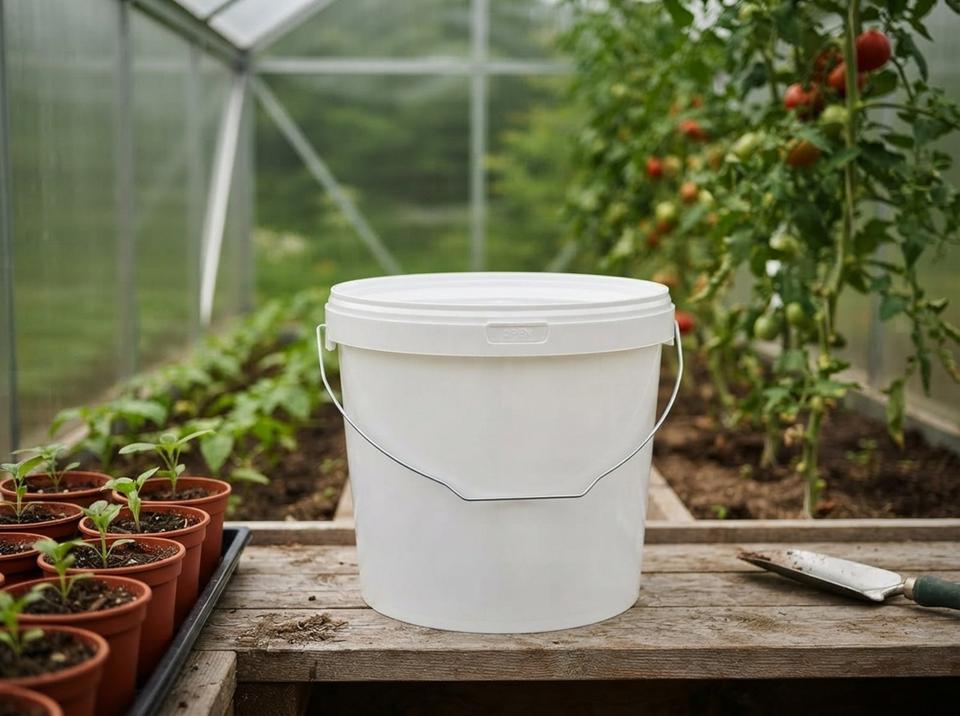
| 21 L | wholesale honey | at home, after washing and drying | grain, compound feed, water for the garden |
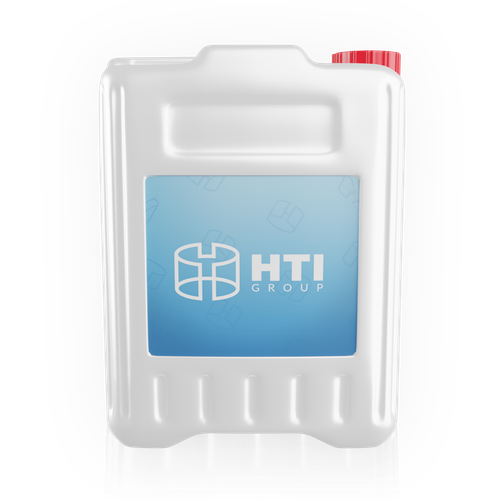
| 10 L jerry can | car care, cleaning products | no | only the same liquid |
The rule is simple: packaging that has held chemicals, paint, or construction mix never goes back to food, no matter how well it's been washed. A jerry can is also harder to clean inside: the cap screws onto a narrow neck, and a sponge can't reach the walls. A bucket is handier here, since it opens across its full width: 332 mm on the 18 and 21 L sizes.
How to wash it
Five steps to wash a bucket so it comes out clean
You don't need special products: warm water, regular dish soap, and patience are enough. What matters more is the order of steps and letting the bucket dry completely before you close it.
1Right after emptying, scrape out what's left with a spatula: the bucket tapers toward the bottom and opens across its full width, so almost all the product comes off the walls.
2Soak the bucket in warm water with dish soap and wash it with a soft sponge. Abrasive powder and a wire brush will leave scratches.
3Wash the lid separately, paying attention to the edge that fits into the double rim: that's where product most often gets stuck.
4Rinse everything with clean water and leave the bucket and lid to dry separately, upside down, until the last drops are gone.
5Remove the old label and mark the new contents. An image applied with in-mold labeling (IML) stays, since it's fused into the wall.
When you need new packaging
New buckets for selling your product
Reusing a bucket at home is one thing; packing product for sale is another. A shopper at the bazaar or in a store will spot a broken OPEN tear strip and someone else's label right away, so it makes sense to pack product for customers in new buckets. You can pick them up by the pallet from the factory warehouse in the Bishkek Free Economic Zone (FEZ), Ak-Chiy village. In Bishkek and Chuy Region we deliver on our own trucks; to Osh, Jalal-Abad, Karakol, Naryn, and Talas we ship by freight carrier; and for buyers in Almaty, Astana, Shymkent, and other cities in Kazakhstan we deliver pallets within the EAEU. Our sales manager confirms delivery time and cost when you place the order. New empty buckets come nested in stacks and take up little space.
Further reading
Further reading on materials and lids
A bucket's second life depends on its material and on how it was sealed the first time. Our articles on PP5 polypropylene, the OPEN tear strip, and common myths cover this.
All blog articles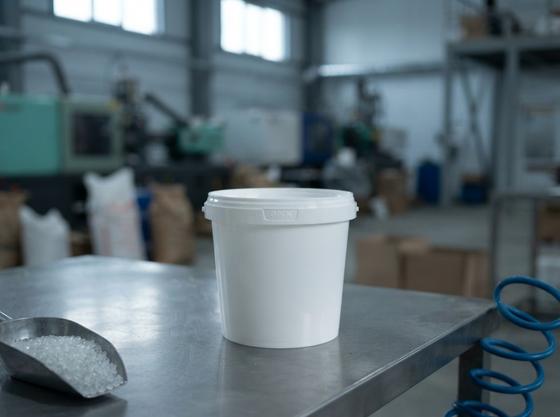 Polypropylene PP5What the number 5 on the bottom means and how much the packaging weighsMaterial and labeling · 6 min
 Bucket mythsEight misconceptions, checked against the numbersMaterial and labeling · 8 min
 IML vs labelsEight scenarios and a clear answer on how to label a bucketMaterial and labeling · 6 min
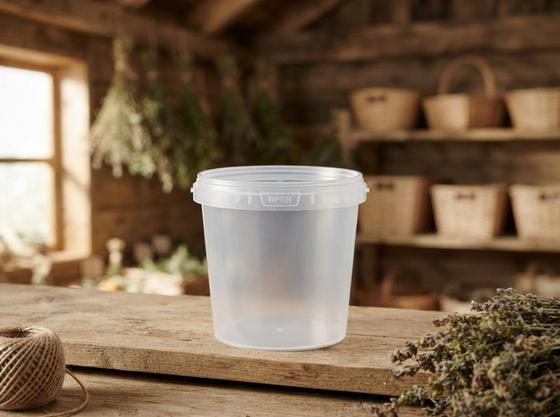 Plastic or glassTare weight, breakage, and pallets: the math for packersComparisons · 6 min
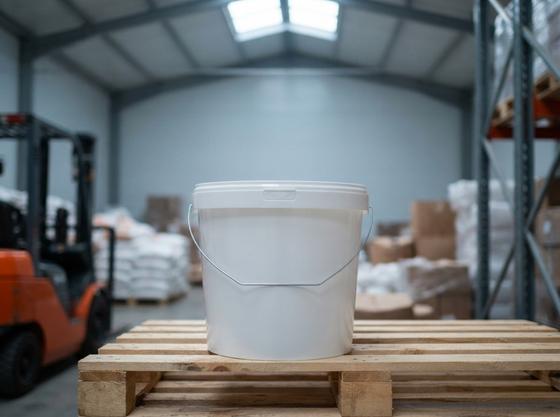 Packaging weight per palletUnits, liters, and kilograms on a single palletOrdering and logistics · 6 min
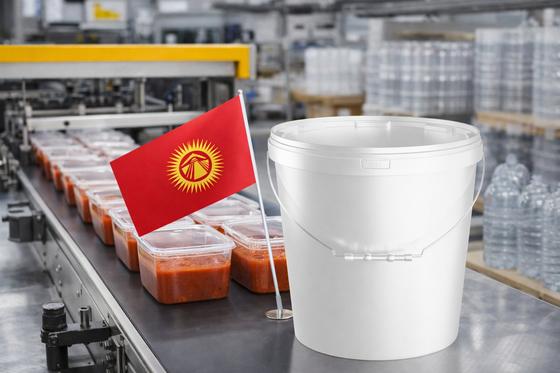 Packaging and salesFive packaging details shoppers noticeChoosing packaging · 8 min
Questions and answers
Questions about washing and reuse
At home, yes, as long as the bucket is intact, the lid closes tightly, and no odor or residue remains after washing and drying. Such a bucket works best for dry foods: grains, sugar, nuts.
Then it's for utility use only: mortar, tools, trash, cleaning water. Don't put food back in that packaging, even if it looks completely clean.
The OPEN tear strip works only once: after the first opening, it stays torn. A customer who sees that can't tell your bucket from one that was opened in transit. A new bucket with an intact seal takes that question off the table.
Wash it again and let it air-dry for a long time with the lid off. If the smell still lingers, keep the bucket for pickles or for non-food uses.
If the logo is applied with IML, no: the image is fused into the wall during molding and doesn't peel off when washed. A paper or film label is usually removed when the bucket is reused.
Our sales manager prices each order based on size, quantity, handle, and printing. Call +996 222 600 292 and tell us what you plan to pack and how much.
Yes: within Kyrgyzstan on our own delivery trucks or by freight carrier, and to Kazakhstan by the pallet within the EAEU. Our sales manager confirms time and cost when you place the order.
Catalog
Food-grade buckets in the HTI catalog
Every size from 560 ml to 21 L, with opening sizes, tare weight, and handle options, is in our catalog. To learn how tamper evidence works and why it's single-use, read our article on tamper-evident seals.
Quote
Switching from used to new packaging?
If you currently sell product in washed buckets and want to switch to new ones, tell us what you pack and in what sizes. Our sales manager will help you choose the size, handle, and body color, and work out how many pallets you'll need for the season.