
 560 ml
 1 L
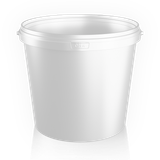 3.8 L
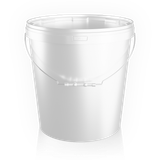 21 L
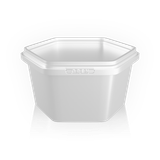 250 ml
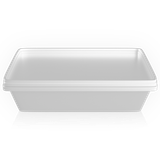 750 ml
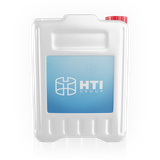 5 L
Our sales manager will contact you shortly
Request a callback from our specialist
Want to learn more about our packaging or find the right fit for your business? Request a callback, and our specialist will call you at a time that suits you. Tell us about your product, and we'll help you choose the best option.
Order a callback from a specialist
Want to learn more about our solutions or find the perfect solution for your business? Leave a request for a callback and our specialist will contact you at a convenient time. Together we will find the optimal solution to make your business thrive!
Request a callback from our HR team
Interested in our openings and career opportunities? Leave your contact details and our HR team will get back to you shortly. We'll answer your questions and explain how to join the HTI Group team.
Order a callback from a specialist
Would you like to learn more about our job openings and career opportunities? Leave your contact information, and our HR department will get in touch with you shortly. We will answer all your questions and provide detailed information on how to become part of the HTI Group team.
与我们取得联系
想了解更多我们的解决方案或为您的业务选择完美的解决方案吗?
请留下您的联系方式,我们的专家将尽快与您联系。
让我们一起找到最佳方案,助您的业务蓬勃发展!
请留下您的联系方式,我们的专家将尽快与您联系。
让我们一起找到最佳方案,助您的业务蓬勃发展!
要点电话回拨来自人力资源部门
想了解更多关于我们职位和职业发展的机会吗?请留下您的联系信息,我们的人力资源部门将尽快与您联系。我们将回答您的所有问题,并提供详细信息,帮助您成为HTI Group团队的一员。
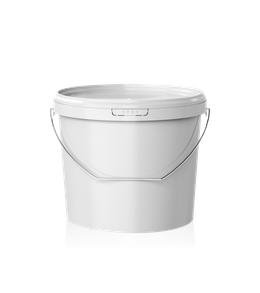 Plastic buckets14 sizes · 560 ml to 21 L
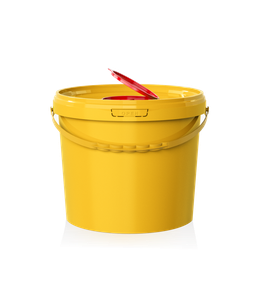 Medical buckets9 sizes · 1 to 21 L
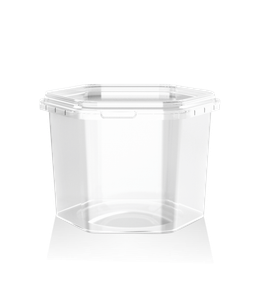 Food containers5 formats · 250 to 750 ml
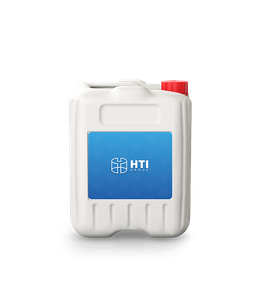 Plastic jerry cans5 L and 10 L
Plastic buckets16 models, 560 ml - 21 L
Medical buckets10 models, 1 - 21 L
Food containers5 models, 250 - 750 ml
Plastic canisters5 and 10 L
塑料桶16 个型号,560 毫升 - 21 升
食品容器5 个型号,250 - 750 毫升
塑料方桶5 升和 10 升
HTI AssistantFind the right packaging for your product in 4 steps
HTI AssistantOnline until 5:00 PM
Hello! We'll suggest the right size for your product, calculate pallets, and quote a price for your order.
Contact the plant
WhatsAppChat with a sales managerCall+996 222 600 292We'll call you backLeave your numberEmailinfo@hti-group.kg
Quick actions
Mon-Fri, 9:00 AM-5:00 PM · Factory in the Bishkek Free Economic Zone, Ak-Chiy village
Packaging material
Food-grade polypropylene (PP5): what packaging buyers need to know
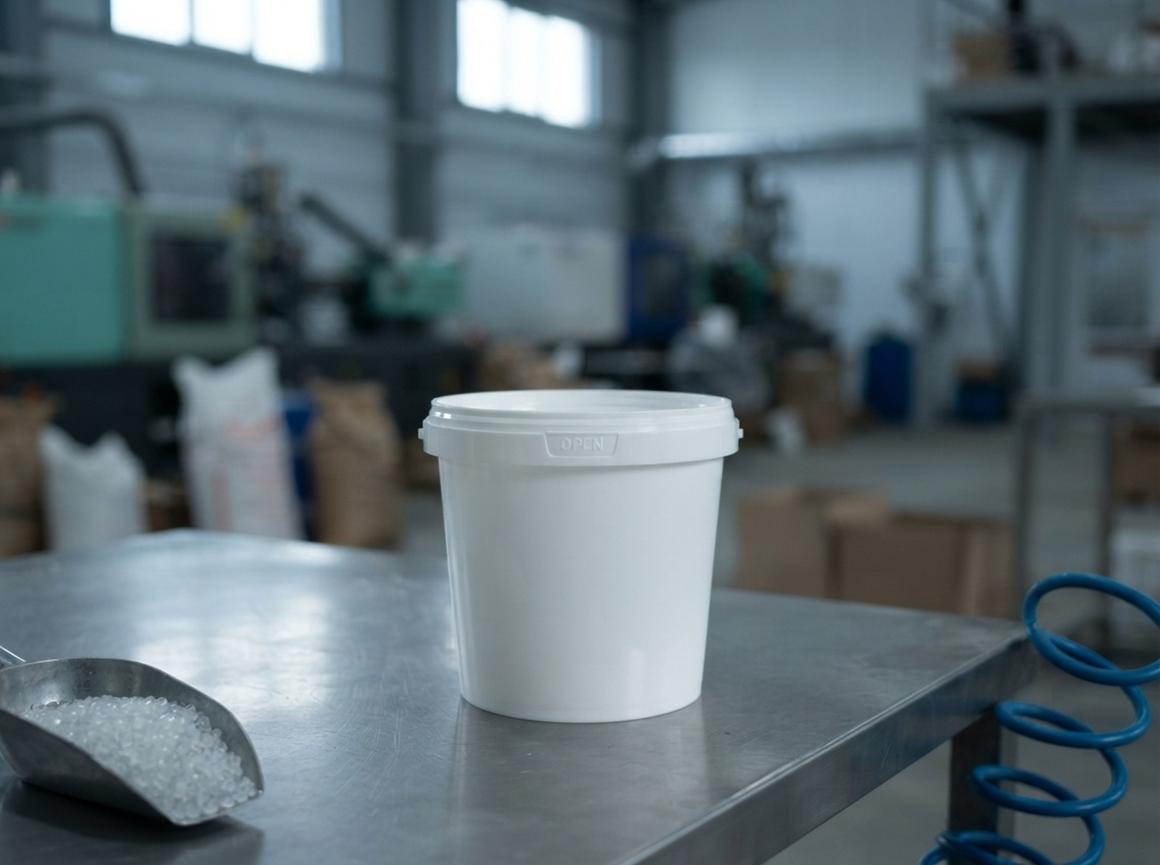
The number 5 inside a triangle of arrows, with the letters PP next to it, stands for polypropylene, one of the most common plastics in food packaging. At the HTI Group plant in the Bishkek Free Economic Zone (FEZ), we mold it into buckets, containers, trays, and jerry cans. With no sales pitch, we explain how to read this marking, which properties of the material actually matter on a packing line, and what to keep in mind if you buy packaging in bulk.
5code in the triangle
PPletter marking
lighter than waterdensity about 0.9 g/cm³
13-620 gweight of HTI products made of PP
Material properties
Why packaging is molded from polypropylene
Polypropylene doesn't have one magic property. Instead, it has a fortunate mix of several ordinary ones. That's why it's chosen for mass-market food packaging around the world, from ready-meal containers to paint buckets. Below are four qualities that packaging buyers notice in practice, not just in a reference book.
Doesn't react with food
Polypropylene has low chemical reactivity: marinade acids, salt, sugar, and fats don't react with it. The material itself has no smell or taste, so the product in the bucket smells like the product. For the same reason, PP also works for household cleaning products and water-based paints and coatings.
Doesn't absorb water
The wall doesn't take on moisture or swell, and the surface is smooth and non-porous straight out of the mold. Thick product comes off with a spatula, and an empty container is easy to wash. For a packer, this means less product lost on the walls and less hassle with packaging that circulates on your production floor.
Lightweight material
Polypropylene has a density of about 0.9 g/cm³, so it's lighter than water and one of the lightest plastics. An empty 1 L bucket weighs 36 g, and a 21 L bucket weighs 620 g. Your truck carries product, not packaging, and a whole season's worth of buckets can travel in one trip.
Molds well under pressure
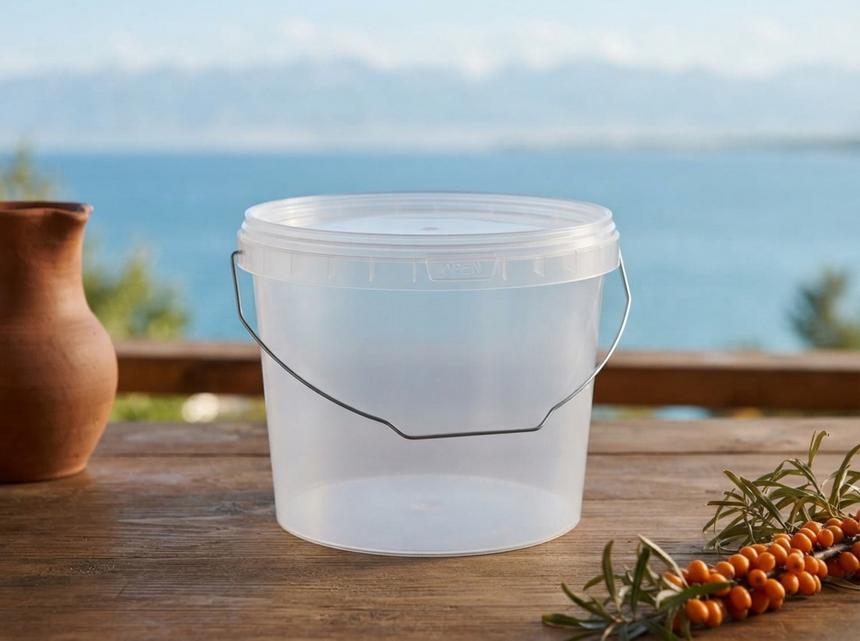
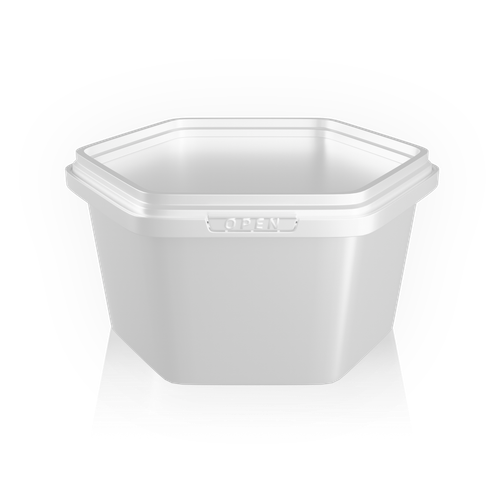
Polypropylene is a thermoplastic: the pellets are melted and injected into a mold, and once cooled, the part holds its shape. This produces a thin, even wall, a double rim, and the OPEN tamper-evident tear strip with raised lettering. During the same molding cycle, artwork can be fused into the wall using in-mold labeling (IML).
Material tool
How much plastic goes into each product
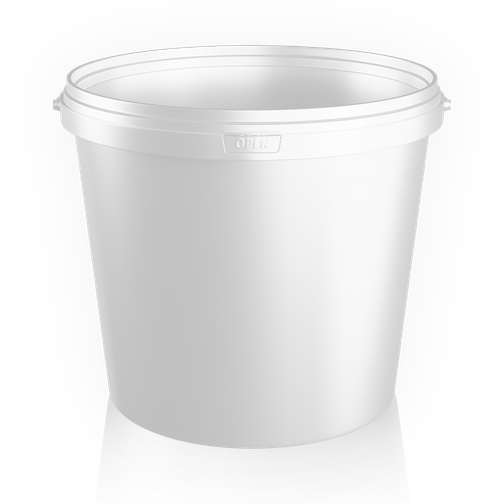
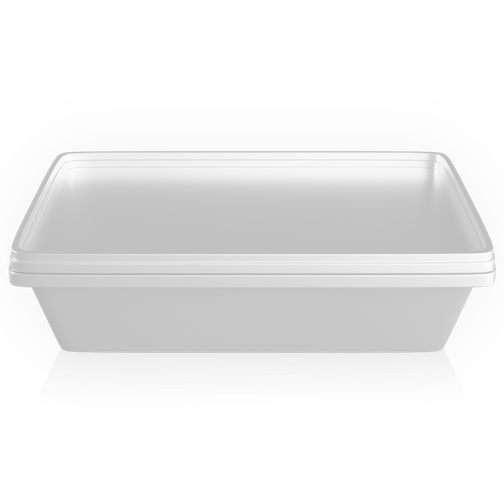
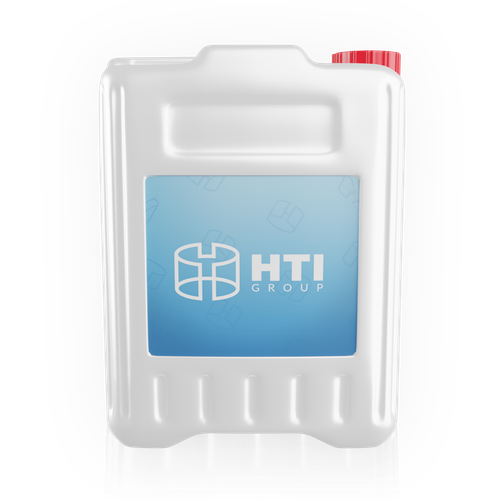
Pick a product, and the tool shows it to scale along with its table row: model, body color, tare weight, and grams of polypropylene per liter of capacity. The "Order" tab converts your monthly product volume into units and pallets, and "Per shelf" shows how many fit in a row on a display shelf.
Packaging from this page's lineup
Pick a product above, and the tool will show its row from the table in this article.
How much product do you package per month
L
We ship in full pallets, so the number of pallets is rounded up.
Shelf length, cm
cm
Shelf depth, cmcm
Based on the top dimensions of the packaging, in a single layer, with no gaps between items.
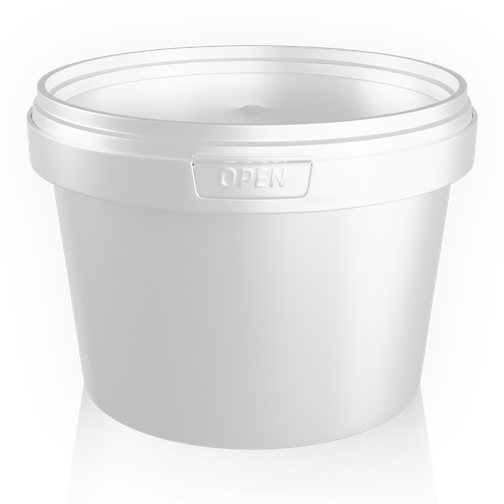 80 mm
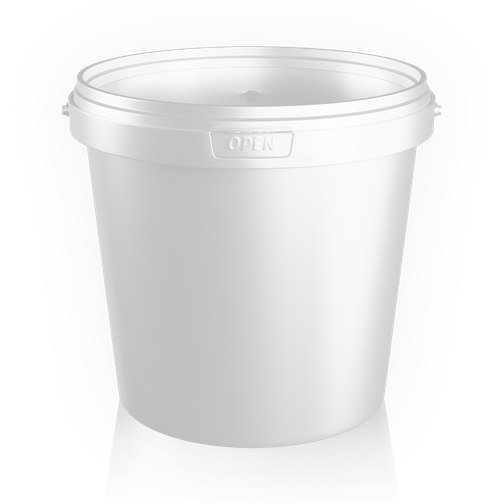 121 mm
 176 mm
 333.5 mm
 50 mm
 240 mm296 mm
How much material goes into packaging
Grams of polypropylene per liter of capacity
As a buyer, part of what you pay for is the plastic the packaging is made of, and your customer pays for its weight in transport. We divided the weight of each empty product by its nominal capacity to get a simple measure: how many grams of polypropylene go into each liter of capacity. Figures are rounded to whole numbers and calculated without handles, since bucket handles are a separate part.
Lineup at the same scalebody width and height per factory spec sheets
| Item | Model | Color | Empty weight | Grams of PP per liter |
|---|---|---|---|---|
| 250 ml container | PHD250 | clear or colored | 13 g | 52 |
| 560 ml bucket | PKS560 | white or clear | 23 g | 41 |
| 750 ml tray | FCD750 | clear or colored | 21 g | 28 |
| 1 L bucket | PK10 | white or clear | 36 g | 36 |
| 3.8 L bucket | PK38 | white or clear | 110 g | 29 |
| 5 L jerry can | EPG500 | white | 240 g | 48 |
| 10 L jerry can | EPG1000 | white | 420 g | 42 |
| 21 L bucket | PK210 | white or clear | 620 g | 30 |
The most material-efficient options are buckets from 3.8 L up and the flat tray: about 28 to 30 g of plastic per liter. Small packaging and jerry cans weigh more per liter: on a small item, the rim and base make up a bigger share, and a jerry can has a molded-in handle, a neck for the cap, and stiffening ribs. That's not a drawback but the price of convenience: you can't sell a single serving in a 21 L bucket, and oil doesn't belong in a bucket with a flat lid.
How to read the marking
The triangle, number, and letters on the bottom
Plastic markings were created for sorting waste, so they mainly tell you about the material. They're easy to read once you remember a few rules. These come in handy when you compare packaging from different suppliers or explain to your customers what the packaging is made of.
1The number 5 in a triangle of arrows is the code for polypropylene. Below it, you'll see PP (or its Cyrillic equivalent on Russian-language markings), and sometimes the number appears as 05.
2Neighboring codes: 1 is PET, used for blow-molded bottles; 2 is high-density polyethylene (HDPE); 3 is PVC; 4 is low-density polyethylene (LDPE); 6 is polystyrene (PS); 7 is other plastics.
3The code is usually molded into the bottom of the product, less often on the side wall or on the lid next to other raised symbols.
4The triangle names the material, not what the product is meant for. Food packaging should be chosen by its intended use, from a manufacturer that makes it for food packing, like HTI food-grade buckets.
5White, colored, and clear bodies in the HTI lineup are all the same material, polypropylene: color changes how the packaging looks, not how it performs.
Logistics
Lightweight packaging on the road
The low weight of polypropylene really shows in transport: a pallet of empty buckets weighs little, and the buckets also nest inside each other in stacks. You can pick up your order from the factory warehouse in Ak-Chiy village, Bishkek FEZ. We deliver to plants and stores in Bishkek and the Chuy Region with our own delivery trucks. Customers in Osh, Jalal-Abad, Karakol, Naryn, and Talas receive their packaging through a freight carrier. Orders from Almaty, Astana, Shymkent, and Karaganda ship by the pallet within the EAEU. Our sales manager confirms delivery time and cost when you place the order. Jerry cans don't nest inside each other, so in a mixed order it's worth listing them as a separate line.
Further reading
Read on: printing, lids, and myths
Material is the foundation, and markings and lids do the rest. Related articles cover IML versus labels, tamper-evident seals, and common myths about plastic.
All blog articles Bucket mythsEight misconceptions, checked against the numbersMaterial and labeling · 8 min
 IML vs labelsEight scenarios and a clear answer on how to label a bucketMaterial and labeling · 6 min
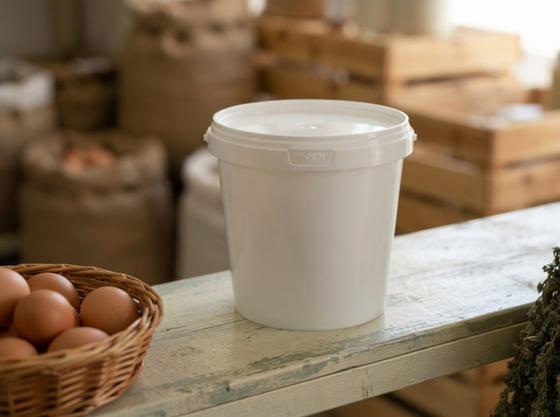 Tamper evidenceHow the OPEN tear strip works and why stores want itMaterial and labeling · 7 min
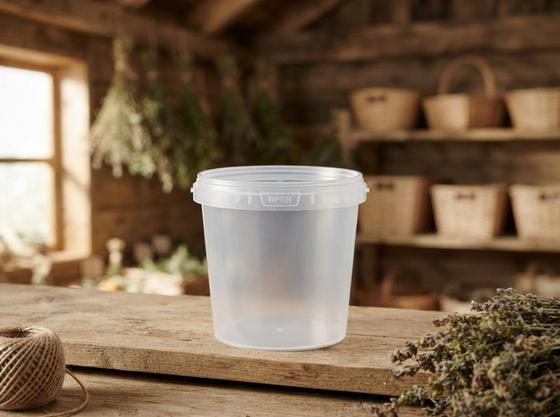 Plastic or glassTare weight, breakage, and pallets: the math for packersComparisons · 6 min
 Packaging weight per palletUnits, liters, and kilograms on a single palletOrdering and logistics · 6 min
 Packaging and salesFive packaging details shoppers noticeChoosing packaging · 8 min
Questions and answers
Frequently asked questions about polypropylene (PP5)
It's a material code: 5 stands for polypropylene. It usually comes with the letters PP. The code helps with waste sorting and tells you right away what plastic the product is made of.
Polypropylene is stiffer and holds the shape of a thin wall better, which makes it a good choice for molding buckets with a crisp rim and a flat lid. Polyethylene is softer and is more often found in film, bags, and blow-molded bottles.
Polypropylene is a thermoplastic, so it can be shredded and remelted. Whether code 5 is accepted in your city depends on local recycling centers. Empty the bucket of any leftover product before dropping it off.
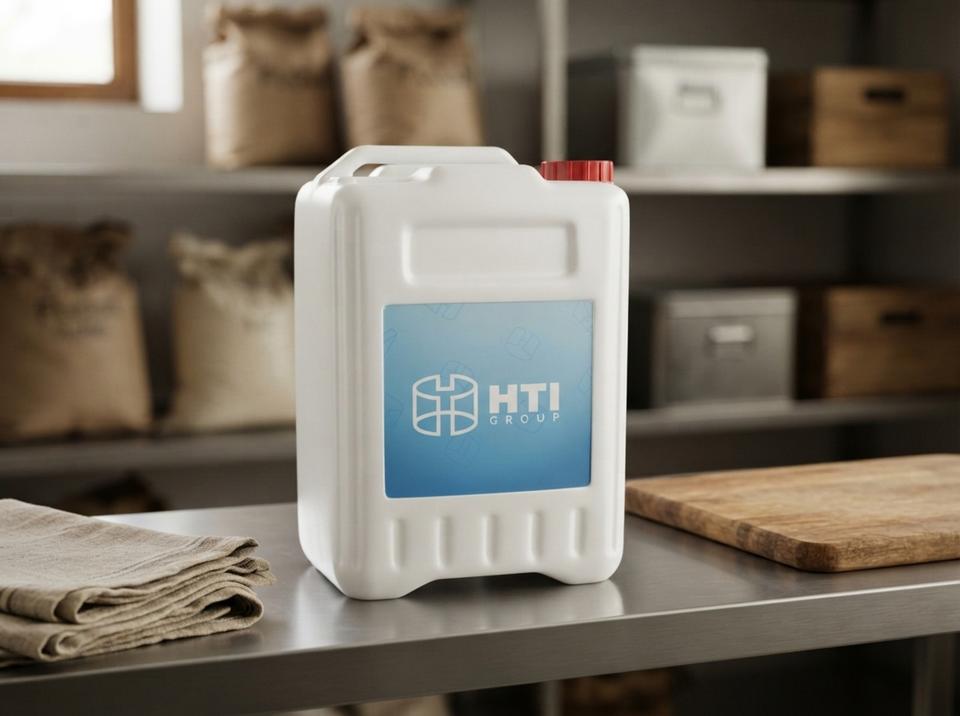
Polypropylene as well. Our 5 L and 10 L jerry cans are white, with a screw cap, a molded-in handle, and stiffening ribs at the bottom.
Our sales manager prices each order individually: the price depends on the product, size, quantity, handle, and printing. Call +996 222 600 292 and tell us which items you need, and we'll prepare a quote for your order.
Yes. A label can be applied to a finished bucket, or with IML the artwork is placed in the mold and fuses with the wall during molding. This kind of image doesn't rub off or peel when washed.
Yes, by the pallet within the EAEU: to Almaty, Astana, Shymkent, Karaganda, and other cities. Our sales manager confirms delivery time and cost when you place your order.
Catalog
Polypropylene packaging in the HTI catalog
Our catalog has buckets from 560 ml to 21 L, containers, trays, and jerry cans, with dimensions and weights. For the basics of choosing food packaging, see our article why food-grade plastic matters.
Quote
Choosing packaging for a new product?
Tell us what you'll be packing: thick or liquid, food or industrial, retail or wholesale. Our sales manager will help you decide between a bucket, a container, or a jerry can, and which size to take for your first order. It's a good idea to test a sample of your product in the chosen packaging before ordering a full run.