

 560 ml
 800 ml
 1 L
 2.3 L
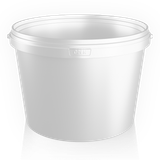 3 L
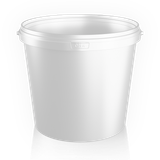 3.8 L
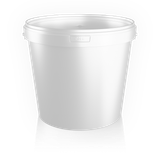 5.6 L
Our sales manager will contact you shortly
Request a callback from our specialist
Want to learn more about our packaging or find the right fit for your business? Request a callback, and our specialist will call you at a time that suits you. Tell us about your product, and we'll help you choose the best option.
Order a callback from a specialist
Want to learn more about our solutions or find the perfect solution for your business? Leave a request for a callback and our specialist will contact you at a convenient time. Together we will find the optimal solution to make your business thrive!
Request a callback from our HR team
Interested in our openings and career opportunities? Leave your contact details and our HR team will get back to you shortly. We'll answer your questions and explain how to join the HTI Group team.
Order a callback from a specialist
Would you like to learn more about our job openings and career opportunities? Leave your contact information, and our HR department will get in touch with you shortly. We will answer all your questions and provide detailed information on how to become part of the HTI Group team.
与我们取得联系
想了解更多我们的解决方案或为您的业务选择完美的解决方案吗?
请留下您的联系方式,我们的专家将尽快与您联系。
让我们一起找到最佳方案,助您的业务蓬勃发展!
请留下您的联系方式,我们的专家将尽快与您联系。
让我们一起找到最佳方案,助您的业务蓬勃发展!
要点电话回拨来自人力资源部门
想了解更多关于我们职位和职业发展的机会吗?请留下您的联系信息,我们的人力资源部门将尽快与您联系。我们将回答您的所有问题,并提供详细信息,帮助您成为HTI Group团队的一员。
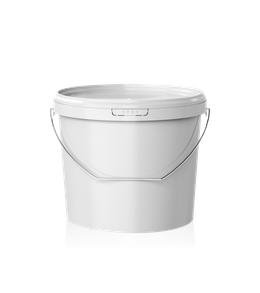 Plastic buckets14 sizes · 560 ml to 21 L
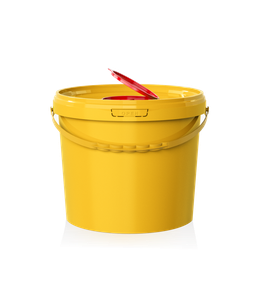 Medical buckets9 sizes · 1 to 21 L
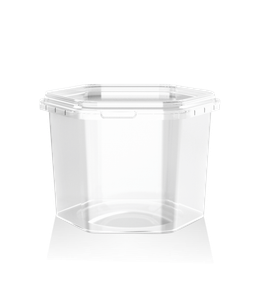 Food containers5 formats · 250 to 750 ml
 Plastic jerry cans5 L and 10 L
Plastic buckets16 models, 560 ml - 21 L
Medical buckets10 models, 1 - 21 L
Food containers5 models, 250 - 750 ml
Plastic canisters5 and 10 L
塑料桶16 个型号,560 毫升 - 21 升
食品容器5 个型号,250 - 750 毫升
塑料方桶5 升和 10 升
HTI AssistantFind the right packaging for your product in 4 steps
HTI AssistantOnline until 5:00 PM
Hello! We'll suggest the right size for your product, calculate pallets, and quote a price for your order.
Contact the plant
WhatsAppChat with a sales managerCall+996 222 600 292We'll call you backLeave your numberEmailinfo@hti-group.kg
Quick actions
Mon-Fri, 9:00 AM-5:00 PM · Factory in the Bishkek Free Economic Zone, Ak-Chiy village
Numbers for packers
Plastic bucket vs glass jar: which is more cost-effective for packing
Honey, jam, and pickles go into glass jars out of habit. But if you sell through markets and shops, you pay for that habit in weight, breakage, and warehouse space. This guide compares the two on facts: what a plastic bucket weighs, how it travels and stores, and how to run the same numbers for your own jar in ten minutes. Bucket figures come from the HTI catalog. As for the jar, we suggest you weigh it yourself.
36 gweight of a 1 L bucket
6,4801 L buckets per pallet
no shardsif a bucket gets dropped
2 colorswhite and clear buckets
Empty weight
How much a bucket weighs and how much product it holds
The table shows the empty weight of food-grade buckets without a handle, how much honey each holds at a density of about 1.42 kg per liter, and what share of the filled pack's weight is the packaging itself. The last column gives the weight of a thousand empty buckets: that is how much packaging you haul with every thousand units of product.
Lineup at the same scalebody width and height per factory spec sheets
| Volume | Model | Empty weight | Honey capacity | Packaging share of filled weight | 1,000 empty buckets |
|---|---|---|---|---|---|
| 560 ml | PKS560 | 23 g | 0.80 kg | 2,8 % | 23 kg |
| 800 ml | PKS800 | 29.5 g | 1.14 kg | 2,5 % | 29.5 kg |
| 1 L | PK10 | 36 g | 1.42 kg | 2,5 % | 36 kg |
| 2.3 L | PK23 | 62 g | 3.27 kg | 1,9 % | 62 kg |
| 3 L | PK30 | 95 g | 4.26 kg | 2,2 % | 95 kg |
| 3.8 L | PK38 | 110 g | 5.40 kg | 2,0 % | 110 kg |
| 5.6 L | PK56 | 156 g | 7.95 kg | 1,9 % | 156 kg |
With a plastic bucket, the packaging makes up about 2-3% of the filled weight; the rest is product your customer pays for. To compare with glass, put your empty jar and lid on the scale and work out the same share: jar weight divided by the weight of the filled jar. With jam, at about 1.33 kg per liter, the bucket's packaging share comes out slightly higher, but in the same range.
Packer's scale
Kilograms of product next to grams of packaging
Enter the net weight you currently pack in a jar, and the tool picks a bucket from this article's table and shows the gross weight and the plastic per kilogram of product. Honey, jam, and sour cream are already on the list, or you can enter your own density. The "Order" tab works out pallets per month.
Packaging from this page's lineup
Choose a size above and the tool will show this bucket's row from the article's table.
ProductFill weight, kg
kg
Enter the net weight and the tool will pick packaging from this page's lineup.
How much product do you package per month
t
We ship in full pallets, so the number of pallets is rounded up.
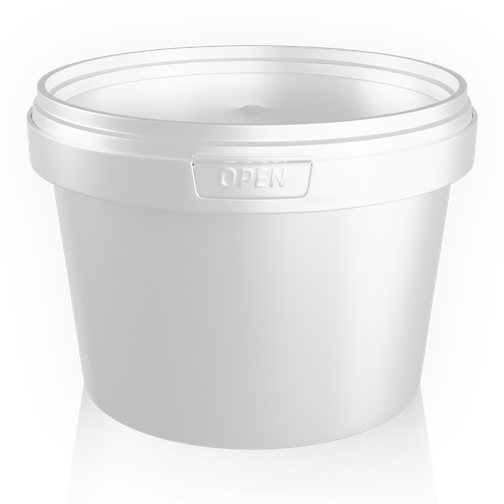 80 mm
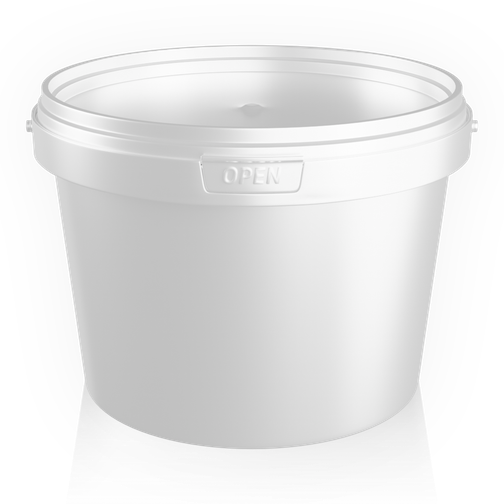 91 mm
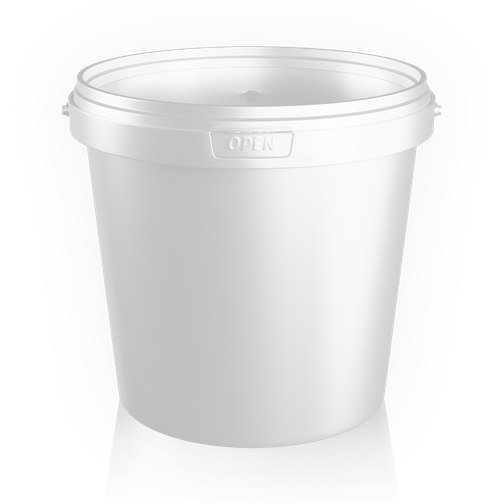 121 mm
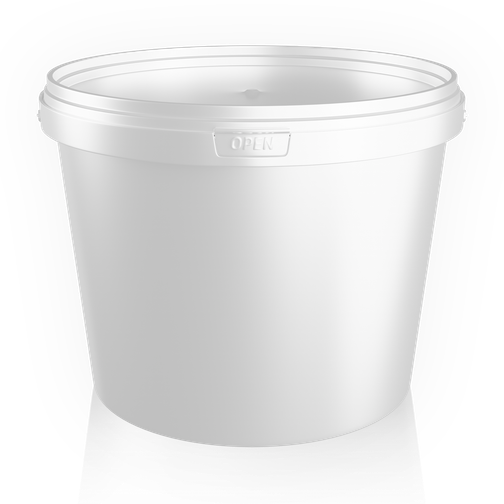 132 mm
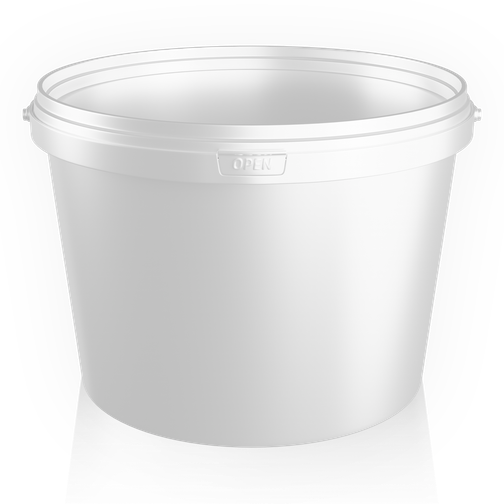 137 mm
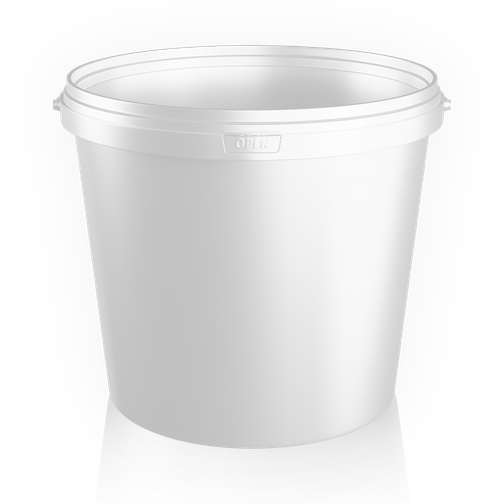 176 mm
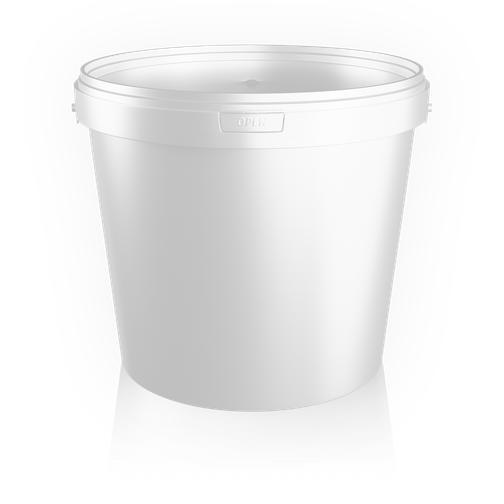 193 mm
Where the savings are
Four cost items where the difference shows
The price of the packaging is only part of the math. A jar and a bucket behave differently in the truck, in the warehouse, and on the counter, and every month those differences turn into real costs. Let's go through them one by one.
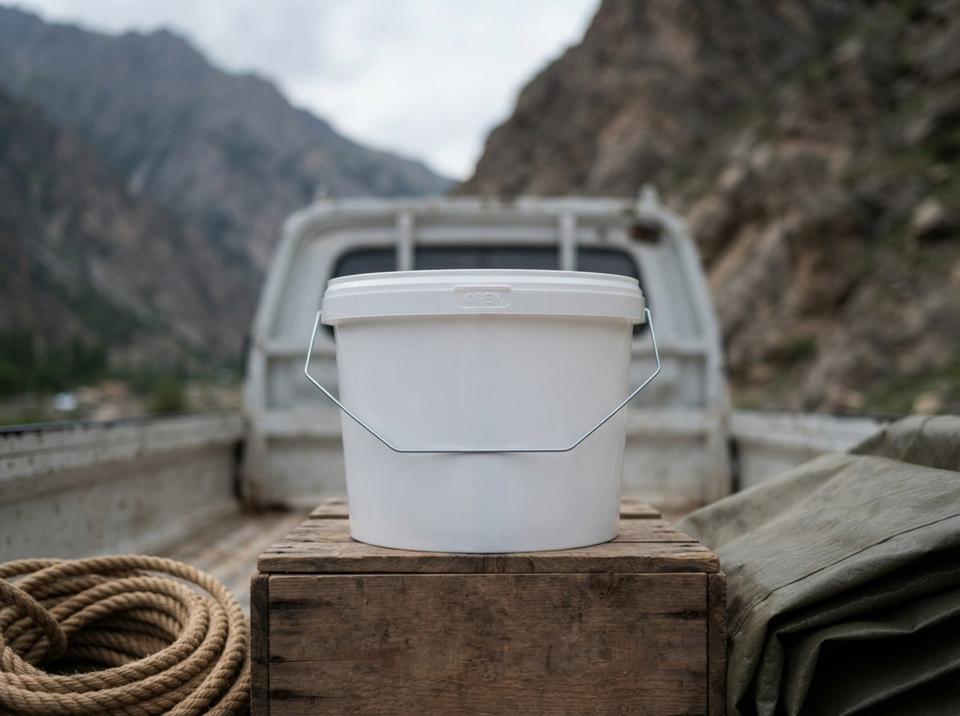
Weight on every trip
Packaging travels with your product wherever you deliver it. A thousand 1 L buckets without handles weigh 36 kg. Weigh your jar, multiply by a thousand, and compare: the difference is dead weight you haul on every trip and never sell.
Breakage and damage to other goods
Glass breaks on the bumpy roads to Naryn or Talas, during unloading, and on the counter. A broken jar doesn't just ruin itself: shards and sticky product end up on the other packs in the box. A polypropylene bucket doesn't shatter when dropped, so this kind of loss almost disappears.
Space for empty packaging
Empty jars don't nest, so they take up as much space as full ones. Empty buckets nest in stacks: one pallet holds 6,480 buckets of 1 L or 2,800 of 3 L. A season's supply of packaging fits in a corner of the shop floor instead of taking up a whole room.
Display and trust
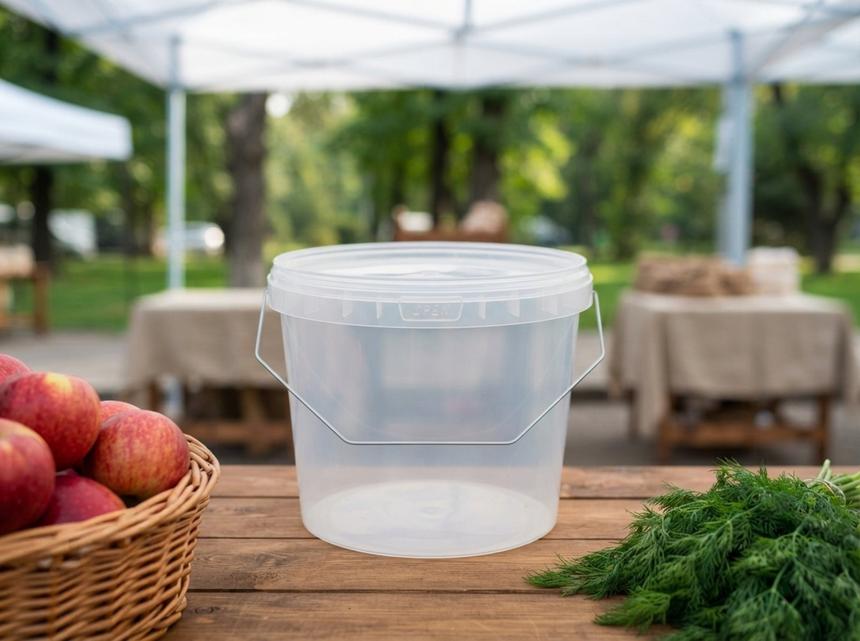
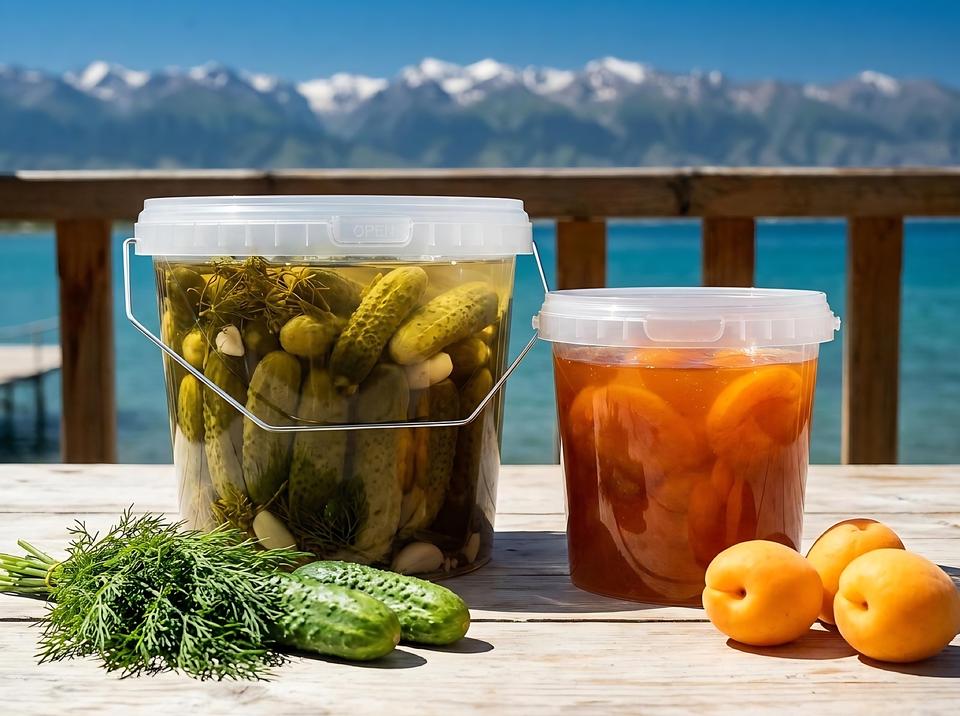
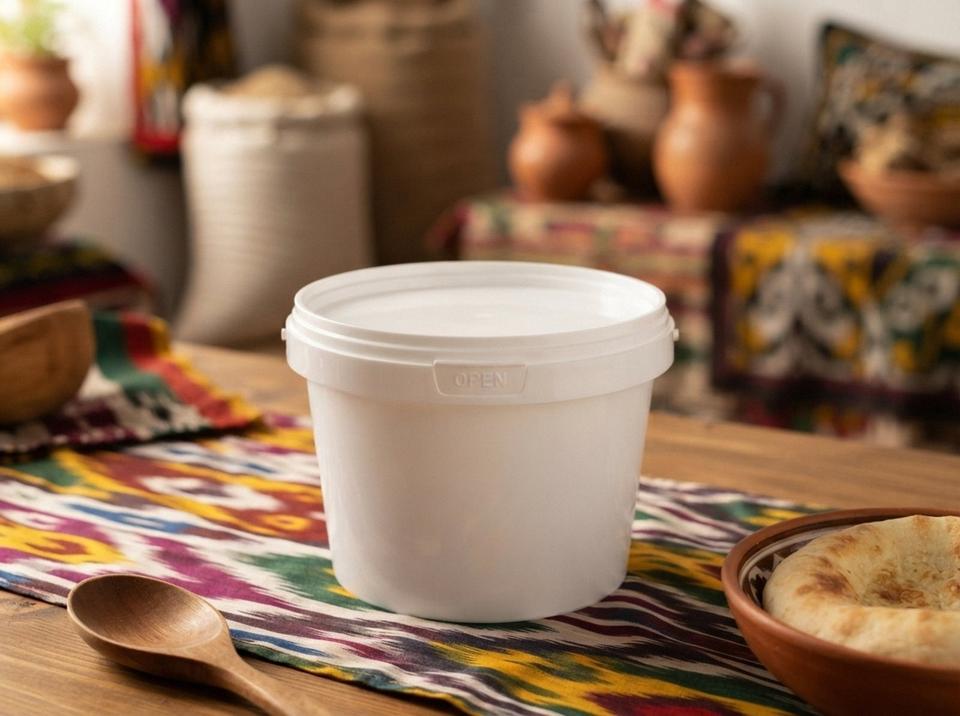
Shoppers like glass because they can see the product. A clear bucket does the same: the color of the honey or jam shows through the wall. And the OPEN tamper-evident tear strip under the rim shows that nobody has taken the lid off since filling.
Step by step
How to calculate the savings for your product
General claims that plastic is lighter don't tell you much. It's more accurate to run your own numbers, and that takes one evening. You'll need a scale, the jar you use now, and a month of sales figures.
1Weigh an empty jar with its lid and compare it with a bucket of similar size from the table, for example the 36 g 1 L bucket.1 L bucket
2Multiply the difference by the number of units you sell per month. That gives you the kilograms of packaging you haul for nothing.
3Check your breakage records: how many jars broke or arrived chipped last season. That's a direct loss, product included.
4Compare warehouse space: how many boxes a month's supply of empty jars takes up, and how much room the same number of nested buckets would need.
5Think about your sales channel: for markets, delivery, and shipping to the regions, a bucket is more practical, while for a gift shelf some shoppers will still choose glass.
Logistics
Switch to buckets without stopping your packing line
Before placing a large order, check the catalog dimensions against your product: height, opening, and brim-full capacity. Then plan deliveries by the pallet. Empty buckets arrive in nested stacks. You can pick them up from the factory warehouse in Ak-Chiy village, Bishkek Free Economic Zone (FEZ). We deliver with our own trucks in Bishkek and the Chuy Region and ship to Osh, Jalal-Abad, Karakol, Naryn, and Talas through a freight carrier. For packers in Kazakhstan, we ship pallets to Almaty, Astana, Shymkent, Karaganda, and other cities within the EAEU. Our sales manager confirms delivery time and cost when you place your order.
Further reading
Three more comparisons from our packaging blog
Glass isn't the only alternative. Our blog compares buckets with metal, bags, and jerry cans the same way, by the numbers: each comparison has its own table and its own tool.
All blog articles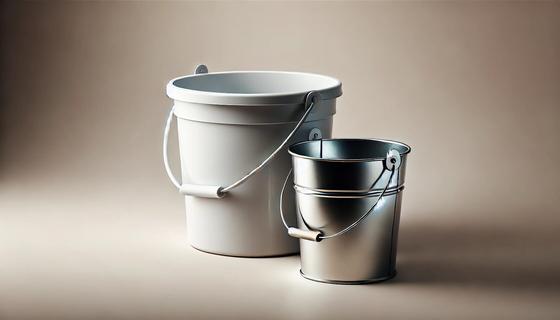 Plastic or metalSeven jobs where a plastic bucket replaces tinplateComparisons · 8 min
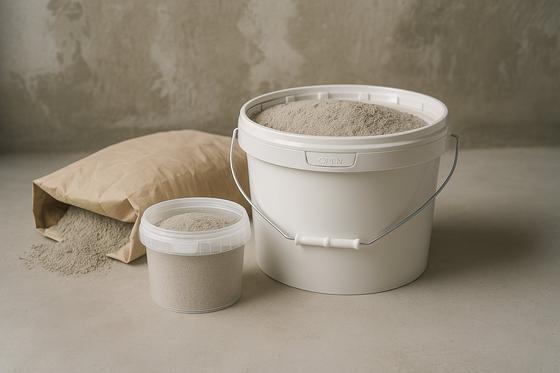 Bucket or bagHow to ship and store dry goods and pastesComparisons · 8 min
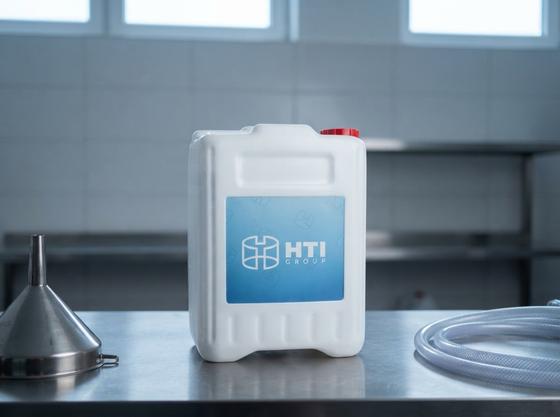 Bucket or jerry canWhich works better for liquids, pastes, and thick productsComparisons · 6 min
 Packaging weight per palletUnits, liters, and kilograms on a single palletOrdering and logistics · 6 min
 Packaging and salesFive packaging details shoppers noticeChoosing packaging · 8 min
 Bucket mythsEight misconceptions, checked against the numbersMaterial and labeling · 8 min
Questions and answers
Questions about plastic vs glass
A 1 L bucket weighs 36 g and a 3 L bucket 95 g, without a handle. Glass jar weight varies by manufacturer, so the most accurate way is to weigh the jar you use and compare it with the table.
In a clear bucket, honey, jam, and pickles are just as visible as in a jar. Choose a white body for a label or printing when shoppers recognize the product by its brand rather than its color.
The bucket has a flat lid, so a full bucket sits steadily on another one of the same size. Stack identical sizes, heavy buckets at the bottom and light ones on top, and keep the stack low enough to lift buckets off by hand.
When your customer expects a jar, for example in gift sets, or when the product is traditionally sealed in glass. For markets, delivery, wholesale, and regional shipping, a bucket is usually more practical.
Our sales manager quotes a price for your order based on size, quantity, handle, and printing. Call +996 222 600 292 and tell us how many jars a month you want to replace with buckets.
Yes: with a label on the finished bucket or with IML, where the label is fused into the wall during molding. This print doesn't rub off or peel when washed. Learn more on the IML page.
Yes, by the pallet within the EAEU: to Almaty, Astana, Shymkent, Karaganda, and other cities. Our sales manager confirms delivery time and cost when you place your order.
Catalog
Buckets to replace jars in the HTI catalog
The catalog lists tare weight, dimensions, and units per pallet for every bucket from 560 ml to 21 L. If you sell honey, take a look at the section on honey buckets, which covers sizes for retail, family use, and wholesale.
Quote
Want to compare using your own numbers?
Tell us your product, your jar size, and how many units you sell per month. Our sales manager will suggest a bucket of similar size, advise whether a white or clear body will show your product better, and work out how many pallets of packaging you need.