


A sales manager will contact you shortly.
Request a callback from our specialist
Want to learn more about our packaging or find the right fit for your business? Request a callback, and our specialist will call you at a time that suits you. Tell us about your product, and we'll help you choose the best option.
Order a callback from a specialist
Want to learn more about our solutions or find the perfect solution for your business? Leave a request for a callback and our specialist will contact you at a convenient time. Together we will find the optimal solution to make your business thrive!
Request a callback from our HR team
Interested in our openings and career opportunities? Leave your contact details and our HR team will get back to you shortly. We'll answer your questions and explain how to join the HTI Group team.
Order a callback from a specialist
Would you like to learn more about our job openings and career opportunities? Leave your contact information, and our HR department will get in touch with you shortly. We will answer all your questions and provide detailed information on how to become part of the HTI Group team.
与我们取得联系
想了解更多我们的解决方案或为您的业务选择完美的解决方案吗?
请留下您的联系方式,我们的专家将尽快与您联系。
让我们一起找到最佳方案,助您的业务蓬勃发展!
请留下您的联系方式,我们的专家将尽快与您联系。
让我们一起找到最佳方案,助您的业务蓬勃发展!
要点电话回拨来自人力资源部门
想了解更多关于我们职位和职业发展的机会吗?请留下您的联系信息,我们的人力资源部门将尽快与您联系。我们将回答您的所有问题,并提供详细信息,帮助您成为HTI Group团队的一员。
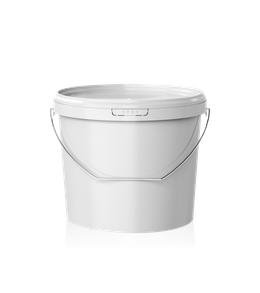 Plastic buckets14 sizes · 560 ml to 21 L
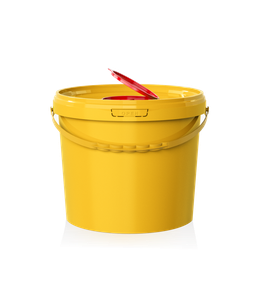 Medical buckets9 sizes · 1 to 21 L
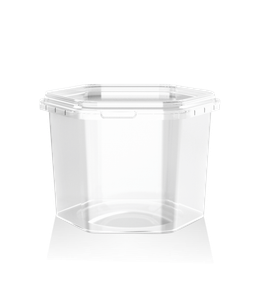 Food containers5 formats · 250 to 750 ml
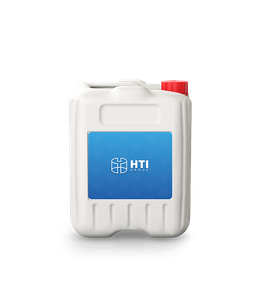 Plastic jerry cans5 L and 10 L
Plastic buckets16 models, 560 ml - 21 L
Medical buckets10 models, 1 - 21 L
Food containers5 models, 250 - 750 ml
Plastic canisters5 and 10 L
塑料桶16 个型号,560 毫升 - 21 升
食品容器5 个型号,250 - 750 毫升
塑料方桶5 升和 10 升
HTI AssistantFind the right packaging for your product in 4 steps
HTI AssistantOnline until 5:00 PM
Hello! We'll suggest the right size for your product, calculate pallets, and quote a price for your order.
Contact the plant
WhatsAppChat with a sales managerCall+996 222 600 292We'll call you backLeave your numberEmailinfo@hti-group.kg
Quick actions
Mon-Fri, 9:00 AM-5:00 PM · Factory in the Bishkek Free Economic Zone, Ak-Chiy village
Vegetable processing
Packaging for canneries and vegetable processing plants
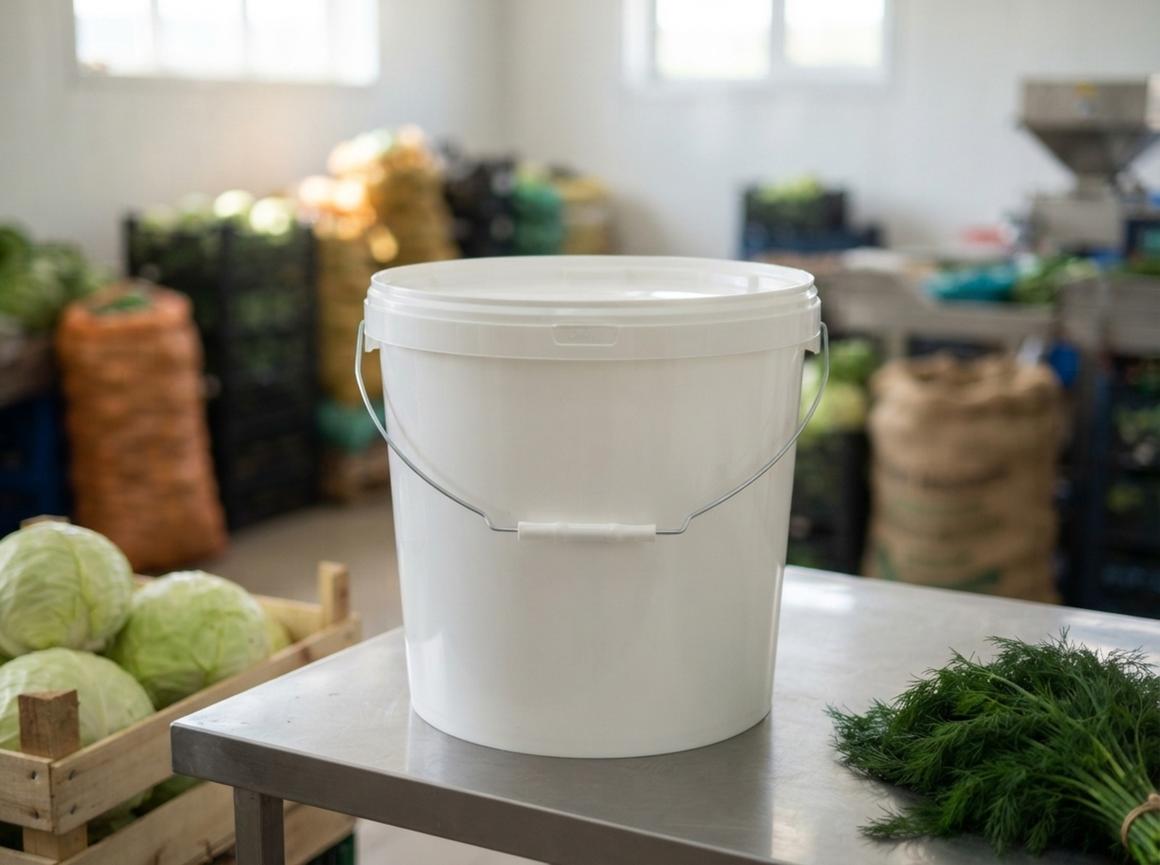
A processing plant runs several product lines at once: pickles and fermented vegetables, marinades, Korean salads, tomato paste and adjika, and jams. Each takes its own route: brining in large buckets, packing for food service, then onto a bazaar stall or store shelf. HTI covers the whole chain from one plant in Bishkek. We make buckets from 560 ml to 21 L, white and clear, plus jerry cans for vinegar and oil. We ship to processors across Kyrgyzstan and Kazakhstan.
0.56-21 Lfrom retail to brining
about 22 kgof pickles in a 21 L bucket
2 colorswhite and clear
IMLone brand across all sizes
Cannery kit
Two packaging streams: large for wholesale, small for retail
A cannery runs two packaging streams: large buckets for curing and wholesale, small clear ones for retail. Set the pallets for each work area to see how many units arrive and how much of the truck the kit takes up.
Ready-made kits
- 1Brining areacabbage, cucumbers, tomatoes in brine21 L bucketPK210 · 600 pcs per pallet
- 2Marinating roomwild garlic, mushrooms, garlic in marinade11.5 L bucketPK115 · 816 pcs per pallet
- 3Deli sectionKorean carrot salad, fish he, soy asparagus, kimchi5.6 L bucketPK56 · 1,920 pcs per pallet
- 4Tomato sectiontomato paste, adjika, lecho3.8 L bucketPK38 · 2,800 pcs per pallet
- 5Packed by weightfamily-size pickles and salads2.3 L bucketPK23 · 3,300 pcs per pallet
- 6Single-serve packssalad, adjika, mushrooms1 L bucketPK10 · 6,480 pcs per pallet
- 7Cooking areajam, fruit butter, and preserves560 ml bucketPKS560 · 7,200 pcs per pallet
- 8Ingredient storagevinegar, vegetable oil10 L jerry canEPG1000 · 100 pcs per pallet
Kit summary
Pallet and unit counts follow factory standards; truck loading is an estimate. The order calculator shows the exact layout.
Work areas and sales channels
Packaging by production stage and by customer
The table runs from the brining area to the store counter. For each area, it shows what happens there, which packaging it uses, and who ends up with the product. The last column matters most. You choose the size by who opens the bucket, not by the product: a cafeteria cook, a bazaar vendor, or a store shopper.
Lineup at the same scalebody width and height per factory spec sheets
| Area | Product | Empty weight | Volume | Goes to |
|---|---|---|---|---|
| Brining area | cabbage, cucumbers, tomatoes in brine | bucket with bail handle and plastic grip | 21 L | curing before packing, bulk wholesale |
| Marinating room | wild garlic, mushrooms, garlic in marinade | bucket with plastic grip | 11.5 L | cafeterias, wholesale outlets |
| Deli section | Korean carrot salad, fish he, soy asparagus, kimchi | bucket with metal bail handle | 5.6 L | delis, bazaar stalls |
| Tomato section | tomato paste, adjika, lecho | bucket with handle | 3.8 L | kebab houses, pizzerias, cafes |
| Packed by weight | family-size pickles and salads | clear bucket | 2.3 L | bazaar, supermarket |
| Single-serve packs | salad, adjika, mushrooms | clear bucket | 1 L | corner store, counter |
| Cooking area | jam, fruit butter, and preserves | small bucket | 560 ml | store shelf, tourists |
| Ingredient storage | vinegar, vegetable oil | jerry can with screw cap | 10 L | in-house work area |
Pickles in brine weigh about 1.05 kg per liter, so a 21 L bucket holds about 22 kg of product. You can't lift it without a bail handle with a plastic grip. A 1 L bucket of jam weighs only about 1.3 kg: a one-handed purchase. Between these extremes, a cannery usually stocks four or five working sizes. Almost all of them nest inside each other while they sit empty in the warehouse.

How a cannery works
Salting, marinating, packing, and storage
Vegetables arrive in waves: cucumbers and tomatoes in late summer, cabbage and carrots in the fall. Within a few weeks, you have to process produce that then sells all winter. That's why canneries plan packaging by work area and in advance, instead of buying more when the cucumbers are already at the gate.
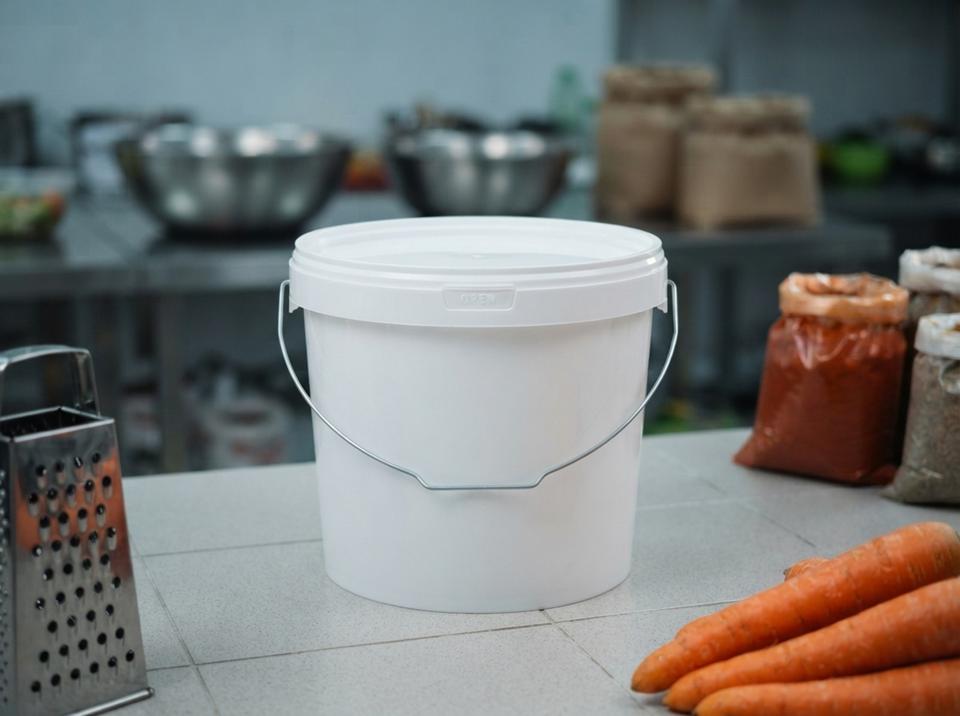
Brining in large buckets
For wholesale, cabbage and cucumbers are brined in 18 L and 21 L buckets. The 332 mm opening lets you layer vegetables by hand and press them under a weight. Our page on pickle buckets explains how much headspace to leave above the product for brine.
Keep spicy apart from sweet
Set aside a separate group of buckets for Korean carrot salad, adjika, and garlic marinades, and never use it for jam. This makes washing easier and prevents mix-ups on shift. Our page on buckets for Korean salads covers which sizes to choose for bazaar sales and for deliveries to outlets.
Counter and retail chains
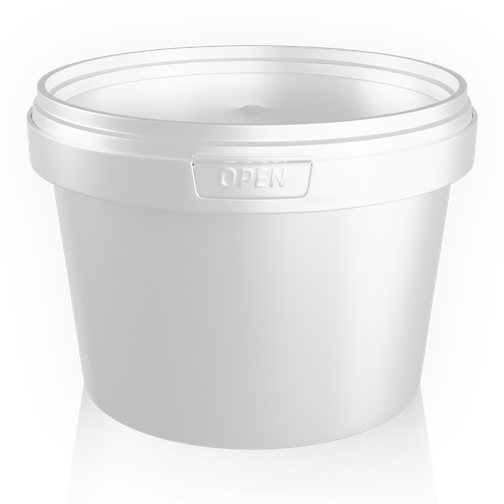
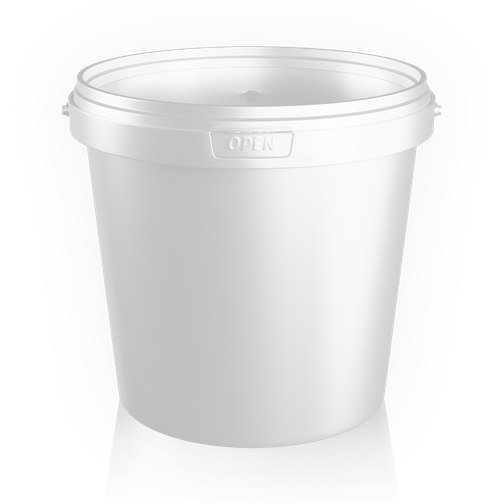
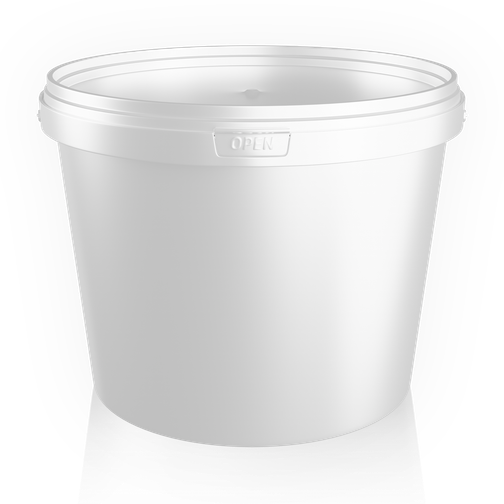
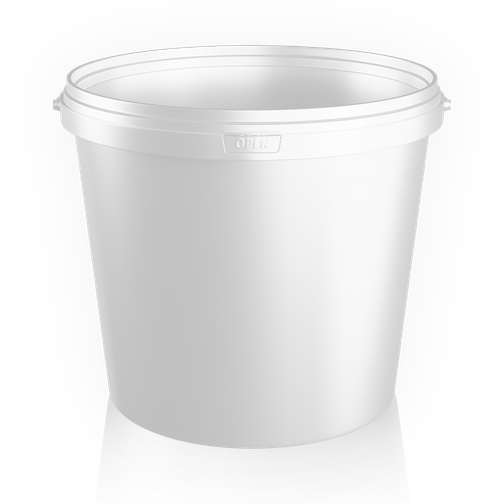
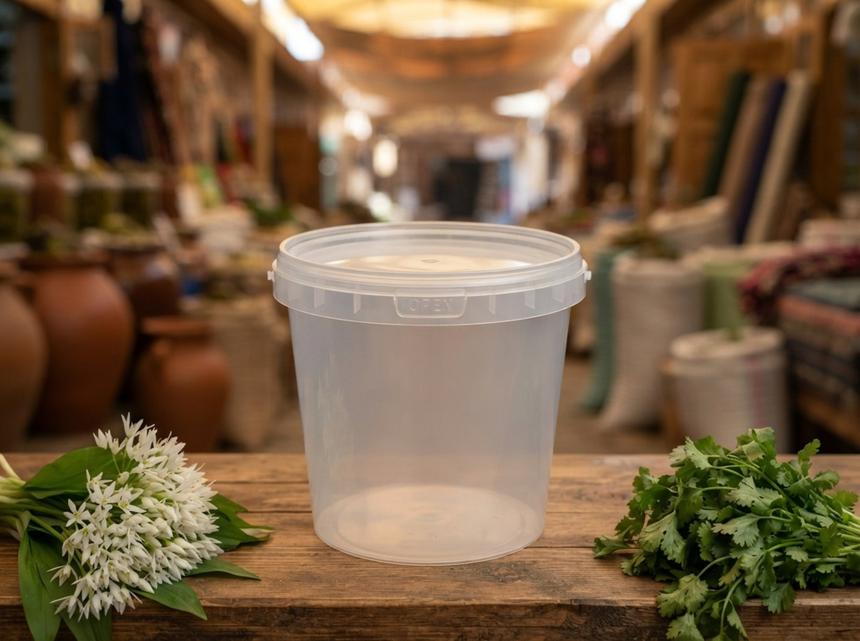
For retail, processors choose 1 L and 2.3 L clear buckets: shoppers see crisp cucumbers and bright Korean carrot salad through the wall. The OPEN tamper-evident tear strip under the lid rim shows that nobody repacked the pickles after they left the plant or topped them up with someone else's brine.
Peak season
From August to October, a cannery works seven days a week, and reordering packaging in those weeks eats up time. Empty buckets nest in stacks, so you can bring in the whole season's stock early, while the produce is still in the field.
How to build a lineup
One lineup for wholesale and retail
It pays to keep a limited set of sizes that covers every sales channel. Every extra size means another stack in the warehouse and more mix-ups at packing. Here's how canneries usually build that lineup.
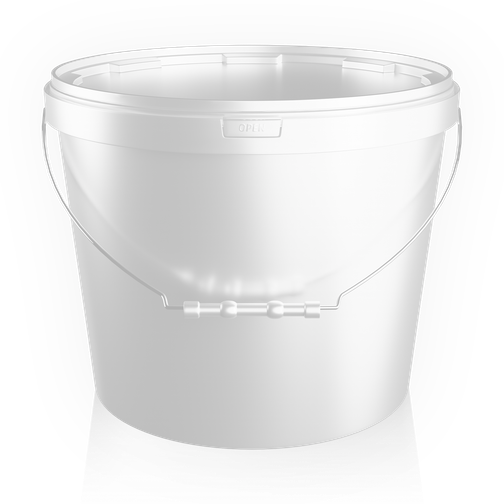
1Brining and curing: 18 L or 21 L with a bail handle and plastic grip. Both have a 332 mm opening; the 21 L is 47.5 mm taller.21 L bucket
2Food service and wholesale outlets: 5.6 L and 11.5 L. A cafeteria cook goes through one bucket in one or two shifts.11.5 L bucket
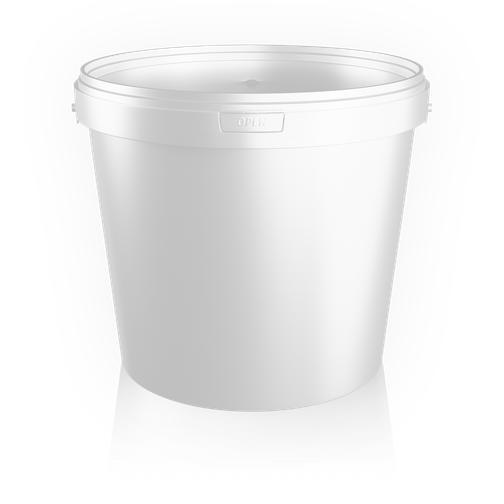
3Retail: 1 L and 2.3 L clear buckets, plus 560 ml for jam.560 ml bucket2.3 L bucket
4One brand across sizes: with in-mold labeling (IML), your logo reads the same on a 1 L bucket and a 5 L bucket.
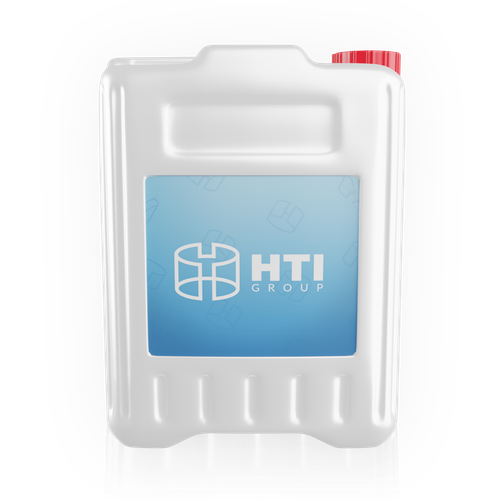
5Vinegar and oil for marinades: 10 L jerry cans, kept separate from finished products.10 L jerry can
Logistics
Packaging in time for processing season
Canneries in the Chuy Valley pick up packaging from the HTI plant in the Bishkek Free Economic Zone (FEZ), Ak-Chiy village, or get it on our own delivery trucks. Processors in Jalal-Abad, Osh, Batken, and Issyk-Kul Region receive buckets via a freight carrier. We ship pallets to canneries in Almaty, Shymkent, and Taraz within the EAEU. Buckets of different sizes and jerry cans travel in one truck, and empty buckets ship nested in stacks. Our sales manager confirms delivery time and cost when you place the order, so order your stock for cucumber season in early summer.
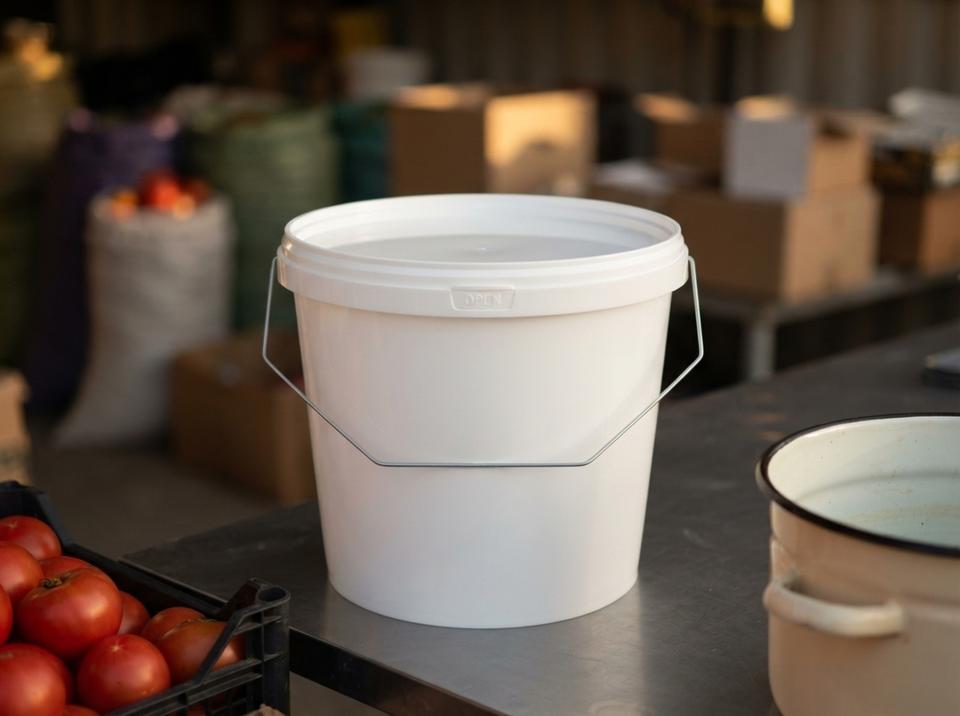
Related pages
Pickles, salads, pastes: estimates by product
Pickles, Korean salads, tomato paste, and jam each have their own page with the product weight in every bucket. Next to them: industries with similar packing needs.
All 20 industries Buckets for picklessauerkraut, cucumbers, tomatoes, wild garlic1-18 L
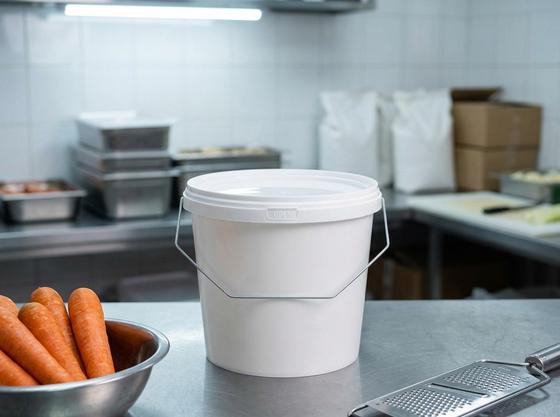 Buckets for Korean saladsKorean carrot salad, khe, kimchi, fern salad1-11.5 L
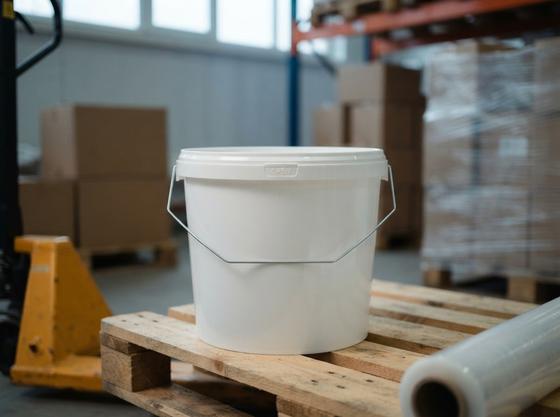 Packers and wholesalersmixed orders for retail chains, regions, and marketplacesall 14 bucket sizes, jerry cans
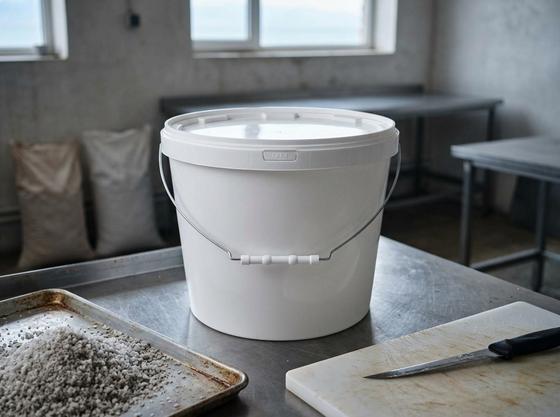 Fish processingsalting, marinating, caviar, preserved fishbuckets 560 ml-21 L, containers
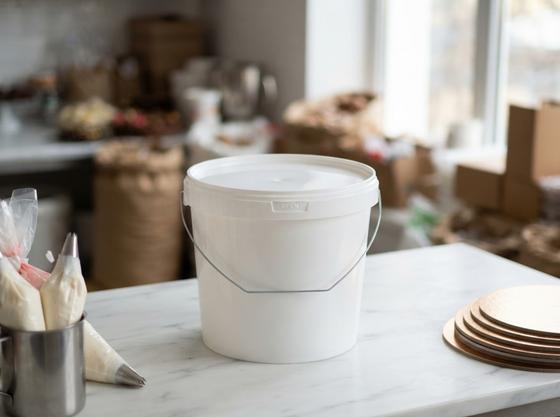 Pastry shops and bakeriescreams, fillings, glazes, ingredients, display case3.8-18 L buckets, 250 ml container, 750 ml tray
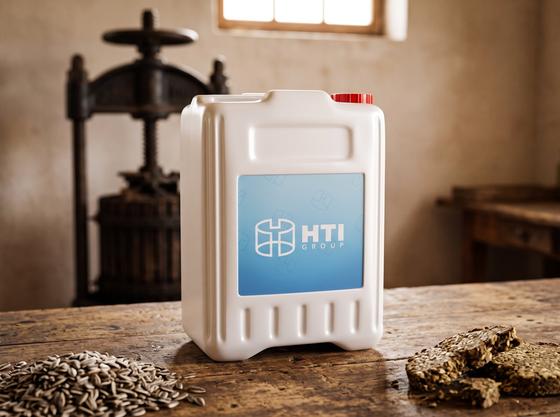 Oil millsvegetable oil, oilseed cake, pastes5 and 10 L jerry cans, buckets
Questions and answers
Frequently asked questions about packaging for canneries
Usually five: 21 L for brining, 11.5 L and 5.6 L for food service and wholesale outlets, 2.3 L and 1 L for the counter. If you make jam, add 560 ml.
Split your buckets into groups and don't mix them: one for Korean carrot salad, adjika, and marinades, another for jams. The easiest way is to separate groups by size or by a label on the lid.
Most often the 3.8 L. Its 200 mm opening lets the cook scoop out every bit of paste with a spoon, and the bucket is used up in a few days. Large cafeterias take the 5.6 L.
Under the lid rim there's an OPEN tamper-evident tear strip. As long as it's intact, nobody has opened the bucket since it left the plant. That's a strong selling point in retail, especially in chain stores.
Your sales manager quotes the price for your order based on sizes, quantity, handle, color, and decoration. Send us your seasonal production plan by product, and we'll quote the whole lineup at once.
Yes. The logo goes on with a label or with IML, where the label is fused into the wall during molding. The artwork is adjusted to each size, so the series looks consistent on the shelf.
Yes, by the pallet within the EAEU: to Almaty, Shymkent, Taraz, and other cities. A mixed order of buckets and jerry cans goes in one shipment, and your sales manager confirms delivery time and cost when you place the order.
Catalog
Packaging for food processing in the HTI catalog
Our catalog lists dimensions, empty weight, and handle options for every size. If you sell to retail chains and marketplaces, see our page on packaging for packers and wholesalers.
Request
Getting your cannery ready for the new season?
Send us your production plan by product and sales channel. Your sales manager will choose sizes, versions, and decoration, calculate pallets, and propose a delivery schedule so packaging arrives before processing starts.