
 560 ml
 850 ml
 1 L
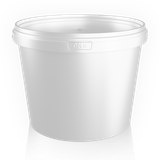 2.3 L
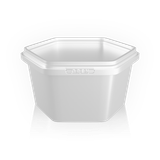 250 ml
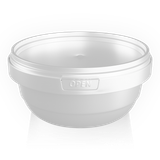 385 ml
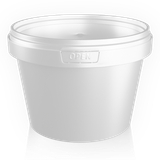 550 ml
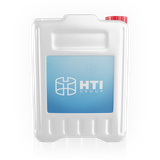 5 L
Our sales manager will contact you shortly
Request a callback from our specialist
Want to learn more about our packaging or find the right fit for your business? Request a callback, and our specialist will call you at a time that suits you. Tell us about your product, and we'll help you choose the best option.
Order a callback from a specialist
Want to learn more about our solutions or find the perfect solution for your business? Leave a request for a callback and our specialist will contact you at a convenient time. Together we will find the optimal solution to make your business thrive!
Request a callback from our HR team
Interested in our openings and career opportunities? Leave your contact details and our HR team will get back to you shortly. We'll answer your questions and explain how to join the HTI Group team.
Order a callback from a specialist
Would you like to learn more about our job openings and career opportunities? Leave your contact information, and our HR department will get in touch with you shortly. We will answer all your questions and provide detailed information on how to become part of the HTI Group team.
与我们取得联系
想了解更多我们的解决方案或为您的业务选择完美的解决方案吗?
请留下您的联系方式,我们的专家将尽快与您联系。
让我们一起找到最佳方案,助您的业务蓬勃发展!
请留下您的联系方式,我们的专家将尽快与您联系。
让我们一起找到最佳方案,助您的业务蓬勃发展!
要点电话回拨来自人力资源部门
想了解更多关于我们职位和职业发展的机会吗?请留下您的联系信息,我们的人力资源部门将尽快与您联系。我们将回答您的所有问题,并提供详细信息,帮助您成为HTI Group团队的一员。
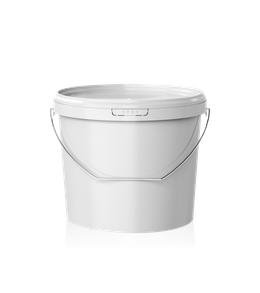 Plastic buckets14 sizes · 560 ml to 21 L
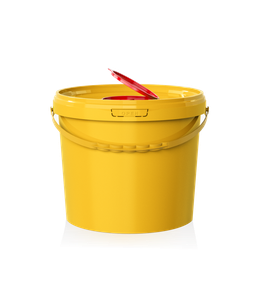 Medical buckets9 sizes · 1 to 21 L
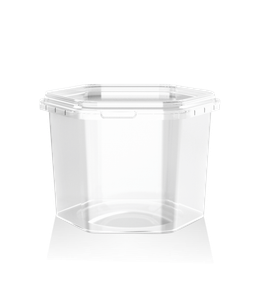 Food containers5 formats · 250 to 750 ml
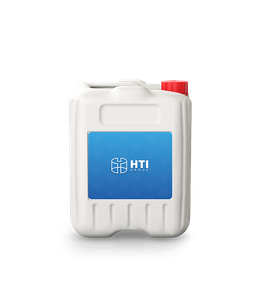 Plastic jerry cans5 L and 10 L
Plastic buckets16 models, 560 ml - 21 L
Medical buckets10 models, 1 - 21 L
Food containers5 models, 250 - 750 ml
Plastic canisters5 and 10 L
塑料桶16 个型号,560 毫升 - 21 升
食品容器5 个型号,250 - 750 毫升
塑料方桶5 升和 10 升
HTI AssistantFind the right packaging for your product in 4 steps
HTI AssistantOnline until 5:00 PM
Hello! We'll suggest the right size for your product, calculate pallets, and quote a price for your order.
Contact the plant
WhatsAppChat with a sales managerCall+996 222 600 292We'll call you backLeave your numberEmailinfo@hti-group.kg
Quick actions
Mon-Fri, 9:00 AM-5:00 PM · Factory in the Bishkek Free Economic Zone, Ak-Chiy village
Thick formulas
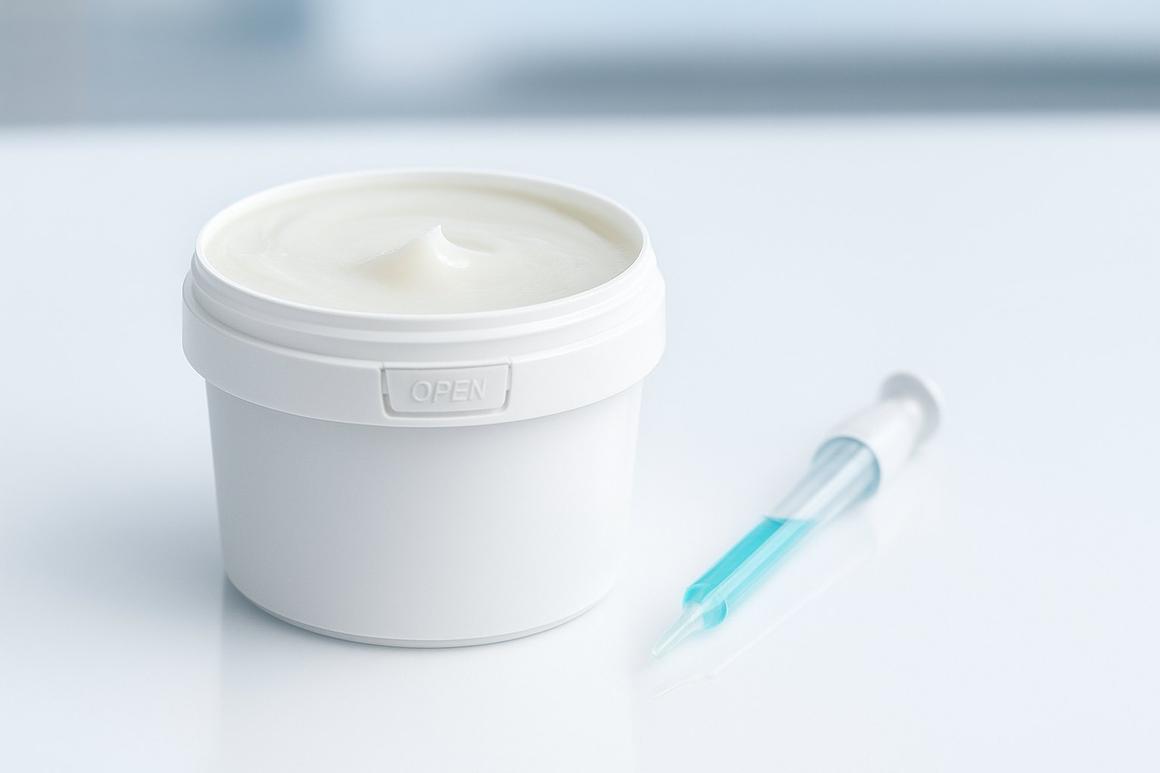
Packaging for ointments and gels: wide-mouth jars and buckets
Ointment and gel packaging is a jar: the thick formula is scooped out with a spatula or fingers, and the lid goes back on many times. At HTI Group in the Bishkek Free Economic Zone (FEZ), we make small polypropylene buckets from 560 ml to 1 L and containers from 250 ml for this kind of product. We don't claim pharmaceutical approvals or disinfected packaging: drug manufacturers check packaging requirements against their own regulations. This article is for small workshops, veterinary pharmacies, and clinics in Kyrgyzstan and Kazakhstan.
250 ml to 1 Ljars and small buckets for retail
118 mmtop diameter shared by four sizes
17,600hexagonal jars per pallet
IMLamong containers: the round 550 ml
Eight formats
From a 250 ml sample jar to a 5 L jerry can of gel
The table lists six items up to 1 L that work as jars, a 2.3 L bucket for production use, and a jerry can for pourable gel. The last column is calculated: how many units a 10 L batch fills at nominal capacity. It shows how many jars you need for one batch.
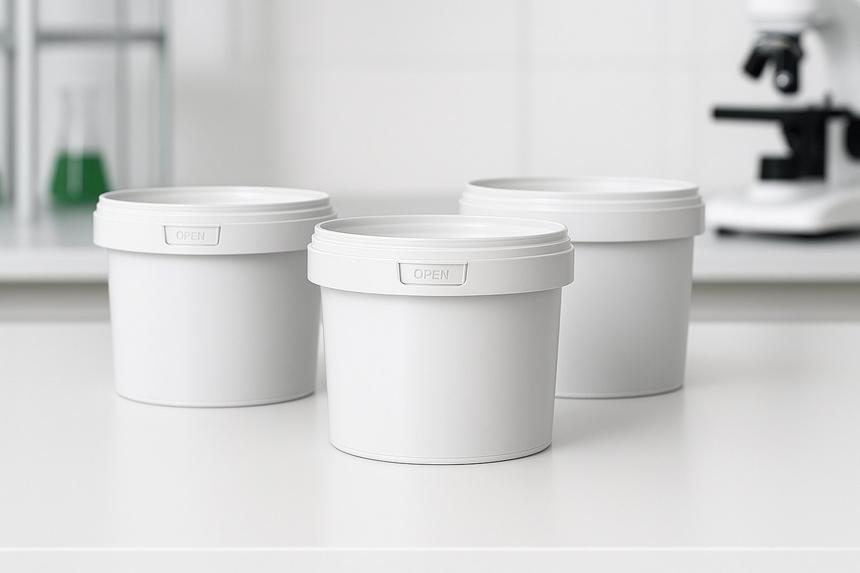
Lineup at the same scalebody width and height per factory spec sheets
| Volume | Task | Shape and size, mm | Empty weight | Units per pallet | From a 10 L batch, pcs |
|---|---|---|---|---|---|
| 250 ml | cream sample for a trade fair | hexagonal, no handle | 13 g | 17,600 | 40 |
| 385 ml | balm for a gift set | round, Ø 118 × | 16 g | 7,200 | 25 |
| 550 ml | branded cream with IML | round, Ø 118 × | 18.8 g | 10,800 | 18 |
| 560 ml | ointment for a veterinary pharmacy | bucket with side lugs, Ø 118 × | 23 g | 7,200 | 17 |
| 850 ml | massage gel for therapists | tall bucket, Ø 118 × | 32.5 g | 7,200 | 11 |
| 1 L | udder ointment for farms | plastic handle, Ø 132.5 × | 36 g | 6,480 | 10 |
| 2.3 L | base cream for workshops and salons | metal bail handle, Ø 175 × | 62 g | 3,300 | 4 |
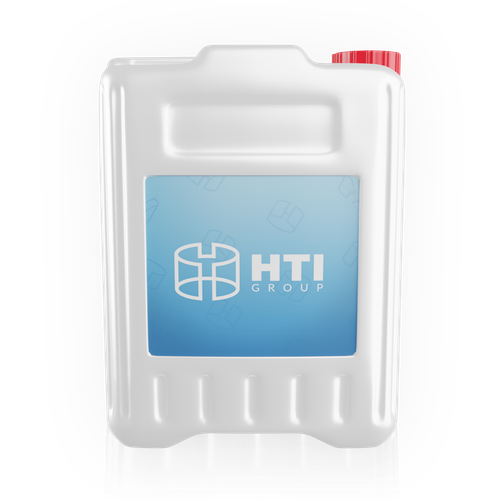
| 5 L | pourable ultrasound gel for refilling | jerry can 163 × | 240 g | 180 | 2 |
Four items (385, 550, 560, and 850 ml) share the same top diameter: a spatula reaches in the same way, and the portion grows as the body gets taller. The 550 ml container and the 560 ml bucket are the same size, but the container is 4.2 g lighter. Weight in kilograms depends on the density of the formula, so find the portion weight with a test fill.
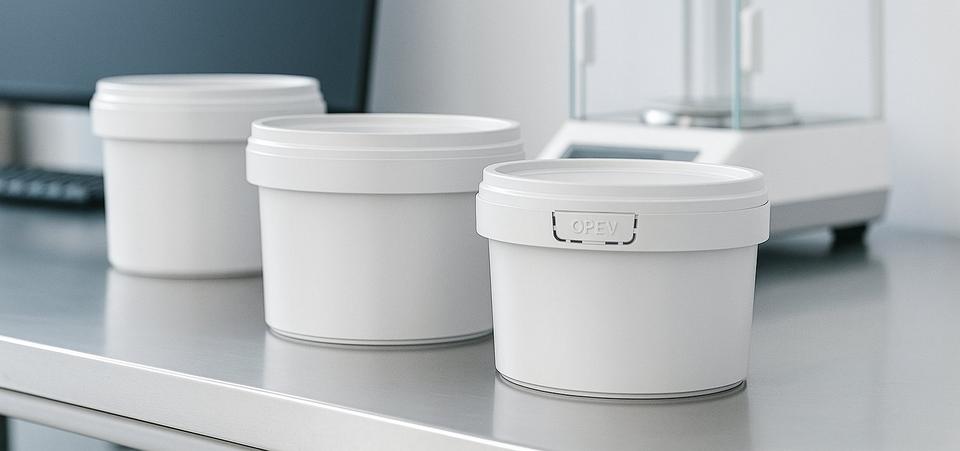
Pick by use case
Pick a use case and the tool shows the jar
Choose a scenario from the list: a cream sample for a trade fair, an ointment for a farm, a massage gel for therapists, or a base for production. The tool places the item next to its neighbors at the same scale and shows the shape, empty weight, units per pallet, and how many jars a 10 L batch fills.
Packaging from this page's lineup
Task
The rows come from this page's table: each one has its own packaging.
What it will be repacked into
Calculated at the nominal capacity of the packaging: how many whole portions it yields.
How much product do you package per month
L
We ship in full pallets, so the number of pallets is rounded up.
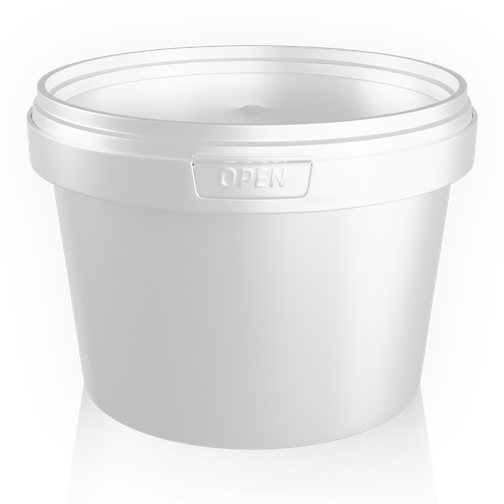 80 mm
 124 mm
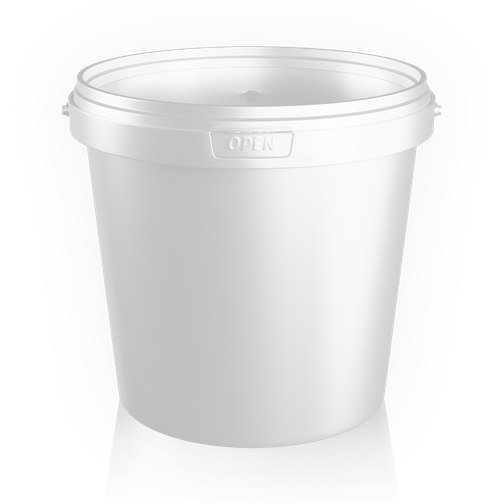 121 mm
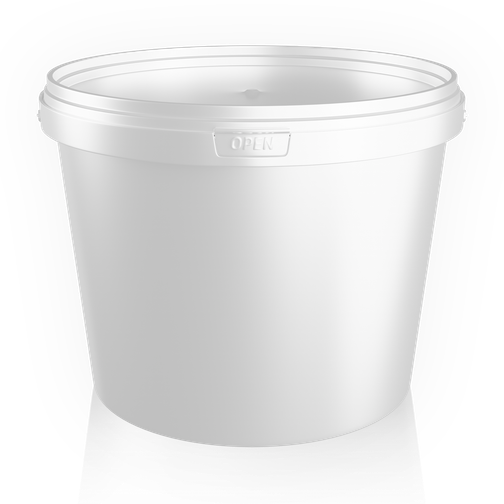 132 mm
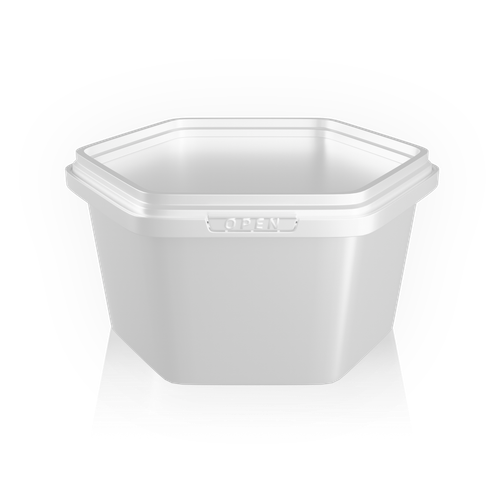 50 mm
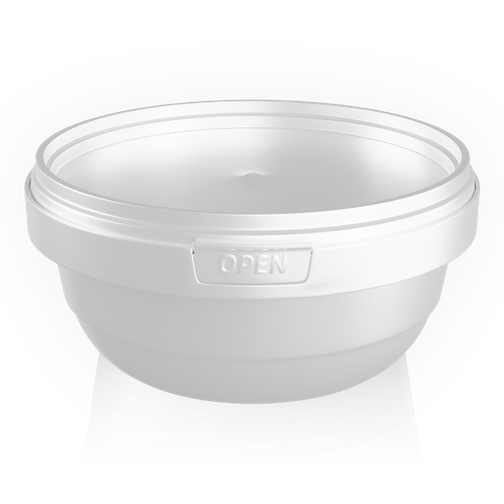 54 mm
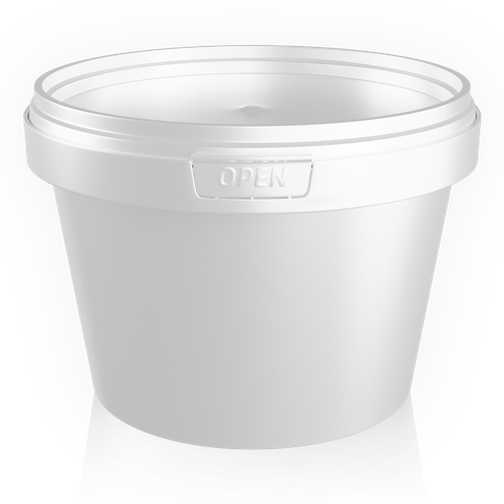 80 mm
 240 mm
Launch steps
Five steps from mixing to a jar on the shelf
A workshop starts with one size and one formula, and a season later its range already includes a cream, a balm, and a gel. To keep packaging from becoming a bottleneck, go through these short steps before your first full-scale order. The first step is for those who make medicinal or veterinary products.
1Check the packaging against your regulations. If your formula is classed as a medicinal product, your regulatory documents set the packaging requirements, and your responsible technologist makes the call.
2Choose the portion size. Retail creams and balms: a 250 or 385 ml container or a 560 ml bucket. Massage gel for therapists: 850 ml or 1 L. A base for production: 2.3 L.560 ml bucket850 ml bucket1 L bucket2.3 L bucket385 ml container
3Run a trial fill. If the ointment is filled warm, test your own filling conditions: we don't claim heat resistance. Let the jars stand, then inspect the lid, the walls, and the surface of the formula.
4Decide on labeling. A label is enough for the first batches, and once the design is settled you can switch to in-mold labeling (IML). That's also when you choose the body: white for your brand or clear to show off the color of the gel.
5Work out packaging per batch. A 10 L batch fills 40 of the 250 ml containers or 17 of the 560 ml buckets. Add a margin for retained samples and convert the total into pallets with the order calculator.560 ml bucket250 ml container
The jar in use
Four details that matter for thick formulas
Ointments, creams, and pastes aren't poured out but scooped, and the jar gets closed dozens of times until it's empty. So you judge their packaging differently from a bottle: can a spatula reach the bottom, how will the customer know the jar hasn't been opened, where will the ingredients label go, and how will the formula get along with the plastic?

An opening as wide as the body
Unlike a glass jar, our small buckets and containers have no shoulders: the top is the widest part of the body. With a 118 mm top on the 385 to 850 ml sizes and 132.5 mm on the 1 L size, a spatula reaches the wall and the bottom, and thick ointment doesn't get stuck in the corners. The formula is spooned in with a spatula, no funnel needed.
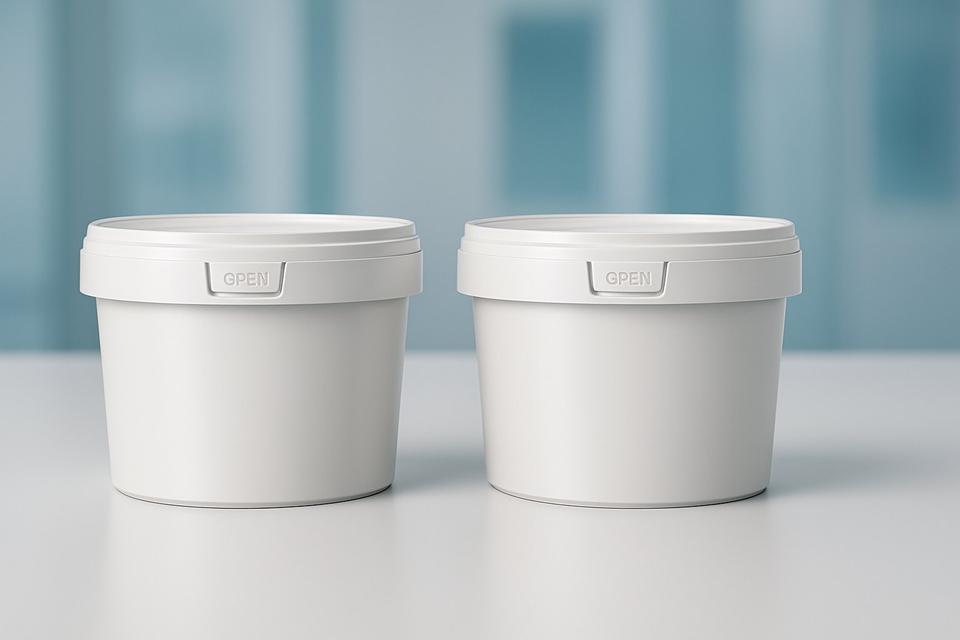
OPEN tear strip on the bucket
An OPEN tear strip is molded under the rim of the bucket: the lid can't come off the first time without tearing it away, so a customer at a pharmacy or pet store can see the jar hasn't been opened before. It's a tamper-evident feature, not protection of the formula from air: only a trial will show how well a closed jar preserves your formula.
Room for a label and IML
An ointment jar has to fit the ingredients, directions for use, batch number, and date. The circumference of a 118 mm top is about 370 mm, but the body tapers toward the bottom, so check your label artwork against a sample. For an established brand, IML printing is a good fit: the image is fused into the wall and won't peel off under greasy hands.
The formula and polypropylene
No one can tell you in advance how polypropylene will behave with your ointment: essential oils, alcohol, fragrances, and active ingredients differ in every formula. Fill a few jars with your product, let them stand as long as the product usually waits to be sold, and compare the color, smell, and texture with a control sample in glass.
Logistics
How packaging reaches your workshop or plant
Small packaging is compact: one pallet holds 17,600 hexagonal 250 ml containers or 7,200 of the 560 ml buckets. We ship in full pallets, but you can mix items: 385 ml containers for cream, 1 L buckets for veterinary ointment, and 5 L jerry cans for gel can all arrive together. Workshops in Bishkek and the Chuy Region get their order on our own delivery truck or pick it up at our warehouse in Ak-Chiy, in the Bishkek Free Economic Zone. Osh, Karakol, and Naryn are served by a freight carrier, while Almaty, Astana, and Shymkent receive pallets within the EAEU. Our sales manager will confirm the delivery cost and time.
Further reading
HTI blog: further reading on jars and lids
Related questions always come up around an ointment jar: how a label differs from in-mold printing, how tamper evidence works, and what polypropylene markings mean. They're covered in our blog articles.
All blog articles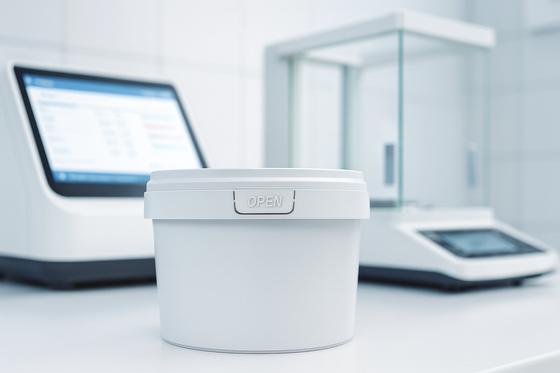 Packaging for labsDry reagents, solutions, and samples: packaging for eight tasksProducts and industries · 8 min
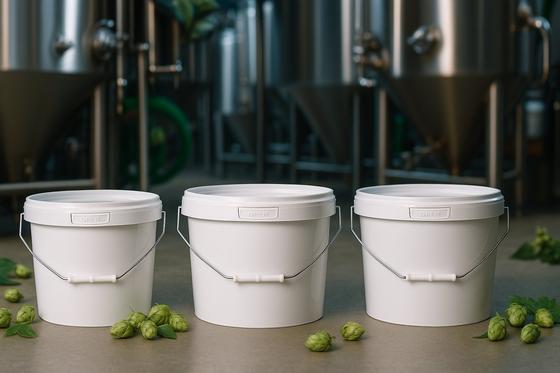 Brewery and wineryWhich packaging works in each area of the plantProducts and industries · 8 min
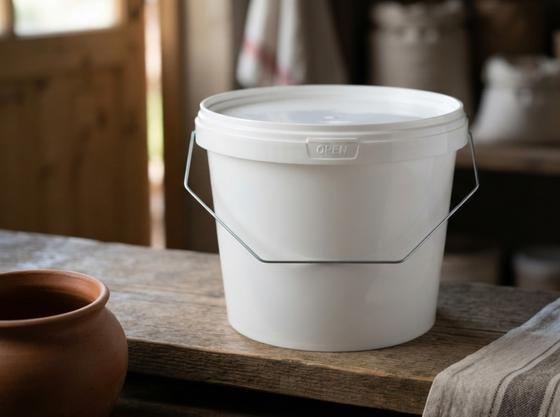 How to store honeyBucket size, moisture, odors, and crystallizationProducts and industries · 6 min
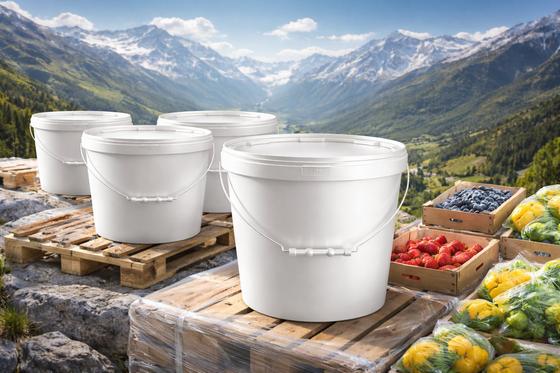 Export packagingHow packaging helps your product reach another country intactOrdering and logistics · 8 min
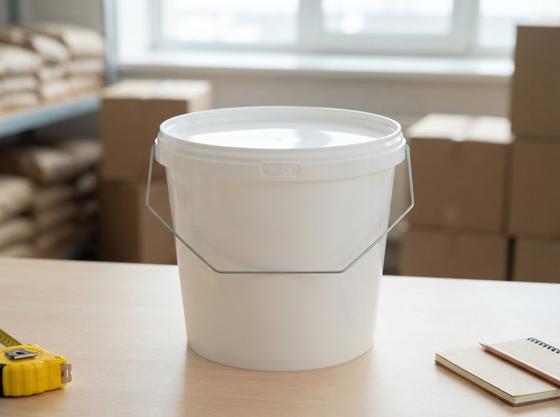 How to choose a bucketSeven parameters to check before you orderChoosing packaging · 7 min
 IML vs labelsEight scenarios and a clear answer on how to label a bucketMaterial and labeling · 6 min
Questions and answers
Questions about packaging for ointments, gels, and creams
Thick ointment goes into a wide-mouth jar so it can be scooped out with a spatula right to the bottom. In the HTI range, that means the round 385 and 550 ml containers and buckets from 560 ml to 1 L with a top of 118 to 132.5 mm. Small portions go into a 250 or 400 ml hexagonal container.
Our buckets and containers are designed as food-grade packaging, and we don't claim pharmaceutical approvals for them. Packaging requirements for medicinal products are set by the drug manufacturer's regulations: check the material, lid, and labeling against them.
Ultrasound gel comes in different thicknesses. Pourable gel is kept in a 5 L jerry can with a screw cap and used to refill the clinic's working bottles, while thick gel that's scooped with a spatula goes into a 560 or 850 ml bucket. A trial batch will tell you whether polypropylene suits a particular gel.
They're the same size, 118 × 80 mm. The container is lighter (18.8 g versus 23 g), 10,800 fit on a pallet instead of 7,200, and it can take IML printing on both the body and the lid. The bucket has side lugs, an OPEN tear strip under the rim, and a brim-full capacity of 650 ml.
Udder and hoof ointments are used in large amounts on farms, so they go into a 1 L bucket with a plastic handle or a 2.3 L bucket with a metal bail handle: the 132.5 and 175 mm tops let you scoop the formula with a gloved hand. Manufacturers check packaging requirements for veterinary products against their own regulations.
A white body is for labels and branding, a clear one for when the color of the gel or cream sells the product. Both buckets and containers come in clear, and the same size can be made in a custom color. Don't pack light-sensitive formulas in clear packaging.
List the items and quantities for our sales manager: orders are made up of full pallets and can include different sizes. In Bishkek, the order is delivered by our own truck or picked up in Ak-Chiy; to Almaty and other cities in Kazakhstan, packaging ships by the pallet within the EAEU.
Catalog
Jars, buckets, and jerry cans in our catalog
Every item in the catalog has a page with dimensions, tare weight, and units per pallet. Established brands will find the section on packaging for cosmetics manufacturers useful, and the choice between a wide opening and a screw cap is covered in our article Bucket vs jerry can.
Quote
Choosing a jar for a new formula?
Tell us what you pack (ointment, gel, cream, or paste), in what portion, and who you sell to: pharmacies, salons, farms, or online. Our sales manager will suggest suitable sizes. Mention how thick your formula is right away: it determines whether you need a bucket or a jerry can.