Want to learn more about our packaging or find the right fit for your business? Request a callback, and our specialist will call you at a time that suits you. Tell us about your product, and we'll help you choose the best option.
Order a callback from a specialist
Want to learn more about our solutions or find the perfect solution for your business? Leave a request for a callback and our specialist will contact you at a convenient time. Together we will find the optimal solution to make your business thrive!
Request a callback from our HR team
Interested in our openings and career opportunities? Leave your contact details and our HR team will get back to you shortly. We'll answer your questions and explain how to join the HTI Group team.
Order a callback from a specialist
Would you like to learn more about our job openings and career opportunities? Leave your contact information, and our HR department will get in touch with you shortly. We will answer all your questions and provide detailed information on how to become part of the HTI Group team.
Mon-Fri, 9:00 AM-5:00 PM · Factory in the Bishkek Free Economic Zone, Ak-Chiy village
Beans, honey, apples
Plastic bucketsand packaging in Talas
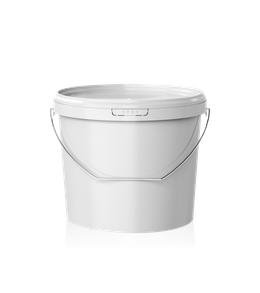
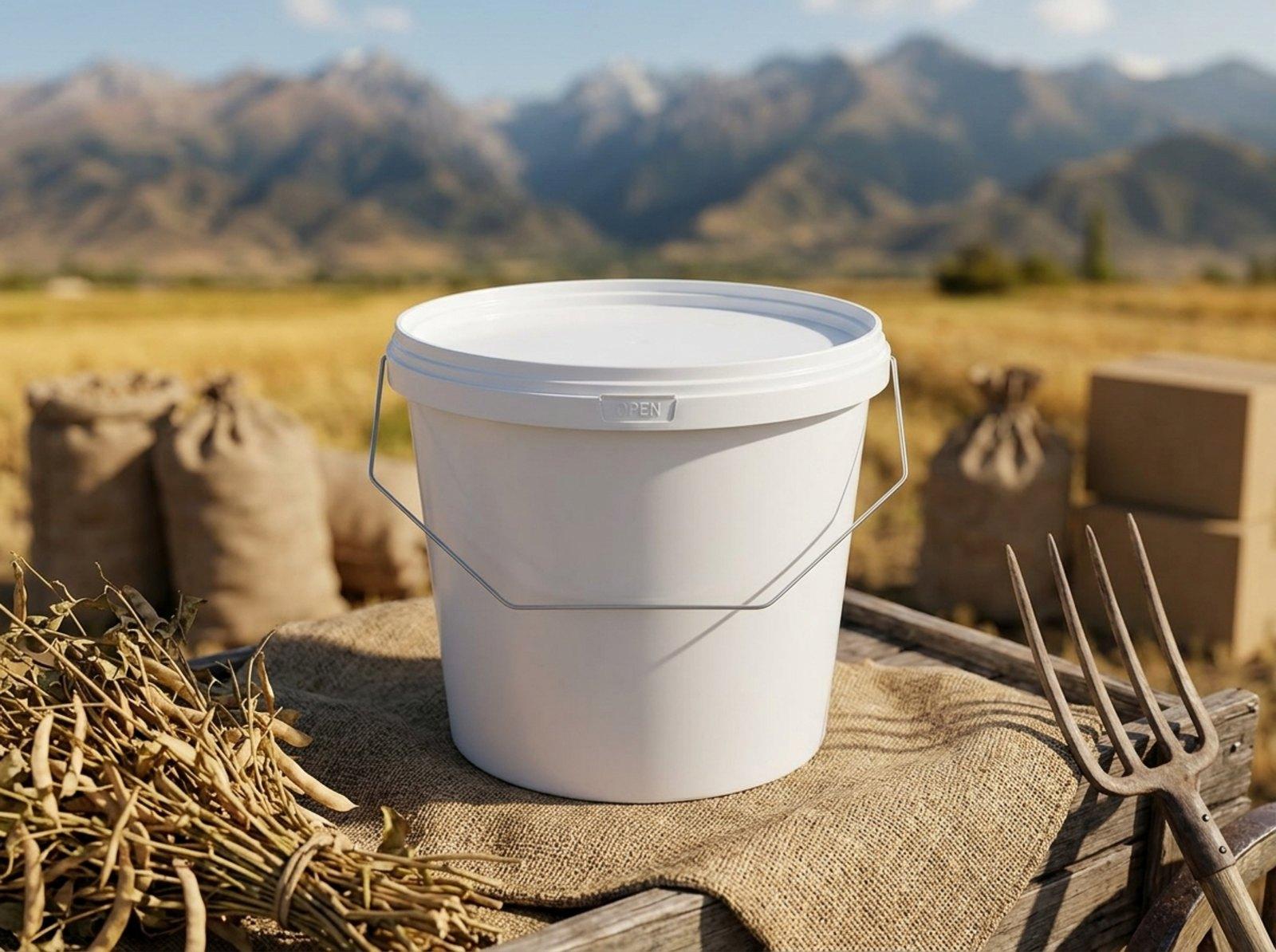
We sell plastic buckets in Talas direct from the factory. Kyrgyzstan's Talas Valley is best known for its beans, but beans aren't the only crop here: villages keep apiaries and livestock, orchards produce apples, and mining companies operate in the region's mountains. Each of these needs its own packaging. In the Bishkek Free Economic Zone (FEZ), HTI makes white and clear buckets from 560 ml to 21 L, plus containers and jerry cans, and ships them to Talas by freight carrier.
We matched what the region produces to all fourteen buckets and calculated how much product each one holds wherever we can say for sure: honey has a density of about 1.42 kg/L, fruit butter about 1.33 kg/L. For beans and dried apples, we list brim-full capacity, since the weight depends on the variety and size grade.
Honey, fruit butter, and beans in small portions for stores and the bazaar.
Fruit butter straight from the kettle, beans for friends, and honey to order.
Honey for wholesalers, beans for cafes, building mixes, and feed.
Containers for honey, fruit butter, and bean dishes.
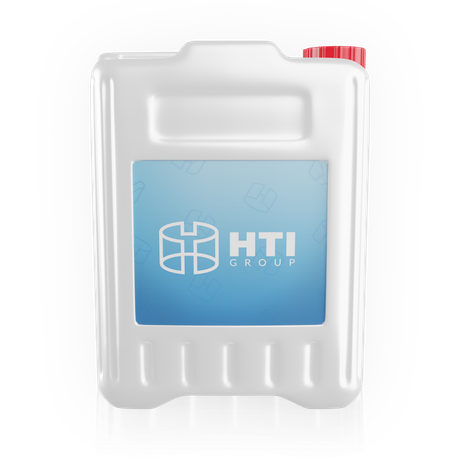
Jerry cans for machinery fluids in the fields and at mountain sites.
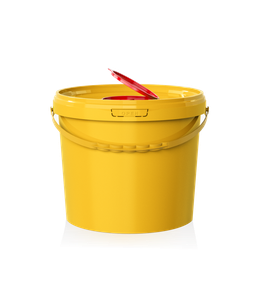
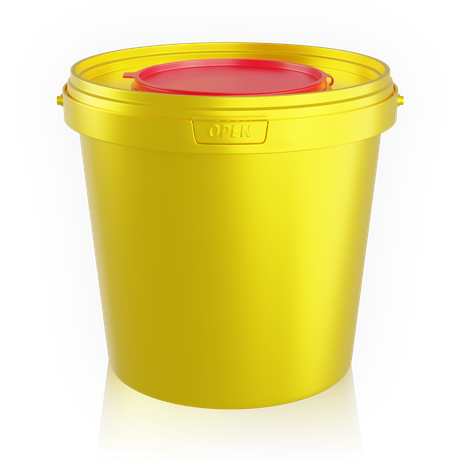
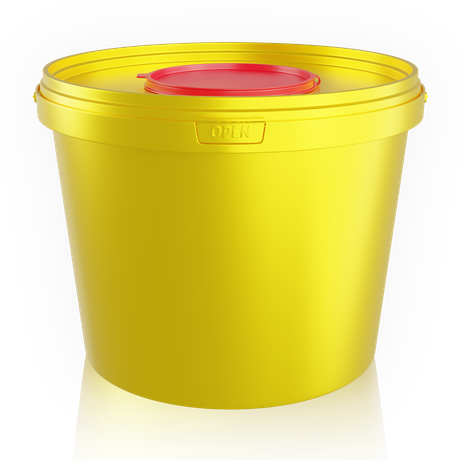
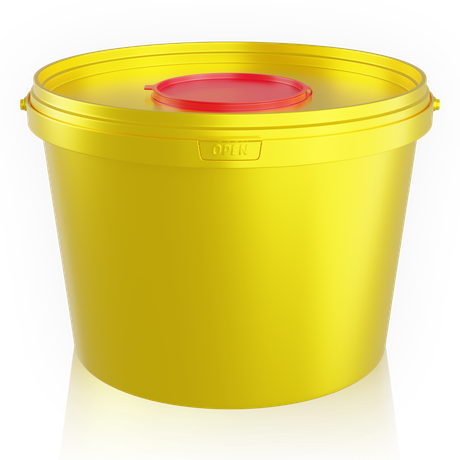
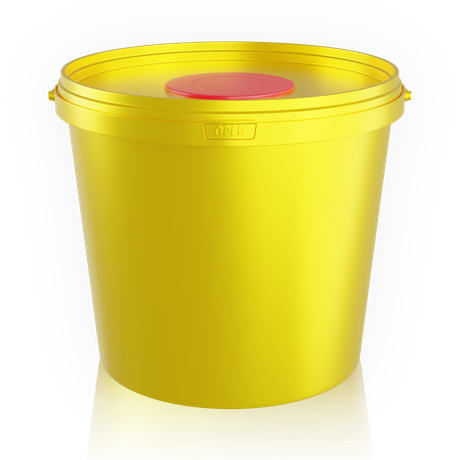
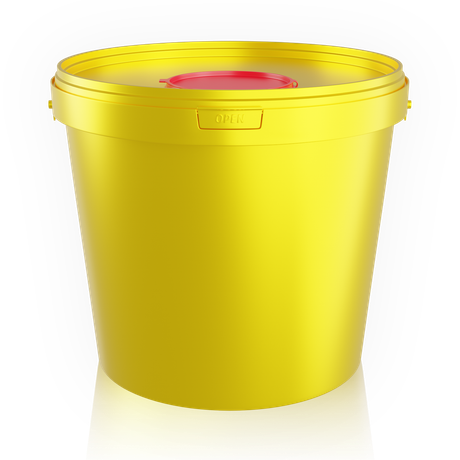
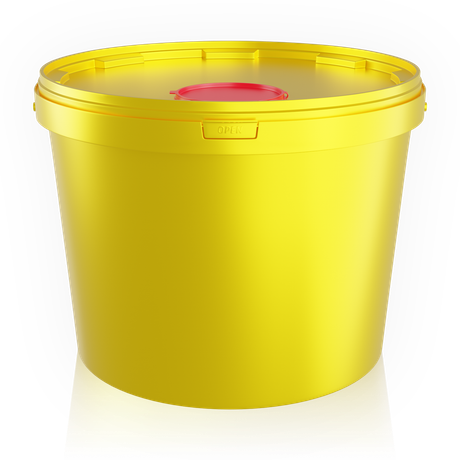
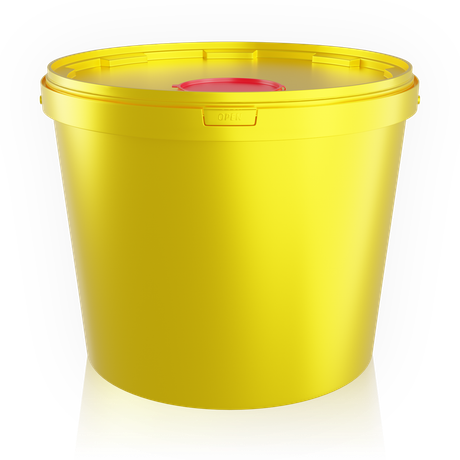
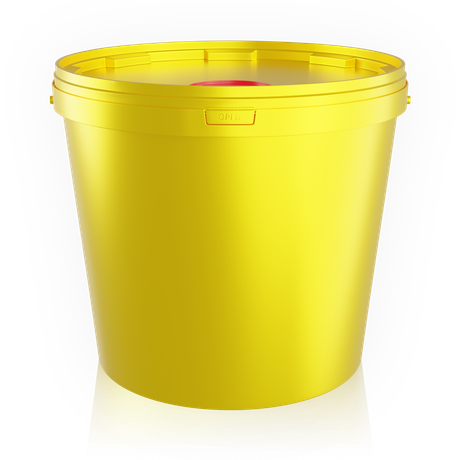
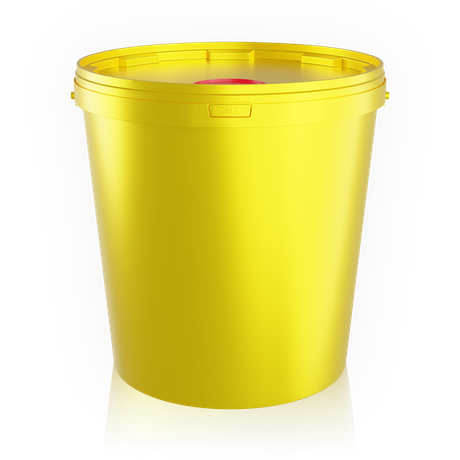
Yellow and red buckets for hospitals, rural health posts, and vets in the Talas Valley.
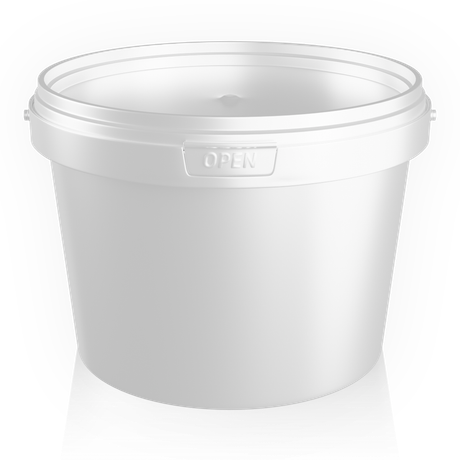
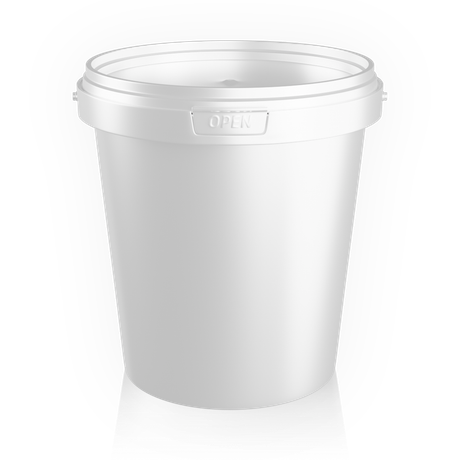
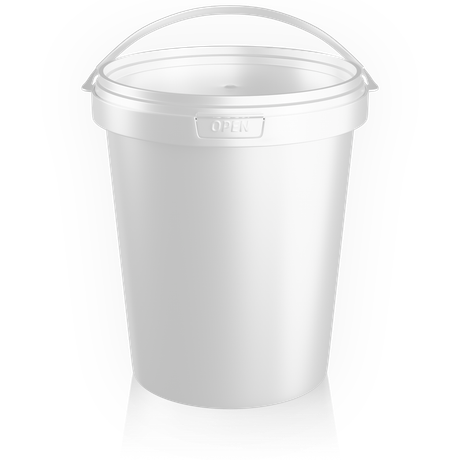
Packaging at the same scale: body width and height from the factory's product cards
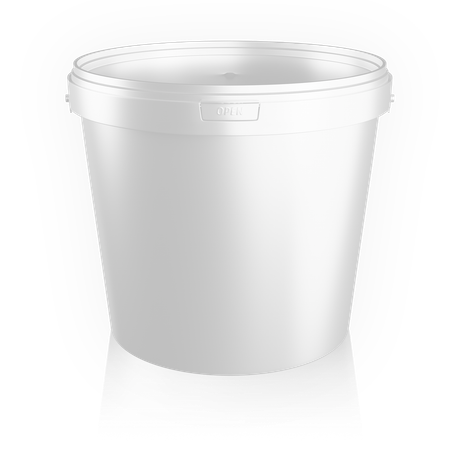
Retail · PKS560
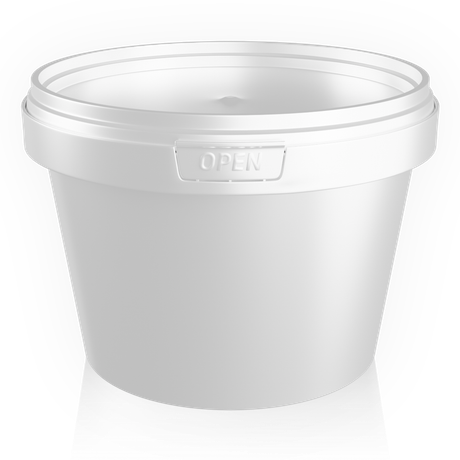
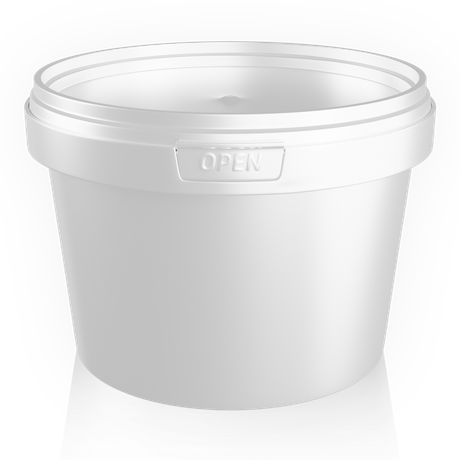
560 ml plastic bucket
Valley honey to sample: about 0.8 kg in a handleless bucket, 7,200 per pallet.
Beans sold to middlemen by the tonne still travel in sacks, and we won't argue with that. Buckets win where beans are sold by the kilogram and on looks: in stores, at the bazaar, and in gift sets. For honey, the most cost-effective size to ship is 15 L: one pallet of empty buckets takes more than 17 tonnes of product.
A farm in the valley rarely does just one thing: beans are harvested in the fall, honey is extracted in summer, and apples are processed in August and September. It helps when all of it goes into packaging from one factory, with matching lids and simple logistics. Here are the four reasons we hear most often from buyers in Talas.
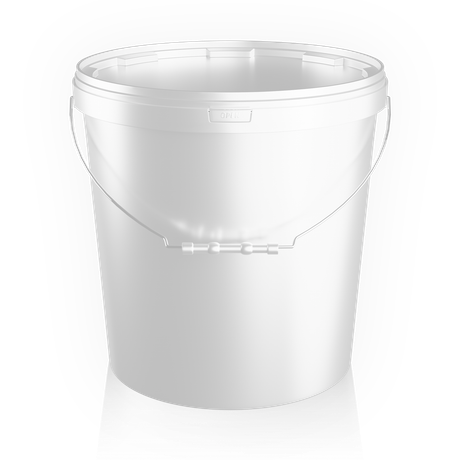
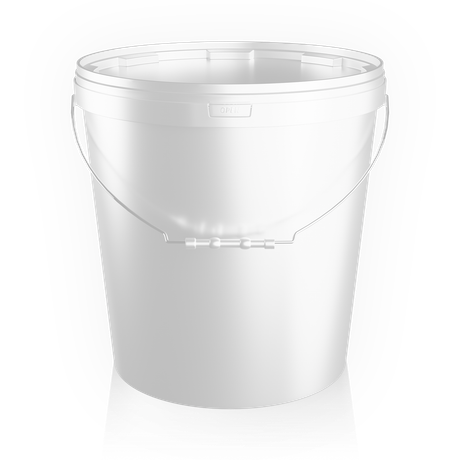
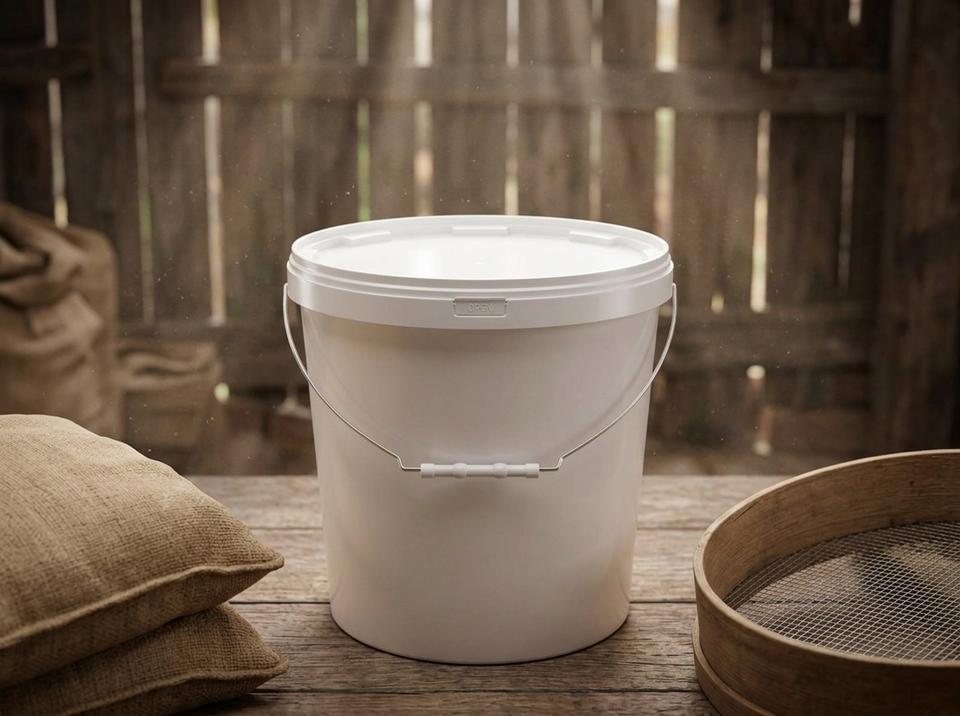
Sorting shed15 L nominal, 16.56 L brim-full
The variety shows through the wall
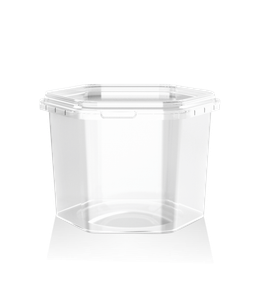
White, speckled, or red beans sell themselves in a clear bucket: shoppers judge the color, size, and cleanness at a glance. Clear buckets come in every size from 560 ml to 21 L, so you can build a matching display from one-liter and 3.8 L buckets.
Exact weights for the counter
A liter of apple butter weighs about 1.33 kg, and a liter of honey about 1.42 kg. Knowing this, a home producer can work out in advance how many 2.3 L buckets a kettle of fruit butter needs and avoid buying extra.
Jerry cans for vehicles and loaders
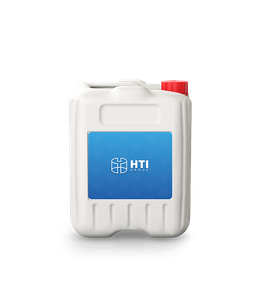
Machinery in the region's fields and mountains needs winter washer fluid, antifreeze, and flushing fluids. Our 5 L and 10 L polypropylene jerry cans close with a screw cap, stand steady thanks to stiffening ribs at the base, and have a flat front panel that's easy to label.
Packaging arrives ahead of time
Beans are harvested in the fall and honey in summer, and both seasons kick off all at once across the valley. Buckets nest inside each other, so a whole season's supply can arrive in one shipment and sit in a shed without cluttering it.
Choose by channel
Where your product is headeddecides the bucket
The same sack of beans or can of honey can be sold in different ways, and the sales channel decides which packaging pays off. Below are guidelines that help Talas farms and small food plants avoid overpaying for packaging.
Supermarkets in Bishkek and Talas: a clear 1 L bucket with a label, a neat pack that sits well on the shelf.
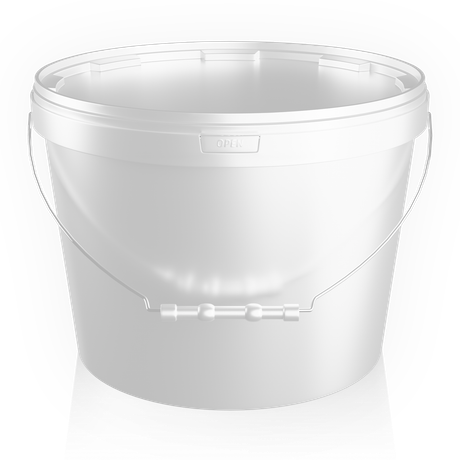
Bazaar and sales to friends: 3.8 L with a metal bail handle, carried by hand instead of in a plastic bag.
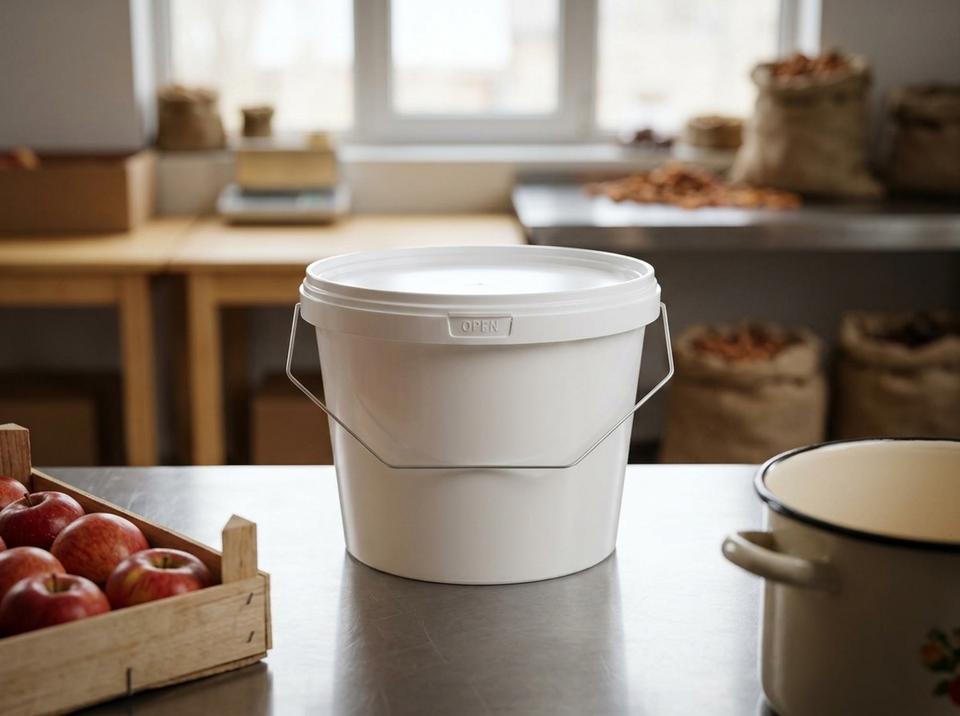
Homemade fruit butter and jam: 2.3 L, about 3.1 kg of product, with a lid that comes off to expose the full opening.
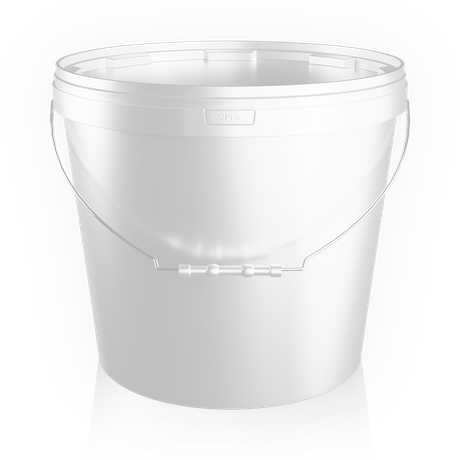
Selling honey wholesale: 15 L with a plastic grip on the bail handle; for retail honey, a one-liter or 850 ml bucket will do.
Garages, vehicle depots, and mountain sites: 5 L and 10 L jerry cans, ordered together with buckets in one shipment.
Shipment estimate
How much packagingfits in one delivery
Choose an item and quantity, and we'll show the pallet count, units rounded up to full pallets, total nominal capacity in liters, empty packaging weight, and the truck you'll need.
Straight-line distance. Click a city to open its page.
Buckets, containers, and jerry cans for Talas ship only from our plant in Ak-Chiy village, Bishkek FEZ; we have no warehouse or office in the city. A freight carrier, chosen by your sales manager when you order, delivers packaging to Talas and villages across the region. If your farm already hauls beans or honey to the capital, picking up the pallets yourself saves paying for a separate trip. Your sales manager will tell you the transit time and cost once the order is assembled. For the bean harvest and the start of honey extraction, order packaging with plenty of lead time.
Yes. The buckets are molded from food-grade polypropylene and are suitable for dry goods. For retail, people choose 1 L; for the bazaar, 3 or 3.8 L. The wide opening lets you scoop beans in without a funnel.
If shoppers choose by how the beans look, go with clear: the variety and cleanness are visible right away. White is the pick when the bucket will carry a bright label or in-mold labeling (IML) with your farm's name, and that's what should catch the eye.
For retail, 2.3 L, which holds about 3.1 kg of fruit butter, or 1 L, about 1.3 kg. Plants that supply semi-finished product to pastry makers do better with 11.5 or 15 L. For more on choosing, see our jam and fruit butter buckets page.
By freight carrier from our plant in Ak-Chiy; your sales manager confirms delivery time and cost when you place the order. You can also pick up the pallets yourself if your truck makes trips to Bishkek.
Call +996 222 600 292 or submit a request. Your sales manager will price your order based on bucket size, color, handle type, quantity, and printing.
Yes. Small orders get a stick-on label, and large runs get IML: the image is fused into the wall during molding and won't rub off. For beans and honey sold under your own name, that's a real plus.
Our 5 L and 10 L jerry cans with a screw cap. A pallet holds 180 of the 5 L or 100 of the 10 L; unlike buckets, empty jerry cans don't nest.
Catalog
Packaging catalogfor the Talas Valley
All buckets, containers, and jerry cans, with dimensions, are in our catalog. For how to choose packaging for grain and other dry goods, see our page on buckets for spices and dry goods.
Tell your sales manager how much of your crop will go into retail packs and who you sell it to. They'll suggest sizes and colors, count the buckets and pallets, and add jerry cans or honey buckets to the same shipment if you need them.