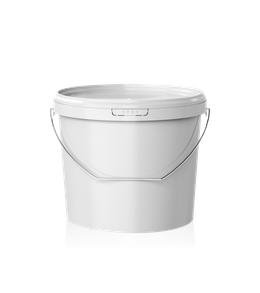
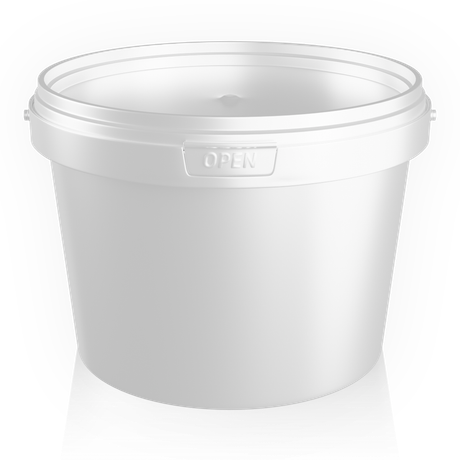
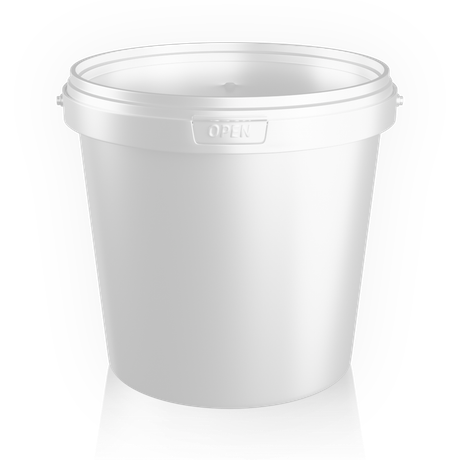
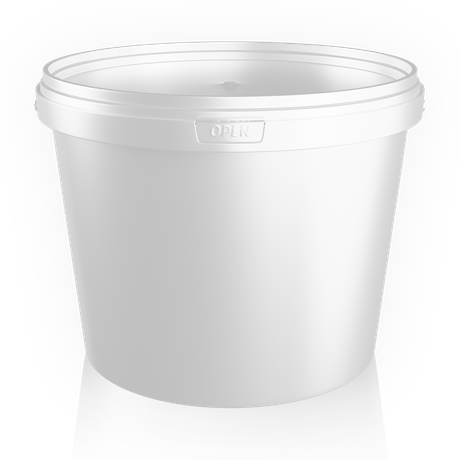
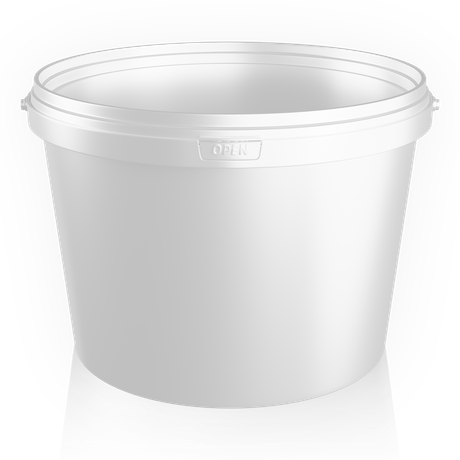
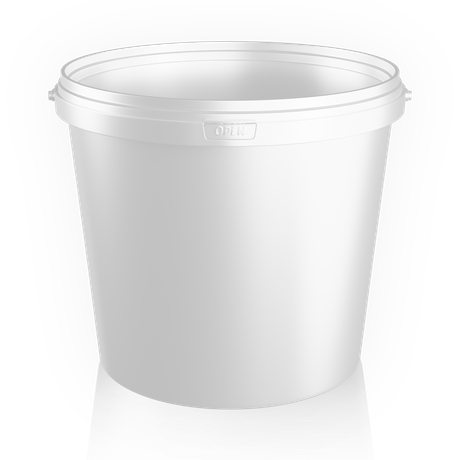
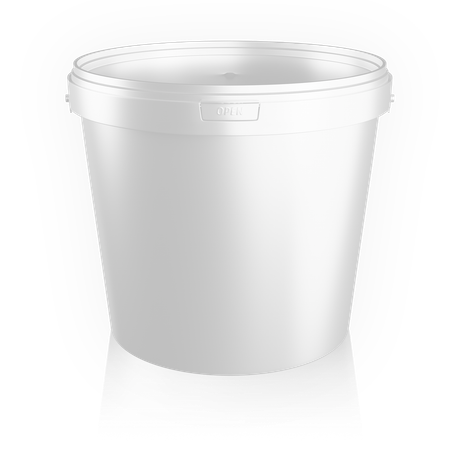
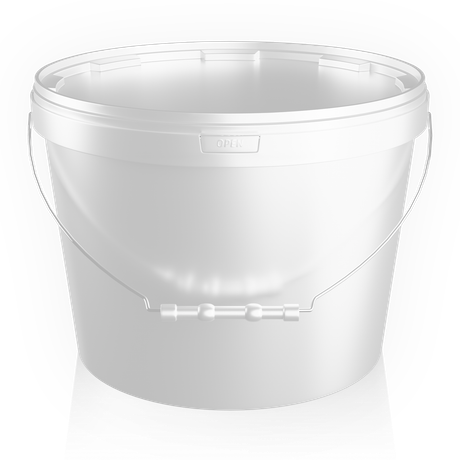
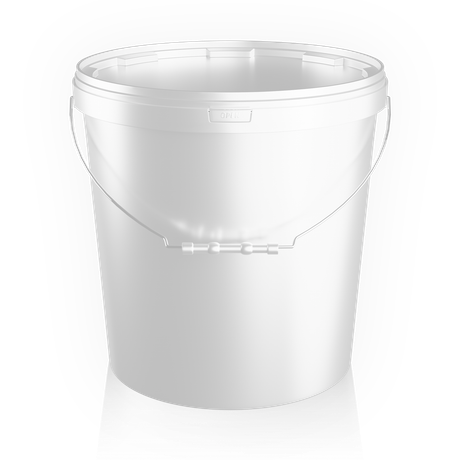
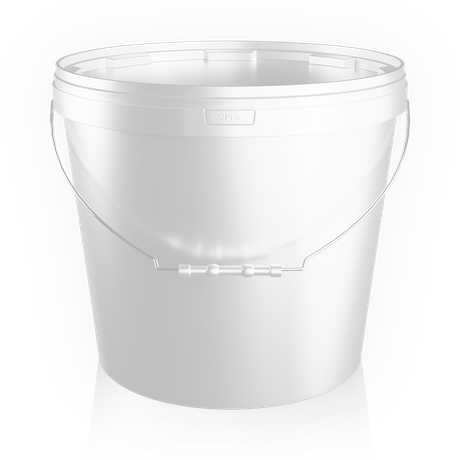
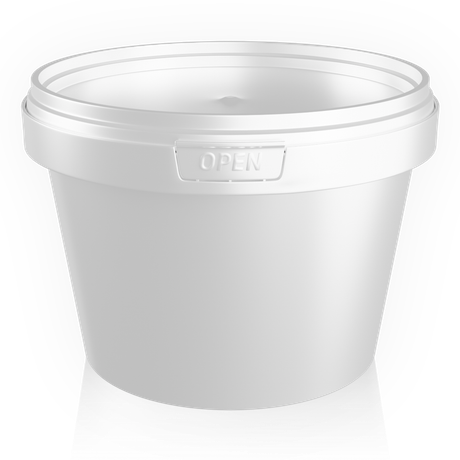
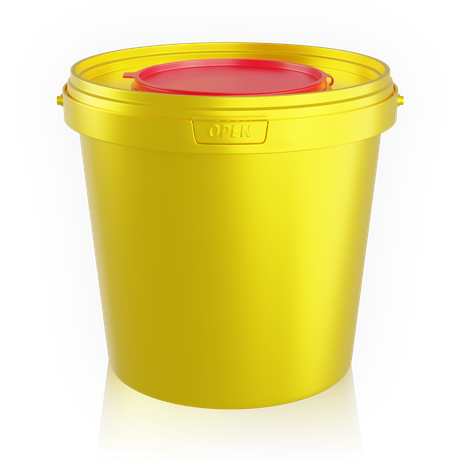
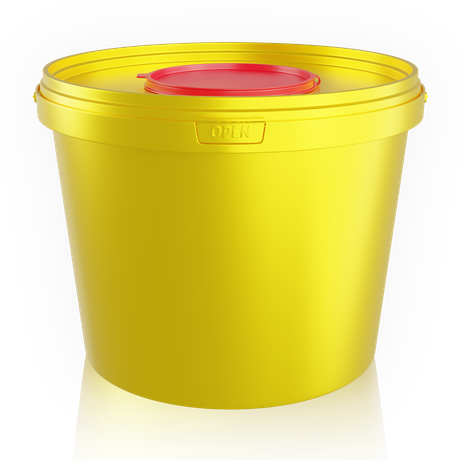
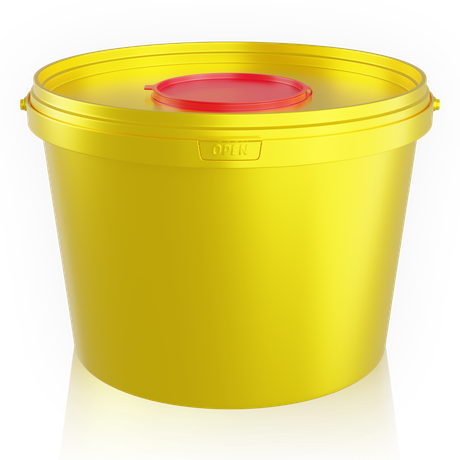
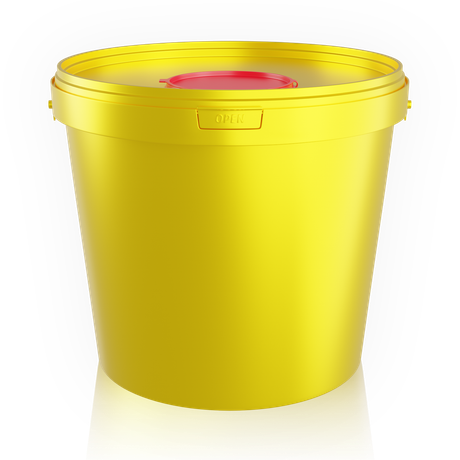
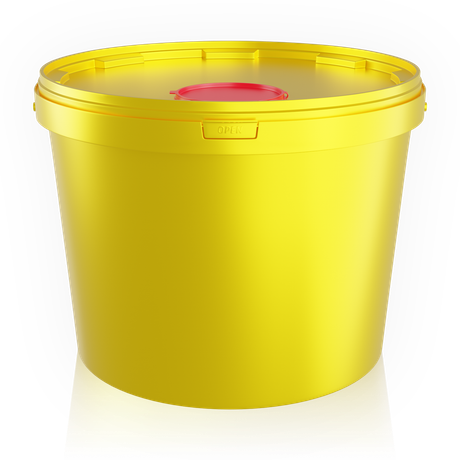
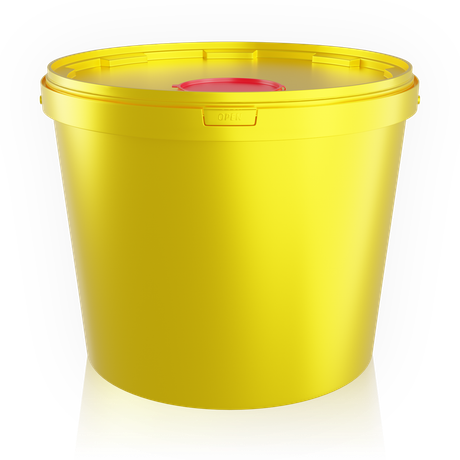
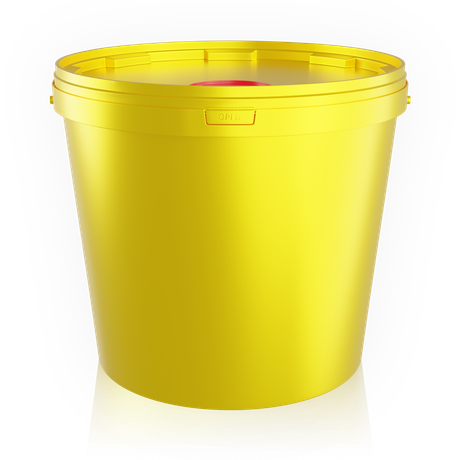
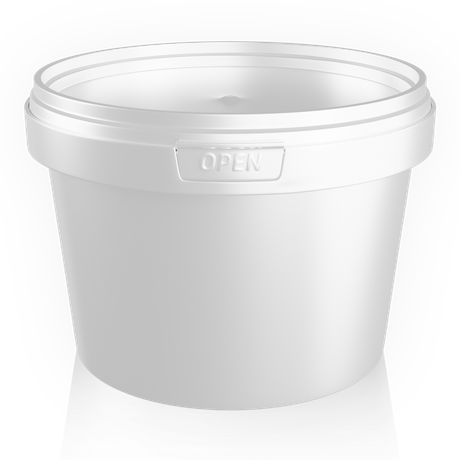
560 ml plastic bucket
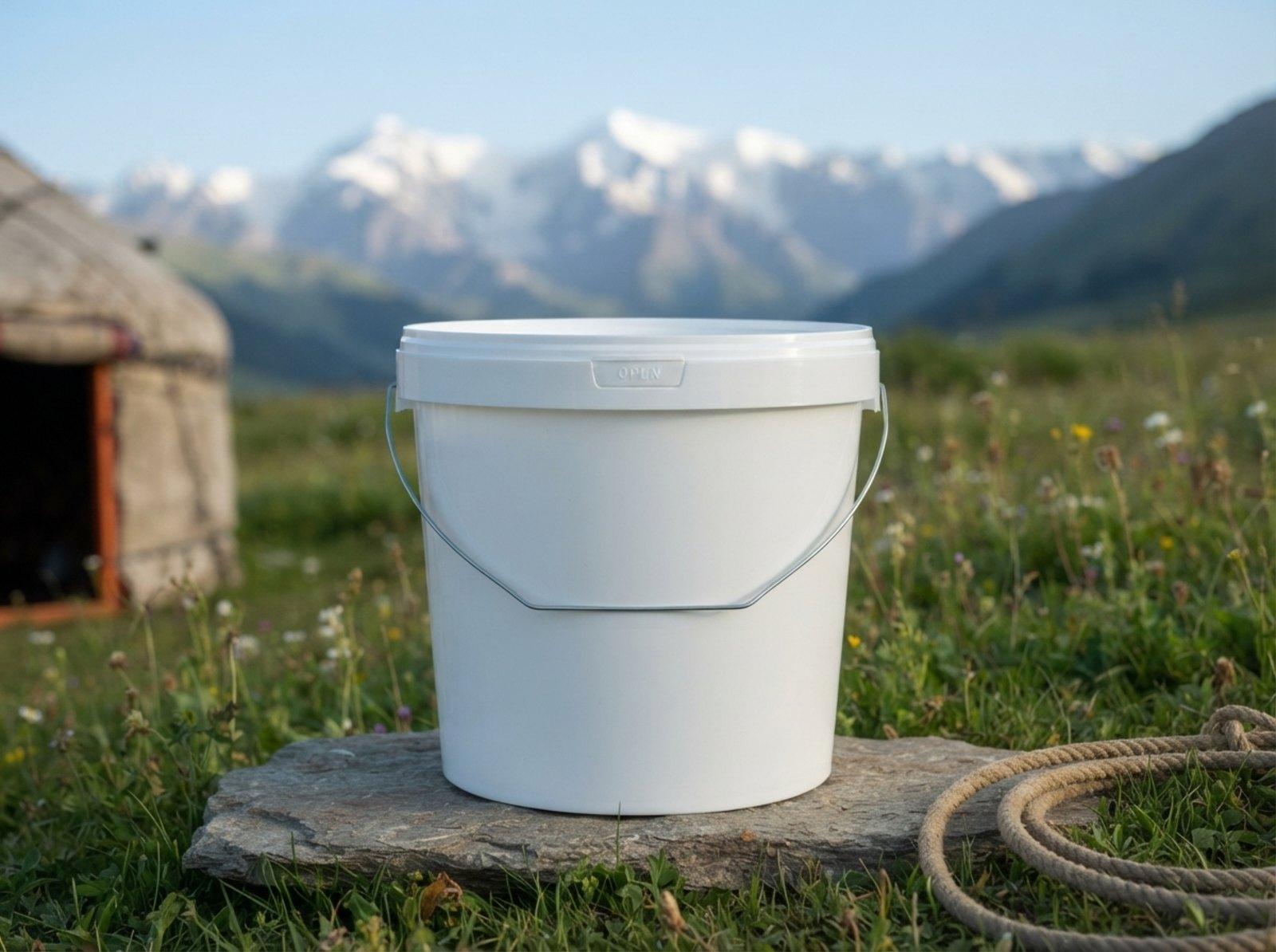
Kaymak from Alay mountain farms: the low bucket with no handle fits snugly in a dairy-row display case.
- Opening
- Ø 118 mm
- Height
- 80 mm
- Empty weight
- 23 g
- Per pallet
- 7,200 pcs
Plastic buckets14 sizes · 560 ml to 21 L
Medical buckets9 sizes · 1 to 21 L
Food containers5 formats · 250 to 750 ml
Plastic jerry cans5 L and 10 L
Plastic buckets16 models, 560 ml - 21 L
Medical buckets10 models, 1 - 21 L
Food containers5 models, 250 - 750 ml
Plastic canisters5 and 10 L
塑料桶16 个型号,560 毫升 - 21 升
食品容器5 个型号,250 - 750 毫升
塑料方桶5 升和 10 升Hello! We'll suggest the right size for your product, calculate pallets, and quote a price for your order.
From the cotton and rice fields of the Fergana Valley to the summer pastures of Alay, almost every harvest and every bazaar product in Osh Region ends up in a bucket at some point. For all of it, the HTI plant in Chuy Region molds white and clear food-grade buckets from 560 ml to 21 L and ships them south by freight carrier. Here you'll find all fourteen sizes with their local uses, recommendations by district, a pallet calculator, and how to order.

Small buckets go on the counter, medium ones into kitchens and family workshops, and large ones out to the fields, pastures, and construction sites. Under each size, you'll see how it's used in the region's districts, from Kara-Suu to the Alay Valley. Each card links to the size page, with dimensions, empty weight, and photos.
A portion a customer carries home from the bazaar in one hand.
Prep for teahouses, canteens, and family workshops.
Harvesting, buying from farmers, mixes, and feed.
Containers for teahouses, bazaars, and plov centers across the region.
Jerry cans for cottonseed oil and water out on the pastures.
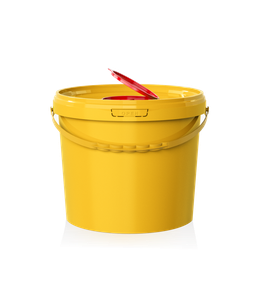
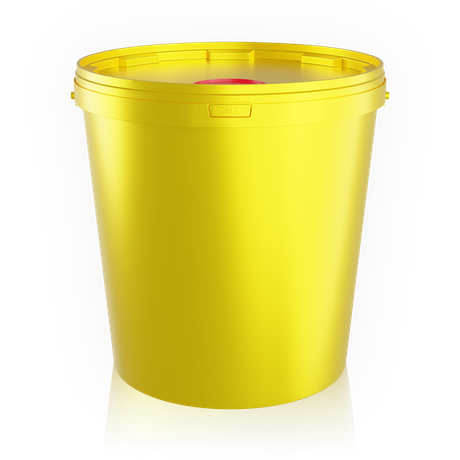
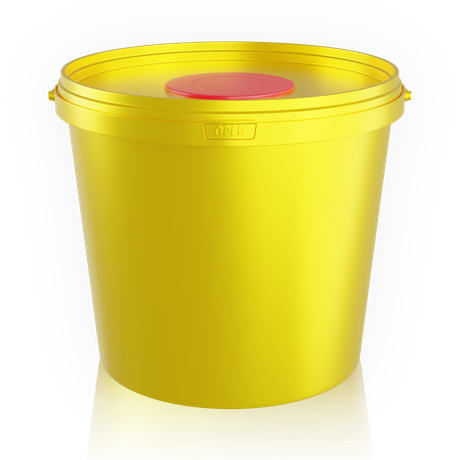
Yellow and red buckets for the region's hospitals, outpatient clinics, rural health posts, and vets.

Kaymak from Alay mountain farms: the low bucket with no handle fits snugly in a dairy-row display case.

Suzma and katyk for customers buying cultured dairy to go with plov for the whole family.

Sweet cherry and sour cherry preserves from Nookat District orchards in a clear body, with the color visible from a distance.

Spicy adjika and shashlik sauce for roadside cafes: the handle is molded in one piece with the body.

A liter of ghee from the summer pastures, brought down from the mountains to the valley bazaars.

Apricot preserves for the Nookat and Osh bazaars: about three kilograms in one family-size purchase.

Dried apricots, pitted and whole, and raisins for Kara-Suu resellers: the 200 mm opening is wide enough for a whole scoop.

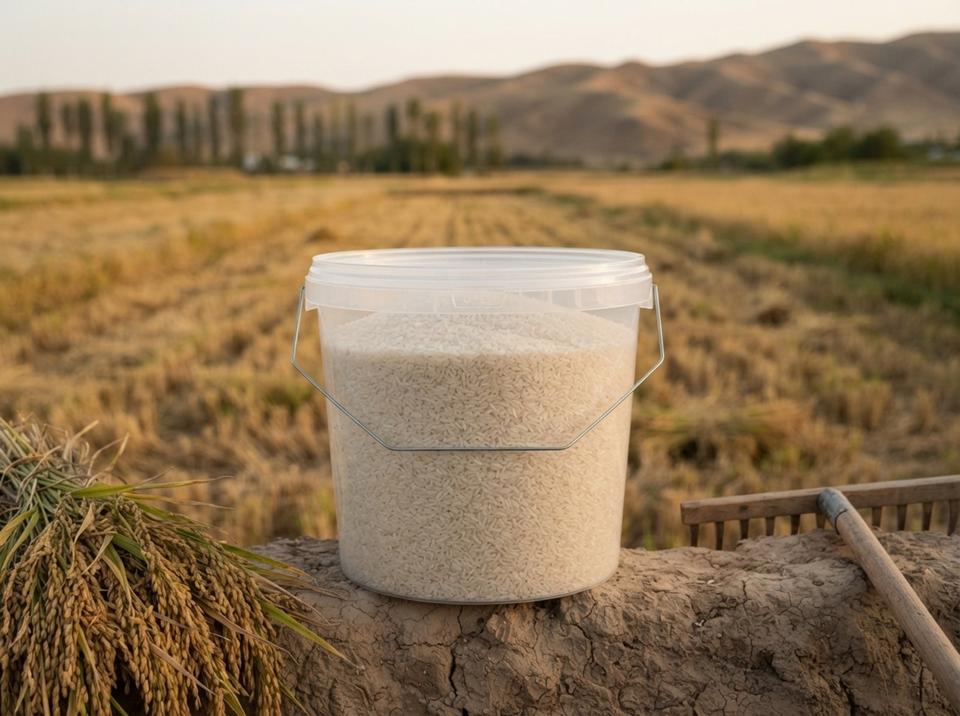
Premium Uzgen rice as a gift for relatives: a rigid bucket with a bail handle won't tear in the luggage.

Pickled tomatoes and peppers from Aravan gardens for the region's canteens and teahouses.

Marinated shashlik meat for highway cafes: the bail handle with plastic grip takes a full bucket.

Picking apricots and cherries in valley orchards: the plastic grip on the bail handle won't cut into your palm, even after a full day.

Exterior paint and primer for homes going up in the Osh suburbs and the region's district centers.

Plaster mix and grout for renovating mud-brick and brick homes in the region's villages.

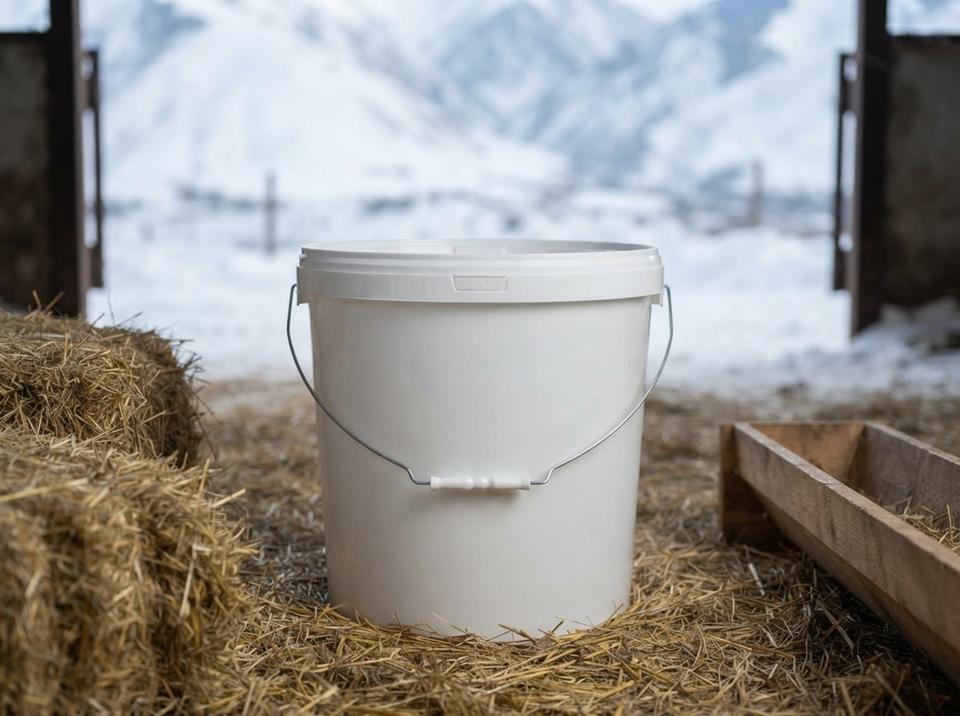
Compound feed, bran, and salt for livestock at winter camps: the tight lid keeps moisture out.

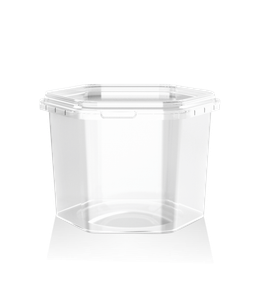
Small portions of cumin and barberries for shoppers at the Kara-Suu bazaar: the 250 ml hexagonal container.

Navat (rock sugar candy) and Middle Eastern sweets with tea at valley teahouses: round 385 ml containers for the table.

Korean carrot salad and achichuk (tomato and onion salad) with takeout plov at Uzgen plov centers: 400 ml, lidded.

Kaymak and suzma from Alay for city customers: the round 550 ml container.

Samsa and manty to go on the road from Osh to the Pamirs: the flat tray with a lid.

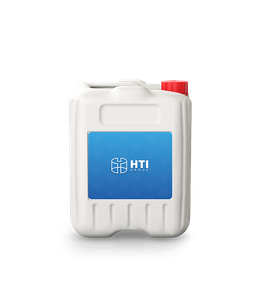
Cottonseed oil for family plov: a 5 L jerry can from an oil mill in Aravan District.

Water for shepherds on the Alay pastures and in the yurt: ten liters, molded-in handle, screw cap.

Rural health posts in Alay's high mountain villages: after an injection, the needle stays behind the valve of a one-liter bucket.

Village outpatient clinics in Nookat District: swabs and ampoules go into a yellow Class B bucket (by Kyrgyz sanitary classification).

Vaccination teams in the valley's rice and cotton villages: syringes go through the needle remover valve.

Dentists in Kara-Suu and Uzgen: a dispenser lid feeds out disinfectant wipes.

Urgent care clinics at district hospitals: harvest-season dressings go into a red bucket for Class C waste.

Territorial hospitals in Aravan and Uzgen Districts: ward waste collection, 11.2 L.

Vets for migrating herds: syringes and vials after vaccinations, before the move up to Alay.

Regional clinical hospital: one floor, one lidded 18 L bucket.

Chon-Alay and remote villages: pickups are rare, so they go for the tall 21 L body, 333.5 mm high.
All our buckets are tapered, so the empties nest inside each other: a pallet holds anywhere from 600 large to 7,200 small buckets. Every bucket has a flat lid with an OPEN tamper-evident tear strip that shows whether it's been opened since filling.
Osh Region is split between valley districts with fields and orchards and mountain districts with pastures. That's why the packaging mix differs: in the valley, people need buckets for the harvest and preserves; in the mountains, for dairy and feed. The table shows the usual starting size and its pallet quantity.
| District | Product | Volume | Per pallet | Learn more |
|---|---|---|---|---|
| Uzgen | rice for sale and as gifts | 3.8 L | 2,800 | dry goods |
| Kara-Suu | dried fruit and spices from the wholesale bazaar | 3 L | 2,800 | nuts and dried fruit |
| Nookat | orchard fruit preserves | 2.3 L | 3,300 | jam and fruit butter |
| Aravan | pickles and marinated vegetables | 5.6 L | 1,920 | pickles |
| Alay, Chon-Alay | kaymak, butter, cultured dairy | 1 L | 6,480 | dairy products |
| Mountain districts | feed and salt for livestock at winter camps | 21 L | 600 | feed and premixes |
| Entire region | marinated meat for shashlik cafes | 8 L | 840 | marinated meat |
The pallet quantity tells you how much truck space your order will take. A 3.8 L rice bucket and the three-liter one for dried apricots fit 2,800 to a pallet, while the 21 L feed buckets fit 600. That's why shipments for a mountain farm and for a bazaar packer end up so different in volume.
The region has two halves: the warm valley with its fields and orchards, and the high mountains of Alay, where livestock is raised. In between are big bazaars that handle everything grown and milked here. Here are four typical bucket buyers and how they choose.

In the south, Uzgen rice is bought for plov and sold not just by the sack: in a clear 3.8 L bucket, the grain shows through the wall and the lid keeps out dust. Cotton farms need 15 to 21 L buckets for fertilizer, water, and small tools.
Resellers buy by the sack and sell by the portion. For dried fruit and spices, the 3 L and 560 ml sizes work well; for pickles, the 2.3 L. Empty buckets stack under the counter and take up almost no space.
In Nookat and Aravan Districts, families cook preserves, pickle vegetables, and make adjika for sale. Counter sizes are 850 to 900 ml and 2.3 L; for cafes and canteens, 5.6 and 8 L with a metal bail handle.
In summer, livestock moves up to the high pastures, and kaymak, ghee, and kurt come down to the valley. The one-liter bucket with a plastic handle and the 560 ml with no handle are the popular retail sizes, while winter feed is kept in the 21 L.
Choose a bucket and enter the quantity you need for the season, and the calculator will show the number of pallets. An example from Uzgen District: a farm packs rice in gift buckets and orders 5,000 of the 3.8 L, which comes to two pallets. Adding 500 of the 21 L buckets for livestock feed adds one more pallet.
The factory sells buckets direct, in orders of one pallet or more. The process is the same for a rice farm in Uzgen and a trader at the Kara-Suu wholesale bazaar.
Call us or leave your number for a callback. Tell us the product, sizes, quantity, and the village or town for delivery. If you need your own brand on the bucket wall, mention it right away.
Your sales manager will suggest sizes for your product, estimate the number of pallets, and quote a price for the whole order. At the same time, you'll learn how long delivery by freight carrier will take and what it will cost.
Pallets are assembled at the plant in Ak-Chiy village, Chuy Region, in the Bishkek Free Economic Zone (FEZ). For IML printing, the artwork is approved first, and then the run is molded.
Your finished order is handed over to a freight carrier, which takes it to your district. Or come for the buckets yourself: pickup from the factory is available too.

All buckets for Osh Region come from one place: the HTI plant in Ak-Chiy village, Bishkek FEZ. We have no warehouse in the south, and each order is assembled for a specific customer. A freight carrier takes it to the region, and your sales manager quotes transit time and delivery cost along with the price of the buckets.
If your farm hauls its harvest to Bishkek to sell anyway, you can pick up pallets at the factory on the way back, so the truck doesn't head south empty.
The season is different in the valley and in the mountains. Orchards and vegetable growers need packaging before harvest, rice farms by the fall harvest, and mountain farms before the move to the summer pastures. Placing your request early gives us time to gather all the sizes you need into one shipment.

Towns with their own page are linked. Osh is a city of national significance and has its own page on packaging in Osh.
The same bucket does a different selling job at the bazaar, in a store, and with a wholesaler. Here are four versions and where each one pays off in Osh Region.
Rice, dried apricots, and preserves show through the wall, so customers don't have to ask you to open the lid. Any size in the range comes in clear, from the smallest up to 21 L.
When your product goes to stores in Osh and the district centers, it needs a readable label with the ingredients and a phone number. On a white body, the label stands out and doesn't get lost against the product.
Under the lid rim is a tamper-evident tear strip with raised OPEN lettering. As long as it's intact, nobody has opened the bucket since filling, and resellers can buy with confidence.
An image with your farm's name is fused into the wall during molding and won't wash off. A trial order is easier to run with a label, and a regular one with IML.

From HTI: we sell buckets direct, in orders of one pallet or more, with no middlemen. Call +996 222 600 292 or request a callback, and our sales manager will pick sizes for your product.
Your sales manager prices each order individually. The price depends on bucket size, quantity, body color, handle type, and printing, so a single price list for everyone doesn't work.
By freight carrier from the plant in Chuy Region. Your sales manager will tell you the transit time and delivery cost when pricing your order. You can also pick up the buckets yourself.
No. The only shipping point is the plant in Ak-Chiy village, Bishkek FEZ. Every order is put together there and goes south as one complete shipment.
Most buyers choose the clear 3.8 L with a metal bail handle: the grain shows through the wall, and the lid keeps out dust. For a family supply, the 5.6 and 8 L work well.
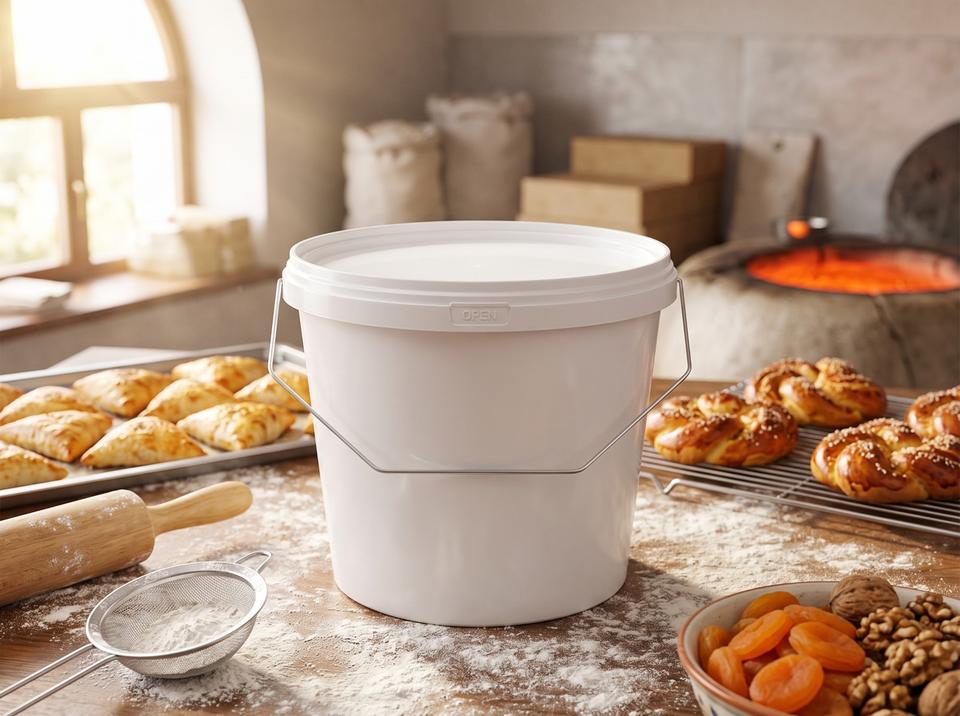
For retail, the 560 ml with no handle and the one-liter bucket with a plastic handle work well. For a detailed breakdown, see our page on buckets for dairy products.
Yes. Small and large buckets, white and clear, plus jerry cans all ship together, each model on its own pallet. It's a convenient way for several farms in one district to buy together.
Yes, in two ways: a label on the finished bucket or IML printing during molding. A label is handy for a first order, and IML for a regular run.
In the catalog, every bucket lists its dimensions and empty weight, with photos. The city of Osh has its own page on packaging for Osh, and the neighboring region to the west is covered on our Batken Region page.

Tell us your product, fill size, and town or village. Your sales manager will pick the buckets, calculate the pallets, and confirm shipping terms to the south.