Want to learn more about our packaging or find the right fit for your business? Request a callback, and our specialist will call you at a time that suits you. Tell us about your product, and we'll help you choose the best option.
Order a callback from a specialist
Want to learn more about our solutions or find the perfect solution for your business? Leave a request for a callback and our specialist will contact you at a convenient time. Together we will find the optimal solution to make your business thrive!
Request a callback from our HR team
Interested in our openings and career opportunities? Leave your contact details and our HR team will get back to you shortly. We'll answer your questions and explain how to join the HTI Group team.
Order a callback from a specialist
Would you like to learn more about our job openings and career opportunities? Leave your contact information, and our HR department will get in touch with you shortly. We will answer all your questions and provide detailed information on how to become part of the HTI Group team.
Mon-Fri, 9:00 AM-5:00 PM · Factory in the Bishkek Free Economic Zone, Ak-Chiy village
Taraz, Shu, Kordai
Plastic bucketsin the Zhambyl Region
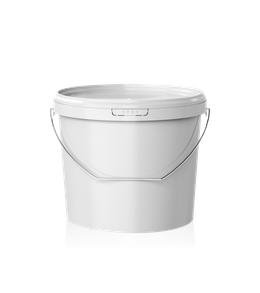
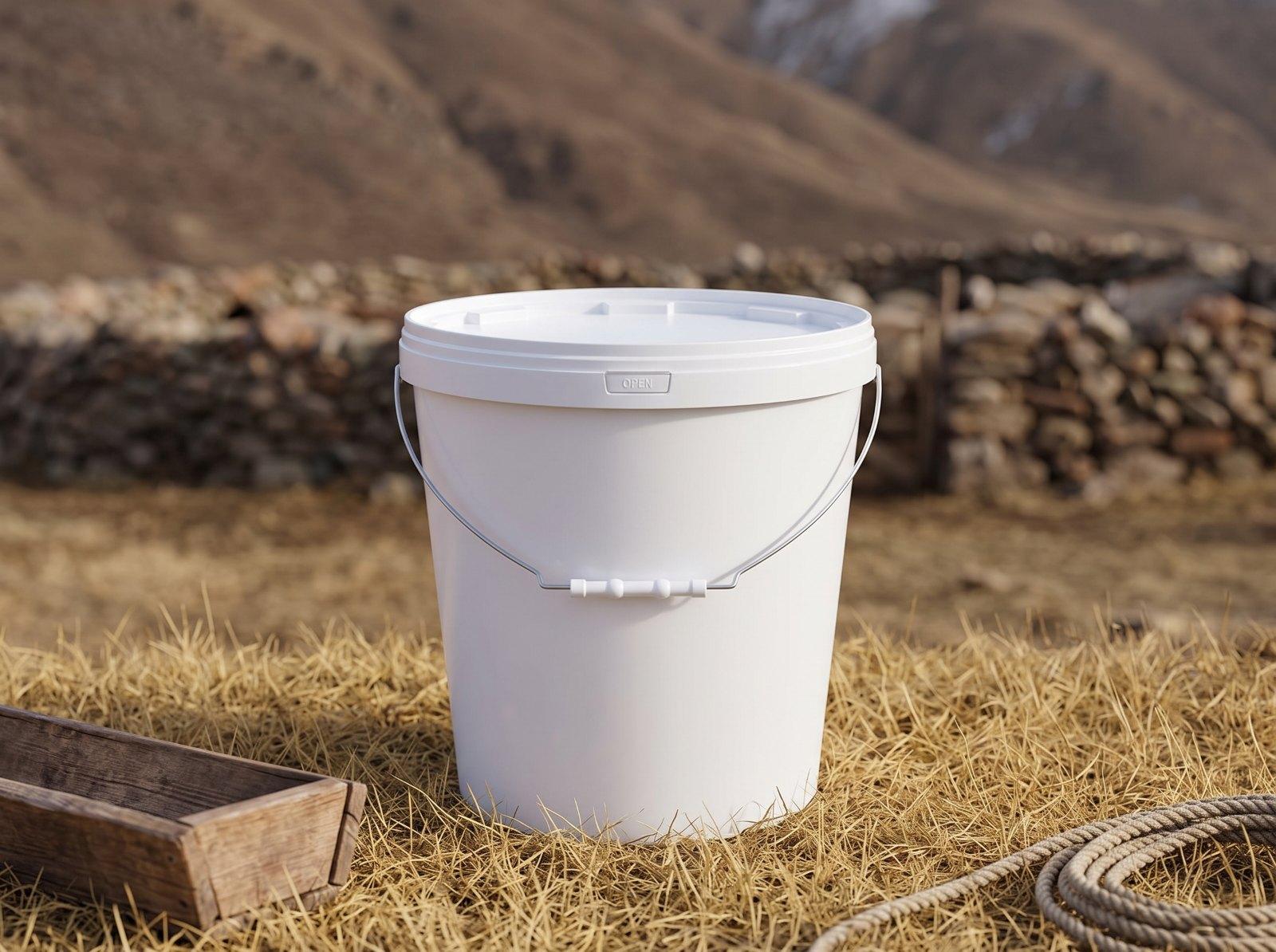
Sugar beet and vegetable fields in the Talas and Shu valleys, sheep flocks below the Karatau Range, apiaries in the foothills of the Kyrgyz Range, the mining towns of Karatau and Zhanatas, and the border villages of Kordai and Merke: in Zhambyl Region, buckets serve very different needs. HTI molds food-grade buckets from 560 ml to 21 L, in white and clear, and ships them to the region by the pallet. This page covers which size suits each local product, how to calculate pallets, and how to place an order.
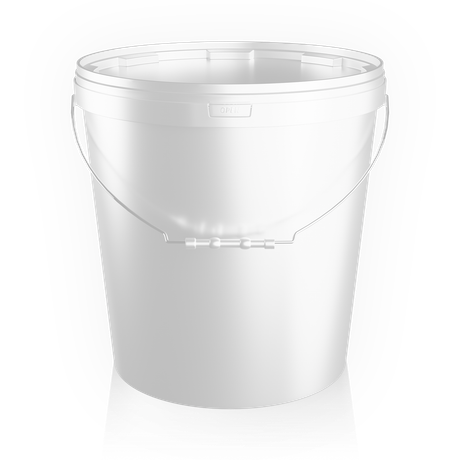
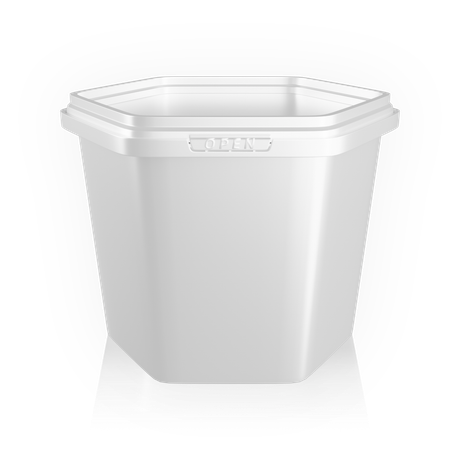
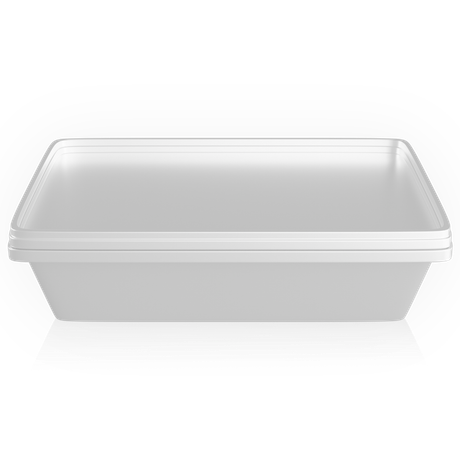
From a small sour cream bucket to a feed bucket, the entire HTI lineup on one screen. Under each size, you'll see how the region's farms, processors, and stores use it. Each card links to that size's page with dimensions, empty weight, and photos.
Small portions for Taraz bazaars and village stores.
Cafe kitchens, delis, and home-based preserve makers.
Harvesting, feed, repairs, and finishing work.
Containers for Taraz bazaars, delis, and highway cafes.
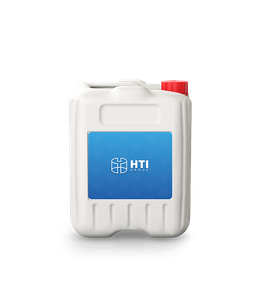
Jerry cans for liquid soap at the mines and water for remote pastures.
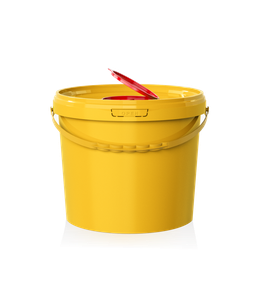
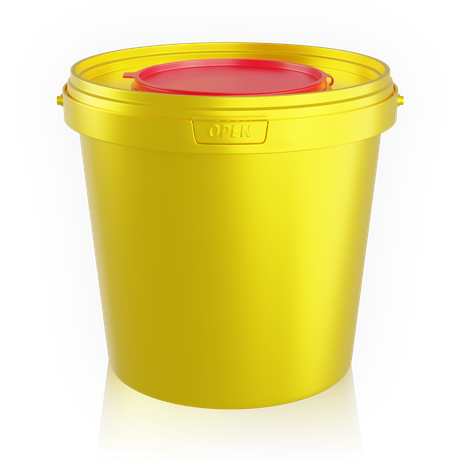
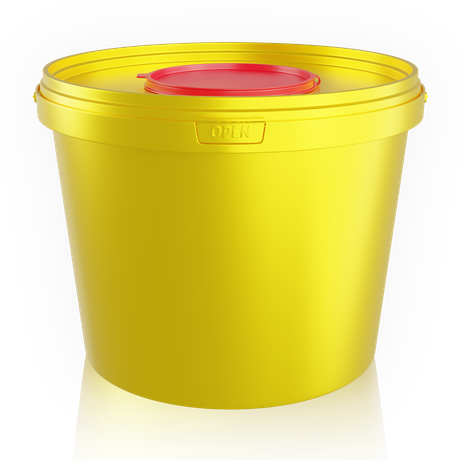
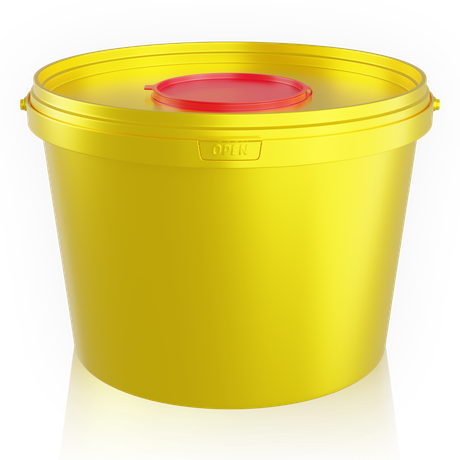
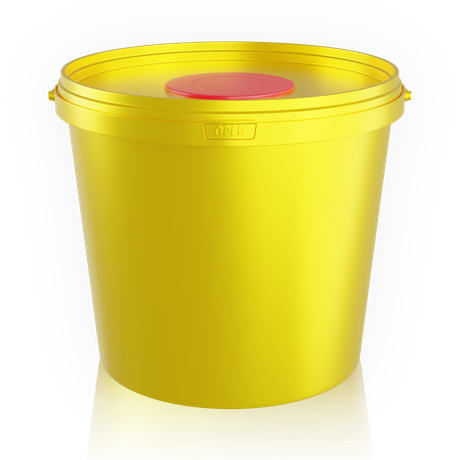
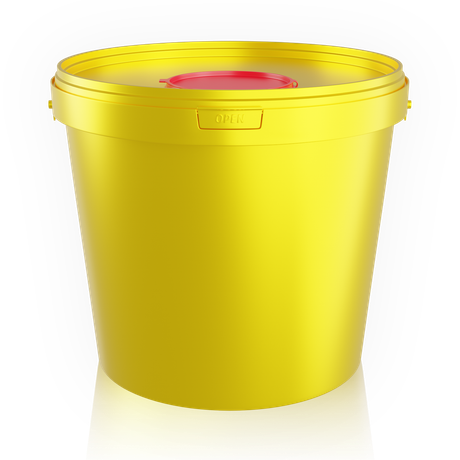
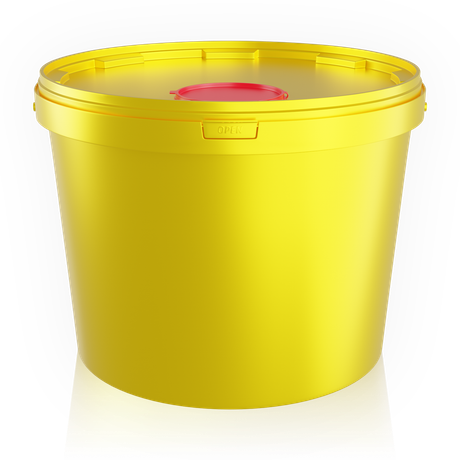
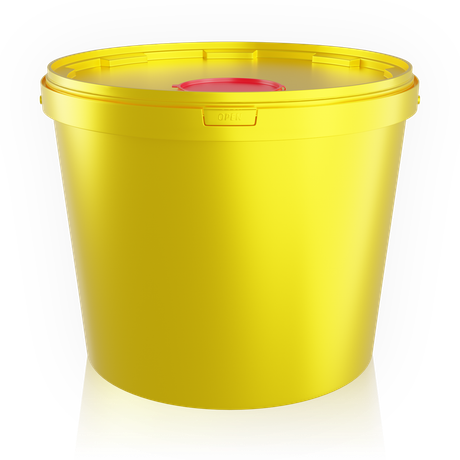
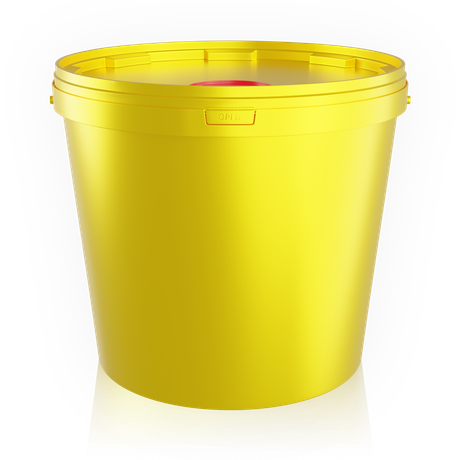
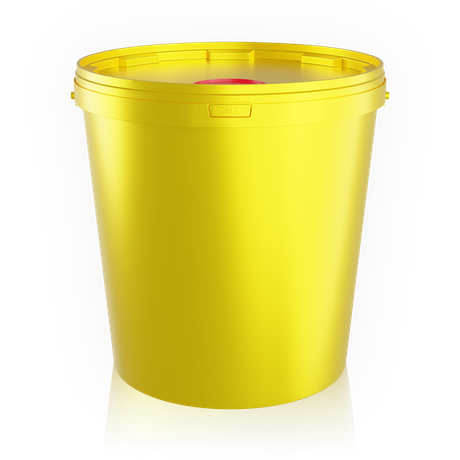
Yellow (Class B) and red (Class C) buckets (by Kyrgyz sanitary classification) for Taraz hospitals, district hospitals, and mine first-aid stations.
Packaging at the same scale: body width and height from the factory's product cards
Small · PKS560
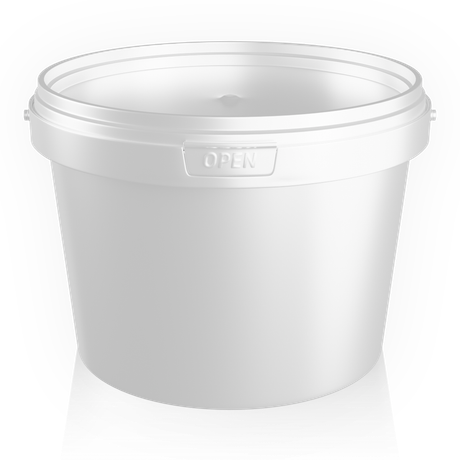
560 ml plastic bucket
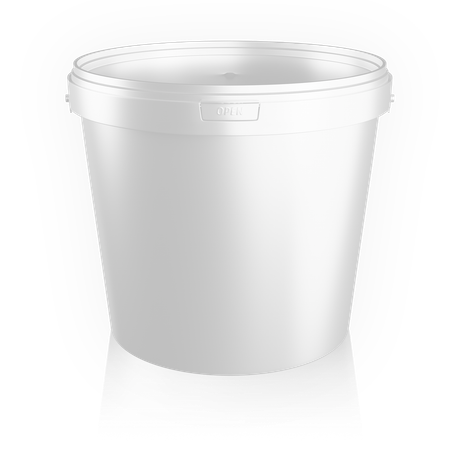
Kaymak and sour cream from village cows for the bazaar: the low bucket with no handle lines up in rows in the display case.
Homemade tomato paste and adjika samples for shoppers at Taraz bazaars: the 250 ml hexagonal container has no handle and fits in the palm of your hand.
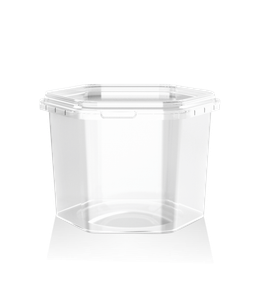
Tomato and pepper salads from the Shu Valley at delis across the region: the hexagonal container holds 400 ml of salad, weighs 16.5 g empty, and has no handle.
Kurt, zhent (a millet sweet), and talkan (roasted grain flour) from villages near the Karatau Range for rural stores: the 550 ml round container, 18.8 g, no handle.
Exam room at a Taraz outpatient clinic: a 3.8 L dispenser bucket sits by the exam table, and wipes are pulled through the 75 mm opening without removing the lid.
Taraz infectious disease hospital: a red 5.6 L bucket stands in the isolation room, and the needle remover in its lid takes the needle off each syringe after an injection.
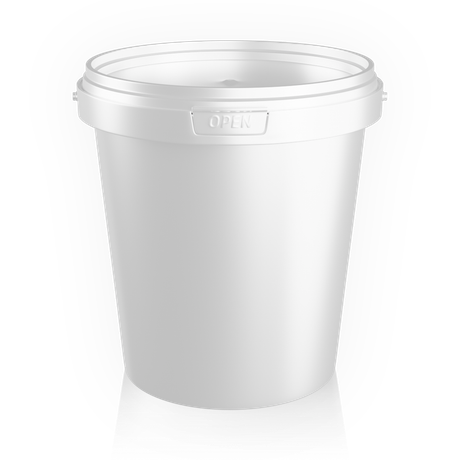
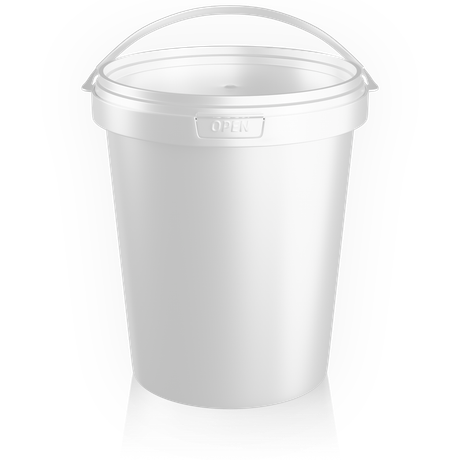
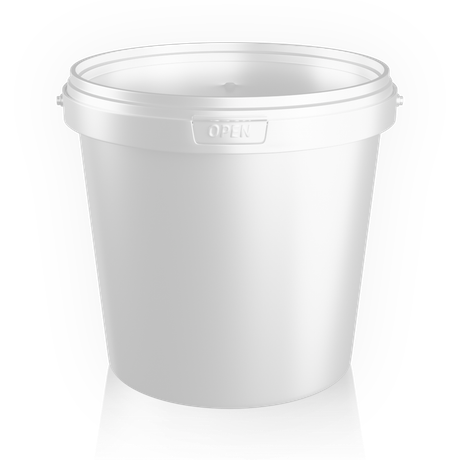
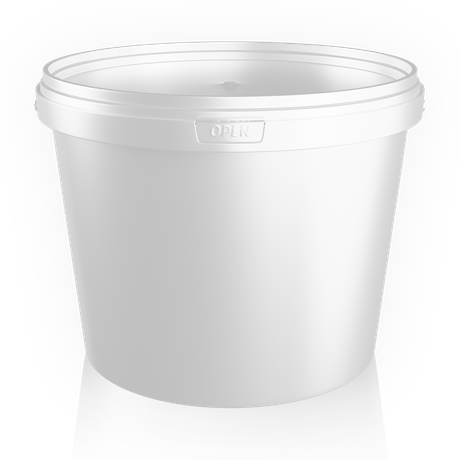
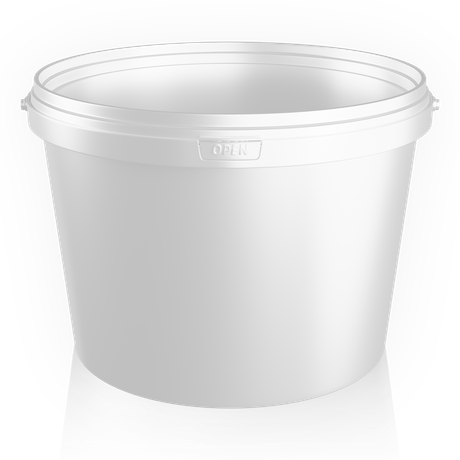
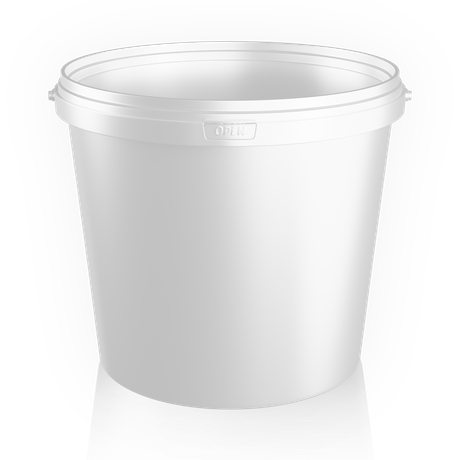
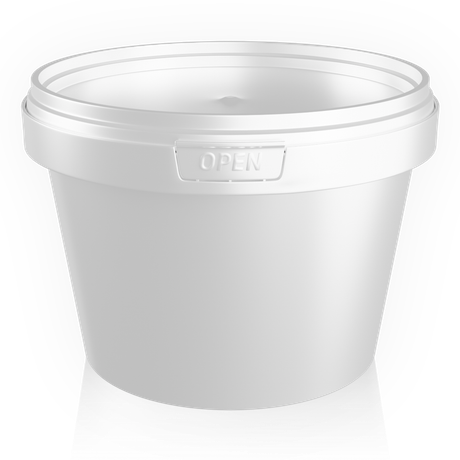
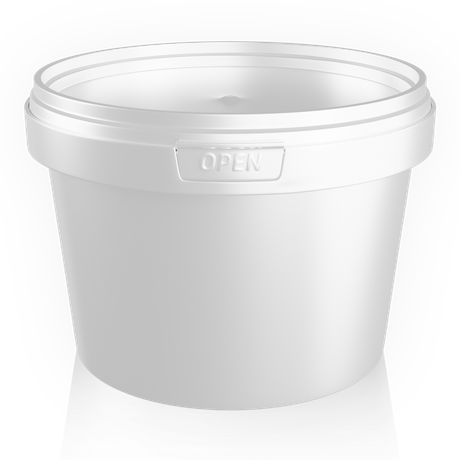
The buckets are tapered, so empties nest inside each other and take up almost no room in the truck. The lid seats into a double rim with an OPEN tamper-evident tear strip underneath, so the first opening is obvious at a glance.
Product and size
What goes into which bucketin the Zhambyl Region
Farms in the region sell their produce at the bazaars of Taraz and Shu, at roadside stands near Kordai, and in their own villages. The table lists the main local products, the go-to bucket for each, and the product weight in that bucket wherever it can be calculated in advance.
Weights are based on nominal capacity. Honey comes to about 1.42 kg per liter, jam 1.33 kg, pickles with brine 1.05 kg, and sour cream almost exactly a kilogram. Every bucket holds more than its nominal capacity when filled to the brim, but that extra space is left empty so the lid seats into the rim without forcing it.
Zhambyl Region stretches from the northern steppes to the mountain ranges on the Kyrgyz border, and its economy is very diverse. For buckets, that means four buyer groups, each with its own sizes and requirements.
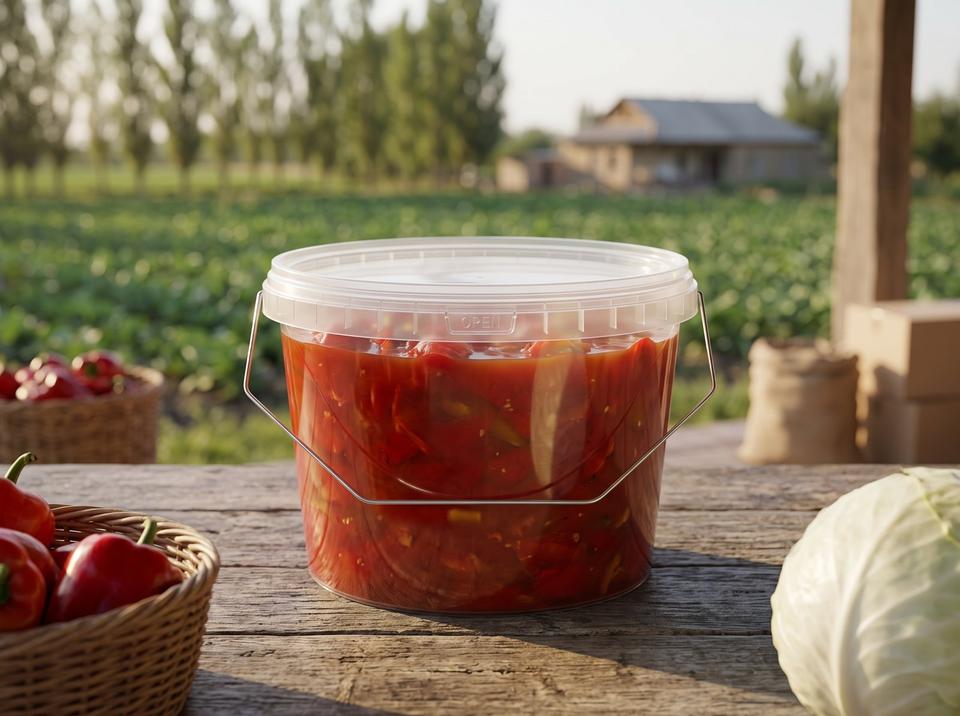
Lecho from the veranda3 L: the clear body shows the color of the vegetables
Vegetables and sugar beets
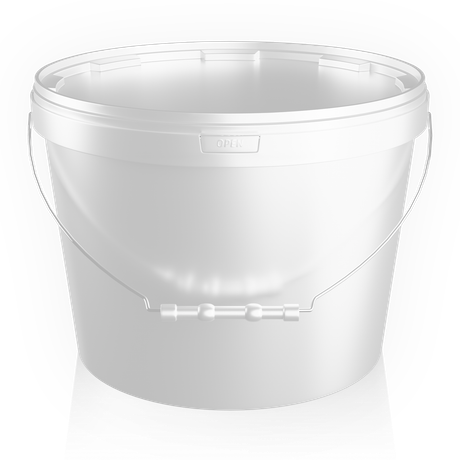
The Talas and Shu valleys grow sugar beets, tomatoes, peppers, and cucumbers. In the field, growers use the 11.5 L with a bail handle and plastic grip; for selling pickles and lecho, the clear 2.3 and 3 L, which show the vegetables without opening the lid.
Flocks and farms
Livestock is raised both on the steppe and in the foothills. Farms need the 21 L for compound feed, bran, and salt, while those who process their own milk and meat need 560 ml buckets for sour cream and 8 L for marinated meat.
Mining towns
Karatau and Zhanatas mine phosphate rock. Repair shops use the 15 L for grease and technical fluids, and crews renovating miners' housing take the 18 and 21 L for plaster and adhesive.
Roads and the border
Kordai sits by a border crossing with Kyrgyzstan, and Merke at the foot of the Kyrgyz Range. Roadside cafes and stands need 3.8 and 8 L buckets for the kitchen and one-liter buckets of honey and jam for the counter.
Pallets
Calculating an orderfor a farm or plant
Enter the bucket size and quantity, and the calculator breaks your order down into pallets. For example, a Shu Valley vegetable farm ordering 7,000 clear 2.3 L buckets for pickling needs three pallets. A farm that needs 900 of the 21 L buckets a year for feed gets two pallets.
Item
BucketsContainersJerry cansMedical buckets
How many pieces you need
pcs
We ship full pallets only, so the result is rounded up.
Pallets of several sizes can go on one truck.
The 5 and 10 L jerry cans have their own pallet quantities, since they don't nest.
Buying
How to buy bucketswith delivery to the region
The minimum order is one pallet of a single size. The process is the same for a farm near Shu, a cafe in Kordai, and a repair shop in Karatau.
1
Request
Call +996 222 600 292 or request a callback. Tell us what you'll be packing, which sizes and how many you need, and which town or village to deliver to.
2
Selection and pricing
Your sales manager will match your product to the right size and handle type, break the order down into pallets, and quote the price of the order including freight to your town or village.
3
Preparation
Your order is put together at our plant in the Bishkek Free Economic Zone (FEZ). If the buckets will carry your brand, the label or in-mold labeling (IML) artwork is approved first, and then the run is molded.
4
Shipping
The pallets go out via a freight carrier, with the shipment processed within the EAEU and the documents traveling with the cargo. Your sales manager gives you the delivery time along with the estimate.
Straight-line distance. Click a city to open its page.
All buckets ship from one place: the HTI plant in Ak-Chiy village, Bishkek FEZ. Orders for Zhambyl Region travel by the pallet via a freight carrier, with the shipment processed within the EAEU. Your sales manager quotes delivery time and freight cost together with the bucket price, before you confirm the order.
HTI has no warehouses or pickup points in the region. The upside: every pallet is built for a specific order, and the truck carries exactly the mix of sizes you ordered.
Demand in the region is seasonal: vegetable farms need buckets for pickling season, apiaries for honey extraction, livestock farms for wintering, and finishing crews for spring. Ordering ahead gives the plant time to put your order together without a rush.
Zhambyl Region
Nearbyand across the country
Towns and villages
Linked places have their own page covering packaging for the local economy.
The same bucket sells differently at a Taraz bazaar, in a chain supermarket, and at a stand on the road to Kordai. Choose the version with the person who will pick it up in mind.
Clear body
Pickles, lecho, and honey sell on color. A clear bucket shows the contents through the wall, so a bazaar vendor doesn't have to open the lid for every shopper.
White body
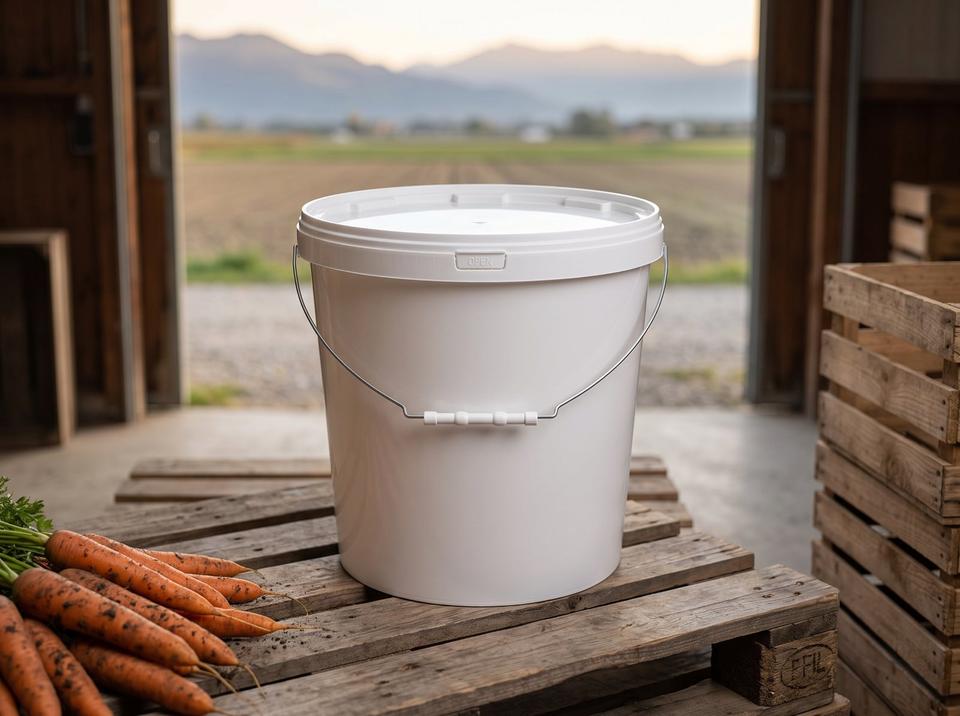
For a label with ingredients and a barcode for retail stores, and for products that don't need to be on display: feed, grease, and construction mixes.
Tamper evidence
Under the lid rim is a tear strip with OPEN embossed on it. It's torn off the first time the bucket is opened, so an intact strip confirms that no one has touched the bucket since it was filled.
Your own brand
A label works for first orders and seasonal products. IML is fused into the wall during molding and won't rub off or peel when washed, which makes it the choice for ongoing production runs.
Questions and answers
For buyersin the Zhambyl Region
Didn't find your answer?A sales manager replies Mon-Fri, 9:00 AM-5:00 PM, Bishkek time
Directly from the HTI plant: orders of one pallet or more ship from the Bishkek FEZ to Taraz, Shu, Karatau, Kordai, Merke, and other towns and villages in the region. Call +996 222 600 292, and our sales manager will help you choose sizes for your product.
Your sales manager prices your specific order based on size, quantity, handle, color, and printing. The freight cost to your town or village is included in the same quote.
By the pallet via a freight carrier, with the shipment processed within the EAEU and the documents traveling with the cargo. Your sales manager confirms delivery time when you place the order.
No. We always ship from our plant in Ak-Chiy village, Bishkek FEZ, and each order is put together for you. There are no pickup points in Taraz or the district centers either.
For selling at the bazaar, the clear 2.3 or 3 L: the smaller one holds about 2.4 kg of pickles with brine. Canteens find the 5.6 L with a metal bail handle more convenient. Learn more on our pickle buckets page.
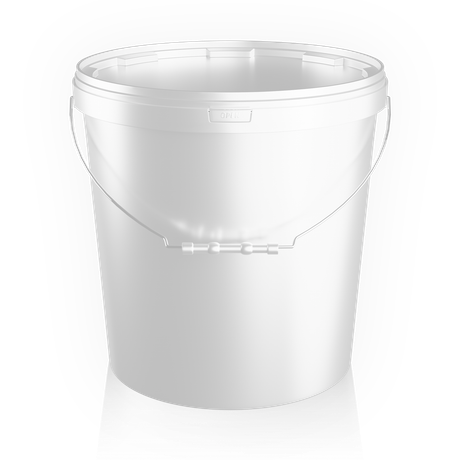
Yes. For compound feed and premixes, farms take the 21 L: a 332 mm opening, a metal bail handle with plastic grip, and a lid. Empty buckets nest inside each other and store in stacks.
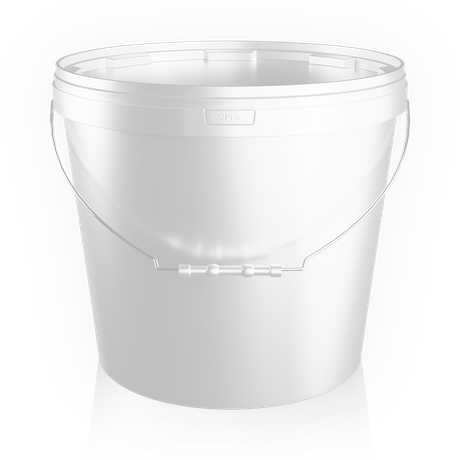
Both have the same 332 mm opening; the difference is height: 286 mm versus 333.5 mm. The 18 L is easier to carry up stairs, while the 21 L pays off where extra capacity matters, such as for feed.
Yes. A label is the easy option for a first order, and IML, with the image fused into the wall during molding, suits ongoing runs. You approve the artwork with your sales manager before molding starts.
Catalog
The full bucket lineupfor the Zhambyl Region
The catalog has dimensions, empty weight, and photos for every size. The regional capital has its own page on packaging in Taraz, and neighboring regions are covered on our Turkestan and Almaty Region pages.
Tell us your product, the sizes you need, and your town or village in the region. Our sales manager will choose the buckets and calculate the pallets and freight cost.