Want to learn more about our packaging or find the right fit for your business? Request a callback, and our specialist will call you at a time that suits you. Tell us about your product, and we'll help you choose the best option.
Order a callback from a specialist
Want to learn more about our solutions or find the perfect solution for your business? Leave a request for a callback and our specialist will contact you at a convenient time. Together we will find the optimal solution to make your business thrive!
Request a callback from our HR team
Interested in our openings and career opportunities? Leave your contact details and our HR team will get back to you shortly. We'll answer your questions and explain how to join the HTI Group team.
Order a callback from a specialist
Would you like to learn more about our job openings and career opportunities? Leave your contact information, and our HR department will get in touch with you shortly. We will answer all your questions and provide detailed information on how to become part of the HTI Group team.
Mon-Fri, 9:00 AM-5:00 PM · Factory in the Bishkek Free Economic Zone, Ak-Chiy village
Karasai District
Plastic bucketsin Kaskelen
Kaskelen, west of Almaty, is growing fast: new neighborhoods, greenhouses along the highways, Karasai District farms, and markets that draw shoppers from nearby villages. All of them need buckets: for putty and mortar, for harvests and fertilizer, for sour cream and pickles on the counter. The HTI plant molds the full size range, from 560 ml to 21 L, and ships orders to Kaskelen by the pallet via a freight carrier.
Fourteen bucketsand a job for each one in Kaskelen
Kaskelen is a suburb, a construction site, and a farming district center all at once, so buckets here end up in very different hands. We've matched each size to a specific job in the town and Karasai District. Each card opens the bucket's page with dimensions, empty weight, and photos.
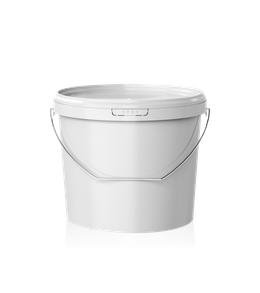
Retail portions shoppers carry home from the market by hand.
Working sizes for cafes, small production shops, and greenhouse farms.
Mixes, feed, harvests, and wholesale orders.
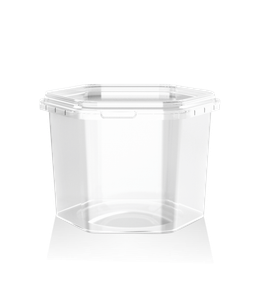
Containers for shashlik cafes, delis, and the Kaskelen market.
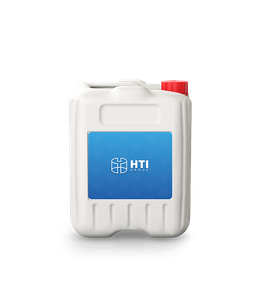
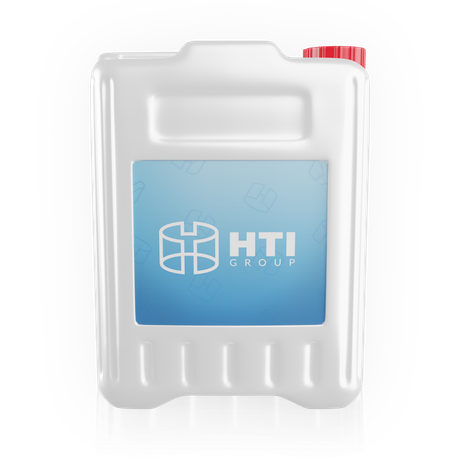
Jerry cans for primer in finishing work and fertilizer for greenhouses.
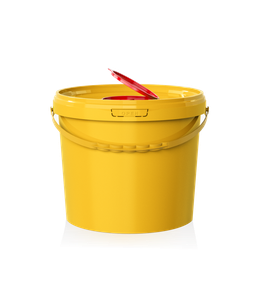
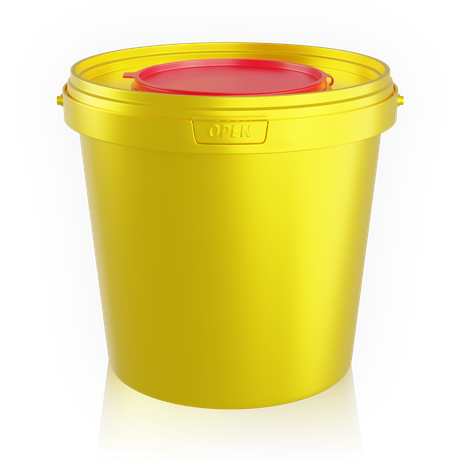
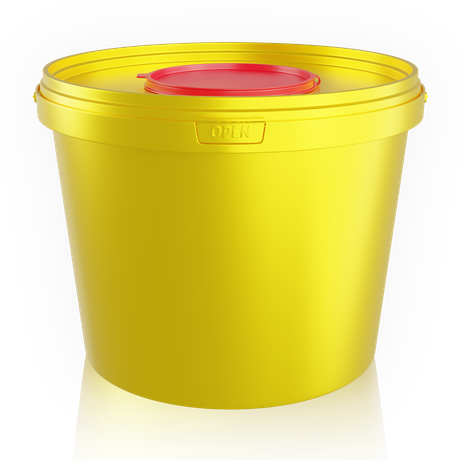
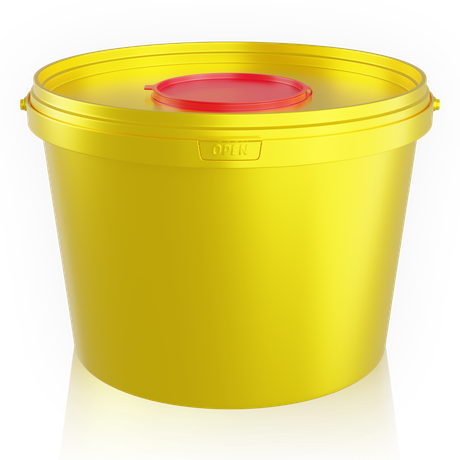
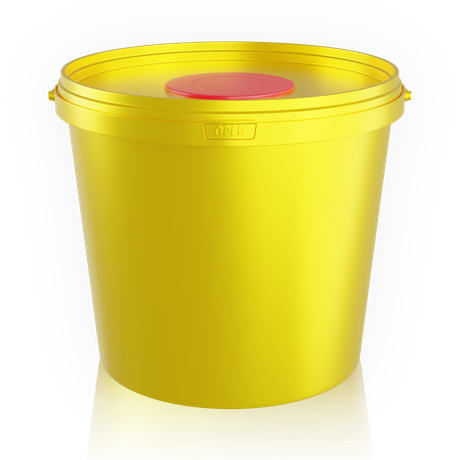
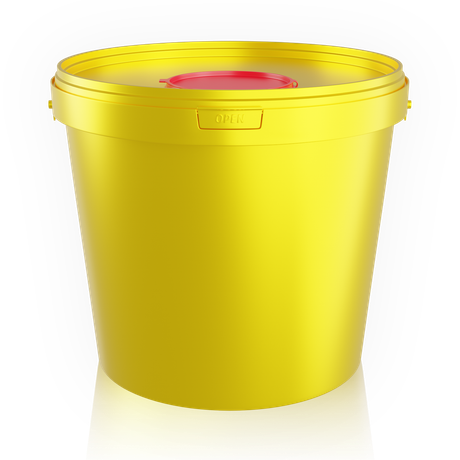
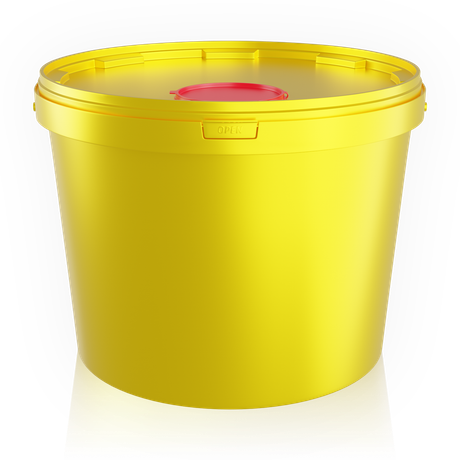
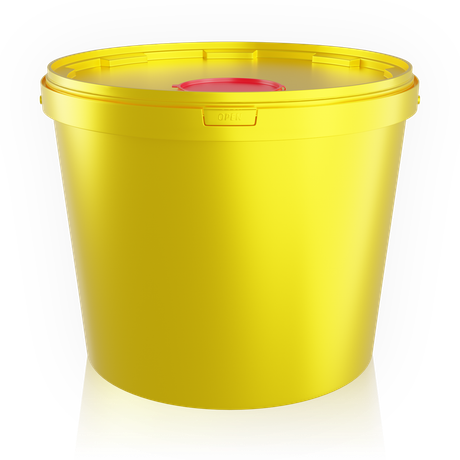
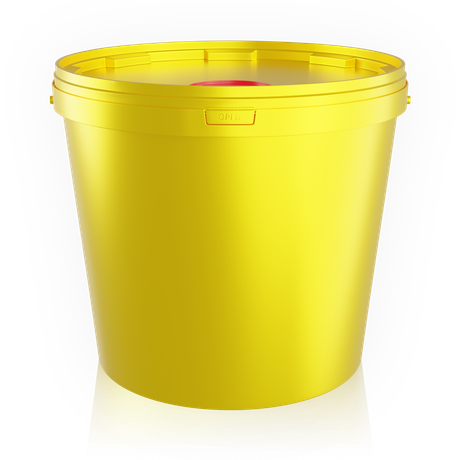
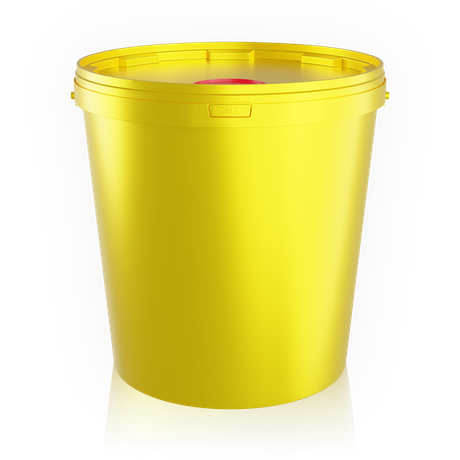
Yellow and red buckets for the hospital, outpatient clinic, schools, and private clinics.
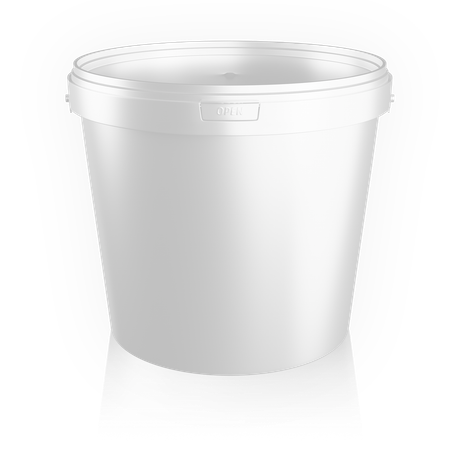
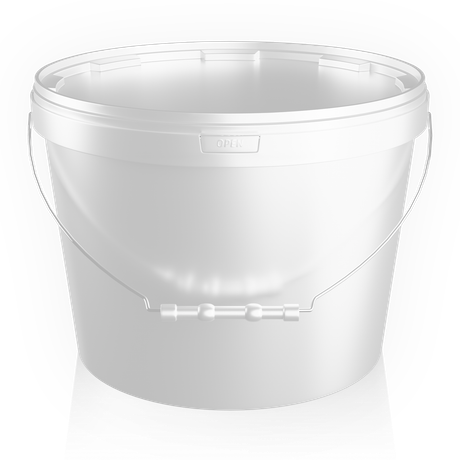
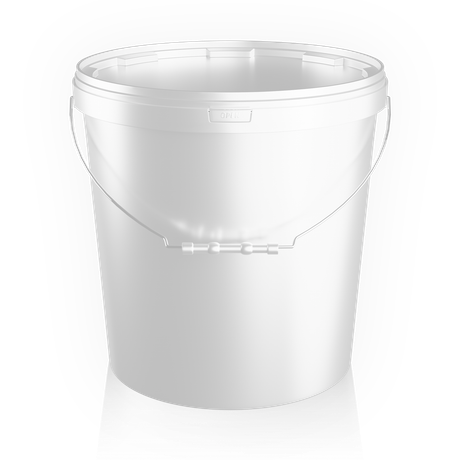
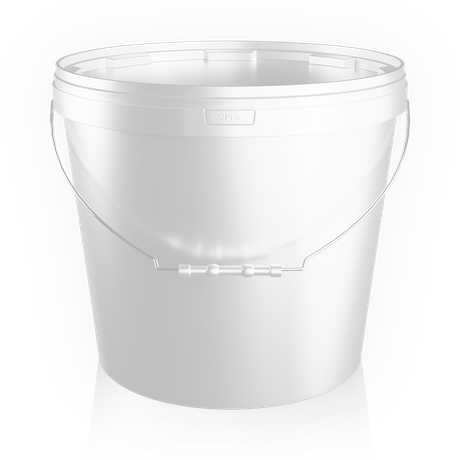
Packaging at the same scale: body width and height from the factory's product cards
Counter · PKS560
560 ml plastic bucket
Homemade kaymak and cream from Karasai District farms: a display-size portion for stores in new neighborhoods.
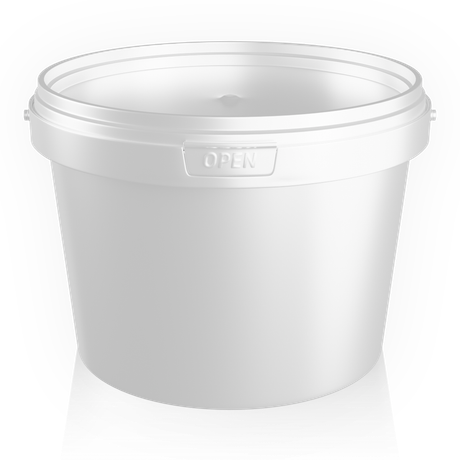
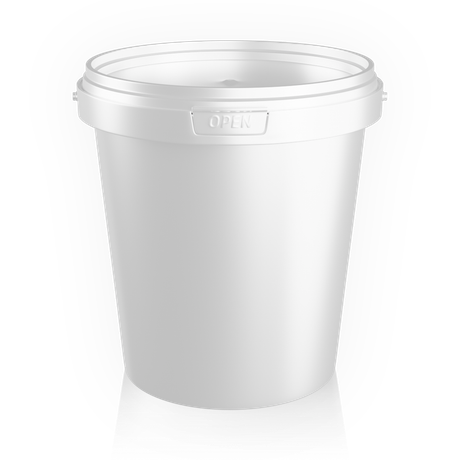
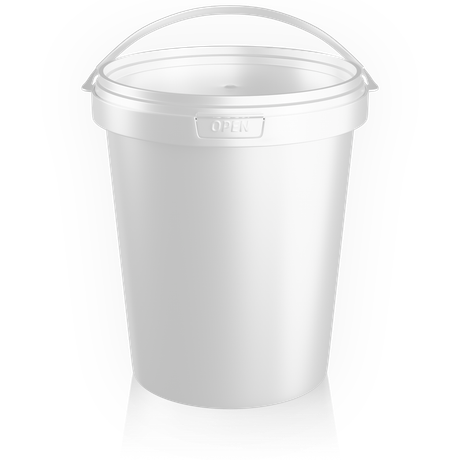
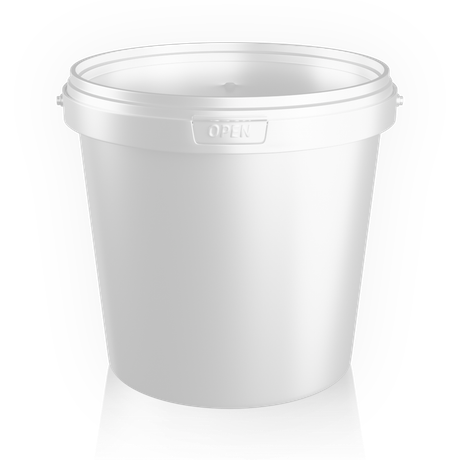
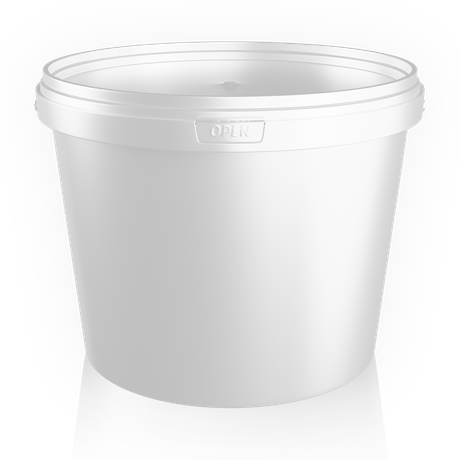
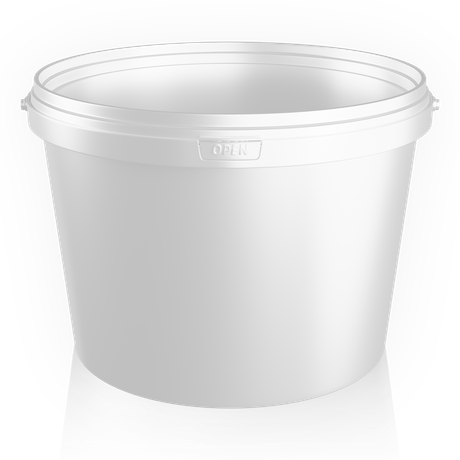
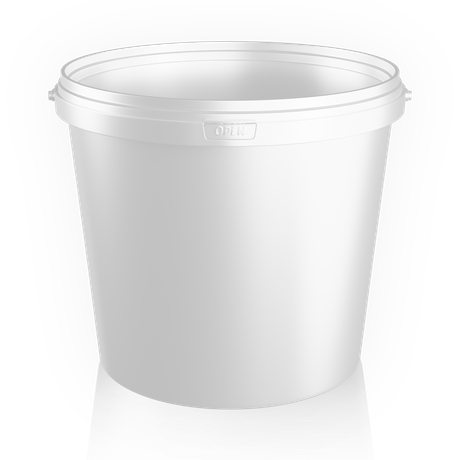
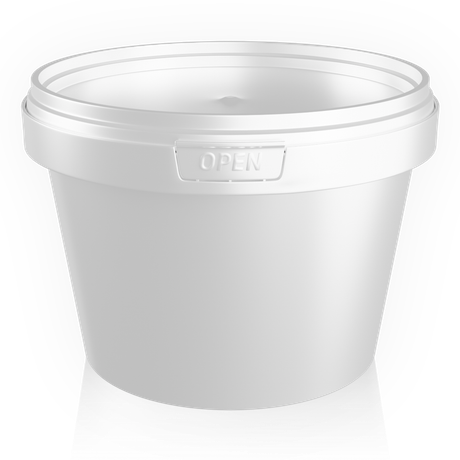
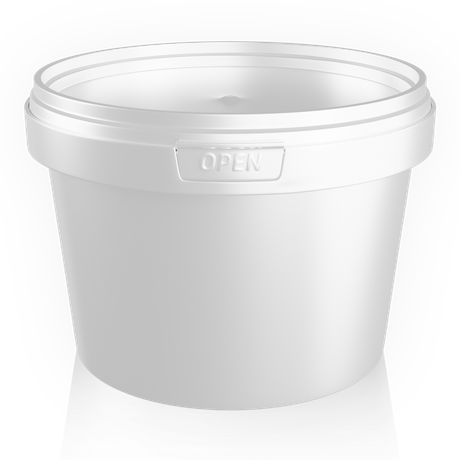
Empty buckets of every size nest inside each other, so a season's supply takes up just a couple of stacks in a garage or site trailer. Every bucket has a flat lid with an OPEN tear strip that shows no one has opened it since packing.
By job
What Kaskelen buysand for which products
Each table row is a buyer type common in Kaskelen and nearby villages. For each one, we list the size usually ordered first, the handle type, and a page with a detailed breakdown.
Three of the seven rows are construction and greenhouses, and that's what sets Kaskelen apart from the region's orchard districts. For mixes and harvests, buyers choose large buckets with a plastic grip; for the counter, small ones with a plastic handle or none at all.
Finishing work, greenhouses, homesteads,and the Kaskelen market
The town sits between Almaty and the farming part of Karasai District, so demand for packaging here is twofold: urban and rural. Four buyer groups come up more often than others, and each has its go-to size.
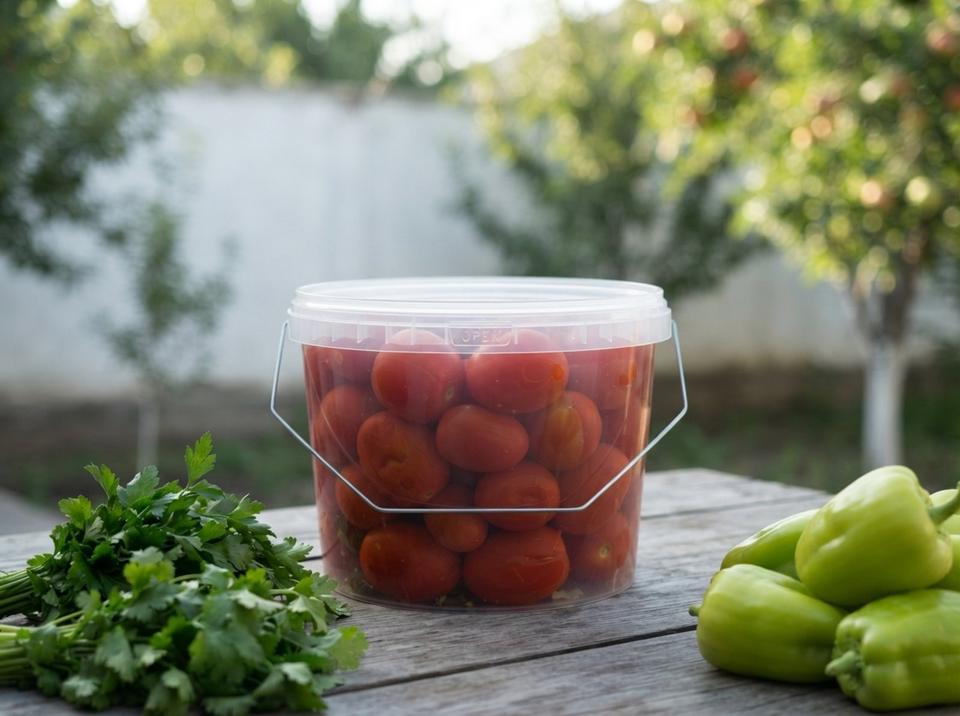
Pickles on the counter3 L: about 3.2 kg of tomatoes with brine
Finishing work in new neighborhoods
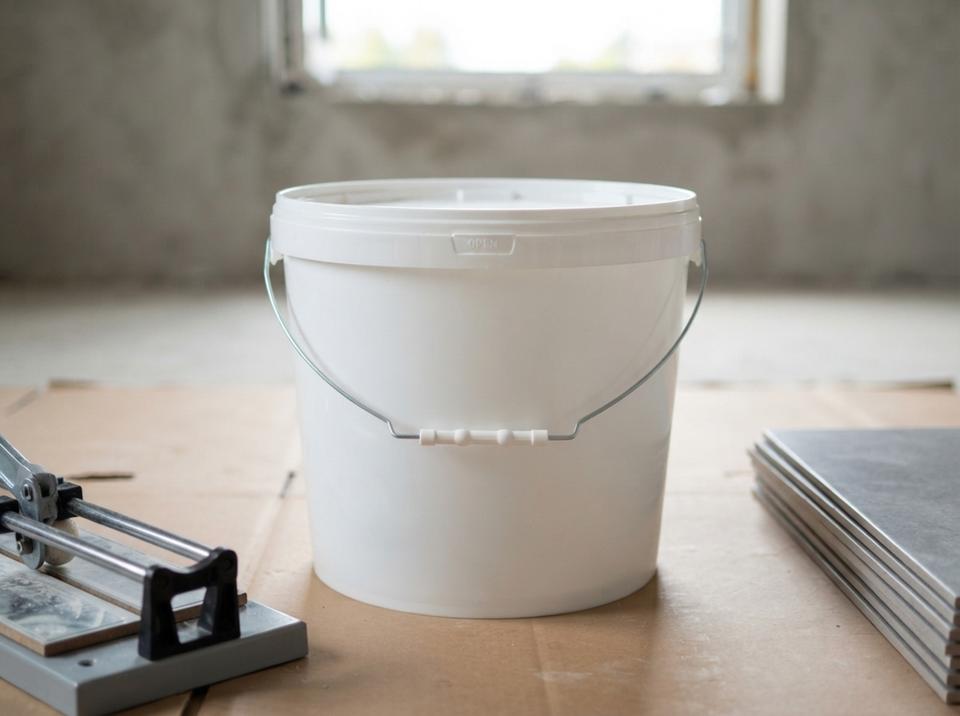
Kaskelen is filling up with new apartment buildings, and finishing crews go through mixes by the bucket. A crew needs 15 to 18 L buckets with a bail handle and plastic grip, while a plant that packs putty or primer under its own brand needs the same sizes with a label or IML.
Greenhouses along the highways
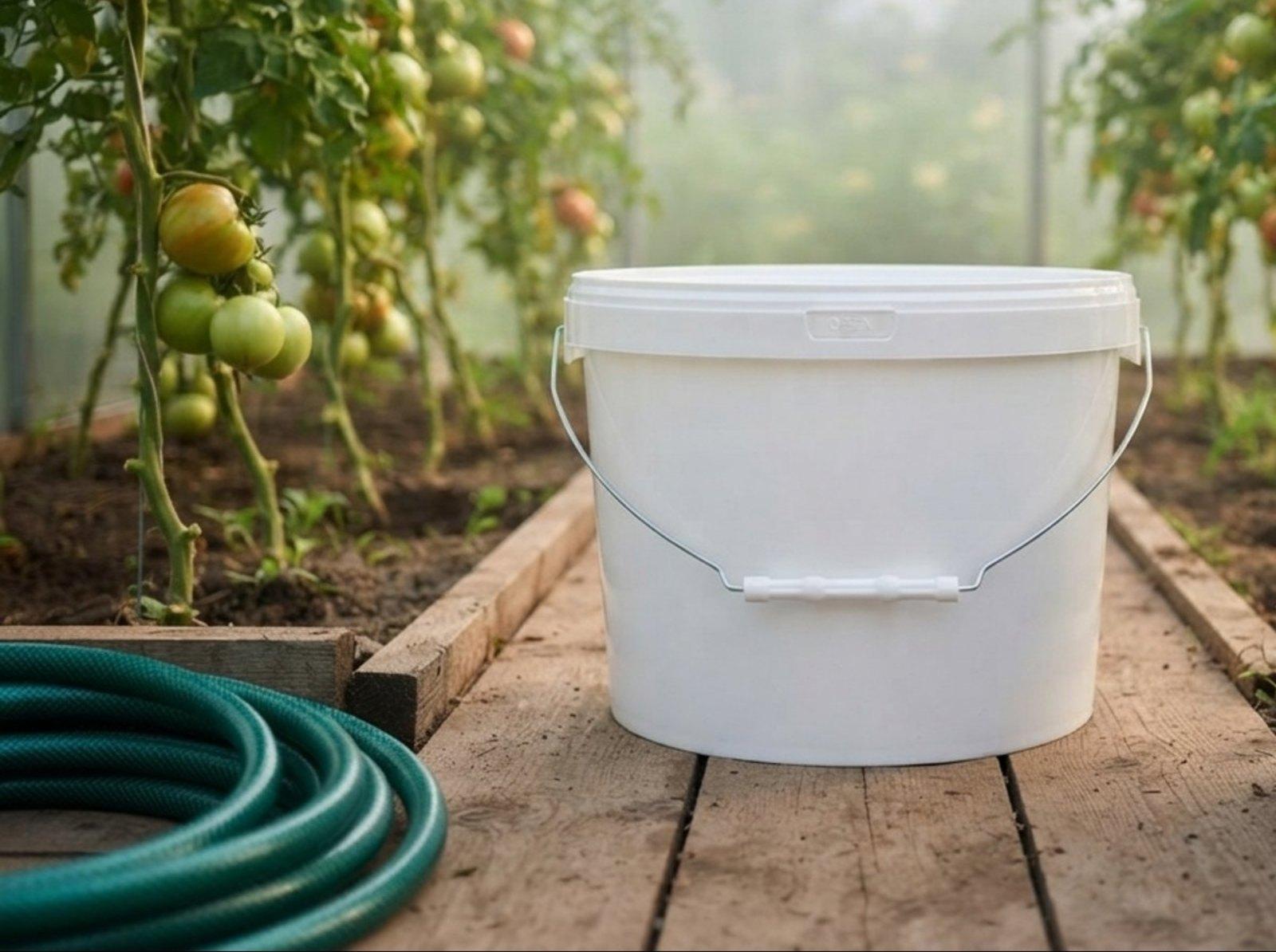
The district's greenhouse farms send tomatoes, cucumbers, and herbs to Almaty. In the greenhouse, the 8 L bucket is used for picking and the 5.6 L for fertilizer, while part of the harvest gets pickled and sold in clear buckets.
Farms and smallholdings
Small dairy farms sell sour cream, kaymak, and cottage cheese at the market and in neighborhood stores. For display they choose 560 ml and 850 ml buckets, for cafes the 3.8 L, and they keep compound feed in a lidded 21 L bucket where mice can't get to it.
Market and shops
Shoppers from nearby villages come to Kaskelen's markets, and sellers of pickles, honey, and salads need their goods in full view. Clear 2.3 and 3 L buckets show off the product, and the OPEN tear strip confirms the lid hasn't been removed.
Pallets
Pallet estimatefor a job site or a season
Enter the bucket size and quantity, and the calculator rounds up to full pallets. Take interior finishing: a company working on an apartment building plans 1,800 of the 18 L buckets for the quarter, which is exactly three pallets. A greenhouse farm that needs 900 of the 8 L buckets for picking gets two pallets, since one would come up 60 short.
Item
BucketsContainersJerry cansMedical buckets
How many pieces you need
pcs
Orders ship in full pallets, and any remainder is rounded up.
Construction buckets and food buckets can travel on the same truck.
Empty jerry cans don't nest, so fewer fit on a pallet.
Five steps to packaging with your logo
How to buy bucketsfrom Kaskelen
You buy direct from the factory, with no resellers. The whole process takes four steps.
1
Item list
Call or send a request: what goes in the bucket, which sizes, and how many. A crew can work it out from the area to be finished, a greenhouse from the expected harvest.
2
Selection and pricing
A sales manager will check that the buckets suit your product or mix, convert units into pallets, and quote a price for the order, including delivery to Kaskelen.
3
Your brand on the bucket
If you want your plant's or farm's logo, we'll agree on a label or an IML design. Orders without printing skip this step.
4
Shipping from the factory
Pallets are assembled in the Bishkek Free Economic Zone and handed to a freight carrier, and the shipment is documented as a movement of goods within the EAEU.
Straight-line distance. Click a city to open its page.
Buckets for Kaskelen ship from the HTI plant in the Bishkek Free Economic Zone, Ak-Chiy village. A freight carrier delivers the order by the pallet, the shipment moves within the EAEU, and your sales manager confirms timing and cost when you place the order. We have no warehouse in Kaskelen or Almaty: every pallet is assembled at the plant for a specific order.
Construction companies can tie their orders to the project schedule: buckets for rough finishing first, then for final finishing. When the volume is known in advance, your sales manager will plan the shipment so the packaging arrives before work starts.
Greenhouses and farms are better off buying buckets before the season. If several farms in the district need the same sizes, they can combine orders and fill a whole truck.
Karasai District
Nearbyand across the country
Nearby in the region
Links lead to pages for nearby towns and all of Almaty Region, with buckets matched to local businesses.
The same bucket comes in several versions. A crew cares about the handle, a market seller about the body color, and a plant about space for its own brand.
Bail handle with plastic grip
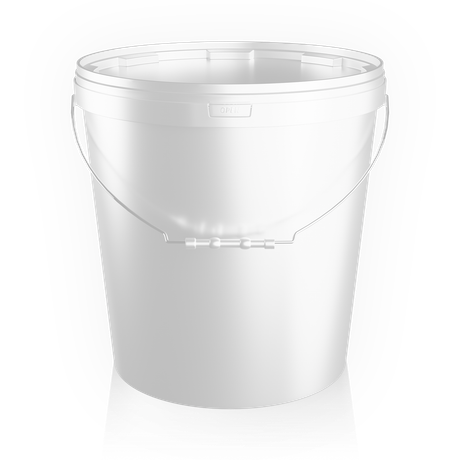
Buckets from 8 L up have a metal bail handle with a plastic grip, so a full bucket of mix won't cut into your palm on the stairs.
Clear body
Pickles, salads, and honey show through the wall. Clear buckets come in all 14 sizes.
Tamper evidence
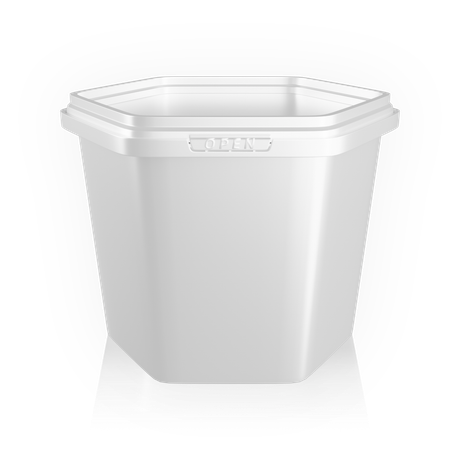
Under the lid rim is a tear-off strip embossed with the word OPEN. As long as it's intact, the buyer knows the bucket hasn't been opened since packing.
Label or IML
A mix plant or dairy farm can have buckets made with its own logo: a label on the finished bucket, or IML, where the image is fused into the wall during molding.
Questions and answers
Questionsfrom Kaskelen
Didn't find your answer?A sales manager replies Mon-Fri, 9:00 AM-5:00 PM, Bishkek time
Directly from the HTI plant. Call +996 222 600 292 or leave your number in the form, and we'll call you back. A sales manager will confirm your product and quantity, choose the sizes, and arrange shipment to Kaskelen by the pallet.
Your sales manager calculates the price for your order based on size, quantity, handle, color, and printing. Freight cost and delivery time are confirmed when you place the order.
A freight carrier delivers them by the pallet from our plant in the Bishkek Free Economic Zone. The shipment moves within the EAEU, and your sales manager prepares the shipping documents when the order is dispatched.
No. Buckets are stored and assembled into orders only at our plant in Ak-Chiy, and pallets travel from there straight to your job site or farm.
Most often the 18 L: a 332 mm opening and a metal bail handle with a plastic grip. For heavy mixes, buyers choose the 15 L so a full bucket is easier to carry. More on our buckets for construction mixes page.
Yes. For picking tomatoes and cucumbers, the 8 L and 11.5 L work well, and for pickles sold at retail, clear 2.3 L and 3 L buckets. See our page on buckets for pickles for more on pickling.
Yes. Construction buckets, food buckets, and jerry cans can all go on one truck. Each model sits on its own pallet, so it's easy to receive and count.
Yes. A label is practical for your first orders, and IML for ongoing production: the image becomes part of the wall and won't rub off on the job site.
Catalog
The full bucket catalogfor Kaskelen
In the catalog, every bucket has its own page with opening diameter, height, weight, and photos. Businesses across the region are covered on the Almaty Region page, and for nearby towns, see our picks for Talgar and Konaev.
A construction site, greenhouse, or plant in Kaskelen?
Tell us what you'll put in the buckets and how many you go through each month. Based on those numbers, a sales manager will pick the buckets and work out the pallets and truckloads.