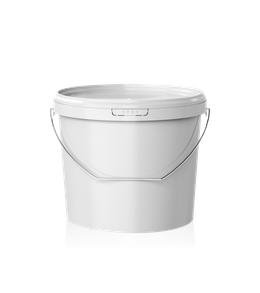
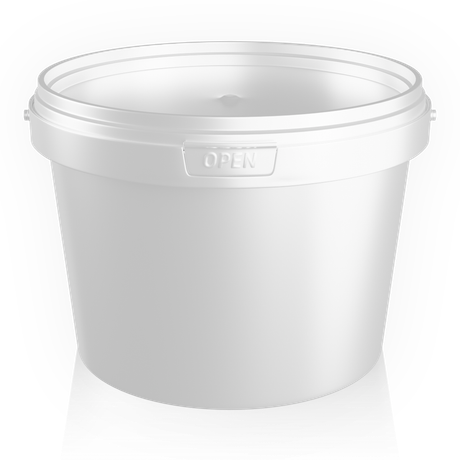
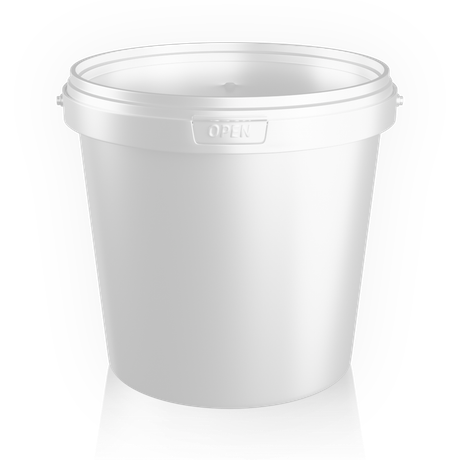
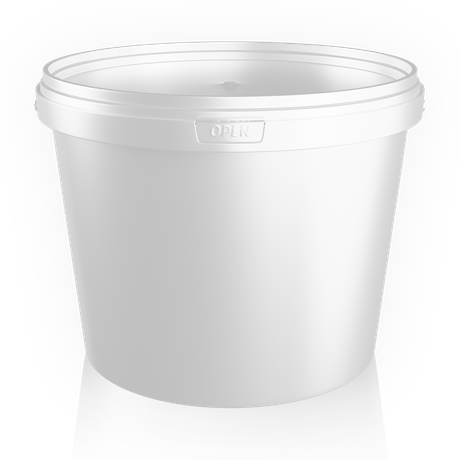
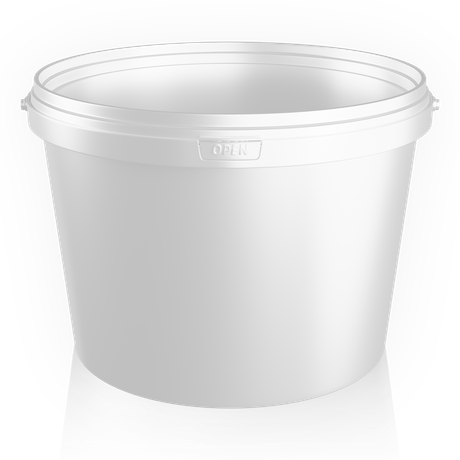
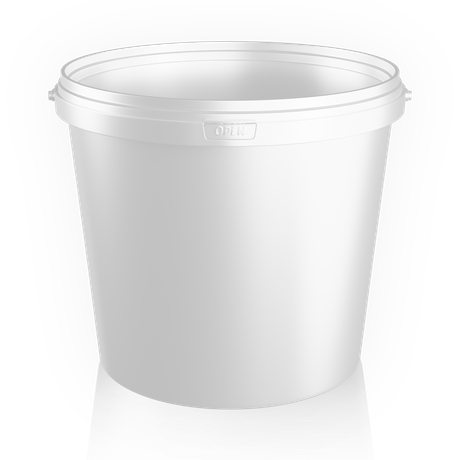
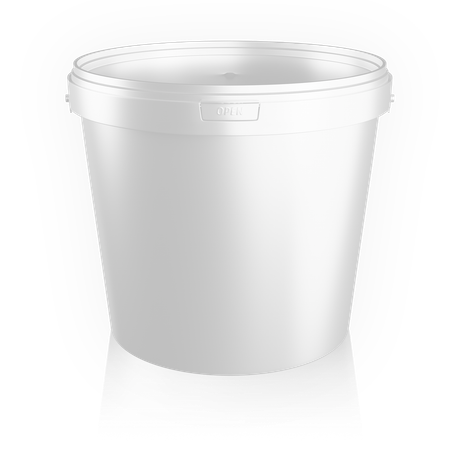
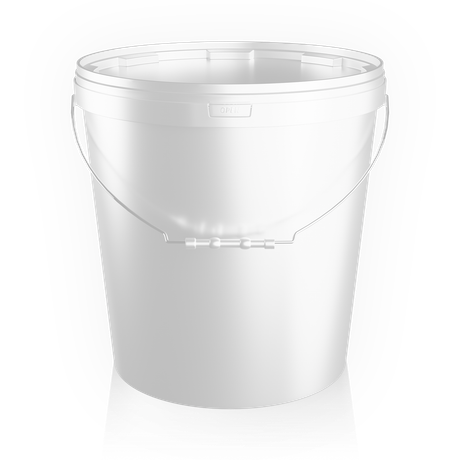
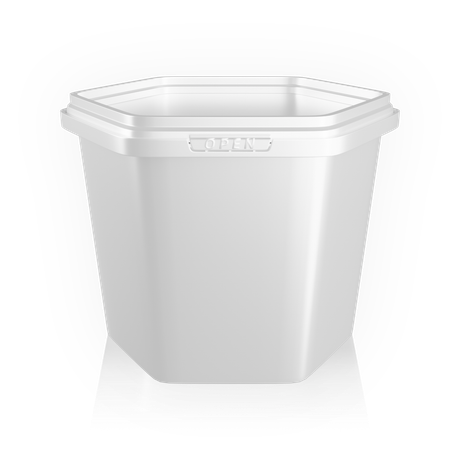
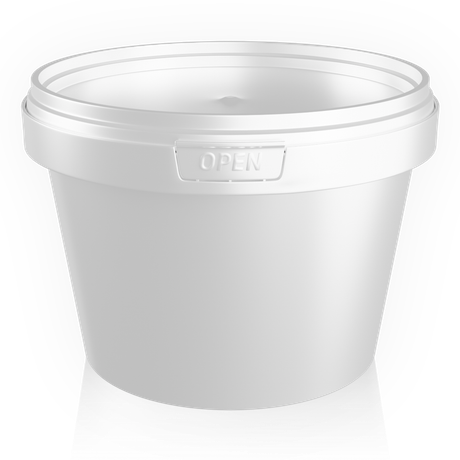
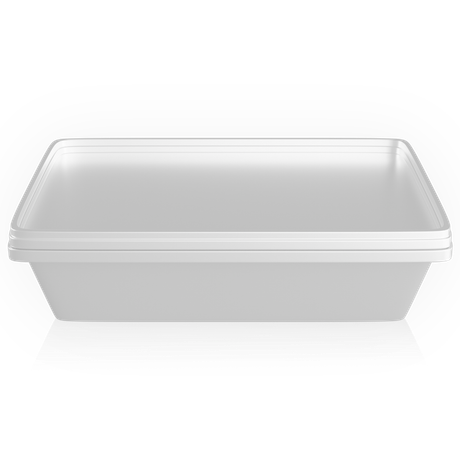
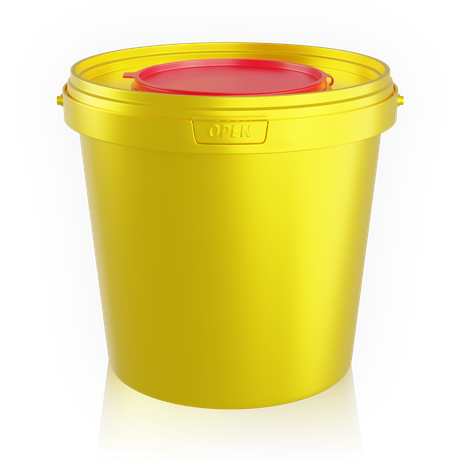
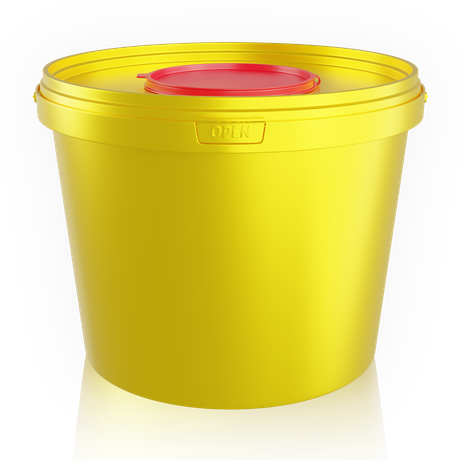
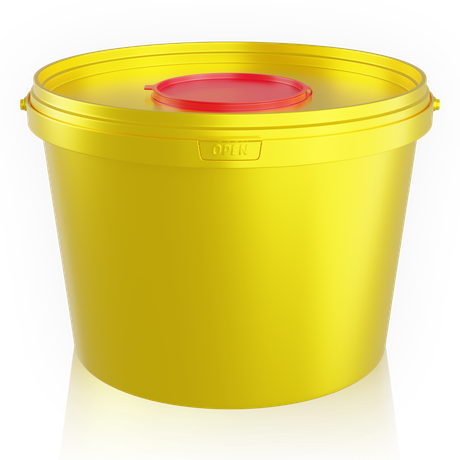
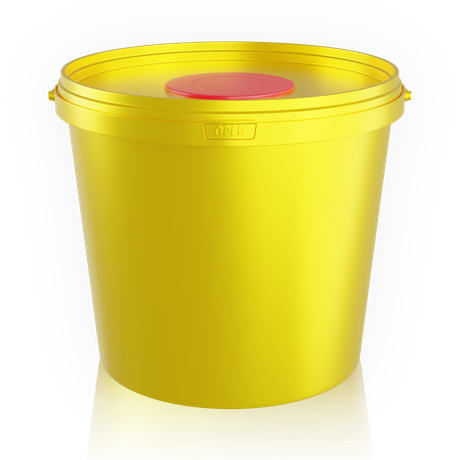
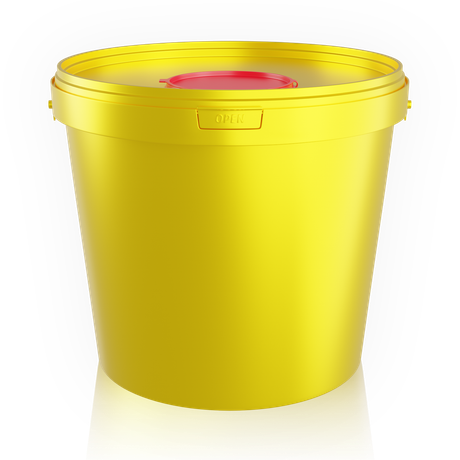
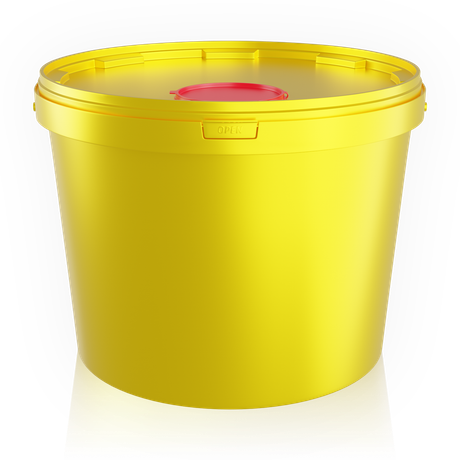
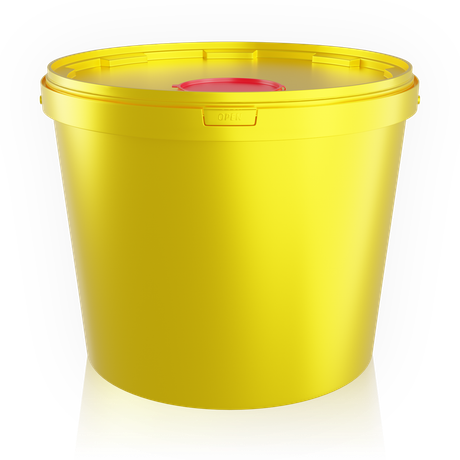
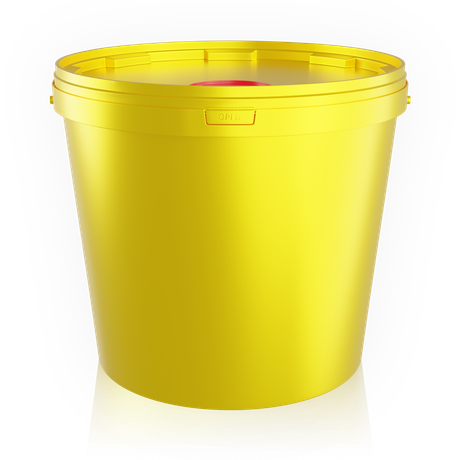
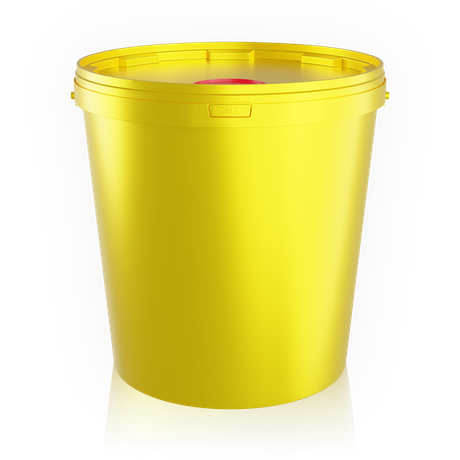
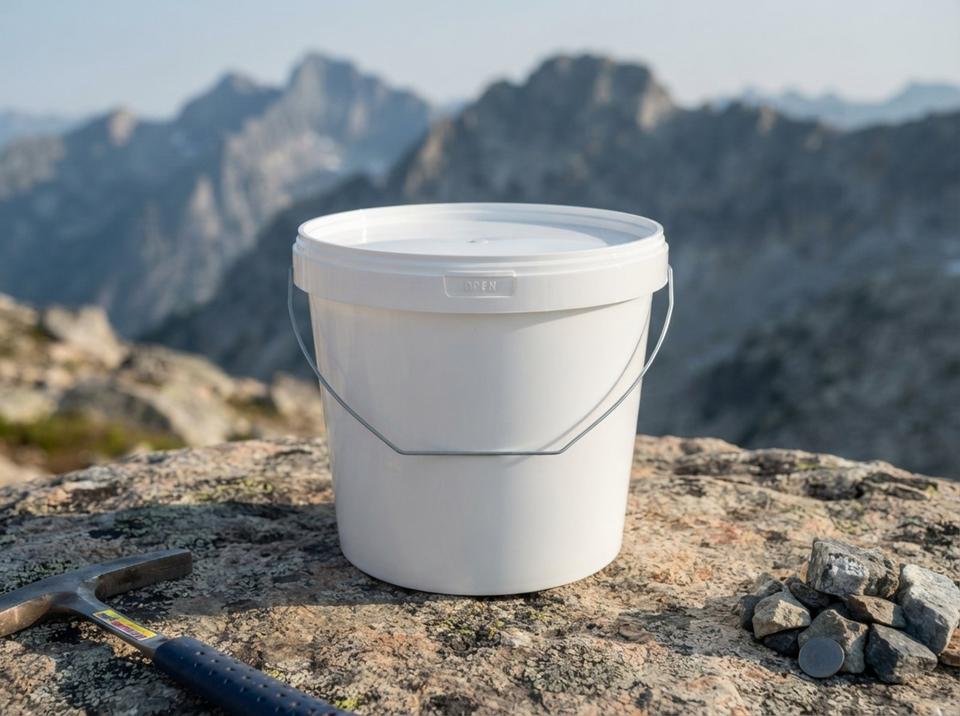
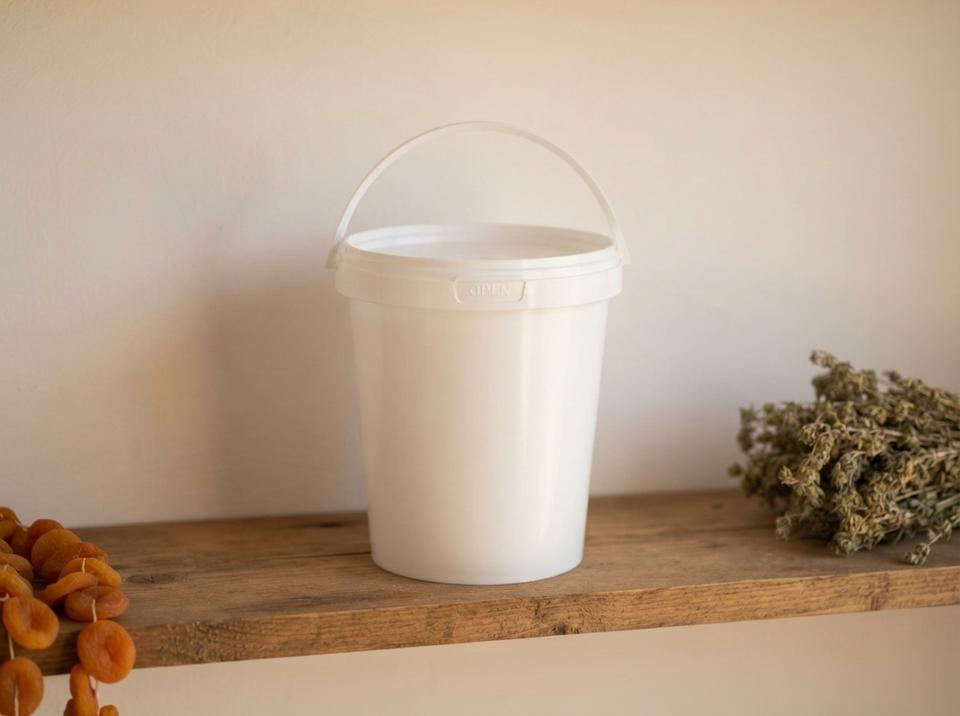
560 ml plastic bucket
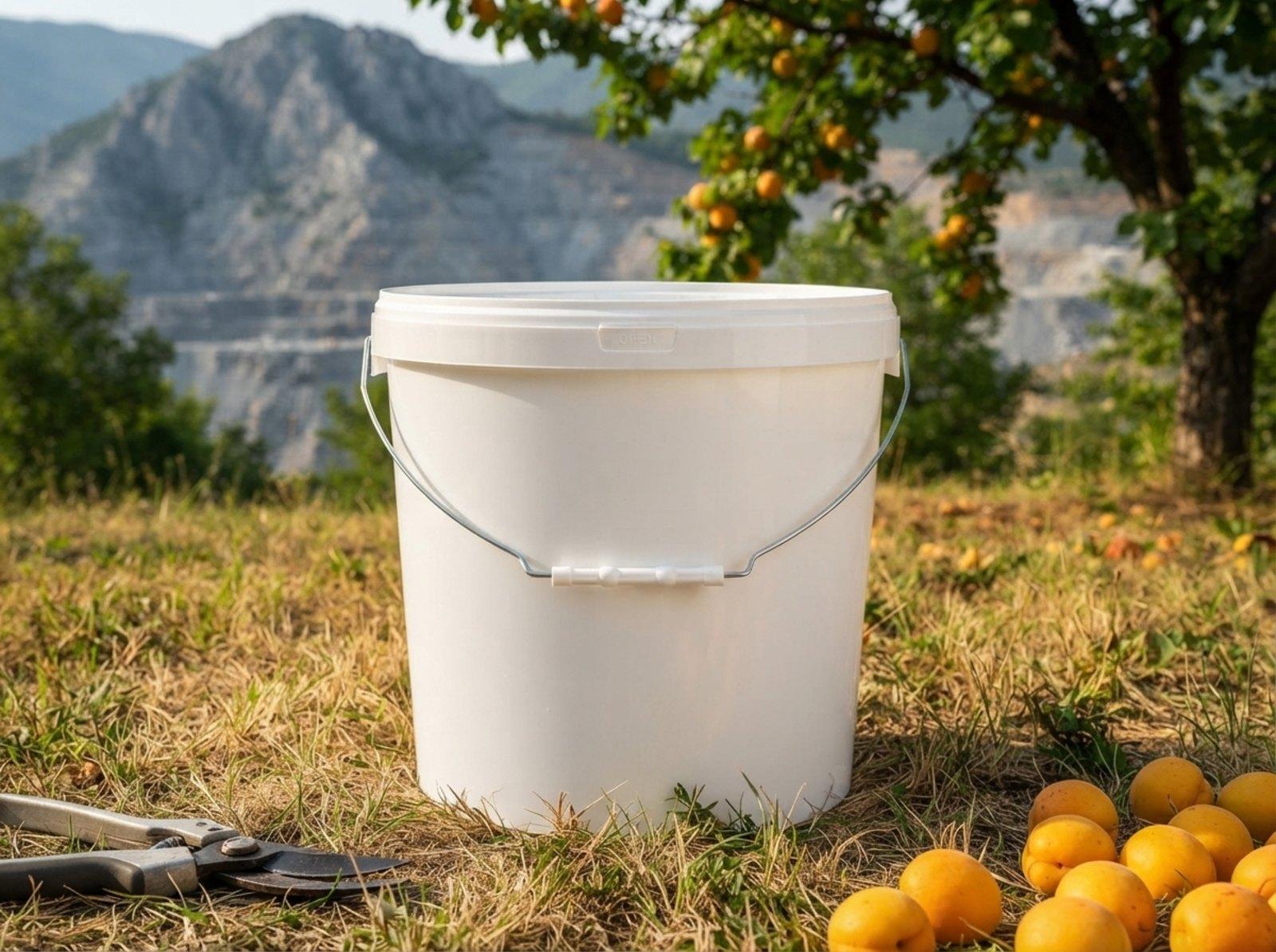
Apricot preserves for tea, a gift for guests: a small bucket with no handle.
- Opening
- Ø 118 mm
- Height
- 80 mm
- Empty weight
- 23 g
- Per pallet
- 7,200 pcs
Plastic buckets14 sizes · 560 ml to 21 L
Medical buckets9 sizes · 1 to 21 L
Food containers5 formats · 250 to 750 ml
Plastic jerry cans5 L and 10 L
Plastic buckets16 models, 560 ml - 21 L
Medical buckets10 models, 1 - 21 L
Food containers5 models, 250 - 750 ml
Plastic canisters5 and 10 L
塑料桶16 个型号,560 毫升 - 21 升
食品容器5 个型号,250 - 750 毫升
塑料方桶5 升和 10 升Hello! We'll suggest the right size for your product, calculate pallets, and quote a price for your order.
Kadamjay is a mining center in Batken Region, surrounded by apricot orchards. Mining needs buckets for grease, samples, and repairs; the orchards need them for the harvest and jam; and households need them for storing supplies. The HTI lineup covers all of it: fourteen sizes from 560 ml to 21 L, in white and clear. Buckets reach Kadamjay from our plant by freight carrier.
Kadamjay, Batken Region: buckets across the region

In Kadamjay, mining and orchards live side by side, and many sizes do double duty. Each one lists its most typical use in the town and the district. Click for dimensions, empty weight, and photos.
Jam, dairy, and small samples.
Grease, home preserves, and household supplies.
Harvest, repairs, and industrial compounds.
Containers for the mine canteen and the town's cafes and stores.
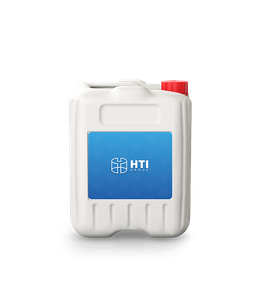
Jerry cans for oils and industrial fluids for mining equipment.
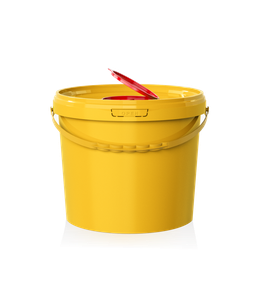
Yellow and red buckets for the mine first-aid station, the hospital, and the outpatient clinic.

Apricot preserves for tea, a gift for guests: a small bucket with no handle.

Kaymak from a home farm to sell to neighbors: plastic handle and a lid that covers the full opening.

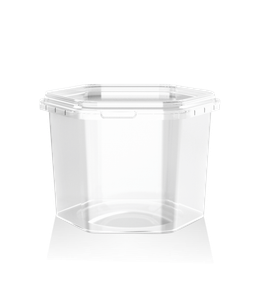
Small portions of dried apricots for the town store: the clear wall shows off the product.

Jam for a grocery shop: the handle is molded in one piece with the bucket, so it's easy to grab off the shelf.

Rock specimens and small samples with a number on the lid: a one-liter bucket with a handle.

For the bazaar: apricot preserves in a clear bucket that shows off their color without opening.

A household supply of dried apricots: your hand fits easily through the 200 mm opening, and the lid keeps out dust.

Pickled cabbage with carrots for the family pantry: a bucket with a bail handle is easy to lift off the shelf.

Ore and rock samples for the lab: the lid keeps specimens from mixing in transit.

Heavy grease for the mine site's excavators and trucks, in a bucket with a bail handle and plastic grip.

Out to the orchard for apricots: the grip on the bail handle spares your hand as the bucket fills with fruit.

Apricots for jam straight from the orchard: fifteen liters under a lid, so the fruit stays dust-free on the way.

Whitewash and paint for the town's houses: the lidded bucket keeps them from drying out.

Rags, mastic, and thick industrial compounds for the mine site workshop, all under one lid.

A serving of apricot preserves with tea at the mine canteen: a 250 ml hexagonal container.

Sour cream with lunch at the workers' canteen: a 385 ml round container per person.

Fresh vegetable salad to go at a town cafe: a 400 ml hexagonal container with a lid.

Dried apricots and nuts sold by weight at the store: 550 ml, clear wall.

Lunch for the mine site: meat and a side dish arrive in a 750 ml flat tray with the lid on.

Transmission oil for topping up excavators and loaders: 5 L, screw cap.

Process water and flushing fluid for the repair bay: 10 L, molded-in handle.

Mine first-aid station: pre-trip checkups and shots, with a one-liter bucket on the medic's desk that keeps the needle behind the valve.

Town outpatient clinic: cotton and ampoules from appointments go into a yellow 2.3 L bucket.

Vaccinating workers before the season: syringes go through the needle remover valve, one 3 L bucket per medical team.

Mine rescue team and first-aid post: wipes for cleaning wounds from a dispenser bucket.

Trauma unit at Kadamjay Hospital: dressings, red body for Class C waste (by Kyrgyz sanitary classification), 5.6 L.

Hospital lab: used testing supplies go into a yellow 11.2 L bucket with a tight lid.

Vets serving orchard farms: used syringes from treating livestock, plastic handle, 11.5 L capacity.

Inpatient ward: a day's waste from the whole ward, 18 L, no steel parts.

Storage until the waste is hauled to the regional capital: 21 L, yellow or red body to match the waste class.
The buckets are tapered, so even a big supply takes up just a corner of a garage or pantry. Every bucket has a flat lid with an OPEN tamper-evident tear strip that comes off at first opening. White buckets take marker writing well, and clear ones are the choice for retail.
The table lists jobs at the mine site and on the town's private farms. For each, you'll see the size and the bucket's brim-full capacity: that extra room lets the lid seat evenly, so factor it in when filling.
| Farm and household | Product or material | Volume | Brim-full | Learn more |
|---|---|---|---|---|
| Mine site | heavy grease | 8 L | 9.326 L | greases |
| Geologists, lab | rock samples | 5.6 L | 5.87 L | tamper evidence |
| Repairs | paint, putty | 18 L | 19.9 L | paint |
| Orchard | apricot picking | 11.5 L | 12.575 L | farms |
| Summer kitchen | jam for the bazaar | 2.3 L | 2.444 L | jam and fruit butter |
| Retail | dried apricots by weight | 850 ml | 955 ml | dried fruit |
For samples, the tamper-evident seal is especially useful: as long as it's intact, you know nobody has opened the sample bucket since collection. For jam and dried apricots, the same seal assures shoppers the product hasn't been touched. Sample numbers are easy to write in marker right on the white lid or wall.
In Kadamjay, mining and apricot orchards sit side by side, so people buy buckets for both machinery and the harvest. A mine site needs a bail handle and a strong lid; an orchard needs a handy size and a clear body for selling; and a household needs a bucket that works for flour and whitewash alike. Here's a closer look at the four groups of buyers.

Excavators, trucks, and pumps at the mine site need heavy grease. It's kept in 8 L buckets with a bail handle and plastic grip: the lid keeps out rock dust, and the wide opening lets you scoop it out with a spatula.
Geologists and lab staff find it easy to sort rock samples into buckets from 1 to 5.6 L. The lid fits tightly, and the OPEN tear strip shows the bucket hasn't been opened since sampling.
In season, apricots are picked into 11.5 L and 15 L buckets, jam goes into clear 2.3 L buckets for the bazaar, and dried apricots into 850 ml for stores. Empty buckets wait in a stack for the next harvest.
For whitewash, paint, and putty, people use 15 to 18 L buckets, and they keep flour and grains in the pantry in lidded 21 L buckets. Food-grade polypropylene works for both food and household jobs.
Choose a size, enter a quantity, and the calculator shows the pallets. For example, a family with an orchard making jam to sell orders 3,200 clear 2.3 L buckets: that's one pallet of 3,300. A mine site workshop orders 500 of the 8 L buckets for grease, which is also one pallet.
You buy directly from the factory, with a minimum order of one pallet. The steps are the same for an orchard and a mine site.
Tell us what you'll store, whether grease, samples, jam, or paint, plus the sizes and quantity. If you need labels or printing, mention it up front.
Our sales manager will suggest buckets and work out the pallets and the order price. They'll check transit time and shipping cost to Kadamjay with the freight carrier.
Your order is prepared at the HTI plant in Chuy Region. In-mold labeling (IML) runs are molded once the artwork is approved.
A freight carrier brings the buckets to town. If your company has its own vehicles in Bishkek, you can pick up the order from the plant.

HTI buckets ship to customers from a single place, our plant in Ak-Chiy, Chuy Region: we have no warehouses in Kadamjay, Kyzyl-Kiya, or Batken. Each order is put together when you place it and sent south by freight carrier. Your sales manager gives you the delivery time and cost when preparing your estimate.
Mine sites need buckets all year round, orchards before the apricot harvest. Mine sites do best with regular orders, while orchards should order everything at once before the season.
If a mine site and the town's private farms are ordering at the same time, the orders can ship on one truck: just let your sales manager know.
Empty buckets arrive in nested stacks, so a pallet is easy to unload by hand and distribute to garages and pantries.

The links lead to the region and nearby towns with their own pages.
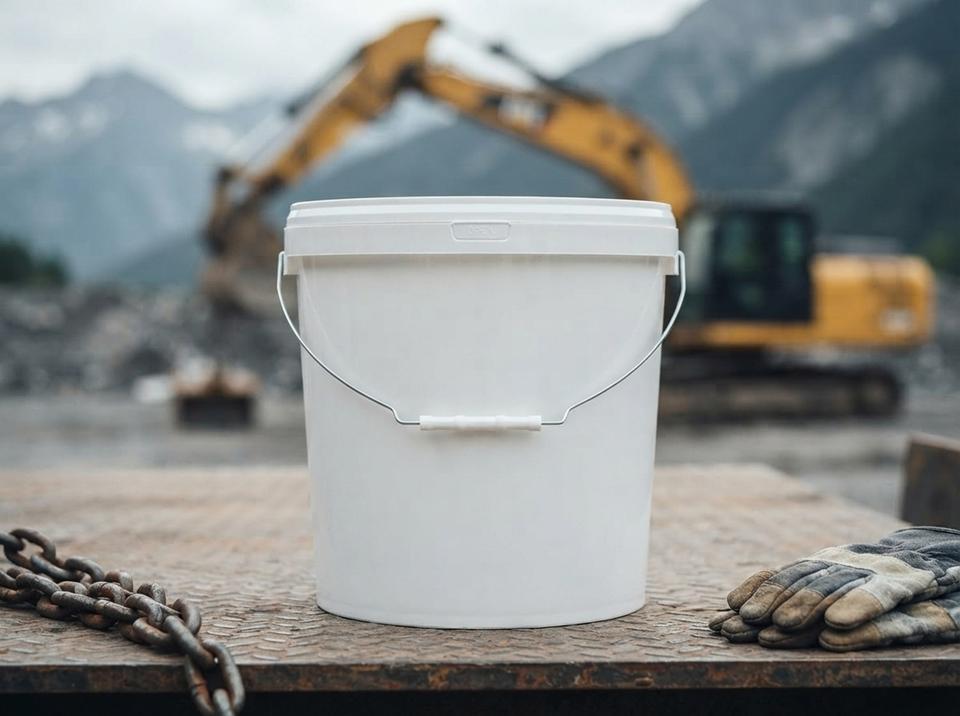
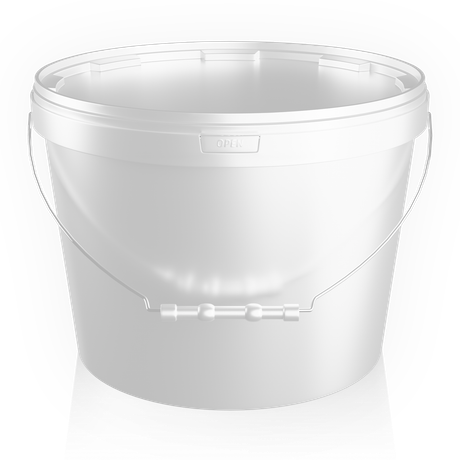
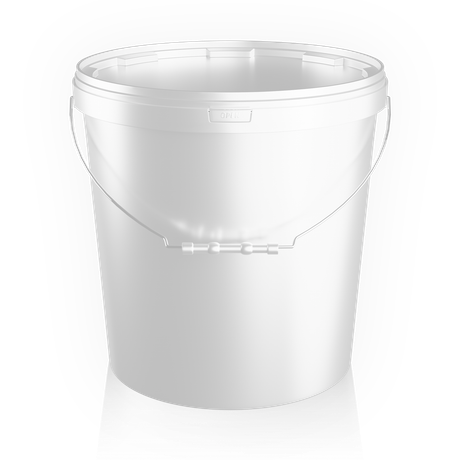
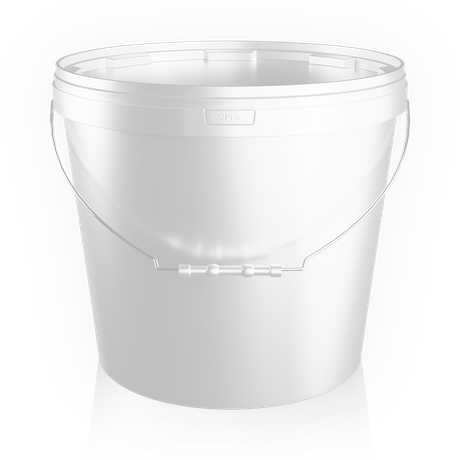
For a mine site, the handle and lid matter most; for orchards and market stalls, it's the body and labeling. The choice depends on where the bucket is headed: the mine site, the orchard, or a store shelf. Here are four versions.
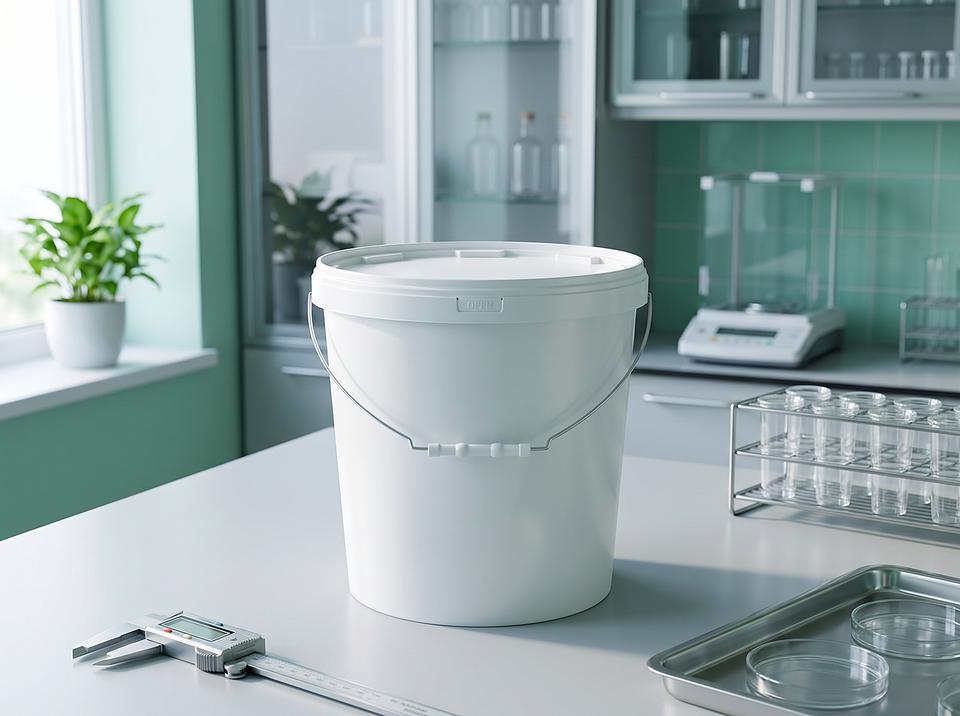
Grease and paint get carried in full buckets, so mine sites use sizes of 8 L and up: their metal bail handles come with a plastic grip that won't rub your palm.
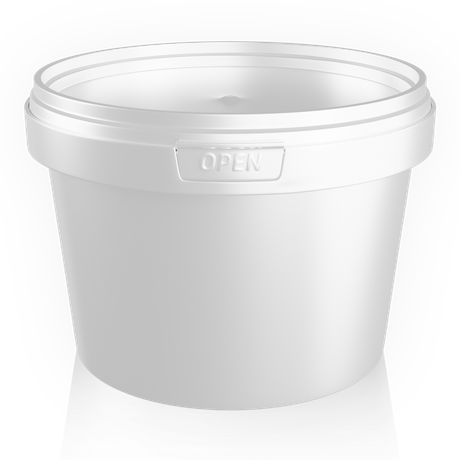
The OPEN tear strip under the rim comes off at first opening. For rock samples and jam for sale alike, it's simple proof that nobody has opened the bucket.
Jam and dried apricots show through the wall, so clear buckets are the pick for the market stall. You can order them in any size in the lineup.
A label with a sample number or farm name goes on a white bucket. For ongoing runs, IML is the answer: the image is fused into the wall during molding.

Directly from the HTI plant, with no middlemen: call +996 222 600 292 or leave your number for a callback. Buckets are sold in orders of one pallet or more and reach Kadamjay via a freight carrier.
Your sales manager prices each order individually, based on size, quantity, handle, color, and labeling. There's no general price list because orders vary so much.
A freight carrier takes your order south. When you place the order, your sales manager will tell you the delivery time and shipping cost. You can also send your own truck to collect it.
No. HTI's only warehouse is at the plant in Ak-Chiy village, Chuy Region, and every order ships from there.
Yes, 1 to 5.6 L buckets with lids are the usual choice. The tamper-evident seal shows the sample hasn't been opened since it was taken, and a numbered label sticks easily to the white body.
Most often the 8 L bucket with a bail handle and plastic grip, or 3.8 to 5.6 L for smaller machinery. All the options are on our grease buckets page.
Yes, buckets in different sizes, white and clear, ship together. Each size is packed on its own pallet.
Yes, with a sticker or IML printing. A sticker is enough for a small order, while IML, which won't rub off, is better for ongoing runs.
Every size is in the catalog with dimensions, empty weight, and photos. For an overview of packaging for the whole region, see the Batken Region page; the neighboring coal town is covered on the Kyzyl-Kiya page.

Tell us what will go in the buckets and how many you need for the season or the year. Your sales manager will pick the sizes and work out shipping to Kadamjay.