Want to learn more about our packaging or find the right fit for your business? Request a callback, and our specialist will call you at a time that suits you. Tell us about your product, and we'll help you choose the best option.
Order a callback from a specialist
Want to learn more about our solutions or find the perfect solution for your business? Leave a request for a callback and our specialist will contact you at a convenient time. Together we will find the optimal solution to make your business thrive!
Request a callback from our HR team
Interested in our openings and career opportunities? Leave your contact details and our HR team will get back to you shortly. We'll answer your questions and explain how to join the HTI Group team.
Order a callback from a specialist
Would you like to learn more about our job openings and career opportunities? Leave your contact information, and our HR department will get in touch with you shortly. We will answer all your questions and provide detailed information on how to become part of the HTI Group team.
Mon-Fri, 9:00 AM-5:00 PM · Factory in the Bishkek Free Economic Zone, Ak-Chiy village
Rail hub and melon fields
Plastic bucketsin Arys
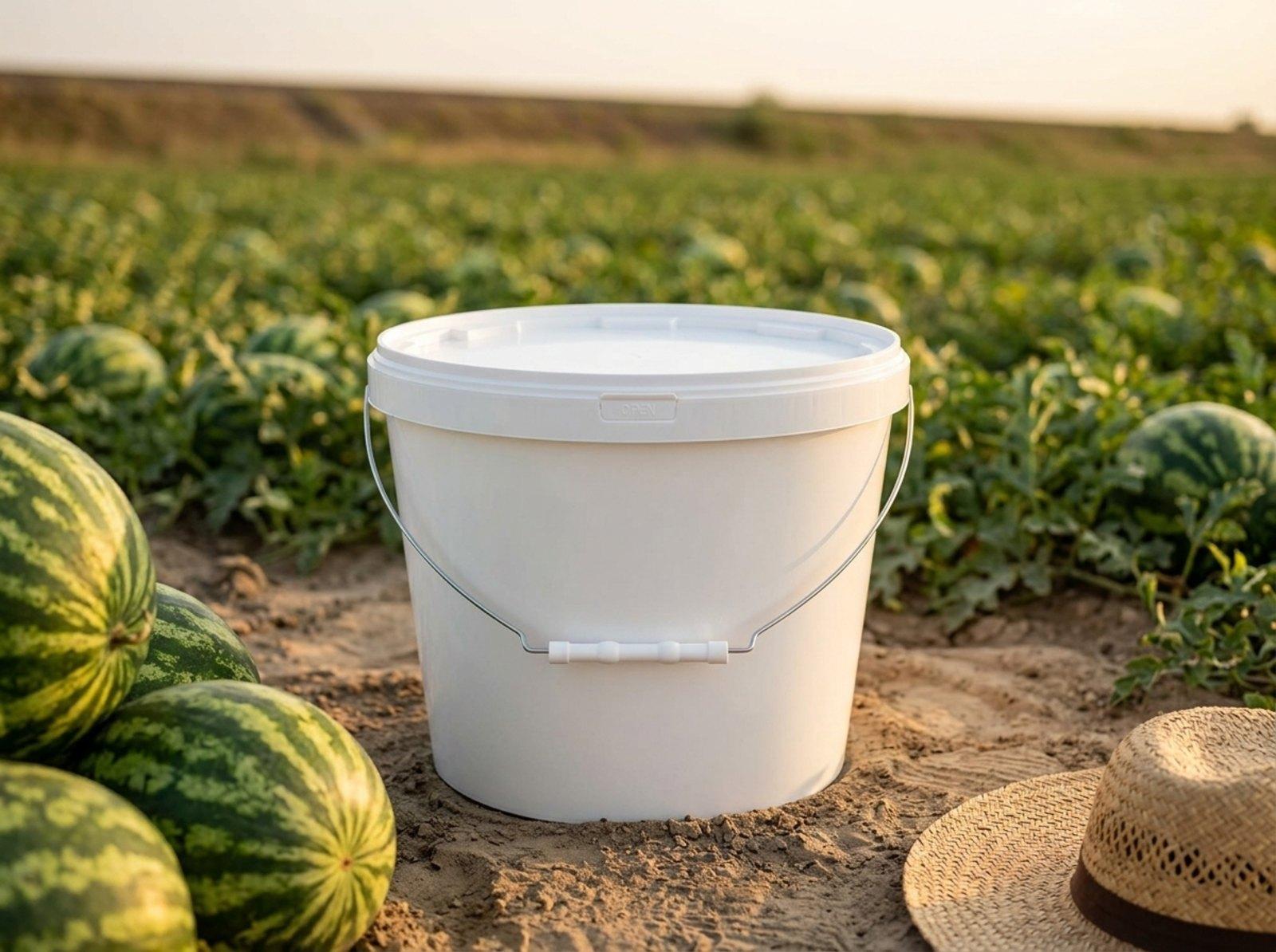
Arys is known as a railway hub of southern Kazakhstan, and the town is surrounded by melon and cotton fields. Melon growers need buckets in spring for seeds and fertilizer and in summer for harvesting and pickling, while the cafes by the station need them year-round for prep. We mold this whole range, from 560 ml to 21 L, at our own plant and ship it to Arys by the pallet. Below you'll find what to choose for each season, a pallet calculator, and how to buy.
In Arys, a bucket changes jobs with the season: seeds and fertilizer in spring, harvest and pickling in summer, prep for cafes and stores in the fall. Under each size is its most common use in and around town.
Roasted seeds, jam, and dairy for retail.
Cafe kitchens, seeds, and small-batch pickling.
Harvest, fertilizer, and wholesale orders.
Containers for platform kiosks, station cafes, and packed lunches for train crews.
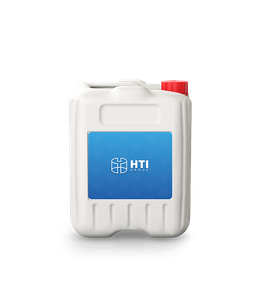
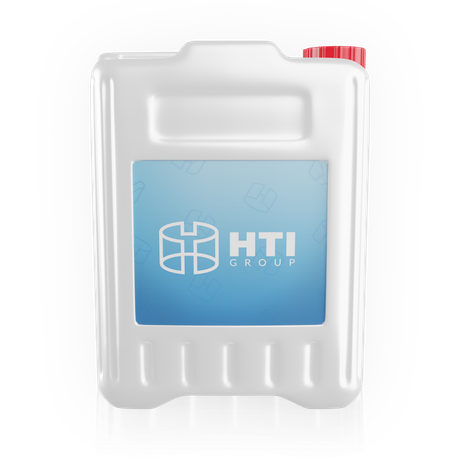
Jerry cans for cleaning products at the rail depot and drinking water for the melon fields.
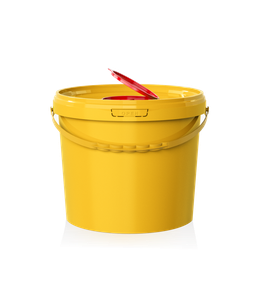
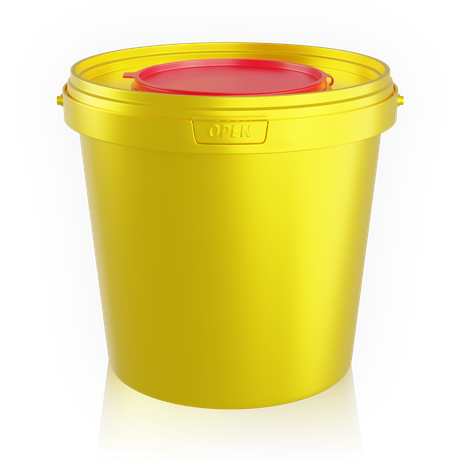
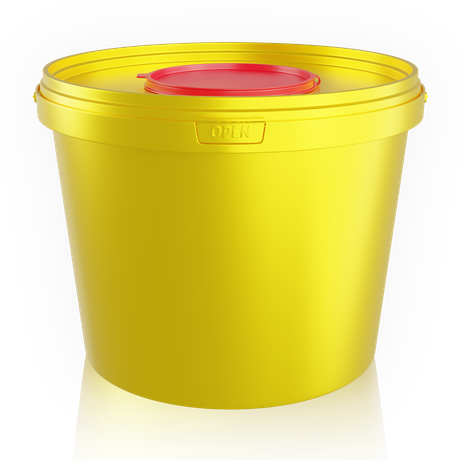
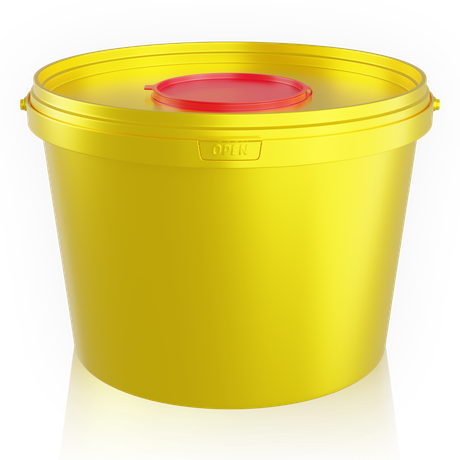
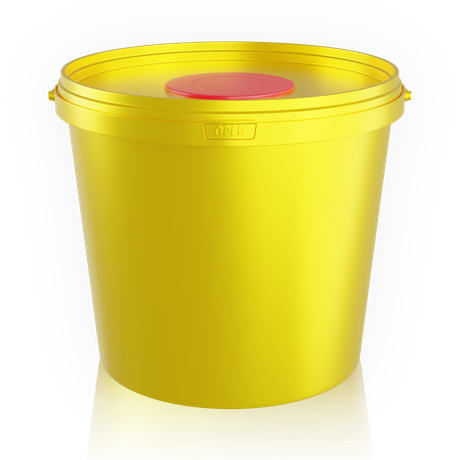
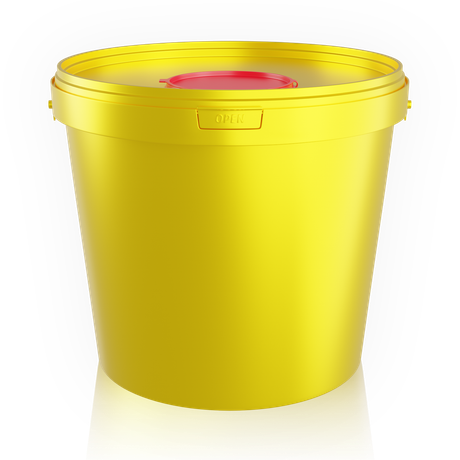
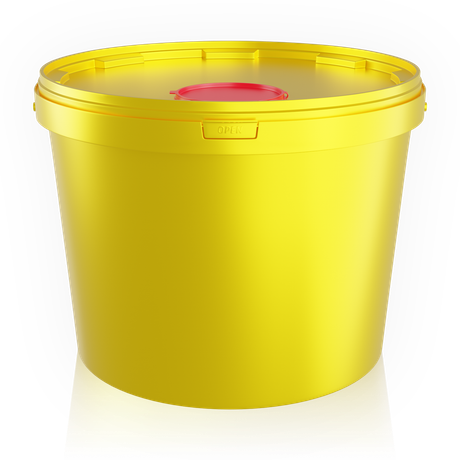
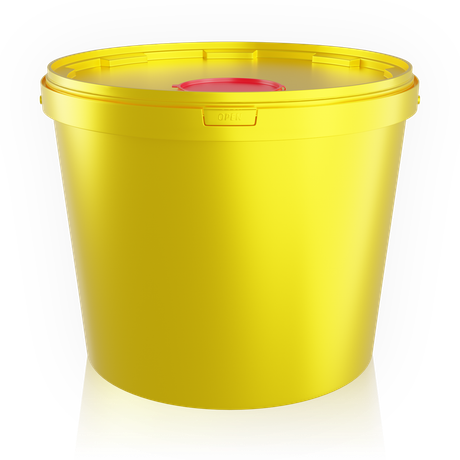
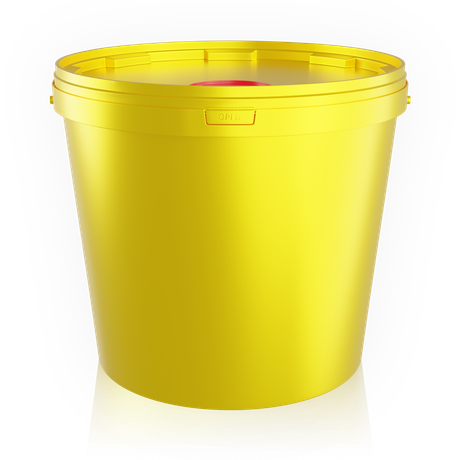
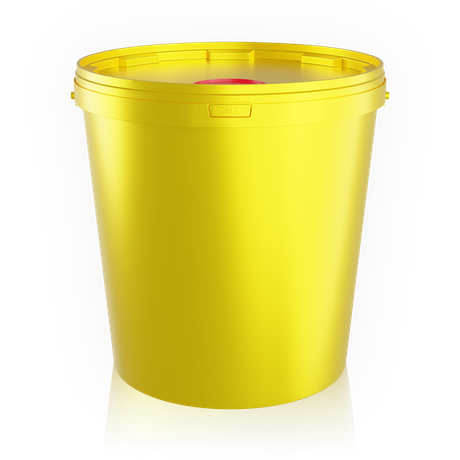
Yellow and red medical waste buckets for the district hospital, the depot's first-aid station, and the station's medical post.
Packaging at the same scale: body width and height from the factory's product cards
Small · PKS560
560 ml plastic bucket
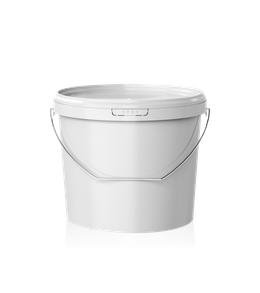
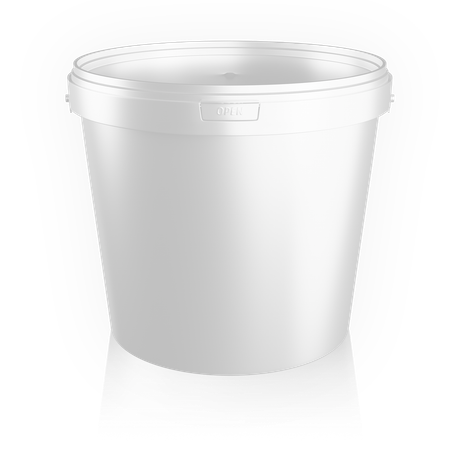
Roasted pumpkin and melon seeds for kiosks by the station: a bucket with no handle, just side lugs.
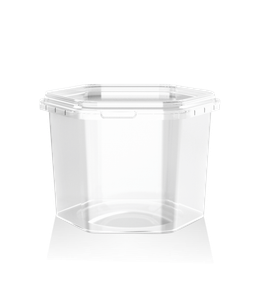
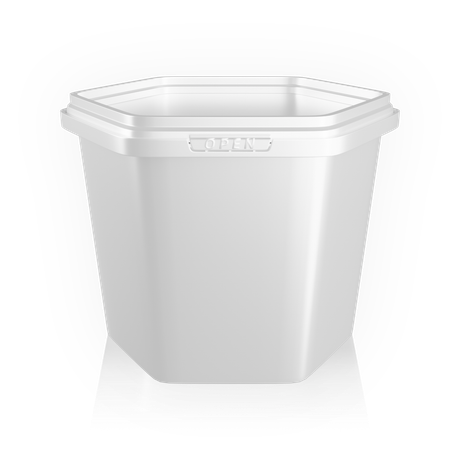
A platform kiosk in Arys scoops kurt and nuts to go with tea into a 250 ml hexagonal container: 13 g empty, with the lid closed in front of the customer.
Locomotive depot health post: an engineer gets a shot after a run, the needle comes off in the lid valve, and the one-liter bucket sits on the procedure table.
Pre-trip medical check room at the depot: after each train crew, the medic collects breathalyzer mouthpieces and tongue depressors in a yellow 2.3 L bucket.
First-aid post at Arys station: a passenger from a passing train gets a shot, and the syringe goes into a three-liter bucket with a needle remover. The empty bucket weighs 95 g.
Outpatient surgery room: cuts from the melon harvest and injuries among track workers. Bandages go into the surgeon's yellow 5.6 L bucket, and the lid valve takes off the needle.
Rail hub ambulance service: after a round-the-clock shift of calls, crews turn in their used supplies, and the yellow 11.2 L bucket at the station gets its lid snapped shut.
Infectious disease ward at Arys District Hospital in summer: a red 18 L bucket holds Class C waste (by Kyrgyz sanitary classification), and the lid stays on until it's taken out.
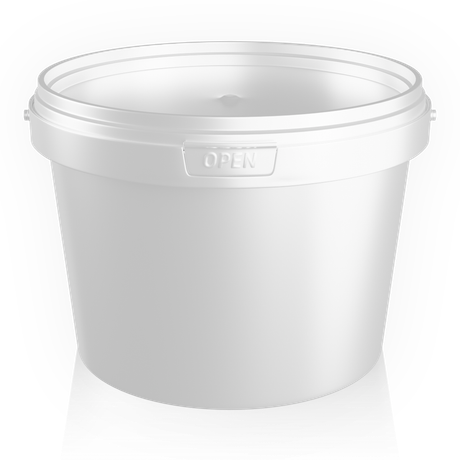
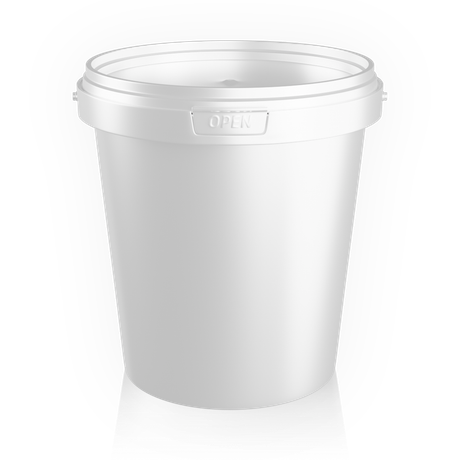
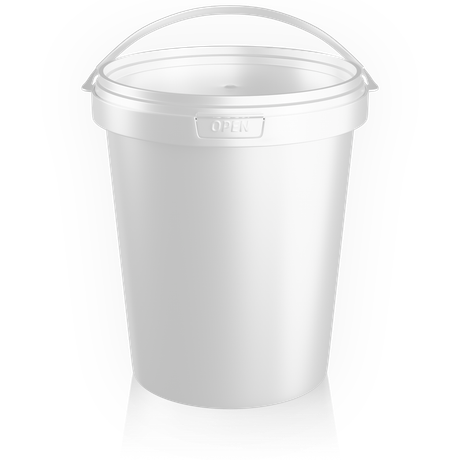
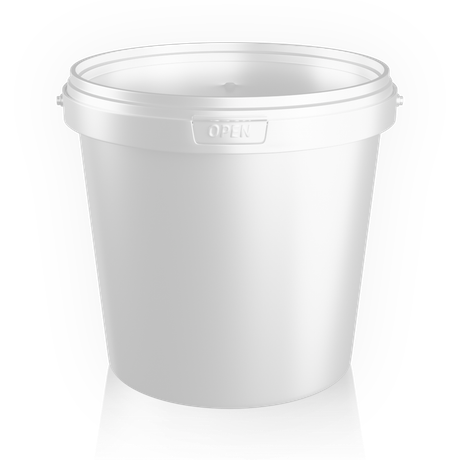
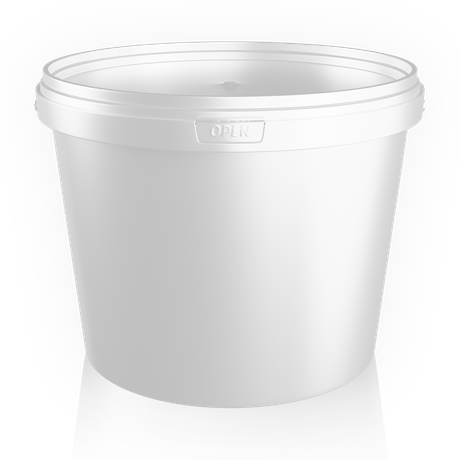
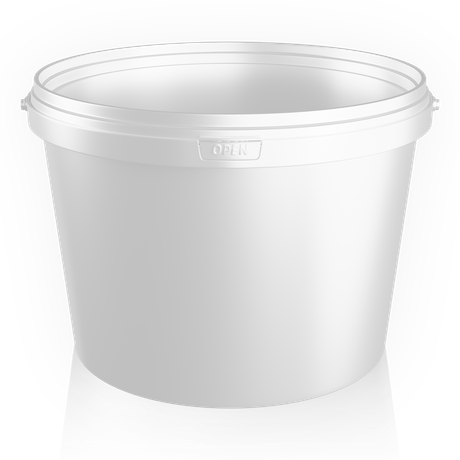
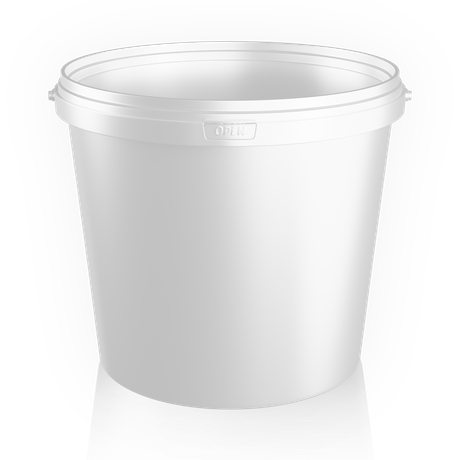
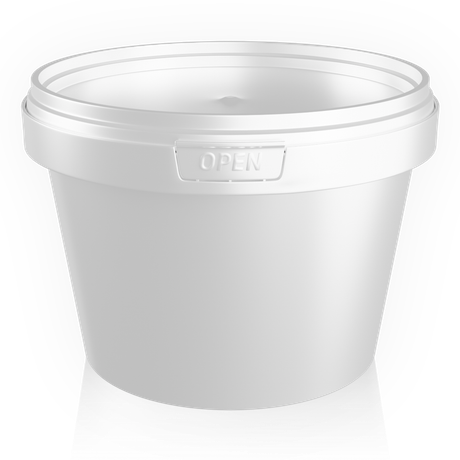
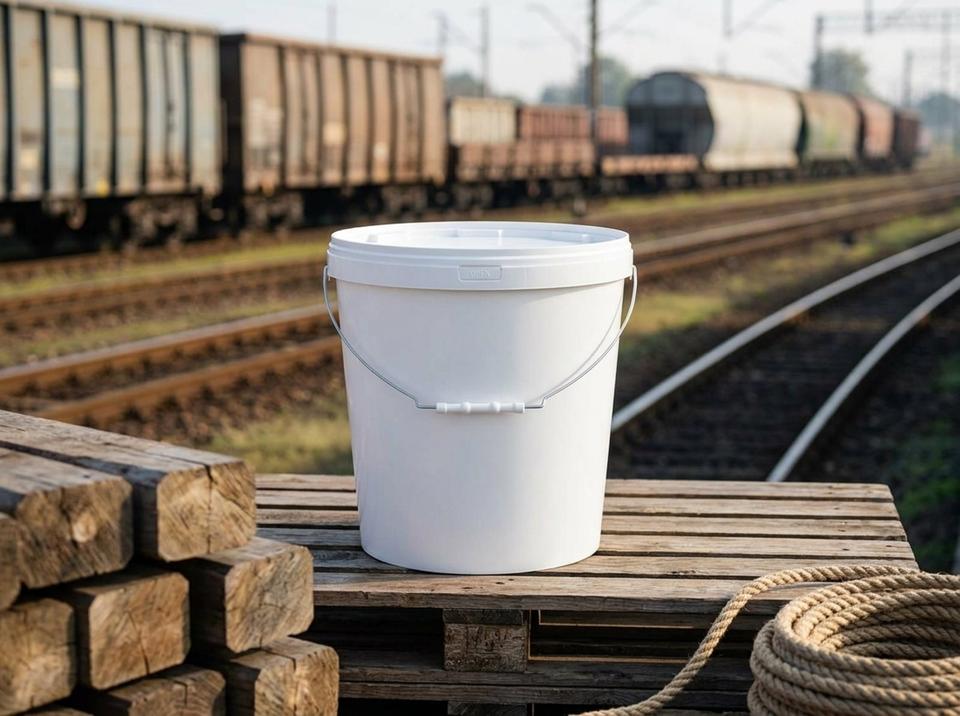
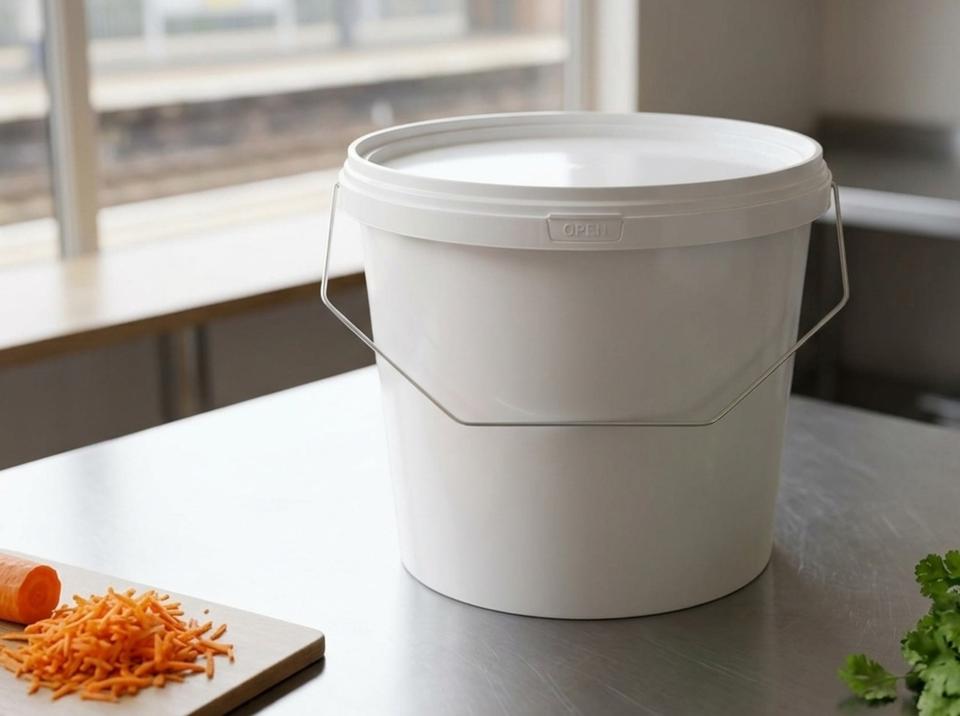
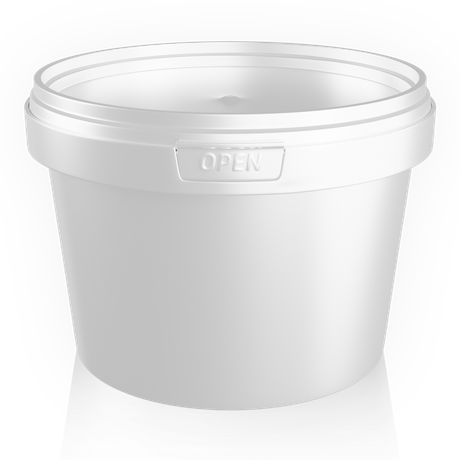
All fourteen buckets nest inside each other, so a whole season's supply takes up a corner of the shed, not half a room. The flat lid seats into a double rim, and just below it is a tamper-evident tear strip embossed with the word OPEN.
Packaging calendar
Season by season:what Arys buys
The table follows a melon grower's year and the station cafes' calendar: which product goes into the bucket, at what time of year, and which size people reach for first.
The heaviest row is pickled watermelon: a liter of pickles with brine weighs about 1.05 kg, so a full 11.5 L bucket comes to roughly twelve kilograms. That's why picklers choose buckets with a metal bail handle and plastic grip, not a plastic handle.
Melon fields, cotton, the rail station,and the market
A town where rail lines meet melon fields buys packaging in four different ways. Each is described below to make it easier to see which size to start with. A melon grower thinks in hectares and tonnes, a cafe in portions per day, and a market vendor in how the goods look on the stall.
Drying melon8 L: 840 per pallet
Melon growers
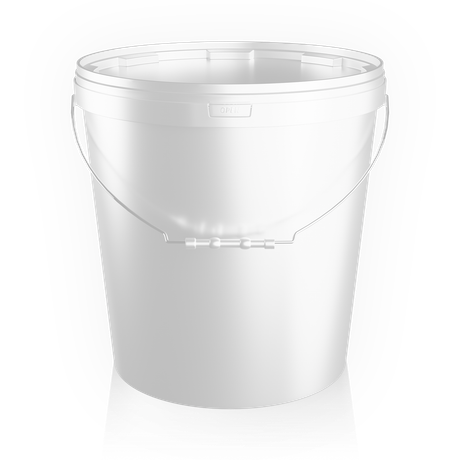
In spring, growers buy fertilizer and seeds; in summer, packaging for picking and slicing melons. They take the 21 L with a 332 mm opening for fertilizer, the 3 L with a tight lid for seeds, and the 8 L for slicing.
Cotton farms
In the cotton fields, buckets carry fertilizer solution and water for the crew. A 15 L bucket with a bail handle and plastic grip is easy to carry down the rows, and drinking water is kept in 10 L jerry cans.
Pickling for winter
Pickled watermelon, cucumbers, and tomatoes sell at the market in fall and winter. Large batches go into 11.5 L buckets, and retail into clear 2.3 L buckets that show off the wedges and the brine.
Station cafes
Cafes and canteens near the station keep salads, sauces, and prepped food in 3.8 to 5.6 L buckets. The 3 L and 3.8 L share the same 200 mm opening, so they line up neatly on the shelf.
Order calculator
How many palletsfor melon season
Choose a size and the number of buckets, and the calculator works out the pallets. A farm outside Arys orders 900 of the 21 L buckets for fertilizer before planting: that's two pallets. For pickling watermelon, it adds 1,200 of the 11.5 L buckets, another two pallets.
Item
BucketsContainersJerry cansMedical buckets
How many pieces you need
pcs
The result is rounded up to a whole pallet.
Planting-season and pickling buckets can ship on one truck.
Jerry cans are counted at their own pallet quantity: 180 or 100 per pallet.
Buying
From your requestto unloading in Arys
We sell buckets direct from the factory, with a minimum order of one pallet. Melon growers, cafes, and stores all go through the same steps, and it goes faster if you know your product and quantity in advance.
1
Tell us about your season
What you'll be packing, in which months, and how much. For melon fields, just give us your planted area and how much you pickle, and our sales manager will turn that into buckets.
2
Review the estimate
Your sales manager will suggest sizes, count the pallets, and quote a price for the order, including shipping to Arys.
3
Confirm your order
Once you confirm, the plant assembles your pallets in the Bishkek Free Economic Zone (FEZ). If you want your farm's brand on the bucket, the artwork gets approved first.
4
Meet the truck
A freight carrier hauls the pallets to Kazakhstan, and the shipment is handled within the EAEU. The paperwork for your order travels with the cargo.
Straight-line distance. Click a city to open its page.
Orders ship directly from the HTI plant in the Bishkek FEZ, Ak-Chiy village: we have no intermediate warehouses in Turkestan Region. A freight carrier hauls the pallets to Kazakhstan, and the shipment is handled within the EAEU. Your sales manager confirms delivery time and cost when you place the order, once the pallets are counted.
Being a rail hub doesn't mean your buckets will travel by train: your sales manager chooses the transport method together with the carrier. What matters on your end is giving the exact unloading address and a convenient time to receive the delivery.
Melon fields need packaging in two waves: for planting and for harvest. If you order both waves in advance, we can split the shipment across two trucks, so you're not hunting for buckets at the height of the season.
Drinking water jerry cans ship on a separate pallet: they don't nest and take up more truck space than buckets of a similar size. Your sales manager will factor that in when putting together a mixed order.
Turkistan Region
Nearbyand across the country
Near Arys
Pages for nearby towns and the whole region, with packaging matched to local products.
In the field and at the market stall, a bucket has different jobs to do. Four versions cover both.
Metal for the field
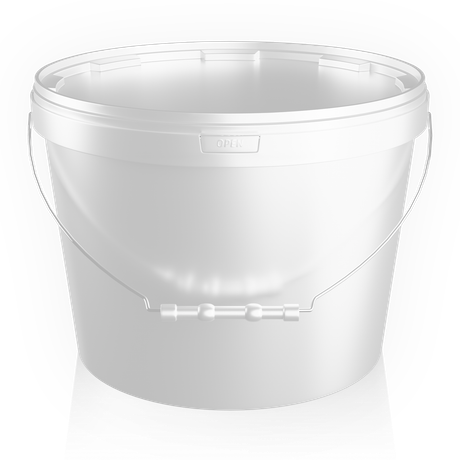
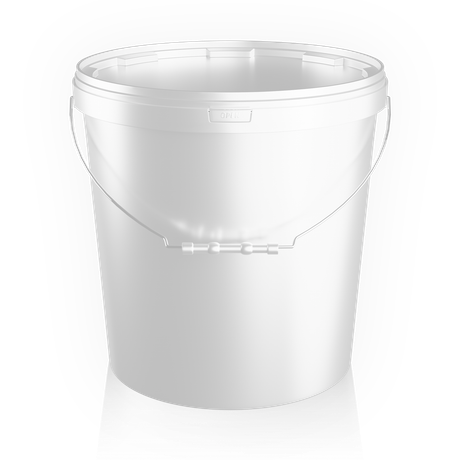
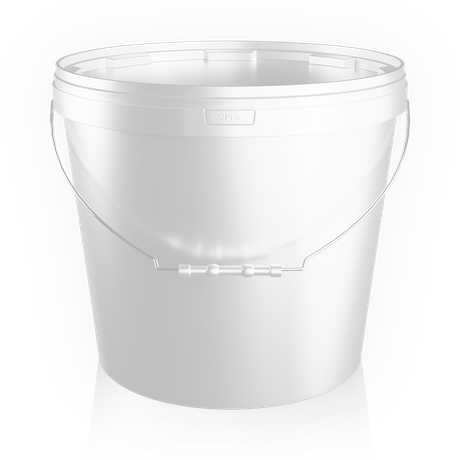
Buckets from 8 L up come with a bail handle and plastic grip that won't cut into your palm when you carry a load of harvest or fertilizer across the whole field.
Clear body for the market
In a clear bucket, shoppers can see pickled watermelon wedges and rind jam without opening it. The clear version comes in every size.
Nesting
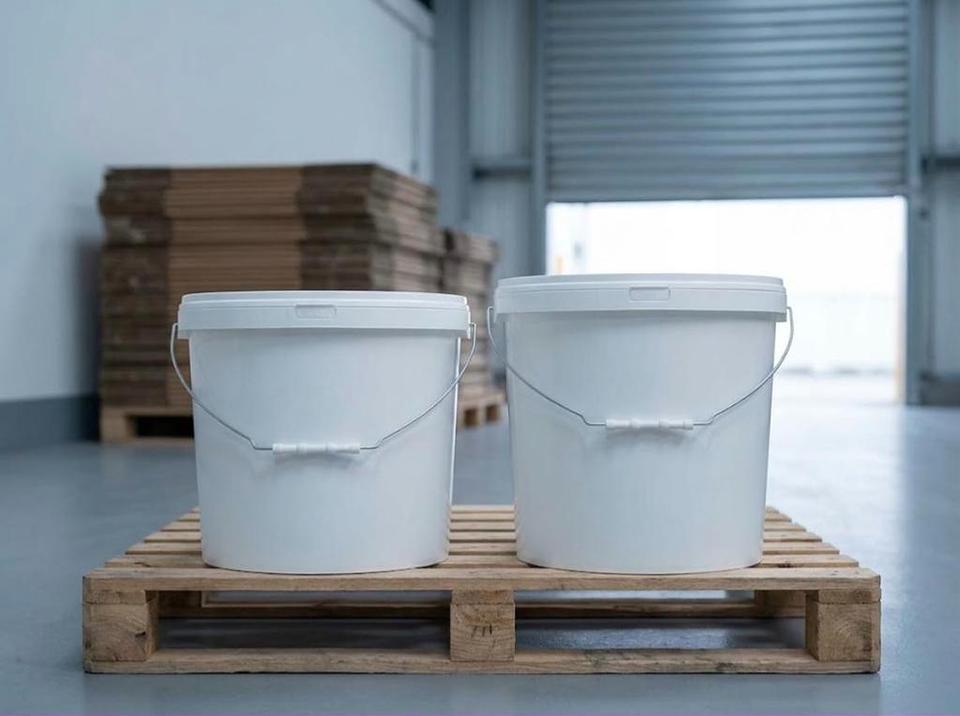
Empty buckets nest inside each other, so a season's supply stores compactly. Jerry cans don't nest, so fewer of them fit on a pallet.
Label or IML
For the market, a label with your farm's name is enough. If the bucket goes to stores, your brand can be fused into the wall with in-mold labeling (IML), and it will survive washing.
Questions and answers
What buyersin Arys ask
Didn't find your answer?A sales manager replies Mon-Fri, 9:00 AM-5:00 PM, Bishkek time
Directly from the HTI plant: orders start at one pallet and ship from our production site in Bishkek. Call +996 222 600 292 or request a callback, and our sales manager will match buckets to your season.
The 11.5 L with a 295 mm top: wedges go in and come out whole. For retail at the market, clear 2.3 L buckets are the usual choice. Learn more on our pickle buckets page.
Your sales manager prices each order based on quantity, handle type, color, and printing, and includes shipping to Arys right in the estimate.
No, we have no pickup points or warehouses in town. Buckets ship only from the plant in Ak-Chiy village and reach you by the pallet.
By the pallet through a freight carrier, as a shipment within the EAEU. Your sales manager confirms delivery time and cost when you place the order.
Yes, they work well for dry goods: the lid keeps out dust, and marker labels show up clearly on the white body. Just don't reuse a fertilizer bucket for food afterward.
Usually the 8 L: a full bucket isn't heavy to carry, and the metal bail handle with plastic grip won't cut into your palm. For larger batches, the 11.5 L works well.
Yes. For a trial order, we apply a label; for ongoing production runs, we use IML: the design is fused into the wall during molding and won't rub off.
Catalog
Buckets for melon fieldsand kitchens, in the catalog
Every size, with dimensions and empty weight, is in the catalog. Recommendations for all of Turkestan Region are on a separate page, and our neighbors in Shardara and Turkestan have pages of their own.
Tell us your crops, how much you pickle, and how much packaging you went through last year. Our sales manager will suggest a mix of sizes and split the order into deliveries for planting and for harvest.