Want to learn more about our packaging or find the right fit for your business? Request a callback, and our specialist will call you at a time that suits you. Tell us about your product, and we'll help you choose the best option.
Order a callback from a specialist
Want to learn more about our solutions or find the perfect solution for your business? Leave a request for a callback and our specialist will contact you at a convenient time. Together we will find the optimal solution to make your business thrive!
Request a callback from our HR team
Interested in our openings and career opportunities? Leave your contact details and our HR team will get back to you shortly. We'll answer your questions and explain how to join the HTI Group team.
Order a callback from a specialist
Would you like to learn more about our job openings and career opportunities? Leave your contact information, and our HR department will get in touch with you shortly. We will answer all your questions and provide detailed information on how to become part of the HTI Group team.
Mon-Fri, 9:00 AM-5:00 PM · Factory in the Bishkek Free Economic Zone, Ak-Chiy village
Tole Bi District
Plastic bucketsin Lenger
Lenger is the center of Tole Bi District, in the foothills next to Shymkent. Farms around town make sour cream, suzma, kaymak, kurt, and cheese, orchards grow sour cherries, sweet cherries, and apples, and the buyers for all of it are often at the bazaars of the big city next door. For these farms, HTI makes food-grade buckets from a small 560 ml up to 21 L, delivered to Lenger by the pallet straight from production. Here you'll find buckets matched to dairy and orchard products, an order calculator, and how to buy.
Irimshik and zhent from Lenger's home dairies, to go with tea: the 250 ml hexagonal container weighs 13 g and barely adds to the weight of the purchase.
Raspberries and currants from foothill gardens for travelers stopping along the highway: a 385 ml round container, Ø 118 × 54 mm, keeps the berries in a shallow layer.
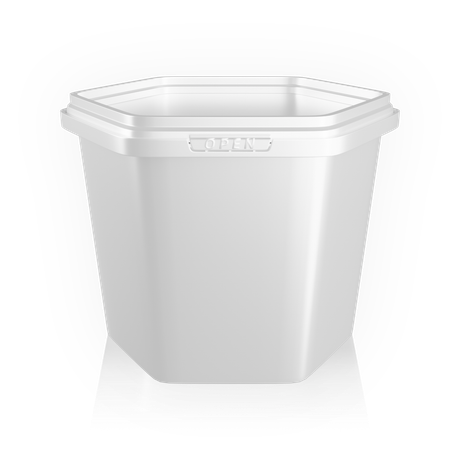
Cottage cheese with honey and nuts, breakfast for a guest at a tourist camp in the gorge: the 400 ml hexagonal container arrives at the table with its lid on.
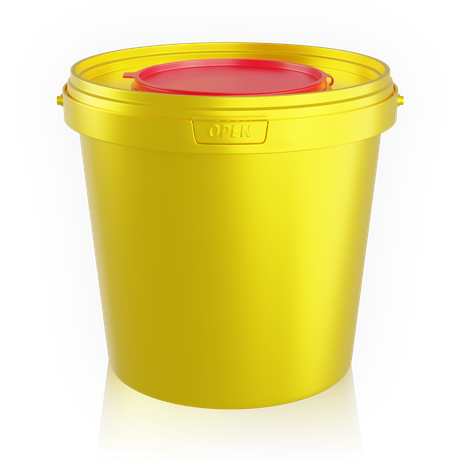
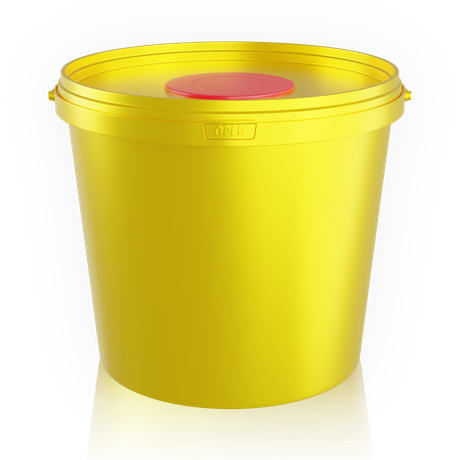
Rural health post in a foothill village of Tole Bi District: a patient gets a shot, the valve removes the needle, and the one-liter bucket measures Ø 132.5 × 121 mm.
First-aid post at a tourist camp in the gorge: scrapes from the mountain trails get cleaned, and the cotton and gloves go into a small yellow 2.3 L bucket.
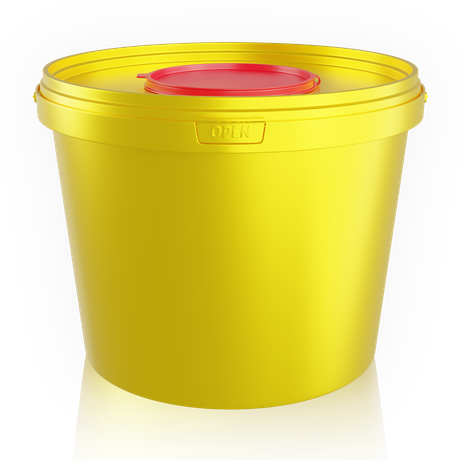
Vaccination room at the district outpatient clinic before the school year: syringes go into a three-liter bucket, and the lid valve removes the needle.
Ultrasound room at the Lenger district hospital: the probe and exam table are wiped down with wipes from the dispenser lid of a 3.8 L bucket, Ø 200 × 176 mm.
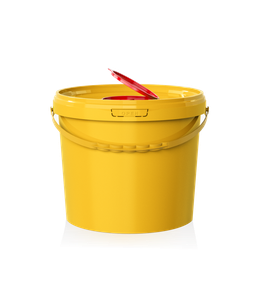
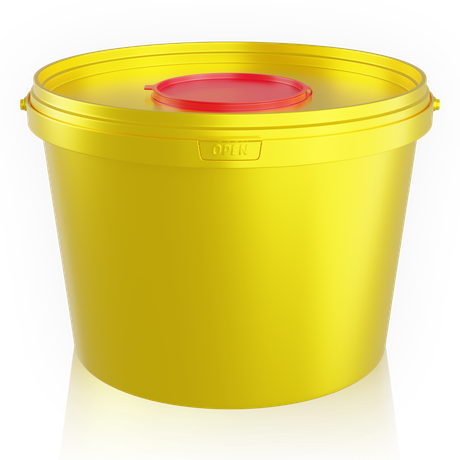
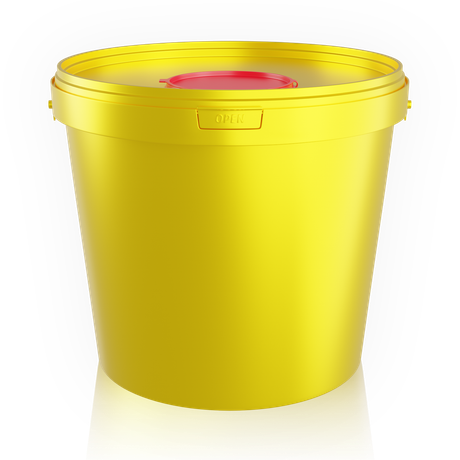
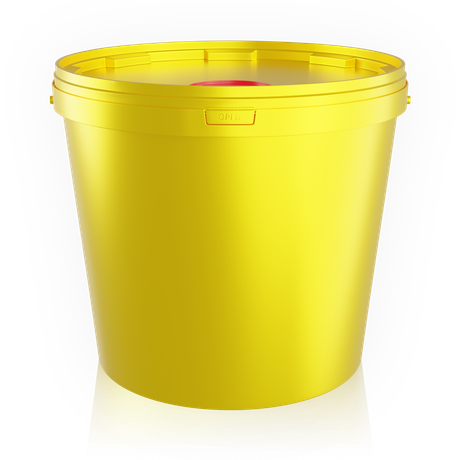
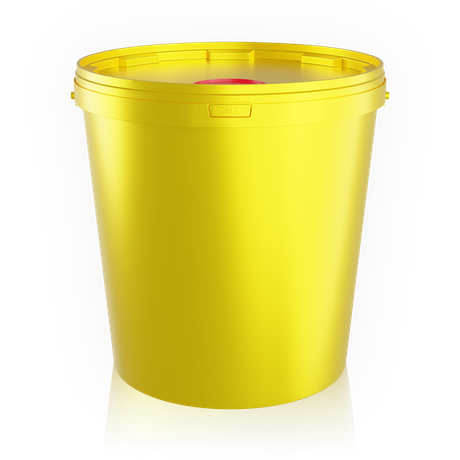
Wound care room at the district hospital during haymaking and harvest: cuts and bruises, with the syringes and bandages going into a yellow 5.6 L bucket with a needle remover.
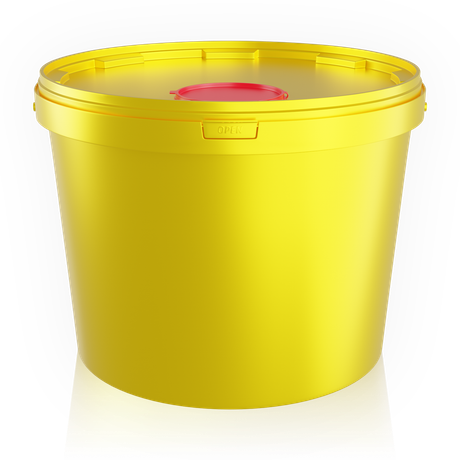
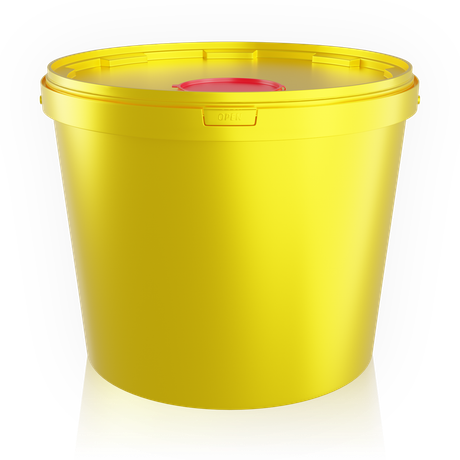
Lenger maternity hospital: a yellow 11.2 L bucket stands by the delivery room and is carried out by its plastic handle after each shift; it weighs 271 g empty.
Infectious disease ward at Tole Bi District Hospital: Class C waste (by Kyrgyz sanitary classification) is collected in a red 11.5 L bucket that weighs 307 g.
Lenger's district outpatient clinic also serves foothill villages: a day's combined waste from all exam rooms goes into an 18 L bucket, Ø 332 × 286 mm.
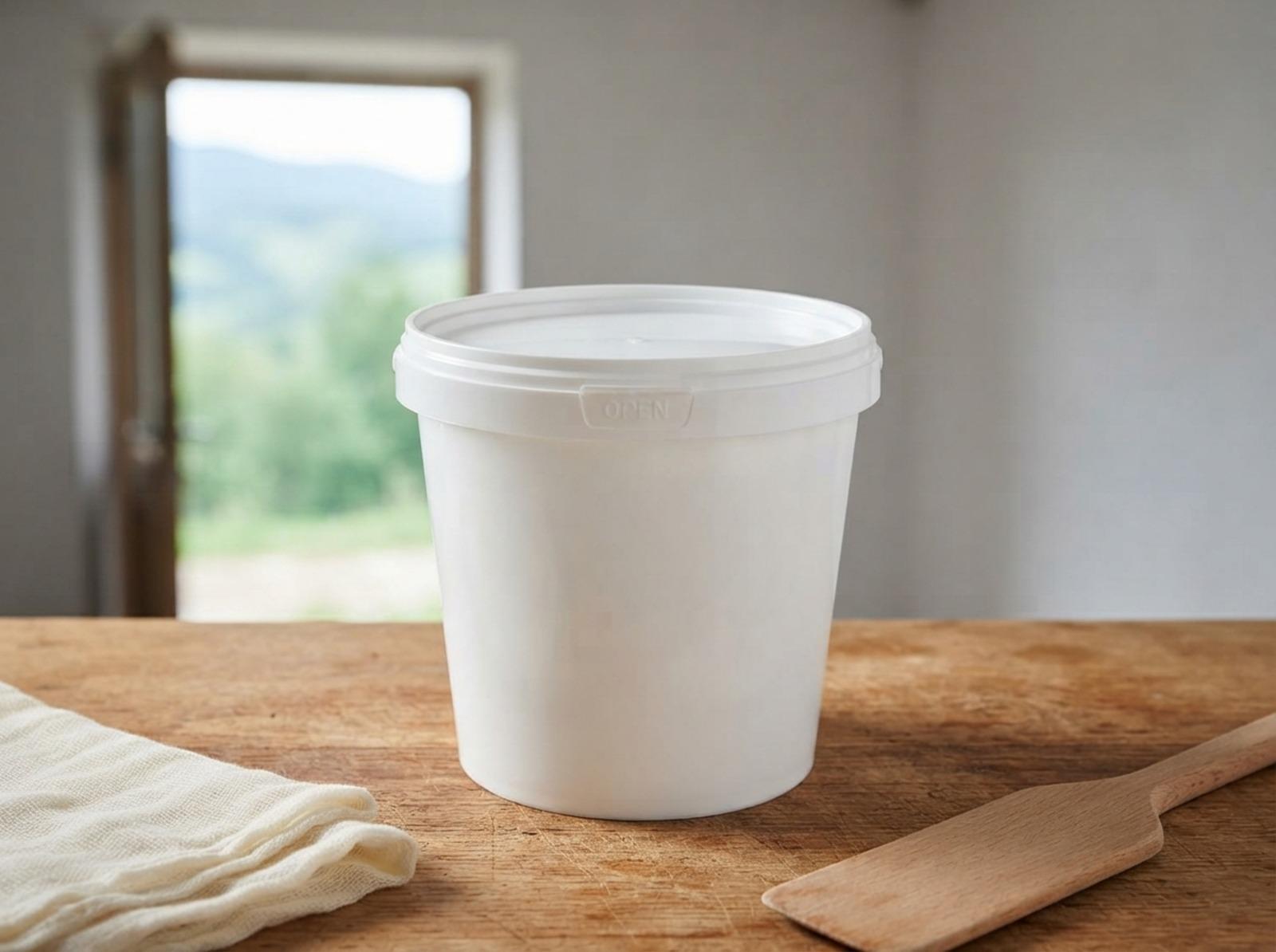
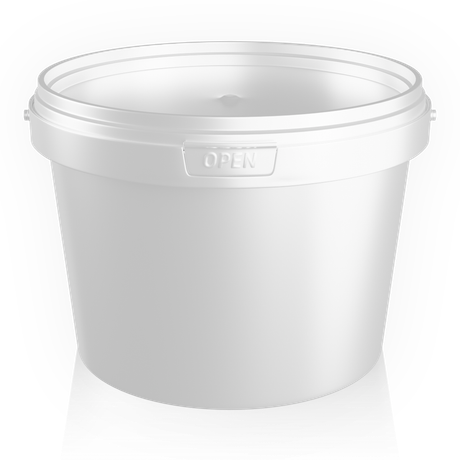
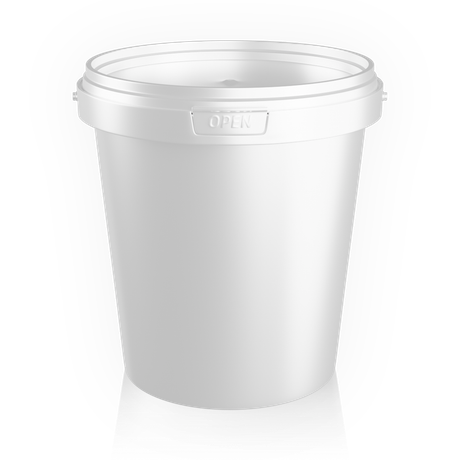
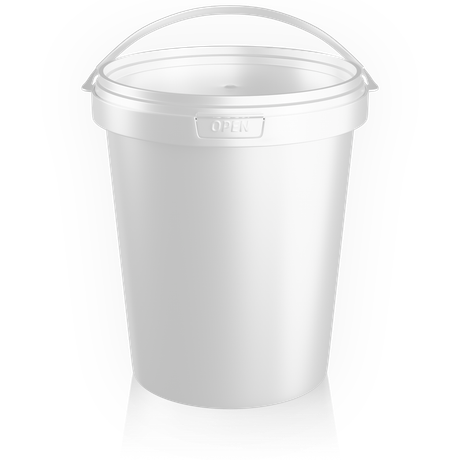
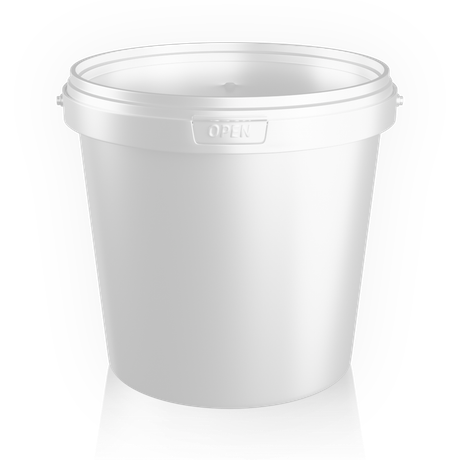
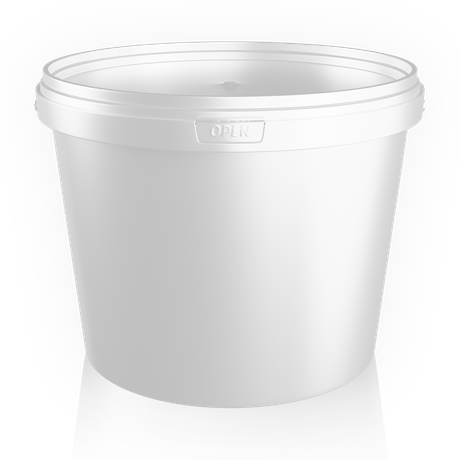
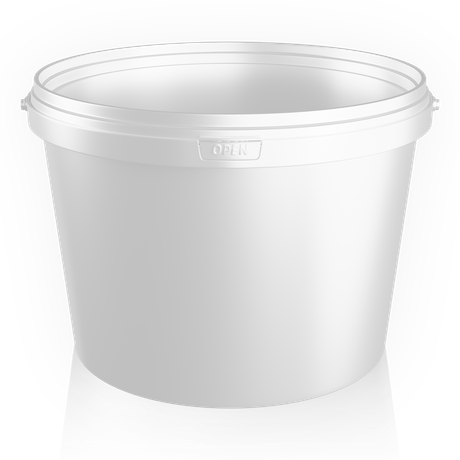
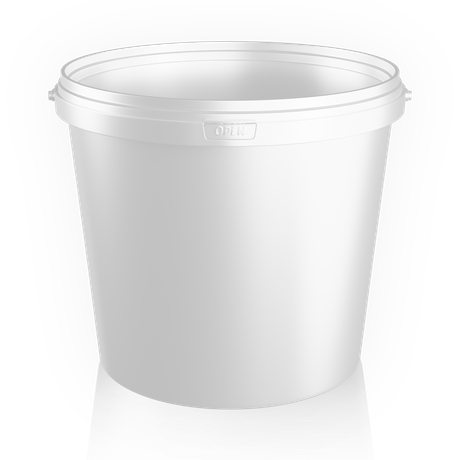
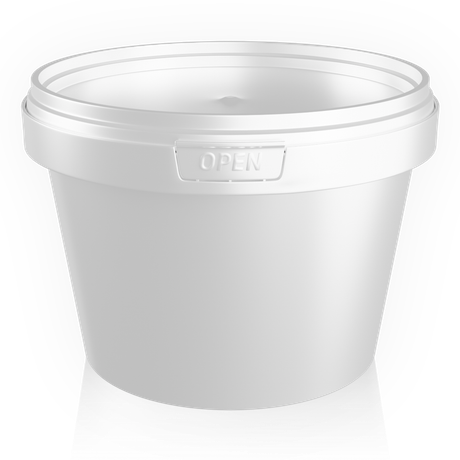
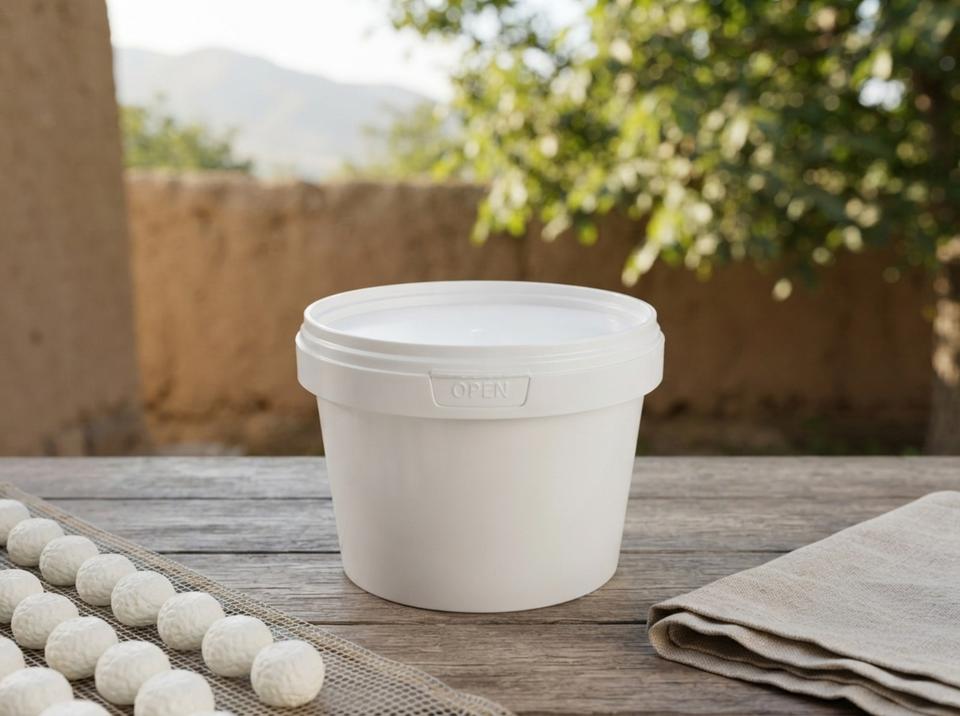
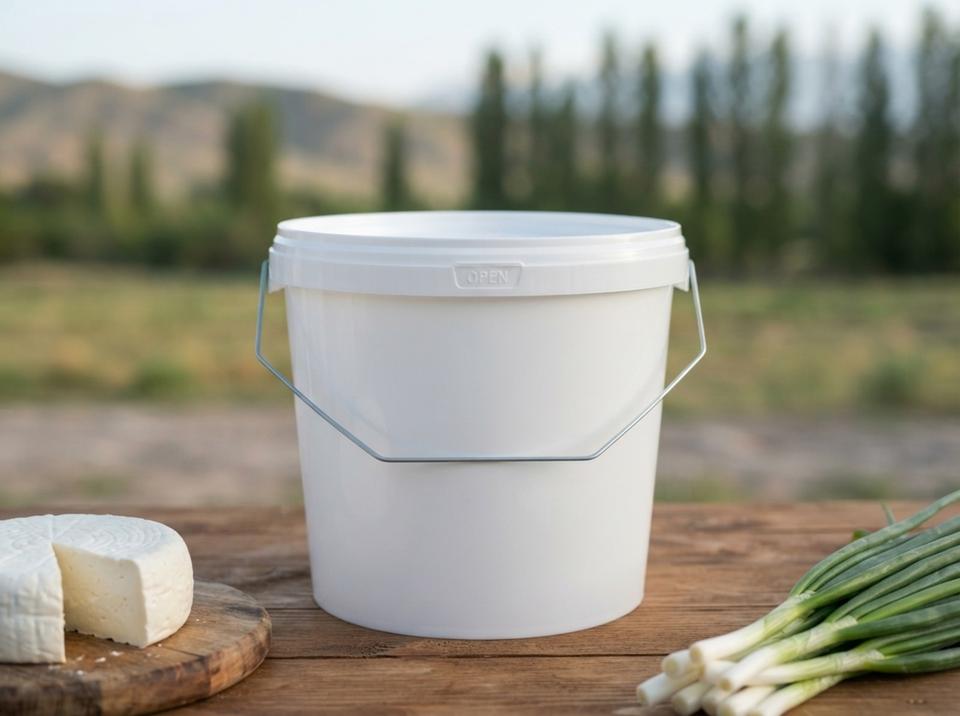
Dairy is sold fresh, so the OPEN tamper-evident tear strip matters to farms: it shows shoppers the bucket hasn't been opened since filling. Empty buckets nest in stacks, so spare packaging takes up almost no room in the dairy.
Find by product
Sour cream, kurt, jam:what to pack them in
The table covers farm and orchard products from around Lenger. For each one, it shows the size to start with and how many fit on a pallet. If you sell both at retail and to cafes, take two sizes: a small one for the counter and a large one for the kitchen.
Dairy retail runs on small buckets: a single pallet holds 7,200 of the 560, 850, or 900 ml size. Farms take the large sizes for their own use, for feed and harvest, and those ship on the same truck.
Tole Bi District makes its living from livestock and orchards, and its big market is right next door in Shymkent. So packaging here is chosen with an eye to how the product will travel to the city and how shoppers will see it. Dairy and jam often go to market in Shymkent, while feed and orchard buckets stay on the farm.
Kurt drying560 ml: 7,200 per pallet
Dairy farms
Sour cream, kaymak, and katyk get packed every day. For the counter, farms use the 560 ml and one-liter sizes; for cafes, the 8 L with a bail handle. A one-liter bucket of sour cream is almost exactly a kilogram, which makes it easy for the farm to keep track of sales.
Kurt and cheese
Kurt is dried and sold year-round, and brynza is kept in brine. The 3.8 L and 5.6 L suit both: a wide opening and a tight lid protect the product on the way to the bazaar.
Foothill orchards
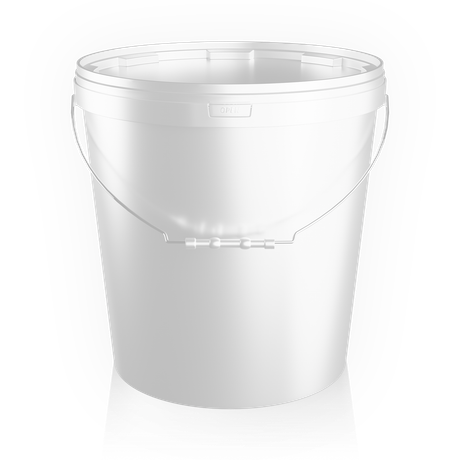
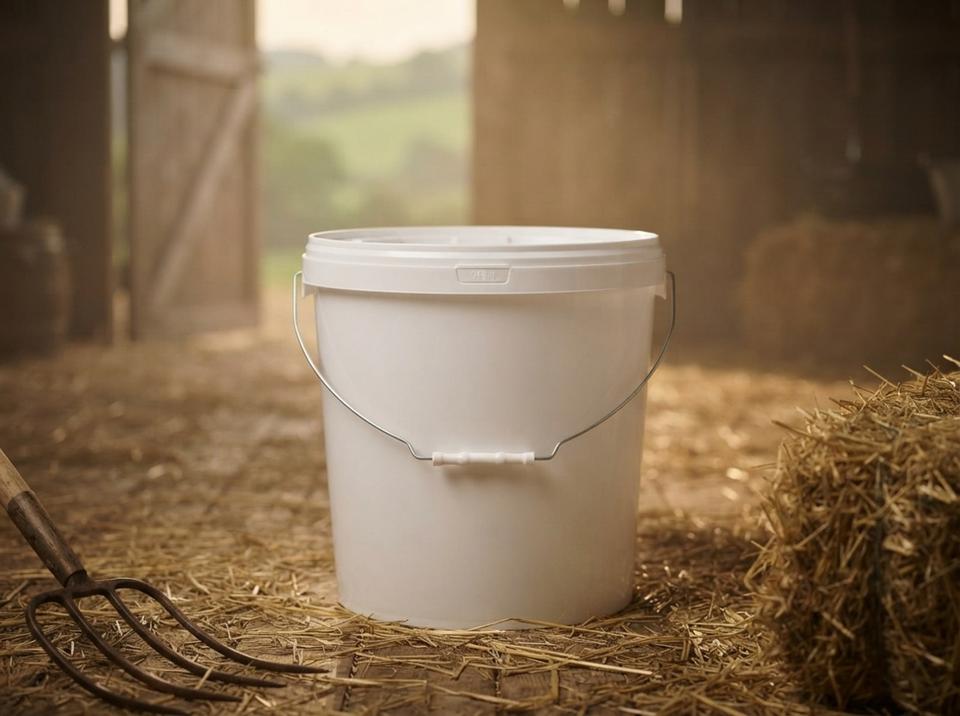
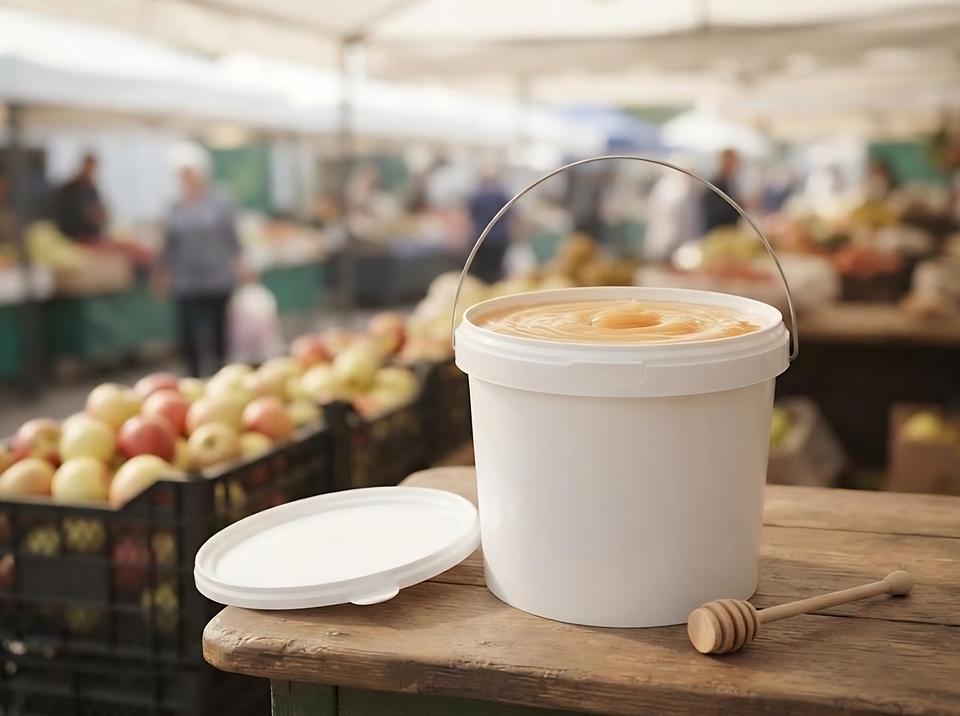
Sour cherries, sweet cherries, and apples are picked into 11.5 L buckets with a plastic grip. Part of the harvest is made into jam and sold in clear 2.3 L buckets, so the color of the jam shows at a glance.
Highway stands
Farm stands on the road to Shymkent sell dairy, butter, and jam. They need a mix of small sizes in one delivery, and a label is an easy way to add the farm's brand.
Order calculator
Palletsfor the farm and orchard
The calculator on the right converts units into pallets: choose a bucket and enter the quantity. A farm outside Lenger that packs kaymak orders 7,000 of the 560 ml buckets for the quarter, which is one pallet. A fruit grower who needs 1,000 of the 11.5 L buckets gets two.
Item
BucketsContainersJerry cansMedical buckets
How many pieces you need
pcs
One-liter and 800 ml buckets come 6,480 to a pallet.
Dairy and orchard sizes ship on one truck.
Pallets are counted whole, so the result is rounded up.
Buying
How a Lenger farmcan order buckets
The minimum order is one pallet, shipped directly from the factory. The steps below work for farms, cheesemakers, and fruit growers alike.
1
Call
Call +996 222 600 292 or leave your number. Tell us the product, the sizes, and how many buckets you go through in a month or a season.
2
Finder
Your sales manager will suggest a size and handle for your product and work out the pallets and the order price, including shipping to Lenger.
3
Branding
If you want your name on the bucket, agree on a label or in-mold labeling (IML). In dairy retail, it helps shoppers recognize your farm.
4
Delivery
Pallets are assembled at our plant in the Bishkek Free Economic Zone (FEZ) and sent by freight carrier as a shipment within the EAEU. The paperwork travels with the cargo.
Straight-line distance. Click a city to open its page.
Buckets for Lenger ship from the HTI plant in the Bishkek FEZ, Ak-Chiy village, and travel to Kazakhstan with a freight carrier. The shipment is handled within the EAEU, and your sales manager will tell you how long it takes and what it costs when you place your order. HTI has no warehouses or pickup points in Lenger or Shymkent.
Farms do well to keep extra packaging on hand: dairy sells every day, and running out of buckets stops sales. Empty buckets sit in nested stacks and take up almost no space.
If you sell both in Shymkent and locally, one order can cover both outlets. Give our sales manager the unloading address, whether it's in Lenger or a village in the district.
Orchards need packaging by the start of the cherry harvest, while dairy farms need it steadily all year. So farms with both livestock and orchards often split their order into two deliveries: one in spring for the harvest and one in fall for winter dairy.
Turkistan Region
Nearbyand across the country
Towns near Lenger
Pages for the region and nearby towns, with packaging matched to local products.
Dairy has to sell fresh and clean, so the right bucket version is part of earning a shopper's trust. Here are four details that both the farmer and the person buying their sour cream look at.
OPEN seal
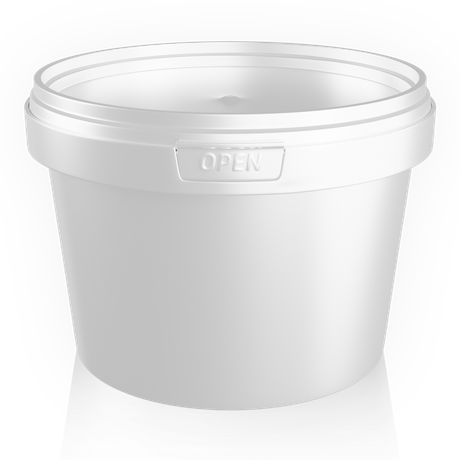
As long as the embossed tear strip is intact, nobody has opened the bucket since it left the farm. For sour cream and kaymak, that's the strongest selling point at the bazaar.
Clear wall
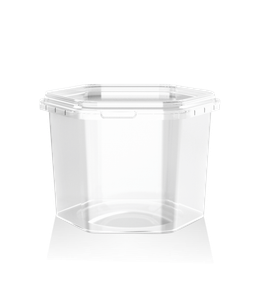
Suzma, brynza in brine, and sour cherry jam show through the body. Every size comes in clear.
White body
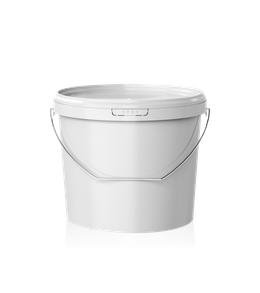
A white bucket looks clean, and labels with the packing date and farm name stick to it well.
Your farm's brand
A label works for a trial run, while IML is fused into the wall during molding and survives washing. Learn more on our IML page.
Questions and answers
Questionsfrom Lenger and the district
Didn't find your answer?A sales manager replies Mon-Fri, 9:00 AM-5:00 PM, Bishkek time
Directly from the HTI plant: orders start at one pallet, ship from our production site in Bishkek, and are delivered to Lenger by freight carrier. Call +996 222 600 292, and our sales manager will help you choose the sizes.
For the counter, the 560 ml and one-liter; for cafes, the 3.8 L and 8 L. For a product-by-product breakdown, see our dairy buckets page.
Pricing is calculated for each order based on size, quantity, handle, color, and printing. Your sales manager will quote it together with the cost of shipping to Lenger.
No, HTI has no warehouses in Shymkent or Lenger. Buckets come straight from the plant in Ak-Chiy village.
By the pallet through a freight carrier, as a shipment within the EAEU. Your sales manager will confirm delivery time and cost to Lenger when you place the order.
Yes, the 3.8 L and 5.6 L are the usual choice for dry kurt: the lid keeps dust off the balls. The same sizes work for brynza in brine. See our page on buckets for kurt and cheese.
Yes, they're loaded onto one truck, with each model on its own pallet.
Yes, with a label or IML printing. A label is handy for a first order; IML suits ongoing packing, when the brand has to stand up to washing.
Catalog
All bucket sizesin the catalog
Dimensions, empty weight, and photos of every bucket are in the catalog. An overview of packaging across Turkestan Region has its own page. For the big city next door, read about packaging for Shymkent, and fruit growers will find the Saryagash page useful.
Tell us your product, fill size, and where you sell: in Lenger or in Shymkent. Our sales manager will pick the buckets and work out the pallets and shipping. If you have both a farm and an orchard, list everything at once for a more accurate estimate.